
You’ve booked the flights. You’ve got the gelato spots saved. And now you’re standing in front of your wardrobe thinking — okay, but what do I actually wear? July in Italy is glorious and brutal in equal measure. The sun is merciless, the piazzas are packed, and the churches will turn you away at the door if you show up in shorts. I’ve made every mistake in the book — shown up to a Florentine restaurant looking like I’d just climbed Vesuvius, worn the wrong shoes across Roman cobblestones, and nearly passed out in a linen blazer that seemed like such a good idea at 8am.
Here’s what nobody tells you: Italy in July isn’t just hot. It’s a specific kind of hot — humid in Venice, dry and dusty in Rome, surprisingly breezy on the Amalfi Coast — and each destination has its own unspoken dress code. Italians notice what you wear. Not in a rude way, but in a quietly observant way that will make you feel deeply aware of your tourist-branded tote and Birkenstocks the moment you step off the train.
This isn’t a list of things to pack. It’s a proper guide to dressing well, staying cool, and actually feeling good in one of the most beautiful — and style-conscious — countries on earth.
Before We Dive In: What July in Italy Is Actually Like
Let me be honest about the weather, because most packing lists gloss over this part. July in Italy is genuinely, relentlessly hot. Rome and Florence regularly hit 35°C (95°F), and the humidity clings to you like a warm, unwanted hug. Venice is its own microclimate — beautiful and slightly swampy, with the smell to match on particularly still days. The Amalfi Coast catches sea breezes that make the heat bearable, but you’ll still be walking steep, sun-exposed paths in full afternoon sun.
Rain is rare in July but not impossible, particularly in the north. More likely, you’ll encounter sudden afternoon storms that pass within an hour — enough to drench you, not enough to ruin a day. The evenings, however, are a different story. Rome cools down to a lovely 22–24°C after sunset. Florence can still feel warm at 10pm. Venice gets genuinely pleasant once the day tourists leave.
The walking conditions matter more than most people anticipate. Roman cobblestones — sampietrini — are beautiful and absolutely ankle-destroying if you’re wearing the wrong shoes. Venetian bridges require constant stair-climbing. The Cinque Terre is genuinely hilly. Your outfit decisions are as much about survival as aesthetics.
And the style culture? Italians dress well. Not formally — this isn’t about suits and heels — but thoughtfully. There’s a concept called bella figura, the art of making a good impression, and it permeates everything. You don’t need to be runway-ready, but putting in a small amount of effort will make you feel less like a tourist and more like someone who belongs.
1. The Lightweight Layer That Will Save Your Life
I cannot stress this enough: a lightweight layer is the single most important thing you’ll pack for Italy in July, and most people forget it entirely.
Here’s the thing — you’ll spend your mornings in beautiful, stone-floored churches that are genuinely cool inside. Then you’ll step into a restaurant for lunch that has aggressive air conditioning. Then you’ll be back out in 34-degree heat. The temperature swings inside versus outside are enormous, and if you’re only dressed for the outdoor heat, you’ll be miserable half the time.
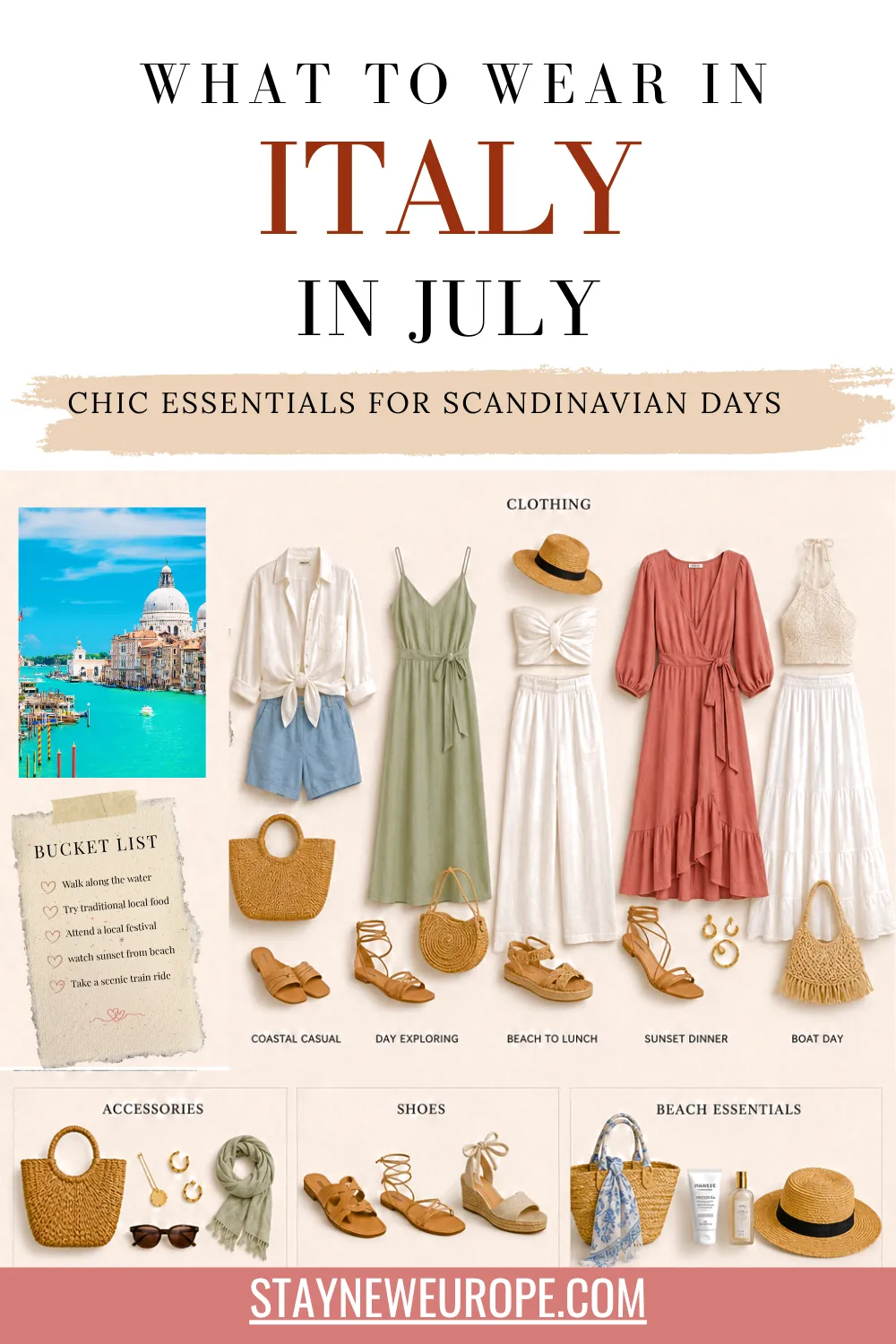
What works: a thin linen overshirt or a lightweight cotton cardigan. Something you can tie around your waist or stuff into a bag without it wrinkling beyond recognition. I travel with a loose-weave linen shirt in a neutral colour that doubles as sun protection for my shoulders and a layer for cold restaurants. It weighs almost nothing and I use it constantly.
What doesn’t work: anything heavyweight, anything synthetic that doesn’t breathe, anything too structured. You’re not going to a meeting; you’re navigating a heat maze.
Local tip: Italian women often carry a light scarf or pashmina that serves triple duty — as a layer, as a church cover-up, and as an accessory that elevates a simple outfit instantly. Do the same.
2. Linen, Linen, and More Linen
If Italy had a national fabric, it would be linen. And there’s a very good reason for that.
Linen is breathable in a way that cotton simply isn’t. It wicks moisture away from your skin, dries quickly, and actually gets cooler as the day goes on rather than collecting heat. Yes, it wrinkles — famously so — but in Italy, a slightly rumpled linen outfit doesn’t look sloppy. It looks appropriately Italian. There’s a reason every boutique in Florence is stuffed with linen trousers and linen dresses the moment summer hits.
Pack linen shirts, linen trousers, linen blend dresses. If you can get a linen-viscose blend, even better — it has a slight drape that makes it feel a bit more polished than 100% linen. Colours-wise, lean into neutrals: ivory, sand, terracotta, sage green. They photograph beautifully against Italian architecture and they mix and match effortlessly.
What to avoid: synthetic fabrics, polyester, anything marketed as “performance wear” with that slightly shiny finish. You will sweat through it and you will smell it by noon. I learned this the hard way on a day trip to Pompeii — do not be me.
Local tip: Pack a linen piece that’s slightly oversized. Italian summer dressing leans relaxed and fluid, not fitted and tight. A loose linen shirt tucked loosely into wide-leg linen trousers is a summer uniform that looks effortless precisely because it is.
3. Dresses: Your Secret Weapon
If you wear dresses, Italy in July is your moment. A good midi dress is genuinely the most practical item you can pack — one piece, minimal effort, maximum impact.
Midi length is the sweet spot. Long enough to walk into a church without needing to add anything, short enough to stay cool in the heat. A wrap-style midi dress in a neutral or subtle print can go from morning sightseeing to an evening aperitivo with just a change of shoes and earrings. It’s the kind of outfit that makes you feel like you have your life together even when you’ve been walking since 8am and your feet are quietly dying.

Look for dresses with pockets (always, forever, non-negotiable) and in fabrics that don’t cling when you sweat — so linen, cotton voile, or viscose blends. Avoid jersey-style wrap dresses in polyester, which look fine but become genuinely unpleasant in the heat.
For churches, a midi dress with sleeves — or with a cardigan or scarf ready to go — covers all bases without any additional planning. That’s fewer decisions, which when you’re already navigating a foreign city in 35 degrees, feels like a luxury.

Local tip: Italian women wear dresses with flat sandals for daytime and barely change the outfit for evening — they just swap shoes and add a belt or jewellery. Adopt this approach and your packing becomes dramatically simpler.
4. Jeans: Know When to Leave Them Behind
I know. You love your jeans. They’re reliable, they’re familiar, and yes, technically you can wear them in Italy. But let me be honest with you — July is probably not the time.
Denim in 35-degree heat is heavy, slow-drying, and unforgiving. It holds heat against your legs, takes forever to dry if you sweat through it, and weighs a ton in your suitcase. I’ve watched people in jeans on the Amalfi Coast look increasingly miserable as the day went on, and I’ve never once thought wow, great outfit choice.

That said: if you simply cannot travel without at least one pair of jeans, go for lightweight or “summer” denim — thinner weave, lighter wash, as relaxed-fit as possible. And keep them for evening only, when the temperatures drop and you’re heading to a nice restaurant where something a bit more structured feels right.

The better alternative for people who want that casual, put-together feel that jeans provide? Wide-leg cotton or linen trousers. They have the same energy — relaxed, versatile, works with everything — without the heat nightmare. I switched to these a few years ago and genuinely don’t miss the jeans.
Local tip: If you’re set on jeans for evening, a slim dark-wash pair with a tucked-in linen shirt and loafers is genuinely chic and very Italian. Just don’t attempt it during the day.
5. The Shoe Question (And It Matters More Than You Think)
Shoes will make or break your Italy trip. I say this with the gentle authority of someone who once wore the wrong shoes in Rome and spent the next two days walking like a retired pirate.
The golden rule: comfort is non-negotiable, but comfort doesn’t have to mean ugly. The good news is that Italy has made it stylish to wear beautiful flat shoes — leather sandals, loafers, canvas sneakers — for decades. You don’t need hiking boots or chunky runners to be comfortable. You need shoes that are already broken in, have some grip on the sole, and can handle cobblestones without throwing you off balance.

Leather sandals are the dream. A well-made pair — think Birkenstock, but sleeker; or actual Italian-made sandals if you’re buying a pair there — will handle hours of walking and look fantastic with everything. The key is that the footbed must be supportive. Flat sandals with zero arch support will leave you with aching feet by noon.

Loafers in leather or suede are ideal for evenings and for days when you want something a bit more polished. Slip-on and stylish, they work with trousers, midi skirts, and even some dresses. A pair of white or cream canvas sneakers (Veja, Superga, New Balance 574) covers the casual daytime look without looking like you’re about to run a marathon.

What to avoid: flip-flops (dangerous on cobblestones, not acceptable in restaurants), stilettos or wedges (I have seen people attempt this; it does not go well), and brand-new shoes of any kind.
Local tip: Florence is one of the best places in the world to buy leather shoes. If your budget allows, pick up a pair there early in the trip and break them in gradually — by the end of the week, they’ll be perfectly worn in and you’ll have a beautiful souvenir.
6. What NOT to Wear: The Tourist Mistakes
Let me save you some embarrassment here, because some of these are more common — and more noticed — than you’d think.
The football shirt with your home team’s name on the back. The matching his-and-hers travel outfits. The socks with sandals (still happening, still jarring in a country where people wear shoes like they were born in them). The enormous branded backpack with the flag patch collection. These things won’t ruin your trip, but they will signal immediately that you’re a tourist in a way that makes you more vulnerable to overpriced menus and slightly less warmth from locals.
Beyond aesthetics, there are practical mistakes too. Wearing light-coloured clothing in Venice near the canals is risky — more so the lower you sit (gondola rides are notoriously splash-adjacent). Wearing white on a dusty day trip to anywhere in the south is ambitious. Wearing anything with a high neckline in the interior heat of August is an act of genuine self-sabotage.
The biggest mistake, though? Overpacking shoes and underpacking tops. You need more fresh shirts than you think (you will sweat) and fewer footwear options than you think (you will wear the comfortable ones every single day).
Local tip: Italians don’t wear activewear or gym clothes casually on the street the way many northern Europeans and Americans do. A pair of leggings and a sports bra is for the gym, not for exploring. Pack accordingly.
7. Evening Outfits: Dressing for Aperitivo and Dinner
Italy takes its evenings seriously, and so should you. The ritual of aperitivo — that golden hour between 6 and 8pm when Campari spritzes appear and everyone looks inexplicably glamorous — deserves an outfit that’s at least slightly elevated from what you wore to the Colosseum.
The good news is you don’t need to pack separate evening clothes. The secret is outfit transformation: the same midi dress you wore sightseeing all day looks different with block-heeled sandals and a pair of earrings. A linen shirt and trousers combo gets dressed up instantly with a wrap belt and a nicer bag. This is the Italian approach — they don’t change entirely, they refine.
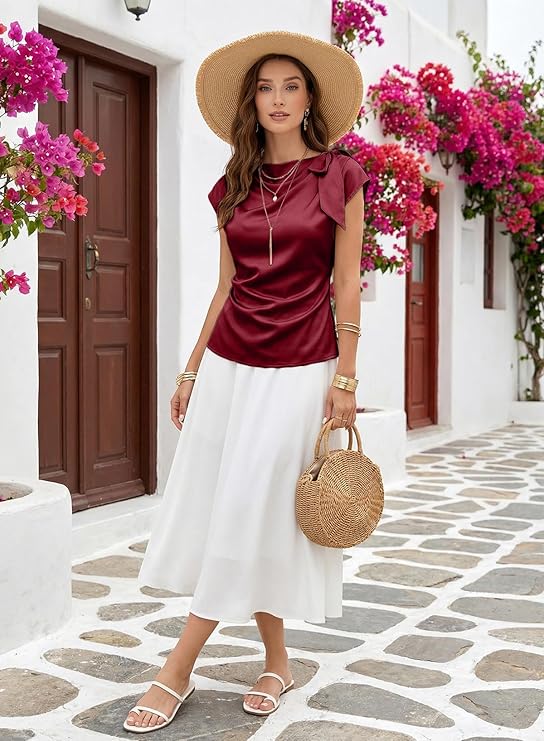
For women: a slightly dressier sandal, some jewellery, perhaps a nicer bag. For men: a linen short-sleeve shirt instead of a t-shirt, clean chinos or trousers, leather loafers instead of trainers. You don’t need a blazer unless you’re going somewhere genuinely fancy (though a lightweight unstructured linen blazer is one of the greatest evening travel pieces ever made).

The restaurants in Italy that require smart dress will usually tell you in advance. Most good trattorias and osterie are more relaxed — they care about the quality of the food, not whether you’re wearing a collar. But showing up in activewear to a candlelit dinner in Verona is a choice you might regret.
Local tip: Many Italians change completely for evening — this is called il cambio d’abito (the change of clothes) and it’s treated as a small daily ritual. Even just freshening up and switching one element of your outfit signals that you respect the evening. It makes the aperitivo taste better. I’m convinced of this.
8. Church Dress Codes: Non-Negotiable
This is the section most people don’t read until they’re standing outside the Vatican being handed a disposable paper skirt. Let me spare you that particular humiliation.
Italian churches — including every major tourist one: St. Peter’s Basilica, the Duomo in Florence, the Basilica di San Marco in Venice — require covered shoulders and covered knees. This applies to everyone, regardless of gender. If you show up in a sleeveless top and shorts, you will either be turned away or handed a covering at the entrance (usually a paper or plastic wrap-around that is both uncomfortable and unattractive).
The solution is simple: dress for churches every day you plan to visit them. A midi dress with sleeves covers everything. A pair of linen trousers and a short-sleeved top with a cardigan or scarf in your bag covers everything. Planning for this takes about thirty seconds and prevents the awkward shuffling outside the gates.
Worth knowing: the “no bare shoulders” rule applies even on baking hot days. The stones of these buildings keep them genuinely cool inside, so the layer you need for the church is also the layer you’ll be grateful for once you’re in.

Local tip: A thin silk or cotton scarf that lives at the top of your day bag is the most elegant solution. Wrap it around your shoulders at the church door, unwrap it the moment you exit. Takes ten seconds, covers all bases.
9. Bags: Function and Form (Yes, Both)
The bag you choose in Italy is a safety decision as much as a style one. Pickpocketing exists — not at the dramatic levels the internet would have you believe, but it happens, particularly in crowded tourist areas. A crossbody bag with a zip closure is the sensible choice.
But — and I say this firmly — the sensible choice can also be a nice-looking bag. Italy is one of the best places in the world to find beautiful leather goods. A structured leather crossbody in cognac, tan, or black works with every outfit, looks intentional rather than defensive, and keeps your belongings secure without making you look like you’re prepared for a heist.

The backpack question comes up a lot. Large backpacks are fine for hiking but look out of place at a nice dinner and are genuinely impractical in crowded museums where you have to check them. A smaller, sleeker backpack — think structured leather mini-backpack rather than 40L hiking pack — is a compromise that works, but a crossbody is more versatile.

Avoid: open-top tote bags (easy pickpocket access), bum bags worn at the front (fine functionally, a look that Italy hasn’t fully embraced), and enormous bags that require you to check them at every museum entrance.
Local tip: If you’re buying a leather bag in Florence, visit the San Lorenzo leather market or the artisan workshops in the Oltrarno district for better quality and prices than the tourist-facing shops near the Duomo.
10. Accessories That Do the Heavy Lifting
Here’s where the Italian approach to dressing really reveals itself: a simple, understated outfit becomes something entirely different with the right accessories. And in the heat of July, when you’re limited to light layers and breathable fabrics, accessories are how you express personality.
A good pair of sunglasses is essential and also the accessory that will make you look most effortlessly Italian. Italians take their sunglasses seriously — they’re considered part of the face, almost a signature. A classic frame (tortoiseshell, gold wire, black acetate) in a shape that suits you is worth investing in before you travel.

Earrings are the quickest outfit-changer in existence. A pair of simple gold hoops turns a linen shirt and trousers into something that reads as deliberately styled. A pair of statement earrings makes a plain midi dress feel evening-ready. Pack three or four pairs that work with your wardrobe and leave the rest at home.
Belts are underrated and very Italian. A thin leather belt worn loosely over a linen dress, or defining the waist of an otherwise shapeless linen shirt, adds structure without effort. It’s a small thing that makes a large difference.
Local tip: Avoid heavy jewellery in the heat — metal heats up and becomes uncomfortable, and long necklaces tangle with everything. Stick to small, lightweight pieces and let your sunglasses and earrings do the work.
11. Preparing for the Unexpected Afternoon Storm
July in northern Italy — Venice, Milan, Lake Como — occasionally throws a short, sharp afternoon thunderstorm that comes out of nowhere and disappears just as quickly. In Rome and the south, this is rarer but not impossible. You won’t need a full rain jacket, but being caught completely unprepared is miserable.
A packable waterproof layer — one of those ultralight ones that folds into its own pocket — is worth the minimal space it takes up. Not a heavy waterproof coat; something featherlight that you can pull on if the sky opens. Alternatively, a large scarf or sarong can double as emergency rain cover in a pinch (I’ve done this; it’s not perfect but it works).

What you don’t need: an umbrella. It’s cumbersome to carry all day, annoying in crowds, and the storms pass quickly enough that you can usually duck into a café and wait them out with a very reasonable excuse to order another espresso.
The real July rain risk in Italy isn’t getting soaked — it’s that the streets become briefly treacherous after rain. Smooth cobblestones get slippery, particularly in Venice. Rubber-soled shoes matter more than you might think.
Local tip: Venice is the most likely place you’ll encounter unexpected flooding, particularly in the autumn — but even in July, low-lying areas near the Rialto or San Marco can get a brief acqua alta. Keep this in mind if you’re wearing nice leather shoes on a particularly humid day.
12. Swimwear and Beach Transitions
If your Italy trip includes the coast — the Amalfi Coast, Sicily, Sardinia, the Cinque Terre beaches — you’ll need to think about beach-to-town transitions, because Italians have very strong feelings about wearing swimwear in the street.
Beach towns in Italy have signs, often stern ones, prohibiting swimwear on the streets, in shops, or in cafés. This is taken seriously — fines exist in some places. A cover-up is not optional; it’s legally required in many coastal towns. The good news is that Italian beach cover-ups are beautiful: loose linen trousers, a breezy kaftan, a wide-leg beach pant over a bikini. This is actually the best version of summer dressing.
Pack a proper cover-up that you can throw on easily when leaving the beach. A lightweight sarong is versatile but a loose linen dress or pair of wide-leg trousers looks more intentional and is more practical.

For the beach itself: a well-made bikini or one-piece that you feel confident in is worth spending money on. Italian beach culture is inherently aesthetic — people are watching, in the nicest possible way.
Local tip: Italian women often wear a matching bikini set with a coordinating cover-up — it gives the whole beach look a put-together quality that feels very bella figura. If you’re buying swimwear, investing in a set (matching top, bottom, and cover-up) in the same colour or print makes everything look more deliberate.
13. Men’s Packing: A Specific Note
Most packing guides focus on women’s wardrobes, and men get a vague gesture toward “smart casual.” Let me be more specific.
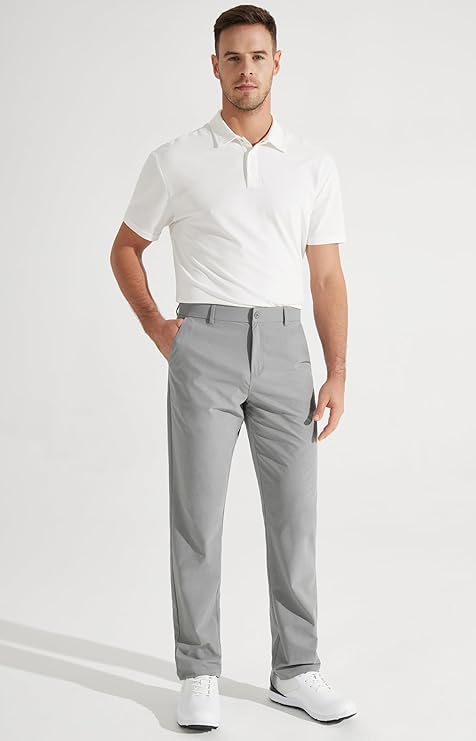
The Italian men’s summer uniform is: linen or cotton short-sleeved shirt (not a polo, not a t-shirt — a proper collared or grandad-collar shirt), chino or linen trousers (shorts are acceptable for casual daytime but not for evening or nicer restaurants), and leather loafers or clean leather sandals. That’s it. It’s simple, it works everywhere, and it looks good.

Pack three to four linen or cotton shirts in neutral or muted tones (white, light blue, terracotta, sage). A couple of pairs of linen or chino trousers. One pair of neutral shorts for beach or very casual days. One pair of loafers, one pair of leather sandals, one pair of clean white sneakers. Done.
What to avoid: cargo shorts (a cultural flashpoint), very bright or loud prints, sleeveless vests in restaurants, trainers with everything. None of these will get you thrown out anywhere, but they will make you look conspicuously non-Italian.
Local tip: A lightweight unstructured linen blazer in navy or sand is the single most useful thing a man can pack for Italy in July. It works for evening, for smarter restaurants, and thrown over a t-shirt it immediately elevates a casual outfit. Worth every inch of suitcase space.
14. Fabrics to Pack and Fabrics to Leave Behind
We’ve touched on this throughout, but let’s get specific — because fabric choice in July Italy is the difference between comfort and suffering.
Pack: Linen (breathable, stylish, improves with wear), cotton voile (lightweight, airy, soft), chambray (lighter than regular cotton, good for shirts), viscose or rayon blends (drapes beautifully, lightweight, cool against the skin), linen-cotton blends (structured enough to look polished, breathable enough to be practical).
Leave behind: Heavy denim, thick cotton jersey (keeps heat in), polyester of any kind (sweaty, clingy, unpleasant), nylon (same problem), wool (even lightweight — it’s July, it’s unnecessary).
A note on colour: Light colours reflect heat, dark colours absorb it. In practical terms, a white linen shirt is genuinely cooler than a navy one. However, white on a dusty day trip to an archaeological site or in Venice near the canals is a risk. Dusty neutrals — sand, ecru, light terracotta — give you most of the heat-reflecting benefit without the dirt-showing downside.
Local tip: Terracotta, burnt orange, warm olive, and dusty rose are not just fashionable colours right now — they’re photographically beautiful against Italian stone, tile, and terracotta buildings. Pack at least one item in these tones and you will thank yourself when the photos come back.
15. Your Italy in July Capsule Wardrobe
Let me pull this all together into something practical. This is what I’d pack for a two-week trip to Italy in July, and I wouldn’t feel like I was missing anything.
Tops: Three linen or cotton shirts (one white, one in a warm neutral, one in a colour you love), two lightweight t-shirts in neutral colours, one nicer blouse or top for evening.
Bottoms: Two pairs of wide-leg linen or cotton trousers (one neutral, one in a colour), one midi skirt that mixes with the tops, one pair of shorts (for beach days only), one lightweight dress that works day and evening.
Layers: One thin linen overshirt or lightweight cardigan, one packable waterproof layer.
Shoes: One pair of leather sandals (broken in before you go), one pair of loafers or cleaner flats, one pair of white sneakers.
Bags: One crossbody leather bag, one small tote that folds flat for markets and beach days.
Accessories: Three or four pairs of earrings, one good scarf in a neutral, one belt, your best pair of sunglasses.
That’s it. Everything mixes together. Everything is appropriate for different situations. And the whole lot fits in a carry-on if you pack strategically — which means Italy in July without checking a bag, without the carousel wait, without the luggage fee. That alone is worth the discipline.
The Practical Packing Section: Actually Getting This Right
Knowing what to pack and successfully packing it are two different skills, and July in Italy exposes the gap quickly.
How many outfits to bring: Fewer than you think. Aim for five or six complete outfits maximum, with pieces that cross-pollinate. Two midi dresses, two pairs of trousers, three or four tops, and one evening option covers a week comfortably if you plan to do laundry (most hotels and Airbnbs have facilities, or you’ll find a lavanderia easily).
Plan for sweating: This sounds inelegant but it’s true — you will go through tops faster than usual. Pack slightly more tops than you think you need, slightly fewer of everything else. A lightweight merino t-shirt is worth considering if you can find one in your budget; it genuinely resists odour for longer than cotton.
Rolling vs folding: Roll everything, particularly linen. It reduces wrinkles more than folding and saves space. Pack shoes in shower caps to keep them from dirtying clothes.
Mistakes to avoid: Packing an “emergency” formal outfit you’ll never actually wear. Bringing more shoes than you’ll realistically use. Overpacking jewellery (you’ll wear the same two pairs every day). Bringing books (your phone is lighter and holds more).
The one thing you’ll wish you packed: A small portable fan. It sounds ridiculous until you’re on a crowded vaporetto in Venice at noon and the person next to you produces one. You will envy them more than you’ve ever envied anyone.
One Last Thing Before You Go
Packing for Italy in July is an exercise in trusting simplicity. The countries that dress best — Italy chief among them — have largely figured out that less, worn well, is better than more, worn haphazardly. A few beautiful pieces that you feel good in will serve you better than a suitcase stuffed with options that you’ll stand in front of at 8am, sweating already, unable to decide.
What I really want you to take away from all of this is permission to dress for the experience of being there. The feeling of a soft linen shirt in a warm evening breeze. The confidence of wearing shoes that can take you anywhere without protest. The small pleasure of looking in a mirror before you head out for aperitivo and thinking: yes, this is right.
Italy will be extraordinary. It usually is. And you’ll look back at the photos — sun on old stone, glasses of something golden, gelato-stained smiles — and remember not just where you went, but how you felt while you were there. Dress for that feeling.
Buon viaggio.


One Response