
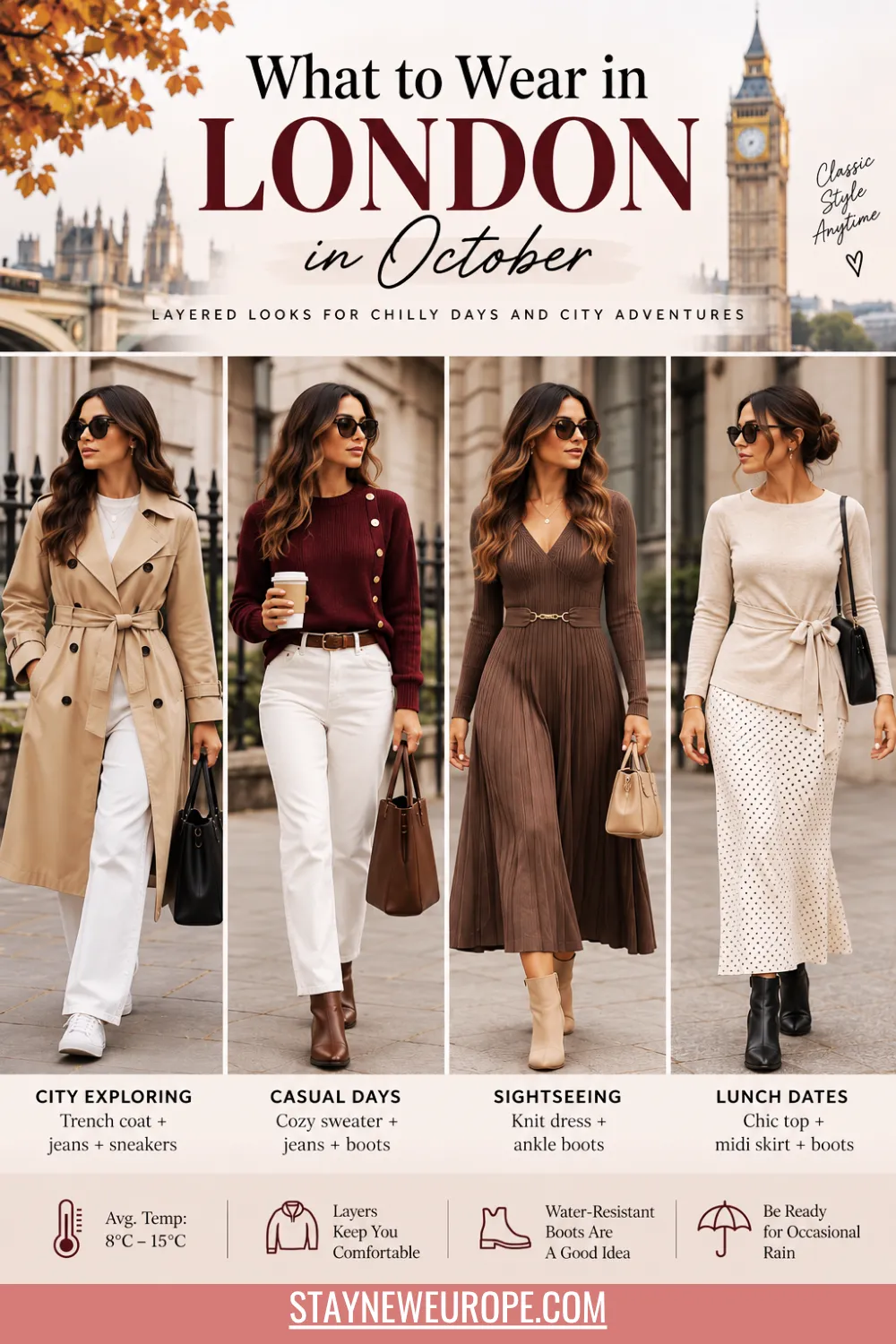
Let me be honest — October in London is a bit of a con artist. It’ll give you a crisp, golden afternoon in Hyde Park that makes you want to buy a trench coat and move there permanently, then turn around and hit you with sideways rain the second you step out of Green Park station.
I’ve done this trip more than once now, and the outfit chaos always starts the same way: someone packs like it’s already winter (hello, puffer coat and thermal leggings) or someone packs like London in October is basically Paris in September, mild and forgiving. It’s neither. It’s colder than people expect, wetter than the forecast admits, and somehow still a city where everyone looks put together on the Tube at 8am.
This is the part nobody tells you before you land at Heathrow with the wrong coat: London in October doesn’t punish bad style choices, it punishes impractical ones. Get the practical part right and the stylish part follows a lot more easily than you’d think.
Before We Dive In
Weather: London in October sits somewhere between 8°C and 15°C (46–59°F), and that range can show up within a single day. Mornings are properly cold — the kind where you’ll want gloves waiting for the bus — and by early afternoon, if the sun’s out, you’ll be peeling off a layer. Rain isn’t constant, but it’s frequent and often light and fine rather than dramatic, the kind that soaks through anything that isn’t actually water-resistant. I learned this the hard way with a “water-resistant” jacket that was, in fact, just a jacket.
Walking and standing conditions: Walking-wise, London is a city of stairs before it’s a city of cobblestones. You’ll be doing Tube station steps, Underground platform sprints, and long stretches on pavement that’s perfectly flat but never-ending — easily 15,000–20,000 steps a day if you’re sightseeing properly. Your feet need to survive that, not just look good in photos.
Style culture: And style culture matters more here than you’d expect for a city famous for its “anything goes” reputation. Londoners do dress casually, but casually put-together — good coats, decent shoes, muted colours, one interesting piece rather than five loud ones. You don’t need to dress like you’re auditioning for a fashion editorial, but showing up in full head-to-toe branded athleisure will mark you as a tourist faster than a map in your hand.
Layering Is Not Optional — It’s the Whole Strategy
This surprised me the first time I visited in October: I packed a coat and assumed that was the plan. It is not the plan. The plan is layers, plural, because the temperature swing between an 8am Tube ride and a 2pm walk through Regent’s Park is bigger than it looks on paper.
The system that’s worked for me every single trip is a base layer (thin long-sleeve top or fine merino), a mid layer (jumper or cardigan), and an outer layer (coat or jacket) that you can strip down from as the day warms up. What I actually do most days is start in all three, ditch the outer layer by lunchtime if the sun’s out, and put it straight back on the second I’m near the river, where the wind off the Thames drops the temperature by what feels like five degrees instantly.

For fabrics, fine merino wool and cotton blends outperform anything synthetic here — they regulate temperature instead of trapping heat or leaving you cold and clammy the second it drizzles. I made the mistake once of wearing a chunky acrylic jumper under a coat on a walking day and spent the afternoon overheating indoors and freezing the moment I stepped back out. Not a good system.

Local tip: pack one genuinely warm mid-layer (a proper wool jumper, not a thin cotton one) even if the forecast looks mild — evenings drop faster than you’d expect once the sun sets around 6:30pm in October.
The Coat Decision That Actually Matters
Here’s the hook: your coat is doing more work in London in October than every other item in your suitcase combined, so this is not the place to cut corners.
A proper trench coat is the classic choice for a reason — it looks intentional, it layers well over jumpers, and a good one is genuinely water-resistant, not just water-repellent for the first ten minutes of drizzle. But a trench alone won’t cut it on the colder, wetter days, which is why I now travel with a lightweight wool coat as my main piece and a packable rain shell as backup, rather than trying to find one coat that does everything.

What doesn’t work is a heavy winter parka — it’s overkill for most of October (save that for December) and it takes up a third of your suitcase. Equally, a thin denim or leather jacket looks great but does nothing against actual rain and not much against the wind, which in London is a bigger factor than most visitors plan for.
If you’re only bringing one coat, go for a mid-weight wool or wool-blend coat in a neutral colour — camel, navy, charcoal — that works over both daytime jeans and an evening dress. It’s the single hardest-working item you’ll pack.
Local tip: check the coat’s shoulders and sleeves for genuine water resistance, not just the fabric description — a lot of “wool coats” are wool-blend with almost no rain protection at all, and you’ll find out the unfortunate way.
Jumpers, Knits, and the Case for Bringing More Than You Think
I used to underpack knitwear for cooler European trips, and every single time I regretted it by day three. October London runs cold enough that a jumper isn’t a backup plan, it’s a daily uniform piece.
A fine merino or cotton-knit jumper works under a coat during the day and, in a slightly dressier version, on its own for dinner if the restaurant’s heated (most are).

Chunkier cable knits are lovely for photos in front of red phone boxes but bulkier to layer and slower to dry if they get caught in rain, so I’d bring one at most and lean on finer knits for the rest.

Colour-wise, this is where the London style culture point actually pays off practically — muted tones (camel, forest green, burgundy, charcoal, cream) photograph beautifully against the grey sky and rarely clash with whatever else you’ve packed, meaning you can mix and match without overthinking it each morning.
Local tip: a turtleneck under your coat instead of a scarf solves the “constantly readjusting a scarf while holding a coffee and an umbrella” problem that I promise will happen to you at least once.
Jeans, Trousers, or Something Else Entirely
Straight or slightly wide-leg jeans are the honest answer here — comfortable enough for a full day of walking, warm enough for October, and dressy enough for dinner if you pair them with the right top and shoes.

Skinny jeans work too, but they’re less forgiving under tights or thermal layers on the colder days.
Tailored trousers in wool or a heavier cotton blend are my personal upgrade pick, especially for anyone heading to a nicer dinner, a show in the West End, or an afternoon tea — they read as more put-together without sacrificing any warmth, and they hide travel-day wrinkles far better than linen ever could (a lesson from packing linen trousers for a similar trip once, expecting Paris-in-September weather rather than London reality — I now check the what to wear in Paris in September guide before assuming any two European cities dress the same in autumn).

Shorts, I’ll be blunt, don’t belong in this trip at all — even on a mild October afternoon, you’ll be cold by 4pm and visibly out of step with everyone else on the street.
Local tip: bring one pair of black trousers specifically for evenings — they go under a coat effortlessly and never look out of place at a nice restaurant or theatre.
Dresses That Actually Work for London Autumn
A breezy summer dress that felt perfect in Rome in July is going to feel genuinely wrong here — not stylistically, just physically uncomfortable the moment the wind picks up.
What works instead is a midi dress in a heavier cotton, wool-blend knit, or corduroy, worn with opaque tights and boots. It’s dressy enough for dinner, warm enough for daytime with a coat over it, and — this is the bit that took me a while to figure out — genuinely more versatile than trousers because you can dress the same dress up or down just by changing the shoes and outer layer.

A knit shirt dress with sleeves rolled up under a coat during the day,
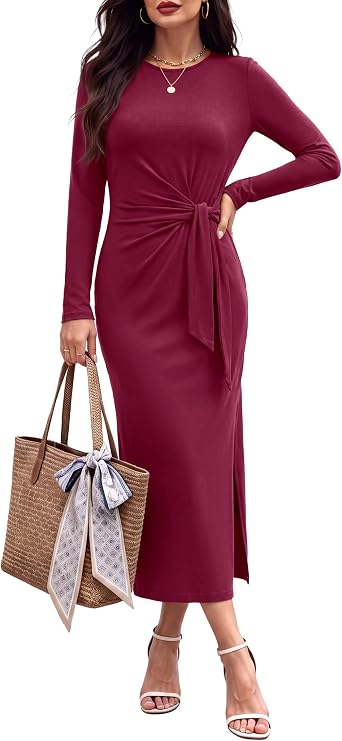
then a blazer and boots swapped in for dinner, is close to a cheat code for packing light without wearing the same outfit twice in a way anyone would notice.
Local tip: black opaque tights (60 denier minimum) are non-negotiable under any dress in October — bare legs will genuinely ruin your day by 11am.
Shoes That Survive the Tube and the Rain
Your shoes are the one item where London genuinely does not forgive bad choices, because you’re walking farther and longer than you think, on pavement that’s flat but relentless, plus stairs — so many stairs — at nearly every Tube station.

Leather ankle boots with a low block heel or flat sole are the workhorse choice: warm, weatherproof enough for light rain if treated with a waterproofing spray, and dressy enough to go from museum to dinner without a shoe change.

Clean white trainers are a solid daytime backup, especially for heavy walking days, but they’re the first thing to get visibly soaked and dirty if the rain turns serious.

What doesn’t work: anything without proper grip on wet pavement, brand-new shoes you haven’t broken in (October is not the month to test that), or open-toe anything, no matter how mild the forecast looks.
Local tip: spray your boots with a waterproofing treatment before you leave home — it takes five minutes and will save an otherwise great pair of boots from being ruined by the first proper October downpour.
What NOT to Wear (Learned the Hard Way)
Full head-to-toe athleisure, complete with the matching tracksuit and the branded backpack, is the single fastest way to look like you just got off a tour bus rather than someone actually living the city for a few days. Save the leggings for the actual gym.
Flip-flops or sandals of any kind are a genuine mistake in October — I’ve seen it happen, and the person in question spent the whole trip visibly regretting their footwear choice by hour two.
Bright, head-to-toe neon or heavily logo-covered clothing also reads as tourist-coded in a city that leans quietly muted, even in its more expressive neighbourhoods like Shoreditch.
And this one surprised me: a heavy winter coat, gloves, scarf, and hat combination in early-to-mid October is overkill for most days and will leave you sweating on the Tube, where it’s often noticeably warmer than the platform outside.
Local tip: if you’re debating between two coats and one feels “almost too warm,” that’s usually the wrong one for early-to-mid October — save it for a December trip instead.
Bags: Crossbody Wins, Here’s Why
A crossbody bag beats a backpack for most of your London days, purely for practicality — it sits close to your body on a crowded Tube carriage, it’s easy to access without taking it off, and it doesn’t accidentally clip someone on a packed escalator (a genuinely common London hazard).

That said, a lightweight backpack earns its place on heavier sightseeing days — a full day covering the British Museum, a long walk along the Southbank, and an evening show benefits from having your hands properly free and a bit more capacity for a folded umbrella and a spare layer.

What I’d skip entirely is anything with obviously exposed zippers or an overly large tote that turns into dead weight by 3pm — you want something you genuinely forget you’re carrying, not something you’re readjusting every ten minutes.
Local tip: a bag with a zipped, interior phone pocket is worth the extra search — London’s Tube and busy tourist spots are exactly where pickpocketing happens, and an accessible outer pocket is an easy target.
Rain Prep — the Part Nobody Packs Properly
I’ll be direct about this one because it’s the single most common mistake I see: people pack for “some rain” and end up dealing with actual, sustained, fine drizzle for hours at a time, and their gear simply isn’t built for it.
A proper compact umbrella (not the flimsy £5 one, an actual sturdy compact) and a genuinely waterproof — not water-resistant — outer layer are both worth the suitcase space. The difference between “resistant” and “proof” matters enormously in London, where rain is rarely a dramatic downpour and much more often a persistent, soaking mist that resistant fabrics simply don’t handle over several hours.

A packable rain shell that folds into your bag means you’re never caught without protection, and it takes up barely any room compared to how much regret it saves you.

Local tip: check the Tube map for stations with covered walkways near your hotel — it sounds minor, but knowing you can dash from a covered entrance to a covered Tube stop without a full soaking is a genuinely useful bit of London logistics.
Fabrics to Choose (and the Ones to Leave at Home)
Wool, wool-blends, and fine merino are your best friends here — they insulate even when slightly damp, which linen and most cottons simply don’t do. Corduroy is a lovely, underrated choice for October specifically; it’s warm, textured, and photographs beautifully against London’s grey backdrop.
Linen, on the other hand, which I’d happily recommend for a summer trip to Spain or Italy, is genuinely the wrong call here — it wrinkles badly, offers no warmth, and does nothing against wind or rain. Pure cotton is fine for base layers but weak as an outer layer once it’s cold and damp.
Local tip: a wool-cotton blend scarf does double duty as an actual accessory and an emergency extra layer if the temperature drops more than the forecast suggested.
Evening Outfits: Theatre, Dinner, and Everything After Dark
Evenings in London in October get cold fast once the sun’s down by 6:30pm, so your daytime layering system needs a slight upgrade rather than a full outfit change.

For a West End show or a nicer dinner, I’d swap daytime boots for a slightly dressier flat or low heel, add the black trousers or midi dress mentioned earlier, and layer a blazer or dressier coat over the top rather than the daytime rain shell.

A statement earring or a good scarf elevates the whole thing without adding bulk to your suitcase.
What doesn’t work: anything too formal for a casual pub dinner, or too casual for a proper theatre evening — London’s evening dress code sits comfortably in the middle, smart-casual, rather than at either extreme.
Local tip: most London theatres don’t actually enforce a dress code beyond “not activewear,” so don’t overthink evening outfits — smart-casual genuinely covers almost everything.
Practical Packing: How Much to Actually Bring
For a five-to-seven-day London trip in October, I pack around 5–6 tops, 2–3 bottoms, one dress, 2 jumpers, one coat plus a packable rain shell, and 2 pairs of shoes — boots and trainers. That’s genuinely enough to mix into 10+ outfit combinations without repeating anything obviously.
Overpacking is the mistake I see most often, usually driven by “just in case” thinking about the unpredictable weather — but the fix for unpredictable weather is smart layering, not more clothes. Underpacking knitwear, on the other hand, is the opposite mistake, and it’s the one that actually leaves people cold and uncomfortable rather than just carrying a slightly heavier bag.
Plan outfits around your coat and shoes first, then build the rest around those two anchor pieces — it’s a far faster way to pack than picking outfits piece by piece and hoping they layer together later.
There’s something genuinely lovely about London in October that no packing list fully captures — the golden light through the plane trees in the parks, the smell of roasted chestnuts starting to show up on street corners, the particular coziness of ducking into a warm pub after being properly cold outside. Get your coat, your shoes, and your layers right, and none of that unpredictable weather will get in the way of actually enjoying it. Pack smart, dress a little more intentionally than you would at home, and go have the trip.


One Response