
Let me be honest: I thought I understood cold. I’d survived London winters, I owned a “serious” coat, and I packed like someone who had it all figured out. Then I stepped off the train in Oslo at 3:30 pm, in near darkness, with wet snow sliding sideways into my collar. My serious coat was a very stylish mistake.
Norway in December is a strange, beautiful mix of fairy lights, blue-hour afternoons, steaming saunas, icy pavements and fjord winds that find every gap in your outfit. It’s not just cold. It’s cold, damp, dark and wildly different depending on whether you’re in Oslo, Bergen or Tromsø.
Most travellers get the same things wrong: cotton leggings, fashion boots with zero grip, and one giant puffer doing all the work. Here’s what I’d actually pack, and what I’d happily leave at home.
Before We Dive In
A few quick facts so the rest of this makes sense.
Weather: Oslo hovers around -5°C to 1°C, with snow that’s usually dry and crunchy. Bergen is milder (roughly 0°C to 6°C) but properly rainy. Tromsø sits around -4°C to 0°C, with wind and the occasional dramatic whiteout. Daylight is short everywhere, and in the far north the sun barely shows up at all.
Walking conditions: Expect packed snow, black ice, slushy crossings and the odd steep hill. Pavements are usually gritted, but not always, and not at 7 am on a Sunday.
Style culture: Norwegians dress for function first, and somehow it still looks effortless. Think wool, dark neutrals, great boots, a good hat. Nobody is judging your puffer, but they will quietly notice if you’re slipping around in trainers.
Travelling elsewhere in Europe? Check out our other seasonal packing guides: [INSERT INTERNAL LINK 1] | [INSERT INTERNAL LINK 2] | [INSERT INTERNAL LINK 3]
A Proper Base Layer (Yes, Really)
If you only take one piece of advice from me, make it this: don’t skip the base layer.
I wore a cotton long-sleeve on my first day because “it’s only a base layer.” Cotton holds sweat, sweat chills, and suddenly you’re the coldest person at the Christmas market. Merino wool is the fix. It keeps you warm, handles damp, and doesn’t smell after three days of wear, which matters when you’re packing light.

I like a thin merino long-sleeve top and merino leggings or long johns. Icebreaker and Smartwool are the classics, but any decent merino blend works. Wear them under jeans, under dresses, under everything.

Local tip: Buy a second set. Wash one, wear one. Merino dries overnight on a radiator.
The Mid-Layer That Does the Heavy Lifting
This is the cosy bit, and it’s where most outfits are won or lost.
A chunky knit, a fleece, or a lightweight wool jumper gives you the warmth that your base layer can’t. Norwegians love a patterned wool sweater, and honestly, buying one there is half the fun. I picked up mine in a little shop in Bergen and wore it every day afterwards.

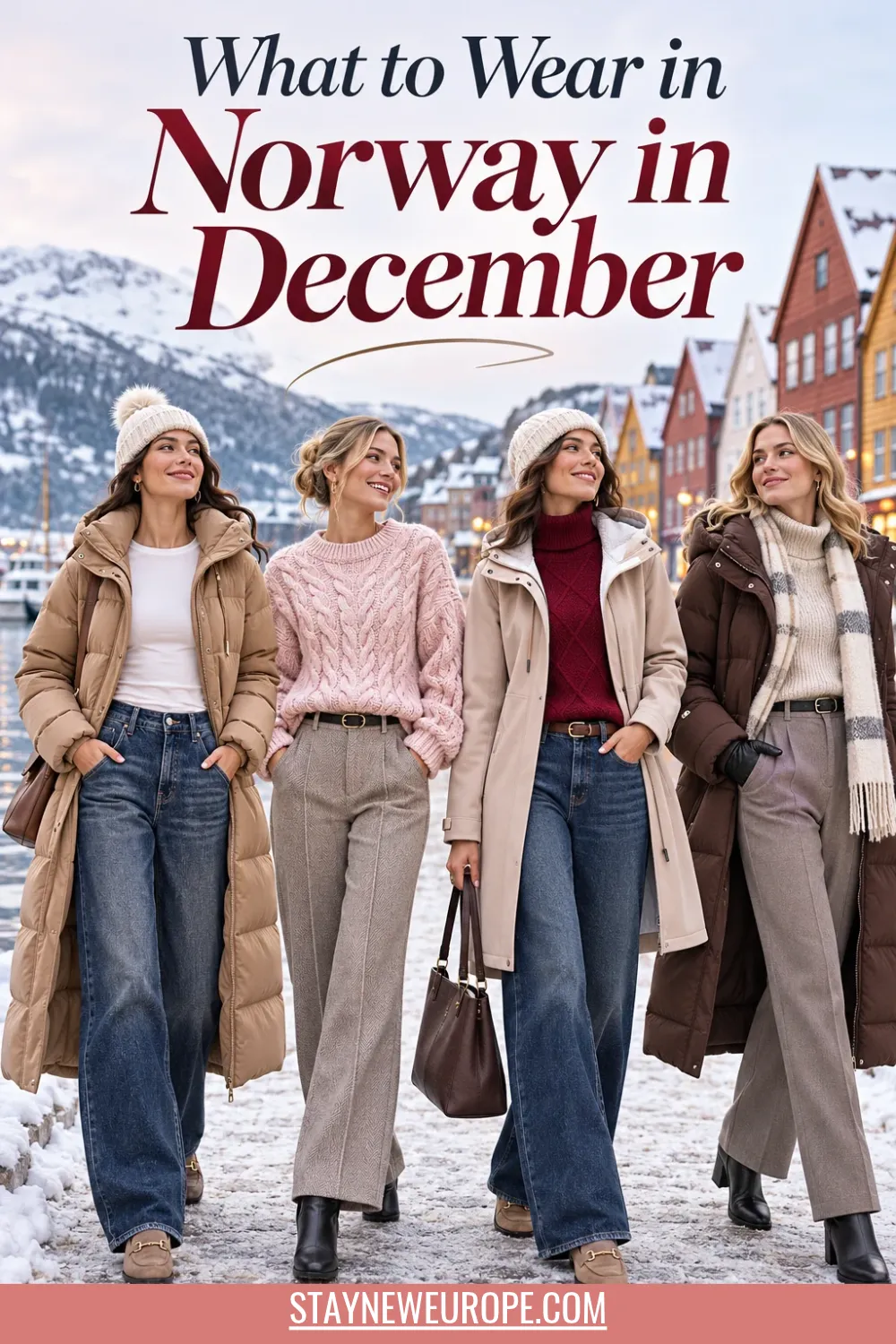
Outfit idea: merino base, thick wool jumper, dark jeans, boots. Looks polished at dinner and holds up on a morning walk along the Oslofjord.

Local tip: Choose a mid-layer with a half-zip or a roll neck. It lets you regulate heat when you dash from a freezing street into a 25°C café.
The Winter Coat: Where You Shouldn’t Be Cheap
Your coat decides whether you enjoy the trip. Full stop.
You want a long, insulated parka or down coat that covers your hips, ideally with a hood. Short jackets let the wind sneak in at the waist, and I learned that the hard way on a ferry in Bergen. Helly Hansen, Bergans and Norrøna are Norwegian brands worth looking at, and they’ll last you years.

For rain-heavy Bergen, add a waterproof shell with a hood. Down loses its magic when it’s soaked, so a shell over the top is a smart combination.
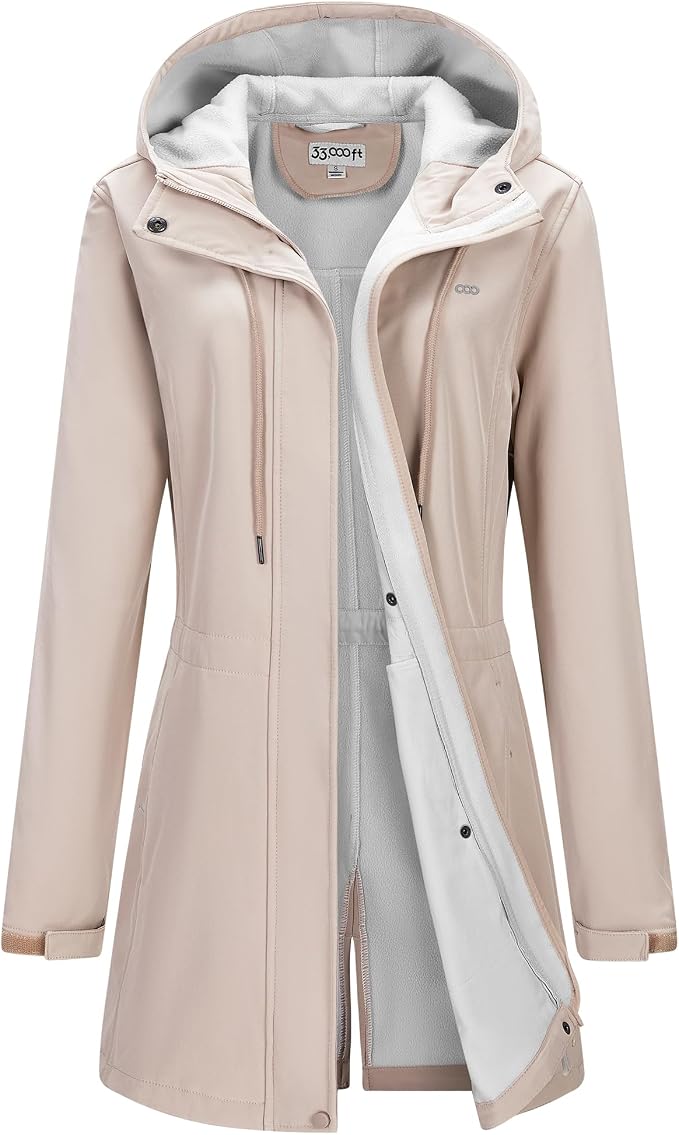
Local tip: If you’re visiting Tromsø or doing anything outdoors for hours, rent a thermal suit from a tour operator rather than buying one. Most Northern Lights tours include them.
Boots With Grip (Not Just Good Looks)
Let me be blunt: fashion boots will betray you in Norway.
I watched a woman in sleek leather ankle boots do an involuntary ice-skate across a Tromsø pavement. She was fine. Her pride was not. You want insulated, waterproof boots with a deep rubber lugged sole. Sorel, Kamik and Merrell make solid options, and a lined boot rated to -20°C is a comfortable target.

Size up slightly so you can wear thick socks without squashing your toes. Compressed feet get cold faster, and that surprised me.
Local tip: Slip-on ice grips (the kind that stretch over your sole) cost very little and weigh nothing. Pack them, especially for Tromsø, Trondheim and any hilly stroll.
Socks: The Unsung Heroes
Cold feet can ruin a whole day, and a good pair of socks fixes it.
Look for mid-calf merino hiking socks. Two thin pairs are not better than one proper pair, and cotton socks are a hard no. I bring four pairs for a week and wash as I go.

If your feet run cold, a thin liner sock under a thicker wool sock is a neat trick. Pack one spare pair in your day bag in case of snow-melt leaks.
Local tip: Many Norwegian homes and hotels ask you to take shoes off at the door. Cute socks are a social asset.
Trousers and Jeans: What Actually Works
Jeans are fine for a city stroll, but they’re not magic.
Denim gets heavy and freezing when wet, so I wear it only on dry Oslo days over thermal leggings. For anything more outdoorsy, go for fleece-lined trousers or softshell pants. They’re stretchy, wind-resistant and still look decent with a jumper.

If you’re dressing up, wool trousers over thermals look sharp and keep you warm. Skip thin leggings on their own. I tried. My knees filed a complaint.

Local tip: Waterproof overtrousers are brilliant for Bergen’s rain and for snow activities. They pack small, and you can pull them on over everything.
Hats, Gloves and a Scarf (Don’t Skimp)
Your head, hands and neck are where you lose heat first, and Norway will test all three.
A wool or fleece-lined beanie that covers your ears is essential. For gloves, pick insulated, waterproof ones with decent grip, because phone-friendly fingertips are a nice bonus. A big wool scarf or neck gaiter keeps the wind off your face on the ferries.

I also carry thin liner gloves in my pocket so I can take photos without my hands turning into ice blocks.

Local tip: Mittens are warmer than gloves. If you get cold hands easily, go with a mitten and thin liner combo.
Evening Outfits That Don’t Scream “Tourist”
Norwegians go out in winter looking relaxed but pulled together.
My go-to: dark jeans or wool trousers, a fine knit or silk-blend top, a chunky scarf and the same boots from the day, wiped clean. Add a little gold jewellery and you’ve done more than most people in the room. A dress works too, with thick tights and knee-high boots.

For fine dining, you’ll rarely need more than smart-casual. Nobody expects heels in the snow, and thankfully so.
Local tip: Restaurant cloakrooms are common. Wear your layers so you can strip down inside without looking dishevelled.
What to Wear to Christmas Markets and Cathedrals
Norway doesn’t have strict church dress codes, but a bit of respect goes a long way.
For Christmas markets, you’re outdoors for hours, so wear your warmest boots and layer up. For a visit to Nidaros Cathedral in Trondheim or Oslo Cathedral, tidy and modest is the easy rule. Take your hat off inside, and keep your shoulders covered.
I stood at a market in Bergen for an hour and a half, sipping gløgg, and I’ve never been so grateful for thermal socks.
Local tip: Bring a small thermos or hand warmers for long market evenings. A few kroner on hot gløgg also works wonders.
Sauna and Spa Etiquette
Norway loves a sauna, and December is the perfect time.
Pack a swimsuit, a quick-dry towel and flip-flops. Many public saunas, like the floating ones in Oslo, require swimwear. Some traditional ones are nude, but not for tourists unless it’s clearly signposted. Check before you go in, because it’s always better to ask.

I’d also bring a robe or oversized sweatshirt for the walk back to the changing room. Wet hair at -5°C is a fast way to learn why people wear hats.

Local tip: Dry your hair properly before you head back out. Wet hair in freezing air can feel painfully cold.
Bags: What to Carry in the Snow
A bag that works in summer might not work in winter.
For daily exploring, a small waterproof backpack is my pick. It leaves your hands free, and you can stash gloves, a thermos and spare socks in it. A crossbody works for evenings, but it can be annoying under a thick coat.

For the trip itself, I’d go for a soft duffle or a sturdy carry-on with good wheels. Snowy pavements are brutal on tiny wheels, so a duffle that you can carry or a backpack-style suitcase is less stressful.
Local tip: Keep your phone in an inner pocket. Batteries die faster in the cold, and mine went from 40% to dead in minutes in Tromsø.
What NOT to Wear (The Mistakes I See Everywhere)
I’ve made most of these myself, so no judgement.
Leave cotton hoodies, canvas trainers, thin leggings, fashion ankle boots and stiff denim at home. Skip the bulky jewellery too, because metal gets painfully cold. And please don’t rely on one giant coat to do everything.
The other big mistake is dressing for the outdoors only. Norway’s indoors are warm, sometimes properly hot, so you need layers you can peel off.
Local tip: Locals call this the onion method: several thin layers rather than one thick one. It works.
Non-Clothing Essentials for Norway in December
A few small things make a big difference.
Pack lip balm, a rich hand cream and moisturiser, because the cold air will dry out your skin fast. Chemical hand warmers are cheap and brilliant. A headlamp helps with dark walks, and a power bank saves you when your battery drops.
Sunglasses sound odd, but snow glare is real on bright days. I wore mine in Oslo more than I expected.
Local tip: Bring a reusable water bottle. Norwegian tap water is excellent, and you’ll save a lot of money.
Fabrics to Choose (and Avoid)
Fabric choice is the quiet secret of staying warm.
Choose merino wool, fleece, down, and waterproof, breathable shells. Avoid cotton, thin polyester and anything that traps sweat. If you wear a synthetic base layer, make sure it’s a proper technical one.
I found that a wool and silk blend feels luxurious and handles temperature swings well. It also looks nicer at dinner than a plain thermal.
A Capsule Wardrobe for Norway in December
Here’s the formula I’d use for a week.
Two merino base layers, two chunky jumpers, one dressier knit, two pairs of trousers (one dark jeans, one wool or softshell), thermal leggings, four pairs of wool socks, one parka, one waterproof shell, insulated boots, hat, gloves and scarf. Add a swimsuit and one simple dress or smart top.
Everything should mix and match in dark neutrals with one or two accent colours. It looks cohesive in photos, and you won’t stress about outfit planning.
How to Pack: Outfits, Weight and Mistakes
How many outfits? Five to six outfit combos is plenty for a week. You’ll wear the same coat and boots daily, so nobody notices repeats.
Pack light or overpack? Light, but not stingy on warm layers. I’d rather rewear a jumper than carry a fifth one, but I won’t skimp on socks or gloves.
Planning tips: Lay everything out before you pack and check that each top works with at least two bottoms. Wear your bulkiest items, boots and coat, on the plane.
Mistakes to avoid: Leaving ice grips at home, packing cotton, and forgetting spare gloves. Also, don’t forget to leave space for souvenirs, because that wool sweater will tempt you.
FAQs About Packing for Norway in December
Is Norway really that cold in December? It depends on where you go. Oslo and Tromsø are properly cold, while Bergen is milder but wet. Layering covers all of them.
Do I need a special coat? You need a warm, long, hooded one. It doesn’t need to be a polar expedition parka, but a flimsy fashion jacket won’t cope.
Can I wear jeans? Yes, in the city, over thermal layers. For snow activities, choose softshell or waterproof trousers.
Should I bring a swimsuit? Yes. Saunas, spas and hot tubs are a highlight, especially after a freezing day.
What shoes are best? Insulated, waterproof boots with a deep tread. Add ice grips for slippery days.
One Last Thing Before You Go
Norway in December has a particular kind of magic. Blue light at 2 pm, snow squeaking under your boots, a candle glowing in every café window, and that smug feeling when you slip into a warm sauna after a day in the cold.
Dress right, and the cold becomes part of the charm instead of the enemy. Pack your wool, lace up your good boots, and go stand under a sky full of stars with a cup of something hot in your gloved hand. You’ll thank yourself for every layer.

