
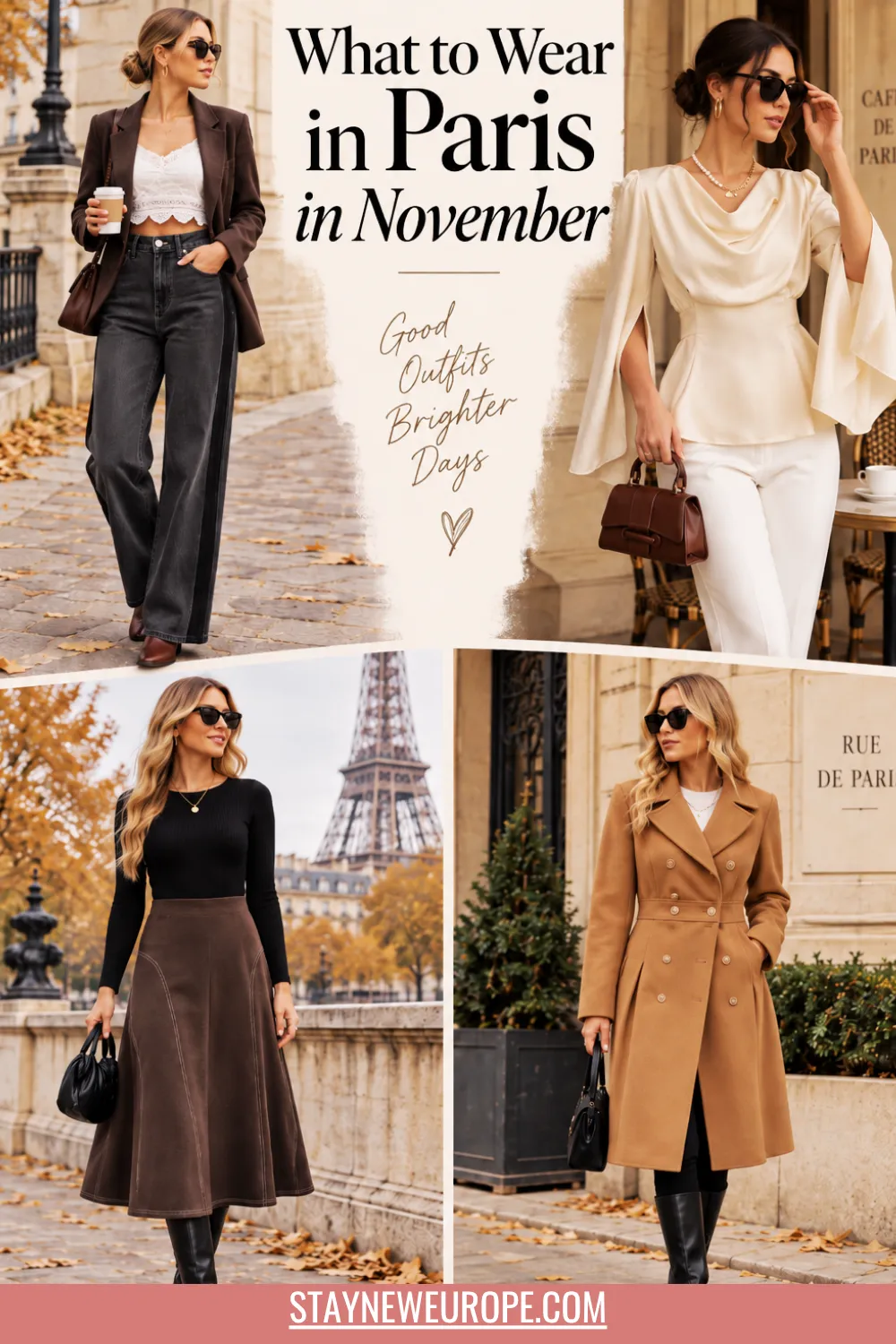
Let me be honest with you: the first time I did Paris in November, I packed like I was going somewhere mild and “European-chic,” and by day two I was buying a scarf off a street vendor near the Seine just to survive the wind coming off the water. Paris in November is not the soft, golden-light version of the city you see on Pinterest in September. It’s grey, it’s a little damp, the light disappears by 5pm, and the wind has opinions.
But — and this genuinely surprised me — it’s also one of my favourite times to be there. The crowds thin out, the cafés get cosy, the Christmas windows start going up in December’s warm-up act, and there’s something about wrapping up in a good coat and walking along the Seine with your breath fogging that just feels cinematic. You just have to pack for it properly, because Paris will absolutely clock you the second you’re underdressed.
So this isn’t a generic “pack layers” article. This is what I actually wore, what I wish I’d packed, and where I got it wrong.
Before We Dive In
Weather: Paris in November sits somewhere between “brisk” and “properly cold,” usually hovering between 5–12°C (41–54°F), with plenty of grey skies and a fair amount of drizzle. It’s rarely dramatic weather — no snow, no downpours that last all day — but it’s the kind of persistent damp cold that gets into your bones if you’re not layered right.
Walking conditions: You will walk more than you think, on uneven cobblestones in older neighbourhoods like Le Marais and Montmartre, plus a good amount of stair-climbing in the Métro (some stations have zero escalators — I learned this carrying a suitcase up four flights near République).
Style culture: Parisians dress with intention, even to buy bread. Nobody’s in head-to-toe activewear, and loud logos or head-to-toe touristy fleece will make you stand out immediately. This isn’t about being fashion-perfect — it’s about looking like you meant to get dressed that morning.
Lightweight Layers (Why They Matter More Than You Think)
Here’s the mistake I see over and over: people pack one heavy coat and call it a day. That works until you step into an overheated café, a packed Métro carriage, or a museum with the radiators cranked to tropical.
The trick with November in Paris is building your outfit in layers you can actually remove — a thin base layer, a mid-weight sweater, and then your coat on top. That way you’re not sweating through brunch at 11am and then freezing the second you step back outside at noon.

I like a merino wool long-sleeve top as my base most days — it’s thin enough to layer, doesn’t trap moisture, and can genuinely be worn two days in a row without anyone noticing (or smelling anything). Pair it with a mid-weight cardigan or fine-knit jumper, and you’ve got an outfit that adjusts as your day does.

Local tip: Cafés and restaurants in Paris run warm in November because they’re trying to keep customers cosy — dress for the street, not the seat, and just plan to shed a layer once you sit down.
The Coat Is Not Optional (Trench, Wool, or Puffer?)
This is the piece that will make or break your Paris November wardrobe, and I mean that literally — you’ll wear it in almost every photo, so choose it like it matters, because it does.
A classic trench coat looks incredible in photos but, unlined, it will not keep you warm past about 10°C on a windy day — I found this out the hard way standing at Trocadéro at golden hour, gorgeous photo, absolutely miserable human.

A structured wool coat (camel, black, or navy) is the better all-rounder: warm enough for most November days, smart enough for dinner, and it photographs just as well against Haussmannian architecture.

If you run cold or you’re there later in November heading into properly chilly territory, a longline puffer in a neutral tone has become completely normalized in Paris streetwear — you’ll see plenty of stylish Parisians in them, so don’t feel like it’s “too casual.”

Local tip: Buy or bring a coat with actual pockets — you’ll want somewhere to shove your phone, gloves, and Métro ticket without digging through a bag every five minutes.
Jeans, Trousers, and the Case Against Shorts
Leave the shorts at home — genuinely, I mean this — Paris in November does not get warm enough at any point in the day to justify bare legs, and you’ll be the only one.
Dark, well-fitted jeans are your best friend here, especially a slightly cropped or straight-leg style that won’t drag through wet pavement.

Wide-leg trousers in wool or a heavier cotton blend also work beautifully and look more “put together” for dinner without needing to change your whole outfit.

What I’d avoid: very light-wash denim (it reads casual-tourist) and anything too tight to layer thermals under on the colder days, because you will want that option by mid-month.
Local tip: Pack one pair of trousers in a slightly dressier fabric — like a wool-blend straight leg — that can go from daytime sightseeing to an evening bistro without an outfit change.
Can You Still Wear a Dress? (Yes — Here’s How)
I get asked this constantly, and yes — you absolutely can wear a dress in Paris in November, you just have to think of it as the base layer of an outfit, not the whole outfit.
A midi dress in a heavier knit or corduroy, worn with opaque tights, ankle boots, and a coat on top, works beautifully for daytime and transitions easily into evening with a swap of accessories. What doesn’t work is a thin cotton or linen dress with bare legs — that’s a summer-Paris look, not a November one.

I wore a black ribbed-knit midi dress with tights and boots to dinner near Saint-Germain and felt properly dressed without freezing on the walk there, which is really the whole goal.

Local tip: Fleece-lined tights are a genuine game-changer under a dress in November — they look identical to regular opaque tights but add a surprising amount of warmth.
Comfortable but Stylish Walking Shoes
Your feet will do more work than any other part of you, so this is not the category to cut corners on for the sake of aesthetics.
Cobblestones in Le Marais and Montmartre are uneven and slippery when wet (which, in November, is often), so anything with a completely flat, smooth sole is a liability.
A leather ankle boot with a small heel or a chunky, low-profile sole gives you grip and warmth while still looking like you belong there. Clean white trainers are fine for daytime, but by evening they read as very obviously tourist.

I switched to ankle boots halfway through my trip after nearly eating pavement outside Musée d’Orsay in the rain, and never looked back.
Local tip: Break in any new boots before you travel — a blister on day one of a multi-day walking trip will ruin your whole itinerary.
What NOT to Wear (The Mistakes I See Constantly)
- Big touristy branded backpacks,
- athleisure sets worn as daywear,
- flip-flops (yes, I’ve seen it in November),
- and bright neon rain jackets are the fastest way to signal “just landed”
— and while there’s nothing wrong with comfort, Paris rewards a slightly more considered look.
The other mistake is under-packing warmth in favour of “cute” — I’ve watched people shiver through an entire afternoon at the Louvre because they wanted the photo in a thin coat. You can have both; it just takes slightly more planning.
Lastly: leggings as actual trousers with no coverage on top. It’s not a moral issue, it’s a warmth issue — leggings alone are not going to cut it against a Paris November wind tunnel by the Seine.
Local tip: If you want to blend in more, swap the giant backpack for a structured tote or crossbody — it instantly reads more “local” and is safer for your belongings, too.
Rain Prep (The Thing Everyone Forgets)
November in Paris isn’t dramatic rain, but it is frequent, fine, misty rain that soaks through anything not properly treated — and nobody wants to spend their trip damp.
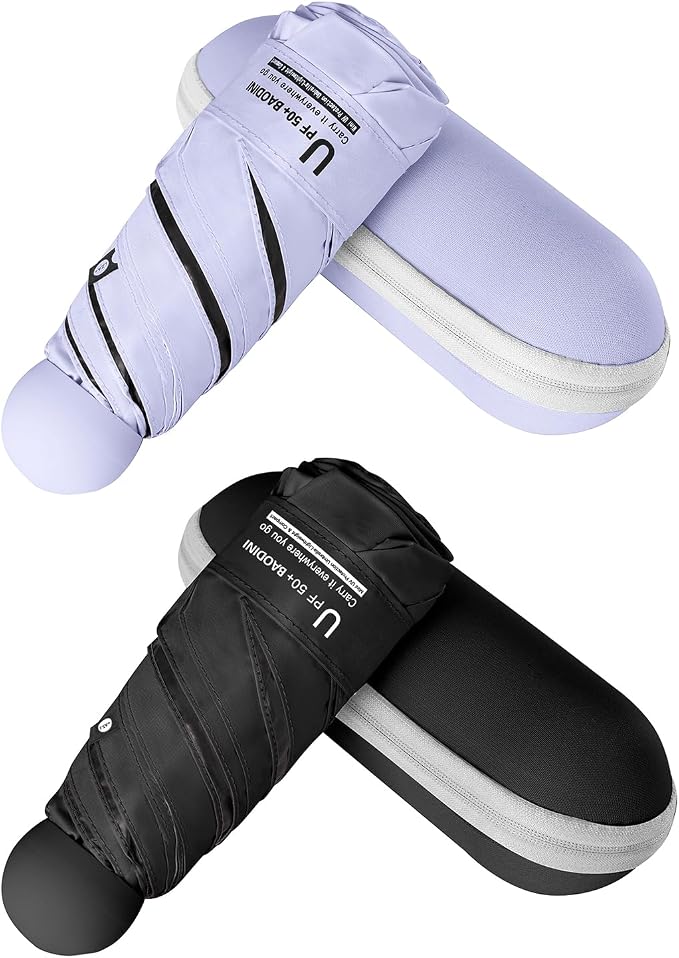
A water-resistant coat (not just water-resistant looking) will save you here, along with a compact umbrella you actually keep in your bag rather than your hotel room.

I’d also treat your boots with a waterproofing spray before you leave — it takes five minutes and saves your feet for the whole trip.

Local tip: Skip the giant golf umbrella — Parisian streets and Métro entrances are narrow, and a compact umbrella is far easier to manage without clonking someone in the face.
Scarves and Accessories That Do the Heavy Lifting
A great scarf is doing double duty in Paris in November — it’s warmth and it’s styling, and honestly it’s the fastest way to make a simple sweater-and-jeans outfit look intentional.

I lean on one large wool or cashmere-blend scarf in a neutral tone that works with everything I packed.
plus a beanie or beret for the colder days (yes, the beret cliché is a cliché because it genuinely works there).

A pair of leather gloves is worth the suitcase space too — by late November your hands will thank you.

Local tip: Learn one simple Parisian scarf knot before you go — the loop-and-tuck style — it looks effortlessly chic and takes ten seconds once you’ve practiced it twice.
Evening Outfits for Paris Dinners
Dinner in Paris — even a casual bistro — tends to feel a notch more “dressed” than casual dinners elsewhere, and it’s worth matching that energy.
I’d build an evening look around one elevated piece: a silk or satin top under your blazer or coat, dark trousers or a midi skirt, and a heeled boot instead of a flat one.

It doesn’t need to be formal, just considered — swap your daytime sneakers for boots and add a scarf or statement earrings, and you’ve upgraded the whole outfit in under two minutes.

Local tip: Keep one small, structured evening bag in your suitcase — even a foldable one — so you’re not carrying your full daytime tote to a nice dinner.
What to Wear for Churches (Notre-Dame, Sacré-Cœur, and Beyond)
Paris’s churches are working places of worship, not just photo backdrops, and most expect shoulders and knees covered — this trips people up more than you’d think, especially in a city known for style.
In November this is genuinely easy to solve because you’re already layered up against the cold — a midi dress or trousers with a sweater covers you without any extra thought. If you’re wearing a shorter dress for some reason, keep a light scarf in your bag to drape over your shoulders at the door.
Local tip: Sacré-Cœur sits at the top of a very steep hill in Montmartre — wear your grippiest shoes that day, not your dressiest ones.
Bags: Crossbody vs. Backpack
For a city with Paris’s reputation for pickpocketing around major sights and the Métro, your bag choice is a genuinely practical decision, not just an aesthetic one.
A crossbody bag worn in front of your body, with a zip closure, is the safest and most practical option for daily sightseeing — it keeps your hands free for holding a coffee or a Métro ticket while staying visible to you at all times.

A structured tote works for daytime if you’re not moving through crowds, but I’d avoid an open-top bag entirely in busy areas like near the Eiffel Tower or on the Métro.

Local tip: Keep your phone and cards in an inner zip pocket, not the main compartment — it adds one extra second of friction for anyone who shouldn’t be in there.
Fabrics to Choose (and Avoid)
Wool, cashmere blends, corduroy, and heavier cotton are your friends this time of year — they hold warmth, layer well, and don’t wrinkle badly in a suitcase.
Avoid pure linen and very thin cotton altogether for this trip — they simply don’t have the insulation for November, no matter how many layers you stack.
I’d also be cautious with anything 100% synthetic against your skin as a base layer; it tends to trap dampness rather than wick it, which gets uncomfortable fast in that persistent Paris drizzle.
Local tip: A wool-cashmere blend sweater is genuinely worth the splurge if you’re buying one thing for this trip — it’s noticeably warmer than acrylic for the same bulk.
Carry-On or Duffle? Choosing the Right Bag for This Trip
Given the stairs, cobblestones, and Métro hopping, I’d steer away from a huge checked case in favour of a solid carry-on with sturdy wheels and a lightweight duffle for day trips outside the city.

A hard-shell carry-on handles the cobblestones better than a soft-sided bag that snags, and if you’re planning any day trips to Versailles or Giverny, a foldable duffle for an overnight bag saves you dragging your whole suitcase around a train station.

Local tip: If your hotel is in an older building (common in Le Marais or Saint-Germain), check whether there’s a lift before you commit to the biggest suitcase you own — some historic buildings genuinely don’t have one.
Building a Capsule Wardrobe for Paris in November
You really don’t need to overpack for this — a tight capsule of interchangeable pieces will get you through a week easily and leave you room to bring something home.
I’d build around: two pairs of trousers or jeans, one midi dress, three sweaters or knits, two base layers, one coat, one pair of boots and one pair of trainers, a scarf, and a couple of accessories to change up the look day to day. Everything should work in at least two or three different combinations — if a piece only pairs with one other item, it’s not earning its suitcase space.
Local tip: Stick to two or three core colours (black, camel, and navy work beautifully together) so literally everything you pack can be mixed and matched without a second thought.
The Practical Packing Section
For a week in Paris in November, I’d pack roughly 5–6 tops, 3 sweaters, 2–3 bottoms, 1 dress, 1 coat, and 2 pairs of shoes — that’s genuinely enough to build a different-feeling outfit every day without hauling a giant suitcase up four flights of Métro stairs.
The biggest mistake I made on my first trip was overpacking “just in case” outfits I never wore, while under-packing warmth layers I actually needed daily. Plan your outfits by combination rather than by day — lay out your pieces and count how many outfits they realistically create before you zip the case shut. If a piece doesn’t mix into at least two outfits, it probably doesn’t need to come.
Go Pack, Go Wander
Paris in November isn’t the postcard version of the city, and honestly, that’s what makes it so good — quieter streets, cosy cafés, a coat you actually get to enjoy wearing, and golden lamplight against wet cobblestones by 6pm. Pack smart, layer properly, and you’ll spend far less time thinking about being cold and far more time actually falling for the city.
Go book that café table by the window. You’re ready for this one.

