
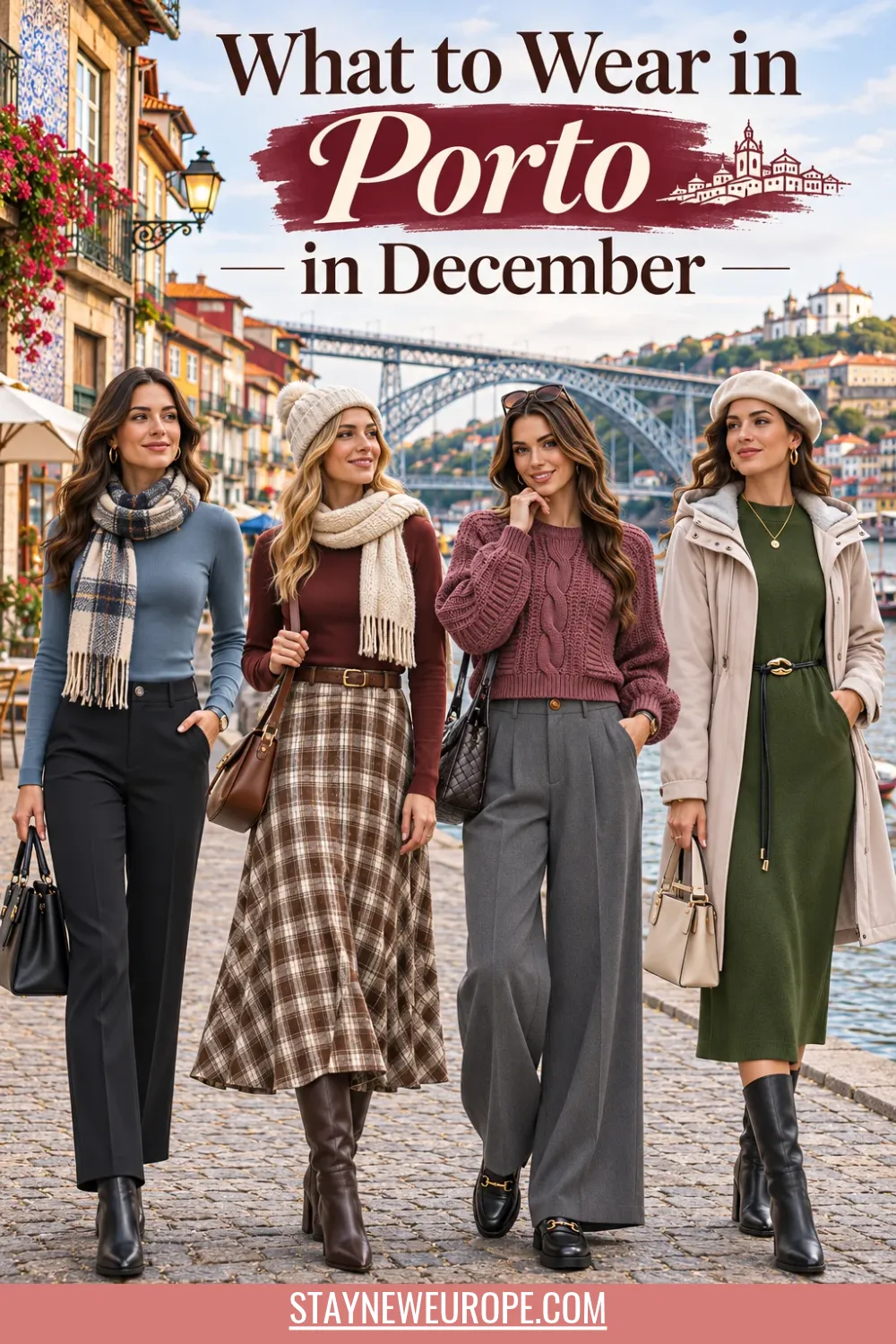
Porto in December is moody, gorgeous and a little bit soggy. The granite streets shine after the rain, the Douro goes the colour of steel, and every café window is fogged up with espresso steam and pastel de nata crumbs.
It’s also steep. Properly steep. You will climb, you will descend, and the Atlantic wind will find every gap in your outfit on the way. The classic packing mistakes here are ballet flats on wet cobblestones, one big coat instead of layers, and suede anything.
I got two of those three wrong my first time. Let me save you the damp socks.
Before We Dive In
A few quick facts so the rest makes sense.
Weather: Expect highs around 13–15°C (mid-to-upper 50s°F) and nights dropping to 6–8°C. December is one of Porto’s wettest months, so rain is likely on several days, often in short, heavy bursts rather than all-day drizzle. It’s humid, which makes the cold feel colder than the number suggests.
Walking conditions: Porto is built on hills, with steep lanes, stairs, tram tracks and calçada (stone paving) that turns slippery when wet. You’ll easily clock 15,000+ steps a day. Your shoes matter more than anything else you pack.
Style culture: Portuguese people dress neatly but quietly. Think dark colours, good coats, clean shoes, scarves. Nobody’s in neon rain ponchos and head-to-toe sportswear, so if you blend in you’ll feel more at ease.
Heading elsewhere in Europe? Check our other monthly guides: [INTERLINK: Lisbon in December packing guide – insert URL from stayneweurope.com] · [INTERLINK: Another city/month guide – insert URL]
1. Start With the Right Bag: A Carry-On You Can Actually Carry
Here’s the hot take: your luggage is part of your outfit, because you’ll be hauling it up cobbled hills.
A soft-sided carry-on or a medium duffle beats a hard-shell spinner here. Wheels on Porto’s uneven stone are a nightmare, and I watched a man’s suitcase wheel snap clean off near Ribeira. Look for a 35–40L carry-on backpack or a duffle with proper shoulder straps so you can carry it up the stairs to your Airbnb without crying.

Pack in packing cubes. They compress winter knits and keep your wet-weather gear separate from your dry clothes, which you’ll be glad of on day three.

Local tip: Many central apartments are up several flights of stairs with no lift. Ask about this before you book, and pack accordingly.
2. Lightweight Layers: The Real Secret to Porto
Porto in December is not a one-big-coat city. It’s a three-thin-things city.
Mornings are chilly, midday can feel almost mild if the sun shows up, and buses, trams and restaurants are properly heated. A heavy sweater has nowhere to go once you’re inside, whereas a thin base layer, a knit and a jacket can be peeled off and stuffed in a bag. This is what actually worked for me: a fitted long-sleeve tee, a merino or wool-blend sweater, and a water-resistant outer layer.

I’d also bring a thin thermal base layer, one for the coldest evenings or the river wind. Merino is worth the splurge here because it stays warm when damp and doesn’t smell after two wears.

Local tip: Cafés and restaurants in Porto often run warm. Dress so you can take a layer off without having to undress.
3. The Porto Dress Code (What Actually Works)
Porto isn’t Paris or Milan, and there’s no pressure to look runway-ready. But locals do look put-together in a relaxed way.
What works: dark jeans, neat trousers, knits, leather boots, a structured coat, a scarf. Colour palettes lean navy, charcoal, camel, olive and black, with the occasional mustard or burgundy for fun. Everything looks even better against the blue-and-white tiled facades.
My rule: if it would look right in a nice café in a mid-sized European city, it works here.
4. What NOT to Wear (Tourist Mistakes I’ve Seen, and Made)
Let me be blunt about the usual offenders.
Smooth-soled shoes. Wet granite is basically a skating rink. Skip leather soles, fashion trainers with flat rubber and anything with a heel.
Suede. Beautiful, but one proper downpour and it’s ruined.
Shorts or a summer dress with bare legs. I did see one tourist attempting this in December. She did not look happy at the top of Clérigos Tower.
Cotton hoodies as your only warmth. They soak up rain and never dry in humid air.
Big, flappy umbrellas are also a bad idea. The wind off the river will turn them inside out within minutes.
5. Jeans, Trousers or Something Else?
Dark jeans are fine, but they take forever to dry if they get soaked. I learned this the hard way when my hem stayed damp for a full day.
My top pick is a pair of mid-weight trousers in a stretchy wool-blend or technical fabric. They’re comfortable on stairs, they dry quickly, and they dress up for dinner. Straight-leg or slightly tapered cuts work best, because wide hems drag through puddles.

If you do bring jeans, one pair is enough. Choose dark wash, a bit of stretch, and no raw hems.
6. Shoes: Comfortable, Grippy and Actually Stylish
If you remember one section of this article, make it this one.
You want waterproof or water-resistant leather ankle boots with a rubber lug sole, ideally broken in before you arrive. Chelsea boots with a chunky sole look sharp in Porto and handle the slopes well. They go with everything, from trousers to a skirt with tights.

A second pair is worth packing: clean, dark leather sneakers or minimalist trainers with proper grip. These are for dry-weather days and for dinner.

Wear thick socks, preferably merino. Bring a spare pair in your day bag, because wet feet will ruin your mood faster than anything else.
Local tip: Break your boots in at home. Porto’s hills show no mercy to new shoes.
7. What to Wear in Porto in December for Women
This is the formula I’d follow, and it works with any mix of pieces.
Tops: Fitted long-sleeve tees, fine-knit sweaters, a silky blouse for dinner, and one chunky knit for really cold days. Roll-necks are especially good under a blazer.

Skirts and dresses: A midi skirt or knit dress works beautifully with opaque tights and boots. Wool tights or fleece-lined ones are a serious upgrade on cold evenings.

Outfit combo: Midi skirt, black tights, ankle boots, roll-neck and a trench or wool coat. Simple, warm and effortlessly local.

Day-exploring combo: Tapered trousers, thermal base, sweater, waterproof jacket, grippy boots. Not glam, but you’ll be happy at hour six of walking.
8. Jackets for Unpredictable Weather
Choose a coat that can handle both rain and chilly wind, and don’t assume you’ll need a big winter parka.
A mid-length water-resistant jacket with a hood is the workhorse here. Trench coats work well if they’re treated or lined. A light packable down jacket tucked underneath adds warmth on the coldest days, and it squeezes into a bag when it isn’t needed.
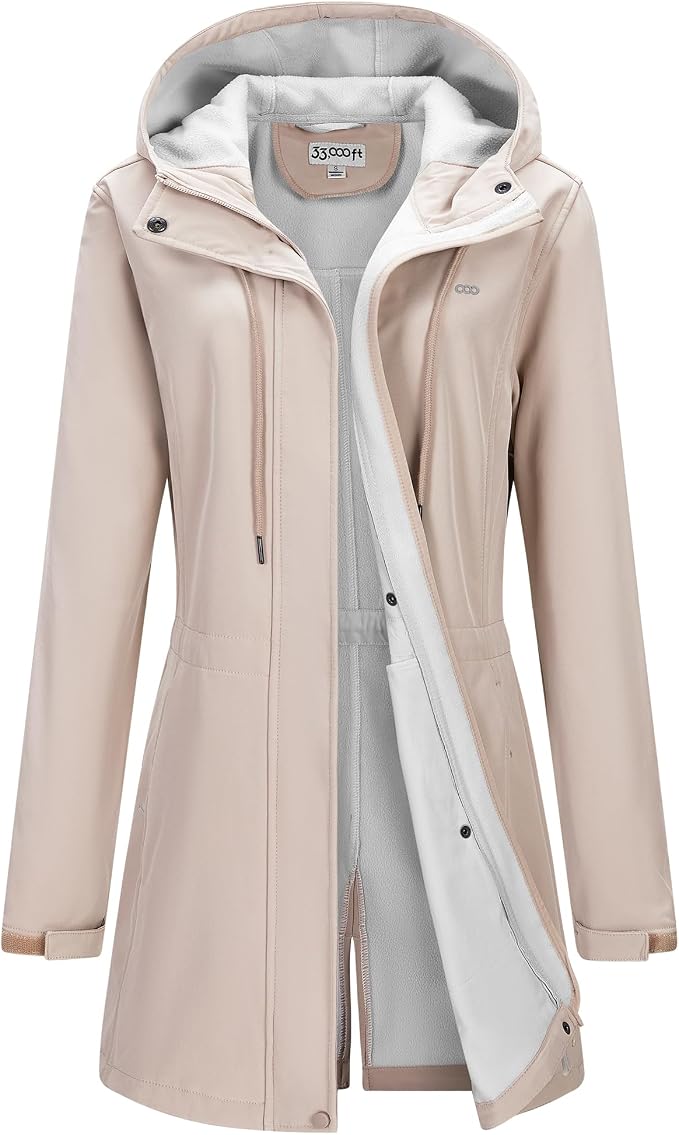
Wool coats look lovely but aren’t ideal in heavy rain. Save one for dinners if you’re bringing it, and wear the waterproof piece by day.
Local tip: A hood beats an umbrella in Porto, because wind and narrow streets make umbrellas a hassle.
9. Rain Preparation (Unexpected, but Important)
The rain in Porto isn’t a polite sprinkle. Sometimes it arrives sideways.
Bring a compact, sturdy umbrella (the kind with a vented canopy handles wind best) as backup to your hooded jacket. A small dry bag or a zip-top pouch protects your phone and passport. I’d also pack a few plastic bags for wet shoes, since you’ll want to keep damp footwear away from your suitcase.

If your boots aren’t waterproof, treat them with a protective spray before you travel. It takes five minutes and saves your whole trip.
10. Evening Outfits That Don’t Scream Tourist
Dinner in Porto is a relaxed affair, but smart casual is the sweet spot. Think of francesinha in a loud, friendly tasca versus a polished tasting menu on the river. You can cover both with the same outfit.
For women: dark trousers or a midi skirt, a silky top or fine knit, boots and a coat. Add a statement earring or a scarf. For men: dark jeans or chinos, a good knit or shirt, a clean leather shoe or boot, and a smart jacket.

Skip the sportswear and the big logos, and you’ll look like you belong.
11. What to Wear for Churches
Porto’s churches are astonishing, from the gilded São Francisco to the tiled São Bento station-lobby-turned-art-gallery. Most are relaxed, but some expect covered shoulders and knees.
Carry a light scarf or shawl to throw over bare shoulders, and avoid very short skirts or ripped jeans. In December you’ll be covered up anyway, so it’s rarely an issue. Remove hats when you go inside.
Local tip: Churches can be properly chilly inside. Keep your jacket handy.
12. Bags: Crossbody vs Backpack
For daily sightseeing, I’m firmly team crossbody. A leather or water-resistant crossbody sits in front of you on crowded trams and in busy areas like Ribeira, and it’s easy to reach for your phone or tickets.

A small backpack makes sense on longer walking days, but pick one with a rain cover or water-resistant fabric. Don’t carry anything in a canvas tote that you can’t afford to get wet.

13. Accessories That Elevate Simple Outfits
This is where Portuguese style lives, in the finishing touches.
A big wool or cashmere scarf is the single most useful accessory you can pack. It adds warmth, polish and colour, and it can double as a shawl in churches. Add a beanie or a soft hat for windy riverside walks, and thin gloves, because your hands will get cold on the Dom Luís I bridge.

Simple jewellery, sunglasses (yes, December sun can be bright and low) and a good belt complete the look.
14. Fabrics: Choose Wisely
Wool, merino and cashmere blends are your friends. They regulate temperature and cope well with damp air.
Technical, quick-dry fabrics help for trousers and base layers. Leather boots and jackets work well if you treat them first.
Avoid heavy cotton knits and chunky denim, which hold moisture, and anything that wrinkles instantly. If an item can’t survive a humid day in a backpack, leave it at home.
15. Non-Clothing Essentials to Pack
A few extras make a real difference. A universal power adapter (Portugal uses type F, two round pins), a portable charger, a small foldable day bag, lip balm and hand cream against the damp cold, and a reusable water bottle.
Throw in blister plasters, because those hills are no joke. A small travel pack of laundry detergent helps if you’re packing light.
16. Your Porto Capsule Wardrobe
If you love a clear formula, this is mine, and it works for 5–7 days.
- 2 pairs of trousers (one dark jeans, one wool-blend)
- 4–5 tops (2 fitted long-sleeves, 2 knits, 1 dressy blouse or shirt)
- 1 midi skirt or dress with tights (optional)
- 1 waterproof jacket + 1 packable warm layer
- 1 pair of waterproof boots + 1 pair of clean sneakers
- 1 scarf, 1 beanie, thin gloves
- Thermal base layer and 5–6 pairs of merino socks
Everything mixes with everything. Stick to a palette of two or three neutrals plus one accent colour.
Practical Packing Tips
How many outfits? Aim for 5–6 mix-and-match outfits for a week, and plan to repeat. Nobody in Porto is counting.
Packing light vs overpacking: Light wins. Porto’s stairs, trams and cobbles reward travellers who can carry their own bag. If you can, do a quick laundry run mid-trip.
Outfit planning: Lay everything out before you pack and remove one item from every category. Check each piece works with at least three others.
Mistakes to avoid: Packing for the forecast only (it changes), bringing new shoes, leaving no room for souvenirs, and skipping waterproofing. Port wine and ceramics have to go home with you somehow.
FAQs About Porto December Packing
Is it cold in Porto in December? Cool rather than freezing, usually 7–15°C. The humidity and wind make it feel colder.
Do I need a winter coat? A waterproof mid-weight jacket plus layers is better than a big winter coat.
Should I bring an umbrella? Yes, a compact windproof one as backup, but a hooded jacket is your first line of defence.
Can I wear sneakers? Yes, if they have good grip. Leather or waterproof sneakers work best.
What should I wear for dinner? Smart casual: dark trousers or a skirt, a nice knit and boots.
Go Pack, You’ve Got This
Porto in December is a quiet kind of magic: steamy cafés, pastel de nata still warm from the oven, rain-dark azulejos glinting, and the Douro glowing gold for ten minutes at sunset.
You don’t need a perfect wardrobe for it. You need good boots, smart layers and a scarf you love. Throw those into a bag you can carry, and let the hills do the rest. See you at the top of the stairs.

