
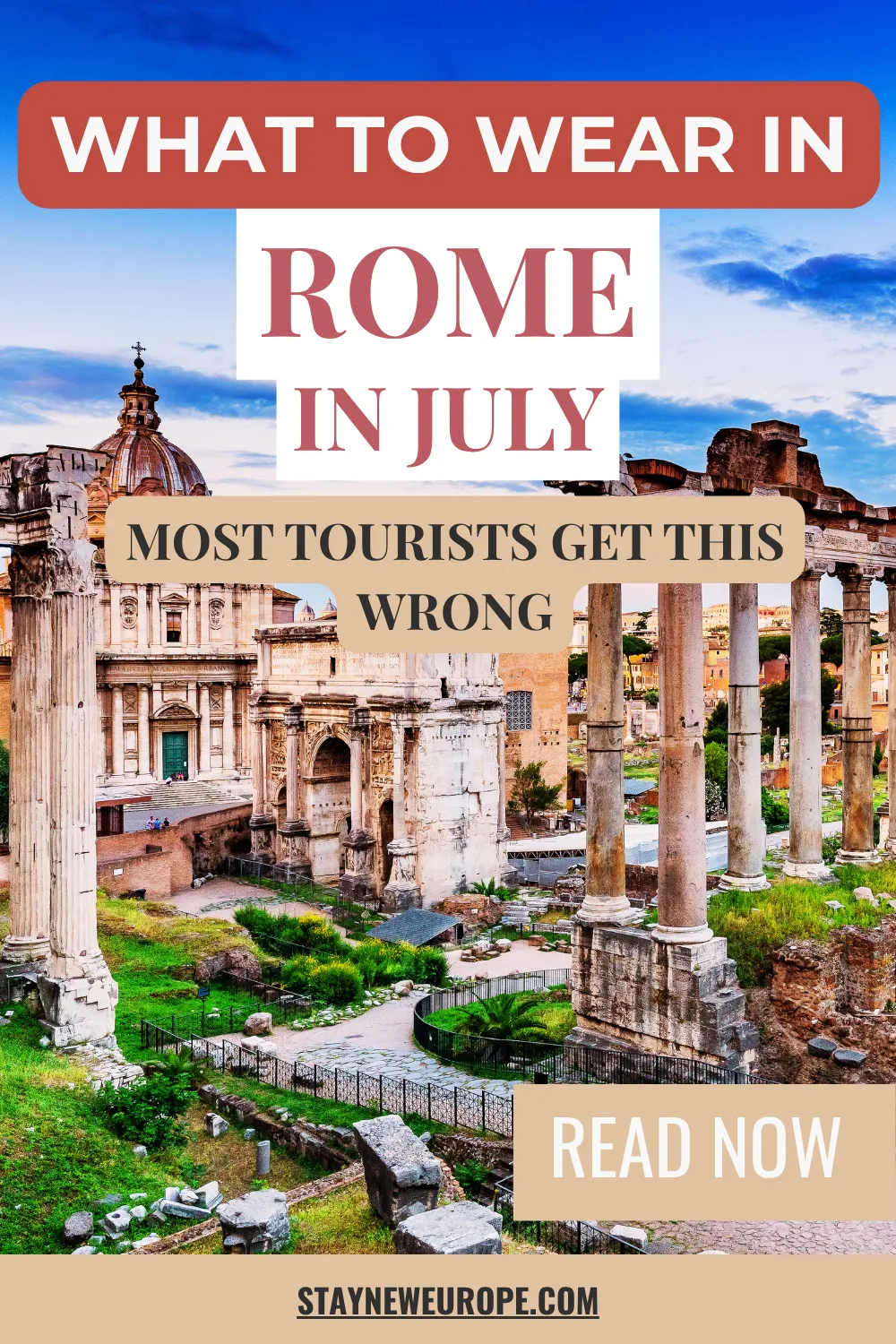
Rome in July is many things: magnificent, overwhelming, deeply romantic, and — let me be completely honest with you — brutally, mercilessly hot. I’m talking 35°C in the shade, sun bouncing off ancient travertine like a spotlight, and a kind of dry, radiating heat that climbs up from the ground and wraps around you before you’ve even left the hotel. I learned this the hard way, standing outside the Colosseum in a denim jacket at 10am, absolutely baking, wondering why I’d thought my “transitional” outfit was a good idea.
The thing about packing for Rome in July is that most people either overpack (too many “just in case” layers, jeans they’ll never wear, shoes that look great but destroy their feet by day two) or they underprepare for the cultural side — showing up at the Vatican in a strappy sundress, getting turned away, and spending twenty euros on a disposable scarf from a street vendor. Neither scenario is ideal.
What you need is a wardrobe that works with Rome in July, not against it. Light, breathable, stylish enough that you don’t stick out as someone who packed in a hurry, and practical enough that you can walk eight miles a day across uneven stone streets without suffering. That’s exactly what this guide is for.
Before We Dive In: What Rome in July Is Actually Like
The Weather (And Why It Demands Respect)
Rome in July is peak summer. Average highs sit around 32–35°C (90–95°F), but it regularly climbs higher, especially in heatwaves, which have become more frequent in recent years. Humidity is lower than, say, Naples or the Amalfi Coast, which is a small mercy — but the intense direct sun more than compensates.
Rain is unlikely but not impossible. You might get one brief thunderstorm during a two-week trip, usually in the late afternoon. It passes quickly. What you should actually worry about isn’t rain — it’s the sun, the heat radiating off ancient stone, and the complete lack of shade in many of Rome’s most iconic spots.
Early mornings are genuinely beautiful — cool-ish, golden light, quiet streets. By 11am, the city is in full blaze. Most savvy travellers do their outdoor sightseeing before noon, retreat indoors between 1–4pm (the museums and the gelato shops will save you), and head back out in the early evening when everything softens.
The Walking Situation
Rome is a walking city, but not in a gentle, flat, pleasant way. The cobblestones — sampietrini, those small rounded stones that cover much of the historic centre — are beautiful and absolutely unforgiving. They shift underfoot, catch heels, and punish soft-soled shoes. The terrain changes constantly: you’ll climb to the Gianicolo, descend into Trastevere’s narrow alleys, navigate the uneven stairs of the Spanish Steps, and cover more ground than your phone’s step counter will believe.
Comfortable footwear is not optional. It is the most important clothing decision you’ll make for this trip.
The Style Culture
Italians dress with intention. This doesn’t mean they’re always formal — in July, even Romans are in linen and sandals — but there’s a certain effortlessness and care about it. Shorts that actually fit. Sandals that are genuinely nice, not just flip-flops. Blouses that aren’t visibly drenched in sweat before noon.
You don’t need to dress like a fashion editor to blend in, but showing up in overly baggy gym wear or clothes that look like you grabbed them from a bin bag will make you feel out of place in a city this beautiful. The goal is stylish practicality. You can absolutely achieve it.
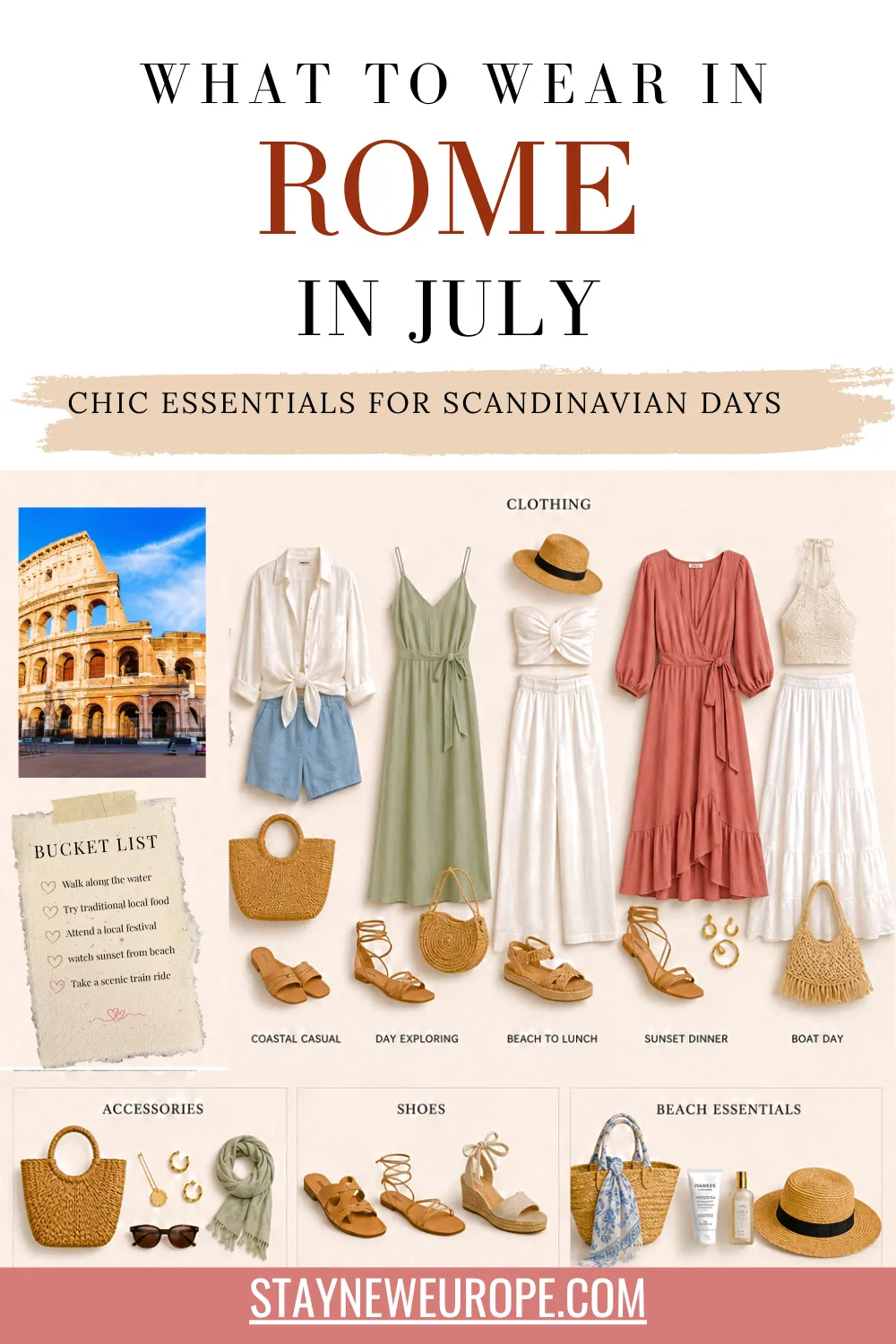
Lightweight Layers: More Important Than You’d Think
I know. You’re going to Rome in July. “Layers” sounds insane. But hear me out.
The temperature difference between outside and inside can be shocking. Roman churches, particularly the major basilicas, are cool — often almost cold — because of their thick stone walls and high ceilings. Museums crank up air conditioning to impressive levels. Restaurants and shops are often frigid. You step out of 35°C heat into what feels like a walk-in cooler, stay for an hour, and then walk back into the sun.
What this means practically is that you want one lightweight layer — a linen shirt, a thin cotton cardigan, a silk scarf worn as a shawl — that you can carry without effort and pull on when needed. Not for warmth outside, but for the indoor temperature whiplash and, crucially, for churches.
I carry a fine-knit cotton cardigan the size of a large handkerchief when rolled up. It weighs almost nothing, fits in any bag, and has saved me from goosebumps in the Vatican more than once.
Local tip: A large, lightweight scarf does double duty in Rome — layer over shoulders in air-conditioned spaces and use it to cover bare shoulders at church entrances. Silk or viscose scarves pack small and work beautifully.
Dresses in Rome: Your Best Friend (If You Choose Right)
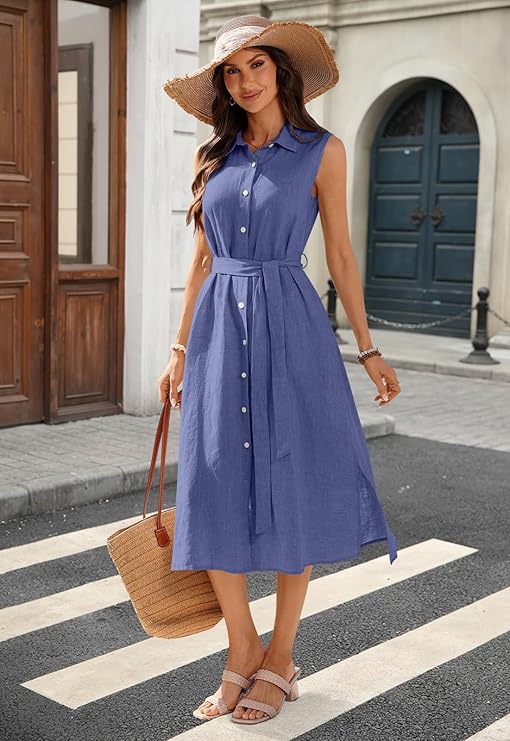
If you wear dresses, July in Rome is the moment they were made for. A good summer dress is the single most efficient item you can pack: one piece, total outfit, naturally breathable, and — if you choose well — absolutely church-appropriate with the right scarf.
The key word is fabric. Linen is king. Cotton is solid. Anything with stretch synthetic (polyester blends, jersey with elastane) will trap heat against your skin and have you feeling like you’re wrapped in cling film by midday. Natural fabrics breathe. Synthetics don’t.

Look for midi lengths or knee-length — they’re cooler than you’d expect because they allow air circulation around your legs, and they’re easier to manage in churches where very short hemlines can be an issue. A loose, flowy
silhouette beats anything fitted. You want air moving around you, not fabric clinging.

My favourite Rome dress formula: linen midi in a neutral or earthy tone (terracotta, dusty rose, cream, olive), with flat leather sandals and a small crossbody bag. Add a silk scarf draped over the shoulders for churches. That’s it. That’s the whole outfit. Done.
Local tip: Avoid white dresses in Rome unless you’re committed to baby-wipe maintenance. The dust, stone, and inevitable coffee splash will find you.
Linen Everything: The Fabric Rome Demands
Let me say it plainly: if you are not packing linen for Rome in July, you are making a mistake.
Linen is the only fabric that actively gets more comfortable as the temperature rises. It’s breathable, it wicks moisture, it dries almost instantly, and it has that effortless, slightly rumpled look that somehow works perfectly in a city full of crumbling ancient ruins. The fact that linen wrinkles? In Rome in summer, that’s a feature, not a bug. Everyone’s a little rumpled. It looks lived-in and chic.
Linen shirts for men are a revelation if you’ve never tried them. Worn open over a plain white tee, or buttoned up and tucked loosely into light trousers, they’re appropriate for everything from morning ruins to an evening at a good trattoria. Women can go with linen dresses, linen wide-leg trousers, linen shirts tied at the waist — honestly, the options are endless.
Cotton also works well — particularly lightweight cotton gauze or voile. What you want to avoid is anything with significant polyester content, rayon that gets clingy when damp, or — please — denim. More on that shortly.
Local tip: Linen wrinkles more when packed tightly. Roll your linen pieces around a soft item rather than folding flat, and they’ll arrive in better shape.
Comfortable but Stylish Walking Shoes: Non-Negotiable
This is where I’ll be slightly forceful, because I’ve watched too many people hobble through Rome with blisters the size of small continents because they brought the wrong shoes.
The cobblestones of Rome are beautiful and completely hostile to heels, thin-soled sandals, and new shoes that haven’t been broken in. You need substantial soles with some grip, good arch support, and — most importantly — shoes you’ve already worn enough that your feet trust them.
The good news is that “comfortable walking shoes” no longer means ugly. There are genuinely stylish options that won’t make you want to amputate your feet by 3pm.

For women: leather sandals with a footbed (Birkenstock, Mephisto, or the many excellent Italian brands) are the Roman summer standard. Trainers in a clean, simple style work well for heavy walking days. Low-heeled block sandals are viable for shorter days or evenings. What doesn’t work: flat thong sandals with no support, wedges on cobblestones (ankle-twist waiting to happen), or anything brand new.

For men: leather loafers or clean leather sneakers are the Roman uniform. Trainers in a neutral colour. Comfortable lace-up shoes if you’re covering serious ground. Avoid sports sandals unless you genuinely don’t care how you look (which is fine! Just be honest with yourself).

Local tip: Bring blister plasters regardless. Even perfect shoes can catch on Rome’s uneven stones in ways you don’t predict. They weigh nothing and you’ll be grateful.
What NOT to Wear in Rome in July
Let me save you from the mistakes I’ve either made myself or watched other tourists regret.
Denim jeans. I know. You love your jeans. Leave them home. Denim is heavy, doesn’t breathe, takes forever to dry if you sweat through them (you will), and will have you fantasising about cutting them off with scissors by noon. Lightweight linen or cotton trousers do everything jeans do in summer, better.
Flip-flops for serious sightseeing. Pool shoes belong at pools. Roman cobblestones will bruise your feet through thin rubber soles, and flip-flops provide zero arch support for eight-hour walking days. Save them for the hotel room or a beach day.
White trainers or white clothing if you’re precious about them. Rome is dusty. The streets kick up a fine pale dust, particularly in hot, dry July. White shoes become grey shoes quickly.
Overly revealing clothing near churches. Sleeveless tops and shorts above the knee will get you turned away from the Vatican, St Peter’s Basilica, Santa Maria Maggiore, and most other major churches. You can cover up at the door with a scarf or a cardigan you’ve brought for this purpose — but forgetting entirely means missing the interiors, which are genuinely unmissable.
Anything tight and synthetic. You will be sweating. Tight synthetics are the enemy. Loose naturals are your friends.
Local tip: Those large plastic zip-lock bags your hotel toiletries came in? Ideal for a sweaty item of clothing you need to carry in your bag until you get back. Pack a couple.
Jeans vs Lightweight Trousers: The Answer Might Surprise You
The answer is: lightweight trousers, always, in July. But if you simply cannot travel without some form of trouser (and I respect that), here’s what actually works.
Linen trousers — wide leg, straight cut, or tapered — are the obvious choice and genuinely look great. They’re comfortable, they photograph well against Roman architecture, and they’re entirely appropriate for nice restaurants in the evening. Earthy tones (tan, cream, terracotta, khaki) work with everything and don’t show dust as obviously as darker colours.

Cotton chinos in a lightweight fabric are a solid second option. They’re more structured than linen, which some people prefer, and they read as smart-casual enough for evening outings.
Shorts are absolutely fine for daytime sightseeing — just remember to carry a cover for churches. Linen or cotton shorts that hit at or just above the knee are both practical and acceptable. Cargo shorts with seventeen pockets are comfortable and useful; just know they’re a clear tourist signal in Rome, where Italian men tend toward slimmer, smarter cuts.
Local tip: If you want to try Roman style, look at what local men wear in summer: slim linen or chino trousers in light colours, plain linen shirts, leather loafers. It’s effortless and it works in any setting from a museum to a dinner reservation.
Evening Outfits: Rome After Dark Is Worth Dressing For
Here’s what no one tells you: Rome in the evening is one of the most beautiful places on earth. The light goes golden and then pink. The streets cool slightly (only slightly, but still). The piazzas fill up, the restaurants spill onto cobblestones, and everything feels a little cinematic. You want to feel good for this.
The good news is that the same clothes that worked during the day can usually work in the evening with minimal adjustment. A linen dress gets a little dressier with nicer sandals and a statement earring. A linen shirt and trousers combination goes from “daytime exploring” to “trattoria dinner” with no changes at all.
What you don’t need: a separate “evening wardrobe” of clothes that are too nice for daytime. Rome in July is not a black-tie situation. Even quite good restaurants are casual by northern European standards — smart casual is entirely sufficient, and nobody is wearing stilettos on cobblestones after 9pm.
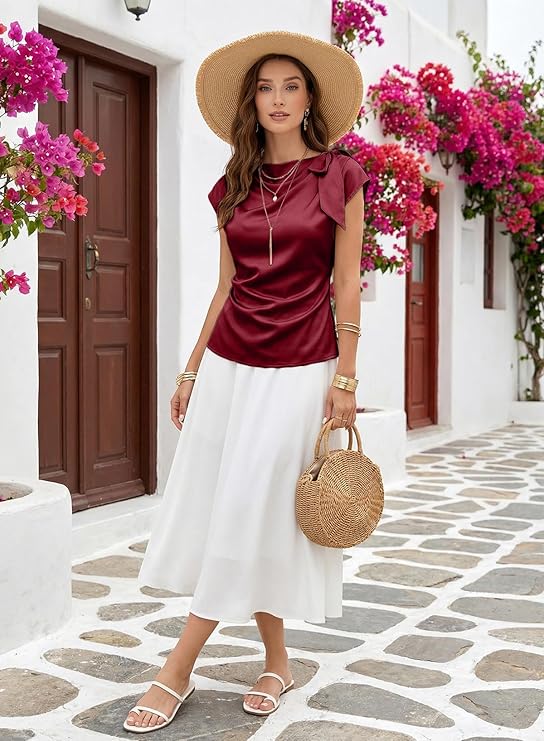
If you want one “going out” outfit that feels slightly more special, a silk or satin top paired with linen trousers or a midi skirt is beautiful and still completely practical for the weather. Add a pair of comfortable heeled mules if you’re willing to manage the stones carefully.
Local tip: Romans eat late — 8:30pm to 9:30pm is standard for dinner. That means your evening actually starts in the warm dusk rather than full dark, and the temperature is far more forgiving for slightly smarter outfits.
Church Dress Code: Plan for It, Don’t Wing It
I mentioned this briefly above, but it deserves its own section because this catches out so many visitors.
Rome’s major churches — the Vatican, St Peter’s, Santa Maria Maggiore, San Giovanni in Laterano, and many more — require covered shoulders and knees for entry. This is not optional and it is enforced, sometimes by staff at the door with measuring eyes.
The practical solution is not to rethink your entire wardrobe but to carry a dedicated “church layer.” A large lightweight scarf works brilliantly — draped over bare shoulders and tied loosely, it covers both requirements if it’s large enough. A thin cardigan covers shoulders and can be tied around the waist to add length to a short skirt. A linen overshirt works if you’re in shorts.

If you’re planning to visit several churches in a day, it’s worth thinking about your base outfit: a knee-length dress or midi skirt, or linen trousers, means you only need to add a shoulder cover at the door rather than doing a full reconfigure. It’s genuinely less stressful.
Local tip: The Vatican gets crowded and hot. Go as early as possible (book timed entry in advance — this is not optional in July), wear your most breathable linen, carry a small bottle of water, and don’t underestimate how long you’ll spend inside.
Bags: Crossbody Wins Every Time
I am firmly on the crossbody bag side of this debate, and I don’t think it’s close.
Rome is a city where pickpocketing exists, particularly in crowded tourist areas (the Colosseum, the Trevi Fountain, the Metro). A crossbody bag worn in front is harder to access without your knowledge than a shoulder bag, a tote, or — especially — a backpack worn on your back in crowds.
Beyond security, crossbodies are simply more practical in summer heat. A backpack adds a layer between your back and the air and creates a sweat patch situation. A tote slides off your shoulder constantly and ties up one hand. A crossbody sits at your hip, stays put, and leaves both hands free for gelato, maps, and gesturing enthusiastically at things.

Choose a bag that’s medium-small — large enough for your camera, sunscreen, phone, a scarf, and a water bottle, but not so large it becomes a burden. Leather or vegan leather in a neutral colour looks good and is more secure than open-top canvas.

Local tip: A small, slim crossbody worn in front (not swinging at your hip) is the Roman tourist equivalent of a safety measure. Do it especially on the Metro and in market areas.
Accessories That Elevate a Simple Outfit
When it’s 33°C and you’re wearing basically nothing, accessories do a lot of heavy lifting for your overall look.
Sunglasses are both practical and stylistic — invest in a pair you actually like wearing, because you will wear them constantly.
A wide-brim hat (straw or woven cotton) does more for your comfort than any amount of sunscreen and also looks great.
Earrings are the easiest way to make a basic linen dress feel intentional rather than effortless-by-accident.
A simple watch, a stack of thin bracelets, a single gold necklace — these small things pull an outfit together without adding heat or weight. Italians are good at this: understated accessories that look considered rather than overdone.
Leave the chunky jewellery at home. It’s heavy, it gets sweaty, and it tends to look overly dressed for summer sightseeing. Small and simple wins.
Local tip: A good quality straw hat is worth buying in Rome itself if you arrive and realise you need one — the markets near Campo de’ Fiori sell beautiful ones, and buying something in Rome is half the pleasure.
Sun Protection as Part of Your Outfit
This isn’t just about health (though it is about health — the Roman July sun is serious). It’s also about how you feel and look after two hours in direct sun.
A wide-brim hat is the single most effective sun protection item you can wear, more effective than any SPF. It keeps your face and neck in shade, reduces how much you squint, and prevents that particular look of someone who’s been slowly cooked. A good linen or straw hat is also stylish in its own right.

UV-protective sunglasses are essential. Long-term sun exposure in reflective urban environments is genuinely harsh on eyes.

Lightweight, light-coloured clothing actually provides sun protection on your arms and shoulders. This is counter-intuitive — you might think bare arms feel cooler — but loose linen sleeves in pale colours shield your skin from UV while still allowing air movement. If you burn easily, a long-sleeved linen shirt on intense sun days is worth it.

Local tip: The reflective quality of Rome’s stone and marble amplifies sun exposure significantly. Even in the shade of a piazza, you’re getting more UV than you’d expect. Apply sunscreen properly, including hands and the back of your neck.
Rain Preparation: Brief, But Don’t Ignore It
July is Rome’s driest month, but occasional thunderstorms do happen — usually fast, dramatic, and over within thirty minutes. The kind that appear from nowhere and drench you before you’ve processed what’s happening.
You don’t need a full rain kit. But a small packable umbrella or a lightweight foldable rain poncho takes up almost no space and rescues an afternoon when everything goes suddenly wet. More importantly, suede sandals and linen clothes dry fast in Roman summer heat — you’re usually fine within an hour of a storm passing.

The more practical preparation is waterproofing your bag’s contents: a small dry bag or even a large zip-lock for your phone, passport, and anything electronic. Roman summer rain, though brief, can be heavy.

Local tip: Locals often duck into a bar (a café, in Italian) when the rain starts, drink a quick espresso at the counter, and emerge when it’s over. This is the correct approach to Roman summer storms and I recommend adopting it.
Fabrics to Choose (and Avoid)
The fabric choice is genuinely everything in Rome in July. Get it right and you’ll feel reasonably comfortable despite the heat. Get it wrong and you’ll be miserable.
Choose: Linen (the gold standard), cotton (including gauze and voile for maximum breathability), cotton-linen blends, silk (excellent temperature regulation, slightly more delicate), bamboo fabrics (increasingly available, genuinely breathable).
Avoid: Polyester (traps heat and sweat, doesn’t breathe), nylon (similar issues), spandex/elastane in significant percentages (clings when damp), thick cotton jersey (surprisingly heat-retaining), denim (heavy, slow to dry, hot), wool (obviously).
The breathability difference between linen and polyester at 35°C is not subtle. It’s the difference between tolerable and not-tolerable. Check labels before you pack.
Local tip: If you’re shopping in Rome (and you should — Italian summer sales, saldi, often fall in early July), look for clothing labeled lino (linen) or cotone (cotton). Street markets and small boutiques often have beautiful linen pieces at genuinely good prices.
Your Rome in July Capsule Wardrobe
Here’s what I’d actually pack for a week in Rome in July, if I was packing with full intention:
Tops: 3–4 lightweight linen or cotton tops (mix of sleeveless and short-sleeve), 1 linen shirt (serves as layer and top), 1 slightly nicer top for evenings.
Bottoms: 2 pairs linen trousers (one casual, one slightly smarter), 1 pair of linen or cotton shorts, 1 comfortable skirt if applicable.
Dresses: 2 linen or cotton midi dresses (these replace a top + bottom, so they save space efficiently).
Layers: 1 lightweight cardigan or fine-knit cotton layer, 1 large silk or cotton scarf.
Shoes: 1 pair broken-in leather sandals with footbed, 1 pair clean comfortable trainers or walking shoes, 1 pair slightly smarter sandals for evenings (optional, only if they’re also walkable).
Bags: 1 crossbody for daily use, 1 small clutch for evenings (optional).
Accessories: Sunglasses, wide-brim hat, simple jewellery.
That’s roughly 7 days of outfits with room for mixing and matching, and it fits comfortably in a carry-on.
Local tip: Plan outfits before you pack. Lay everything out and check that each piece works with at least two others. If something only works with one specific item, it’s probably not earning its place in the bag.
Practical Packing: How to Actually Do This Right
How many outfits to bring: For a week, five or six full outfits is plenty — you’ll wear things twice, particularly trousers and skirts. Rome has laundromats (lavanderia) if you need them, and many hotels will do laundry.
Pack light, genuinely. The single biggest packing mistake for Rome is bringing too much. You’ll buy things. You’ll want space. You’ll be hauling your bag over cobblestones at some point. A carry-on is entirely achievable for up to ten days if you’re disciplined.
Don’t pack things you “might” want. If you’re not sure about it, leave it. The “just in case” jacket that takes up a third of your bag will not be worn in July in Rome.
Pack a small empty bag. For shopping, for laundry, for whatever. Takes up no space and becomes useful almost immediately.
Wear your bulkiest items on travel days. If you’re bringing trainers, wear them on the plane. It’s an obvious trick that still saves meaningful bag space.
One Last Thing Before You Go
Rome in July rewards those who travel lightly and dress thoughtfully. Not because Romans will judge you (they’re mostly too busy arguing about football and making excellent coffee), but because you’ll feel better, move better, and be more present in one of the most extraordinary cities on earth when you’re not tugging at a sweaty collar or nursing blistered heels.
Pack the linen. Bring the good sandals. Carry the scarf. Forget the jeans.
And when you’re standing in the Forum at golden hour, dust rising from ancient stone, the light doing that impossible Roman thing where everything looks like a painting — you’ll be glad your outfit was the last thing on your mind.

