
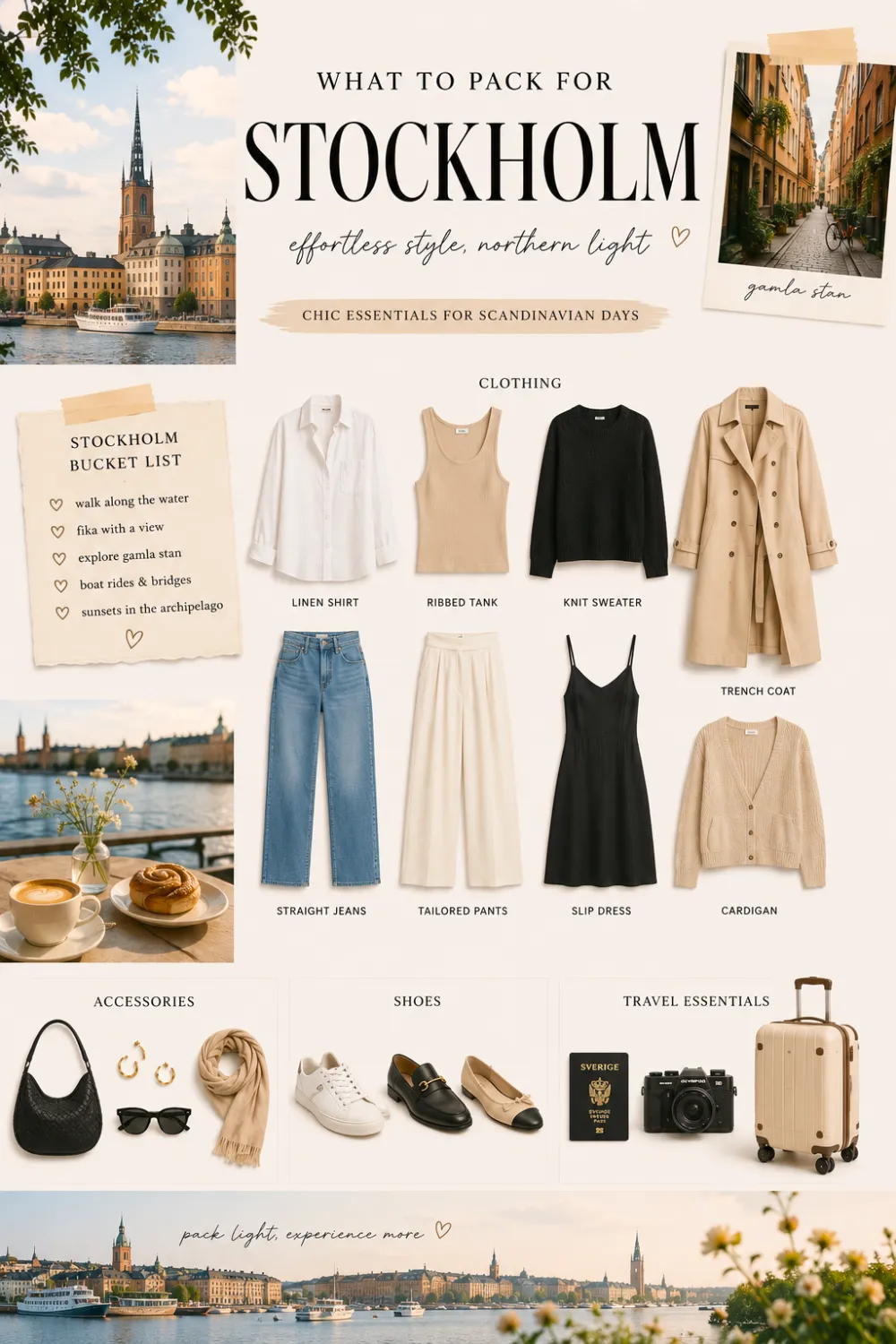
Stockholm has a way of making you feel underdressed even when you thought you nailed it. I stepped off the train at Stockholm Central in a lightweight linen shirt, feeling very “Scandinavian summer,” and immediately noticed that every single local walking past me looked like they’d stepped out of an Acne Studios lookbook — structured, deliberate, effortlessly cool. My breezy tourist energy evaporated within about four minutes.
The thing about Stockholm is that it’s not just a beautiful city — it’s a city with genuine style opinions. The weather shifts more than you’d expect, the evenings can feel surprisingly cold even in peak summer, and you’ll be walking far more than your hotel’s “10 minutes on foot” estimates suggest. Getting your packing wrong here doesn’t just mean discomfort. It means standing out in a way that Stockholm’s elegantly minimal locals will silently clock.
So let’s talk about what to actually wear in Stockholm — season by season, situation by situation, without the generic nonsense.
Before We Dive In: What Stockholm’s Weather Is Really Like
Let me be honest: Stockholm’s climate is one of the trickier ones to pack for in Europe. The city sits at roughly the same latitude as parts of southern Alaska, which tells you something. Even in summer, evenings routinely dip to 10–14°C (50–57°F), and a grey, drizzly afternoon is never fully off the table regardless of what the forecast said that morning.
Spring (April–May): Temperatures hover between 5°C and 17°C (41–63°F). Some days feel properly warm, especially in late May when the sun hangs in the sky until 9 or 10pm. But mornings are cool, winds off the water can be biting, and rain arrives without much warning. This is genuinely a four-seasons-in-one-day kind of situation.
Summer (June–August): This is peak Stockholm. Temperatures average 18–25°C (64–77°F), though heatwaves occasionally push it above 30°C. The famous Swedish light — that long, golden-hour glow that seems to last all evening — is intoxicating. But don’t be fooled into thinking you can ditch the layers entirely. Evening boat trips or outdoor dinners by the water can feel quite cold once the sun drops.
Autumn (September–October): Think rich colours, crisp air, and genuine chill. Daytime highs of 8–15°C mean you’re firmly in jacket-and-scarf territory. Rain becomes more consistent. Pack accordingly.
Winter (November–March): Cold, dark, and honestly stunning. Temperatures often sit between -5°C and 5°C (23–41°F), with the possibility of snow. You’ll need proper winter gear — not just a slightly thicker coat.
One more thing worth knowing: Stockholm is a walking city built across fourteen islands, connected by bridges and waterways. You will cover serious ground every day — across cobblestones in Gamla Stan, along the wide walkways of Södermalm, up through the parks of Djurgården. Your shoes matter enormously here.
The Lightweight Layer Strategy (More Important Than Anything Else)
I learned this the hard way on my first trip to Stockholm in May: one thick jumper is worth far less than three thin, packable layers. The temperature can swing 10 degrees between 9am and 2pm, and you’ll be moving from heated museums to outdoor terraces to breezy canal bridges within the same hour.
The layer system that actually works goes something like this:
- a fitted base layer (a simple long-sleeve top or quality tee), a mid-layer that can go on or off easily (a merino cardigan, a thin knit, a zip-up), and an outer layer that handles wind and light rain without making you look like you’re prepping for a camping expedition. The outer layer is your statement piece in Stockholm, so choose it with some care.
Merino wool is genuinely your best friend here. It regulates temperature brilliantly, doesn’t wrinkle when stuffed in a bag, and doesn’t smell after a full day of walking. A merino base layer under a linen shirt sounds odd until you’re standing on Skeppsholmen bridge in late May with cold wind coming off the water and you’re the only comfortable person in your group.
Local tip: Stockholm locals rarely wear heavy, bulky outerwear even in cooler weather. They tend toward sleek, structured jackets in neutral tones. If you show up in a bright performance fleece, you’ll look exactly like a tourist. A well-cut trench or a slim-fitting wool-blend jacket will serve you better aesthetically and practically.
The Stockholm Aesthetic: What Dressing Like a Local Actually Means
This section surprised me when I first started paying attention to it. Stockholm has one of the most distinctive street-style cultures in Europe — and it’s not flashy. It’s almost aggressively understated.
The Swedish approach to dressing centres around what might be called “quiet luxury” before that phrase became a global trend.
- Clean lines, neutral or muted colour palettes (lots of sand, off-white, forest green, navy, rust), quality fabrics, and a fit that’s intentional without being tight.
Think less “tourist doing Europe” and more “person who actually owns a beautiful wardrobe.”
This doesn’t mean you need to go out and buy an entirely new wardrobe before visiting Stockholm. But it does mean that packing a few pieces with considered cuts — a well-fitted blazer, some straight-leg trousers, good quality basics — will make you feel far more at home than throwing together your usual holiday mix of bright prints and overly casual shorts. Stockholm is simultaneously relaxed and stylish, which is the most Scandinavian thing imaginable.
Local tip: Swedes have a concept called lagom — roughly translated as “just the right amount.” It applies to everything, including clothing. Not too loud, not too plain. A few considered pieces worn well beats a suitcase overpacked with options.
Trousers vs Jeans: Which Actually Works
Jeans are totally fine in Stockholm — don’t let anyone tell you they’re not. But they need to be the right jeans, and you need to know when they’re working for you and when they’re not.
A slim or straight-leg dark denim will carry you through almost any situation in Stockholm, from a morning fika to an evening at a restaurant in Östermalm. Acid-washed, overly distressed, or very baggy jeans start to look out of place once you’re sitting down to a nicer dinner. The locals tend to wear their denim dark and fitted — that’s just the aesthetic here.

That said, I’d strongly argue for packing at least one pair of quality trousers alongside your jeans. A pair of straight-leg chinos or tailored trousers in a neutral tone (khaki, navy, stone) opens up your outfit options considerably and photographs beautifully against Stockholm’s coloured facades and waterfront views. They also transition from day to evening without any effort.

For women: wide-leg trousers in a linen or cotton blend are very on-brand for Stockholm’s summer look. Pair them with a fitted top and a structured bag and you’ll blend right in. For cooler months, wool-blend trousers with a quality knit keep you warm and sharp simultaneously.

Local tip: If you’re visiting Stockholm’s more upscale neighbourhoods like Östermalm or planning dinner somewhere proper, slightly dressed-up trousers will serve you better than jeans. Stockholm restaurants aren’t stuffy about dress codes, but the locals do tend to dress up a notch for evenings out.
Walking Shoes That Don’t Ruin Your Day (or Your Look)
I have to talk about shoes in Stockholm because this is where most tourists get it genuinely wrong, and I was one of them once. Flip-flops are a bad idea on cobblestones, white trainers get ruined in light rain, and heels on the uneven stone streets of Gamla Stan are essentially a torture device.
Gamla Stan — the old town — is stunning and completely paved in centuries-old uneven cobblestones. Södermalm involves hills. Djurgården has gravel paths. Even the “flat” areas involve more varied ground than you’d expect. You need shoes with proper sole grip and enough cushioning to get you through 15,000 steps a day without your feet staging a protest.

What actually works: clean white leather trainers (not canvas — leather handles unexpected drizzle far better), a quality pair of loafers with a subtle heel or thick sole,
Chelsea boots for spring and autumn, or a clean low-top sneaker in a minimal style.

Stockholm’s style aesthetic aligns well with understated footwear — chunky white trainers, clean leather shoes, minimal boots. These also happen to be some of the most comfortable options for distance walking.

What doesn’t work: open sandals in spring or autumn (your feet will be cold), stilettos in Gamla Stan (physical hazard), very thick-soled platforms on cobblestones (ankle risk), or anything with a thin, flat sole that offers no cushioning at all.
Local tip: Swedish brand Tretorn makes brilliant canvas and rubber shoes that are both stylish and genuinely practical for Stockholm’s variable weather. They’re available all over the city and make for a perfect souvenir that actually gets used.
What NOT to Wear in Stockholm (Tourist Tells to Avoid)
Let me be direct about this because it’ll save you some grief. Stockholm is not an aggressively judgmental city — the locals are warm and welcoming — but if you care at all about not looking like you’ve just stepped off a tour bus, there are a few things worth avoiding.
Matching tourist tracksuits or performance athletic wear in the city is the biggest tell. Stockholm locals wear activewear for actual exercise, not for wandering around museums. If you’re not going for a run, skip the leggings-and-technical-jacket combination.
Heavy logo-covered clothing is another one. The Stockholm aesthetic is specifically anti-logo. Quiet, quality basics over flashy branding every time. Big printed t-shirts with tourist slogans don’t need to be mentioned.
Overpacking your accessories is also something to watch. Stockholm style tends toward one or two considered accessories rather than a full complement. One good watch or bracelet, one quality bag, a pair of clean earrings. Piling on too much looks busy against the minimal backdrop of the city.
Finally — and this surprised me — very bright, tropical prints feel particularly out of place in Stockholm. The city’s colour palette is earthy, muted, organic. A vivid Hawaiian shirt or neon anything will stand out in a way that reads more “lost cruise passenger” than “intentional traveller.”
Local tip: When in doubt, go neutral. Stockholm is one of those cities where a simple, well-fitted outfit in a tonal colour scheme will always look more “right” than something louder.
Dresses and Skirts: The Stockholm Summer Case
Stockholm in summer is genuinely beautiful, and dresses absolutely belong in your suitcase — with a few conditions. The conditions are: bring a layer to go over it, choose fabrics carefully, and think about what you’re walking on.
Midi dresses and maxi skirts work brilliantly for Stockholm summer days.

They photograph beautifully, they keep you cool when it’s warm, and they align with that effortless Scandinavian style far better than a short, fitted bodycon dress would.
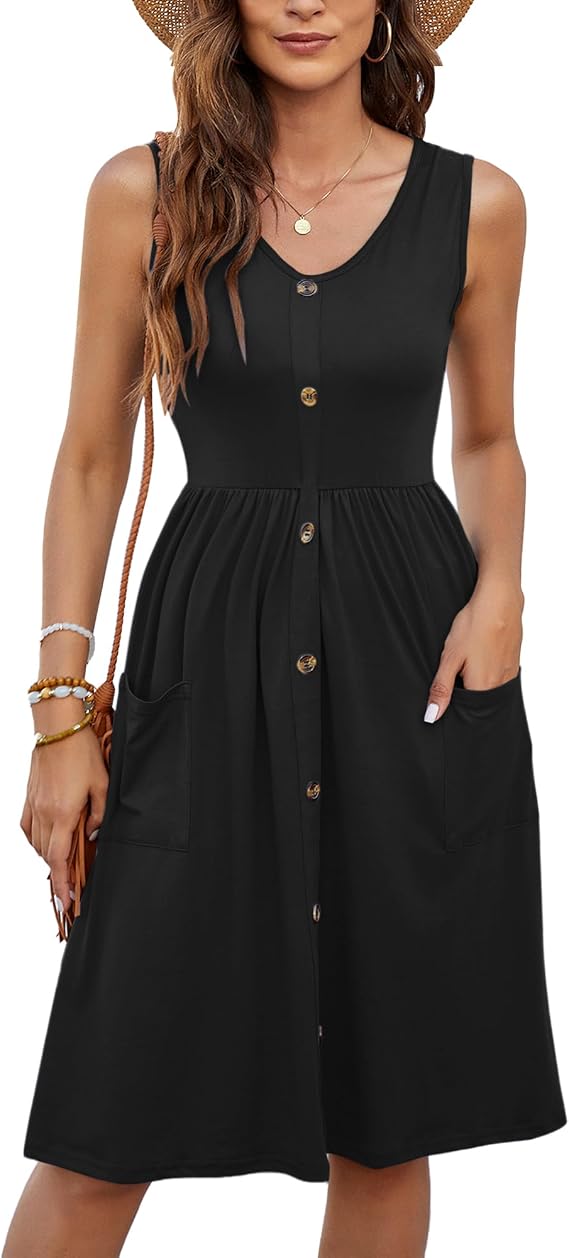
Think linen, cotton, or light jersey — relaxed shapes, earthy tones or subtle prints.

Wear them with a denim jacket or light blazer that you can pull on for cooler moments. A thin longline cardigan also works perfectly and is easier to stuff in a bag than a jacket. The key is never leaving your accommodation in just a dress without a layer to hand, because Stockholm will find the one breezy afternoon of the week to remind you that it’s not actually the Mediterranean.
If you’re visiting in spring, a heavier wrap dress in a ponte or jersey fabric is your best friend. It’s warm enough for 15°C weather, stylish enough for a restaurant, and forgiving enough for a day of walking.
Local tip: If you’re planning an evening boat trip around the archipelago — which you absolutely should — bring a scarf or light wrap no matter how warm the afternoon was. The water amplifies the wind considerably and evenings on the water can feel shockingly cold.
The Stockholm Jacket: Your Most Important Packing Decision
If I had to identify the single piece of clothing that will most define your Stockholm experience, it’s your jacket. Get this right and everything else falls into place.
For spring and autumn: a classic trench coat is genuinely perfect for Stockholm. It handles light rain, looks sharp against the city’s architecture, and layers over almost anything. Go for a neutral colour — camel, stone, navy — and choose one with a proper lining for added warmth in April and September. A well-cut trench will photograph beautifully against Stockholm’s waterways and coloured buildings, and it’s exactly what you’d see the locals wearing.

For summer: a lightweight denim jacket or a linen blazer covers most bases. These go over a dress or a simple tee-and-trousers combination, handle the cooler evenings, and look intentional rather than purely functional.

For late autumn and winter: you need to commit to proper warmth. A wool-blend or down-filled coat that hits at mid-thigh is the Stockholm winter uniform. Pair it with a chunky scarf (Swedes do scarves very well) and you’ll both stay warm and look like you belong.

One jacket I’d specifically recommend for Stockholm: a simple, unlined overshirt or shirt-jacket in a heavier fabric. It works as a layer, it looks good open over a tee, and it’s endlessly versatile across seasons.

Local tip: Brands like Fjällräven (Swedish, naturally) make incredibly practical yet stylish outerwear that blends right into Stockholm’s streets. Their Kånken bags are also everywhere in the city — not tourist merchandise, actually worn by locals daily.
Evening Outfits: Stockholm After Dark
Stockholm’s evening scene ranges from relaxed waterfront bars to genuinely elegant dinner restaurants, and the city handles both with equal confidence. What’s lovely about going out in Stockholm is that the dress code is almost never formally stated — it’s more about reading the room and dressing with intention.
For a casual evening — drinks at a bar in Södermalm, dinner at a neighbourhood spot, watching the sun go down from Monteliusvägen — your day outfit with a slightly smarter layer works perfectly. Swap the walking shoes for loafers, add a clean shirt or a knit top, and you’re set.

For a proper dinner in Östermalm or a nicer restaurant in the city centre, Stockholm calls for something a bit more considered.
For women: a midi dress or smart trousers with a silk or satin-finish top and low heels or clean leather boots reads exactly right. For men, slim chinos or dark jeans with a shirt (untucked is fine) and clean leather shoes or quality leather trainers is the Stockholm evening uniform.

What’s refreshing is that Stockholm doesn’t require you to get dressed up in a stressful, formal way. The city’s style is confident and considered, not performative. A well-chosen simple outfit worn with easy confidence reads better here than an overdone occasion dress.

Local tip: Dinner in Stockholm tends to start later than in many other European cities — 7:30–8pm is normal. If you’re heading out for the evening, the daylight will still be going strong until 10pm in summer, which means lighter-coloured evening outfits work far better here than they would in most cities.
What to Wear for Stockholm’s Museums and Indoor Spaces
Stockholm has some of the world’s best museums — ABBA The Museum, Vasa Museum, Fotografiska, Moderna Museet — and they’re all heated, comfortable, and visited by people in everything from casual jeans to smart office wear. There’s no dress code concern in any of Stockholm’s museums or galleries.

The practical consideration is that museums are usually quite warm, so your layering strategy becomes important again. If you’ve walked across town in a heavy coat and thick scarf, you’ll want to be able to strip back to a lighter layer quickly without carrying a mountain of outerwear around the galleries. A packable top layer that folds into your bag is ideal for museum days.
Unlike visiting churches in southern Europe, Stockholm’s churches and religious sites don’t have specific dress requirements around covered shoulders or knees. That said, they’re generally cool inside, so your layers will earn their place again.
Local tip: The Vasa Museum in particular is enormous and kept at a specific temperature to preserve the 17th-century warship inside. It can feel cool even in summer. Don’t leave your mid-layer at the hotel on Vasa Museum days.
Rain Preparation: The Stockholm Reality Check
Let me be the person who tells you this before you experience it rather than after: Stockholm gets more rain than its Instagram presence suggests. Not constant, relentless rain — but regular, inconvenient drizzle, sudden afternoon showers, and grey mornings that can stretch into grey afternoons.
A compact, packable rain jacket is one of the most valuable things you can bring to Stockholm. Not an umbrella (they’re annoying to carry and struggle with any wind), but a genuinely waterproof or water-resistant outer layer that stuffs into its own pocket. Keep it at the top of your day bag, and you’ll be grateful for it at least once during a week-long trip.

For shoes, leather is dramatically better than canvas in wet conditions. A good pair of leather trainers or ankle boots with water-resistant treatment will keep your feet dry through Stockholm’s rain far better than canvas sneakers, which become miserable sponges within minutes.
If you’re visiting in autumn or spring and it’s raining properly, a mid-weight waterproof coat rather than just a water-resistant layer makes a real difference. Stockholm rain in October is not the same as a light Paris drizzle.
Local tip: Swedish brand Stutterheim makes the most beautiful rubber raincoats you’ll ever see — they’ve become a genuine Stockholm style statement, not just waterproofing. You’ll see them everywhere in the city during rainy weather. Worth buying if you plan to return.
Fabrics to Pack (and One or Two to Leave Behind)
Fabric choice sounds like a minor detail until you’re on day four of a trip and you’re either damp and uncomfortable or perfectly regulated and looking fresh. Stockholm’s variable conditions mean that fabric decisions actually matter.
Pack merino wool. It’s the single best fabric for temperature-variable travel. Lightweight merino doesn’t itch, doesn’t wrinkle, regulates warmth brilliantly, and fights odour better than any synthetic. A merino base layer, a merino long-sleeve, or a merino cardigan will serve you across all of Stockholm’s seasons.
Pack linen for summer. It breathes, it looks effortlessly appropriate for Stockholm’s summer aesthetic, and it photographs beautifully. Yes, it creases — but in Stockholm, a slightly relaxed linen look reads as intentional, not sloppy.
Pack a thin jersey knit. A good-quality cotton-jersey long-sleeve or fitted knit gives you a layering piece that works under everything without adding bulk.
Leave behind pure cotton for rain-heavy seasons. Cotton absorbs moisture and takes forever to dry. In spring or autumn Stockholm, a damp cotton top or jeans will make you cold and miserable within an hour. If you’re visiting outside of peak summer, reach for synthetic-blend or merino alternatives instead of straight cotton.
Leave behind silk for anything but evenings. Silk marks immediately in light rain, which is a constant possibility in Stockholm. Save it for a dinner outfit when you know you’ll be mostly indoors.
Bags: Crossbody, Tote, or Backpack?
This comes up every time I talk to people planning a Stockholm trip and honestly the answer depends on context — but let me share what I actually use.
For daytime exploring: a leather or structured crossbody bag wins every time. It keeps your hands free for photographing Stockholm’s gorgeous waterfront and old town, sits flat against your body in crowded spots, and looks intentional rather than purely practical. A crossbody in a neutral leather tone works across all your outfits without clashing with anything.

A tote bag works well for museum days or when you’re carrying a bit more — a folded rain jacket, a water bottle, a guidebook. A simple canvas or leather tote in a neutral colour is very on-brand for Stockholm’s aesthetic.

Backpacks are practical but do read slightly more “tourist in transit” in Stockholm’s city centre. If you want to bring one for longer day trips out to the archipelago or for hiking in the surrounding nature, absolutely — but for everyday city wandering, the crossbody will serve you better both aesthetically and practically.

Security-wise, Stockholm is a genuinely safe city and pickpocketing is rare compared to many other European capitals. That said, busy public transport and tourist areas are always worth being sensible about — a crossbody with a zip closure is a practical choice regardless.
Local tip: Fjällräven’s Kånken backpack is practically the unofficial bag of Stockholm. If you want a backpack that actually looks like what the locals use, this is it. They’re available all over the city.
Accessories That Elevate Everything Without Taking Up Space
Stockholm’s approach to accessories is minimal but intentional — which is actually great news if you’re trying to pack light. You don’t need a jewellery organiser full of options. You need three or four pieces that work hard across multiple outfits.
A quality scarf is probably the single most useful accessory you can bring to Stockholm. It provides warmth on cold evenings, works as a wrap on boat trips, adds a pop of personality to a neutral outfit, and takes up almost no packing space. Choose a lightweight wool or cashmere blend in a versatile colour — rust, forest green, navy, or a subtle pattern.

Sunglasses are essential for summer Stockholm — that endless evening light is genuinely beautiful and genuinely intense. A clean, classic frame in a neutral acetate colour works perfectly.

A quality watch or a few simple, clean jewellery pieces will take you far. Stockholm style isn’t about layering chains or stacking rings — one well-chosen piece per element is the aesthetic here. A thin gold bracelet, a simple pair of hoops, a classic watch. Understated and intentional.
One more thing: a compact tote bag that folds flat into your main bag is a surprisingly useful accessory for Stockholm. You’ll use it for market visits, shopping, and impromptu picnics by the water. Stockholm is very much a city for lingering in parks and waterfront spots with something from a local bakery.

The Stockholm Capsule Wardrobe: Packing Light Without Missing Anything
This is the section I wish I’d had on my first trip to Stockholm, when I wildly overpacked and spent the whole trip wearing about half of what I’d brought. If you’re wondering what to wear in Stockholm across a 5–7 day trip, here’s what actually covers everything:
Tops: 2 quality tees (neutral tones), 1 fitted long-sleeve merino or jersey top, 1 slightly smarter blouse or shirt that works for evening.
Bottoms: 1 pair dark jeans (straight or slim), 1 pair tailored trousers or chinos, 1 skirt or dress depending on the season and your preference.
Layers: 1 thin merino cardigan or zip-up knit, 1 denim jacket or linen blazer, 1 outer jacket appropriate to the season (trench for spring/autumn, light cotton jacket for summer, wool coat for winter).
Shoes: 1 pair quality leather trainers or loafers for daytime walking, 1 pair slightly smarter shoes or ankle boots for evenings.
Accessories: 1 quality crossbody bag or structured tote, 1 lightweight scarf (doubles as a wrap on cold evenings), sunglasses for summer.
That’s genuinely everything you need. The temptation to pack “just in case” outfits is real, but Stockholm’s style culture rewards simplicity, and your back will thank you for the restraint. If you want to take packing light even further, the guide on how to pack a carry-on for 10 days has excellent practical advice on building a versatile travel wardrobe from fewer pieces.
Local tip: Stockholm has excellent shopping for Scandinavian brands — COS, Acne Studios, & Other Stories (all started in Sweden), plus independent boutiques all over Södermalm. If you genuinely need something you forgot or want to add a piece that feels very Stockholm, you’re in exactly the right city for it.
Packing Practical: Mistakes to Avoid
Let me be honest about the errors I’ve seen friends make (and made myself) when packing for Stockholm:
Underpacking layers for summer. Stockholm’s summer looks warm on paper. It can be warm. It can also be 14°C at 9pm with wind off the water. Every summer trip needs at least two substantial layering pieces regardless of the forecast.
Bringing only one pair of shoes. Your feet will cover more ground than you expect. One pair of walking shoes and one pair of evening shoes is the minimum viable approach. Don’t try to make one pair do everything — your feet will hate you by day three.
Forgetting that evenings are cold. This catches people in spring and autumn especially. 20°C at noon does not mean 20°C at 8pm. It often means 10°C at 8pm. Pack for the evenings, not just the midday forecast.
Overpacking “just in case” outfits. Stockholm is a great city for shopping if you genuinely need something you’ve forgotten. You’re more likely to need less than you think, not more.
If you’re venturing beyond Stockholm to explore more of Sweden or Scandinavia, check out these underrated European cities worth visiting in spring for more packing context across different Northern European climates.
The Seasonal Quick Reference: What to Wear in Stockholm Month by Month
Because sometimes you just need the shortcut:
April: Layers are everything. Light merino, a mid-layer knit, a trench or structured jacket. Ankle boots or leather trainers. Don’t underestimate the cold — Stockholm April can genuinely feel like February elsewhere.
May: Your most versatile month. Temperatures are rising but evenings are still cool. Dresses with a jacket, jeans and a linen blazer, quality trainers. This is prime Stockholm time and the city looks spectacular.
June–August: Linen and light cotton come into their own. Dresses, relaxed trousers, quality tees. But always — always — carry a mid-layer. The evenings will catch you without it. Sunglasses are non-negotiable.
September: One of the prettiest months in Stockholm as the city turns golden. Pack as you would for May — layers that transition through a significant daily temperature range. A slightly heavier outer layer than summer.
October–March: Commit to warmth. A good wool coat, scarves, quality boots that handle wet conditions, thermal base layers for the coldest months. Stockholm in winter is genuinely beautiful if you’re dressed for it — the Christmas markets, the snow on the Old Town rooftops — but dressing inadequately will make you miserable.
Here’s the thing about packing for Stockholm: the city rewards people who show up with intention. Not perfection, not a vast suitcase of options, but a few well-chosen pieces, an understanding of how the weather actually behaves, and a willingness to dress with just a little bit of care.
You’re going to walk over ancient bridges as the light turns gold at 9pm. You’re going to sit at a waterfront table with a glass of something Swedish and feel like you’ve found one of Europe’s best secrets. You’re going to explore the oldest parts of a city that has been continuously inhabited for nearly 800 years.
Wear something you feel good in. Bring your layers. Pack your rain jacket. And leave a little room for whatever beautiful, impractical thing you find in a boutique on Södermalm that you absolutely did not plan for — and will wear for years.


7 Responses