
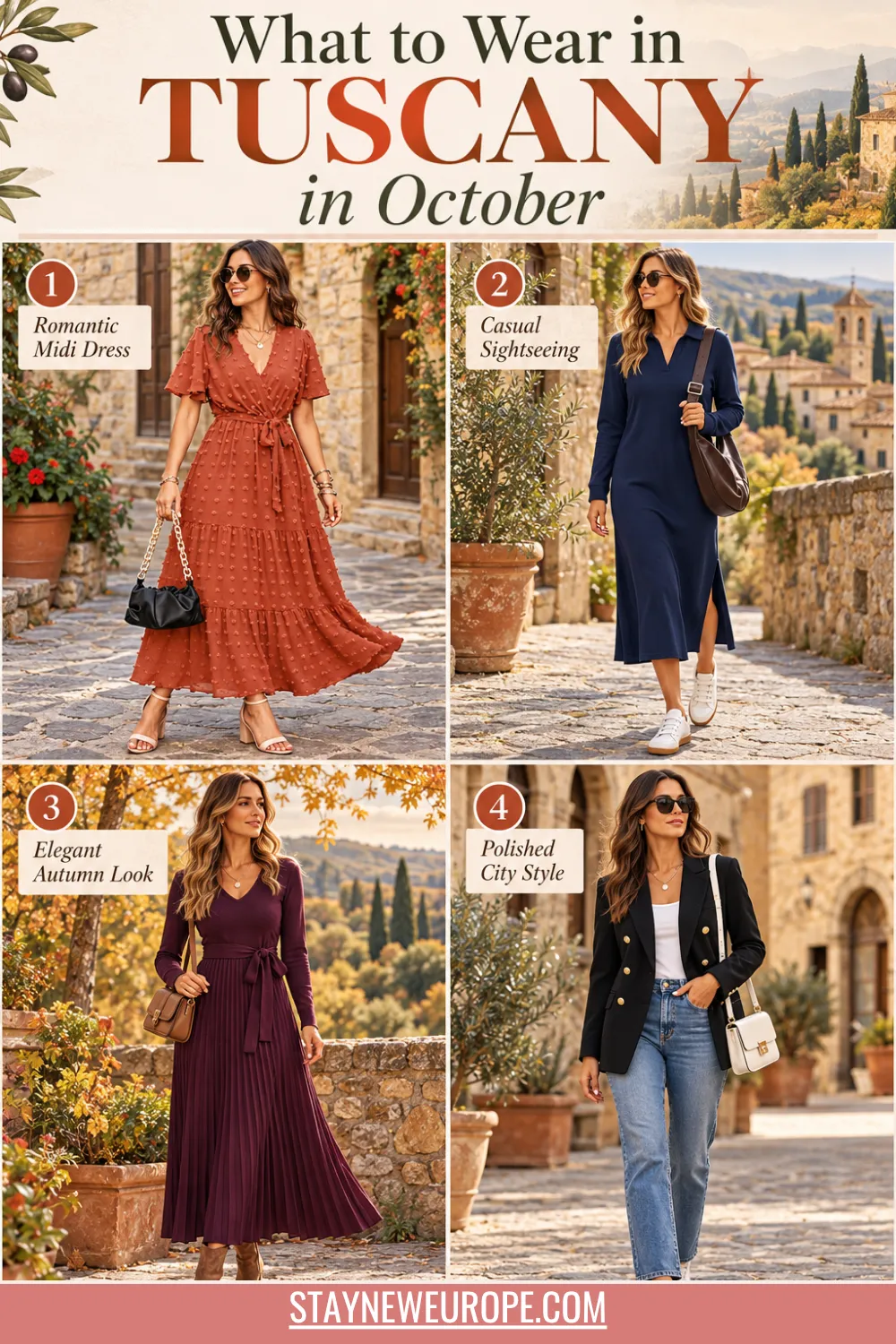
Let me be honest — I packed for my first October trip to Tuscany like I was still chasing summer. Linen dresses, sandals, one thin cardigan “just in case.” By day two in Montepulciano, wind whipping off the hills at 7pm, I was wearing every piece of clothing I’d brought at once and still cold.
Tuscany in October is gorgeous — the grape harvest is winding down, the light goes gold and soft in a way it never does in July, and the tourist crowds thin out enough that you can actually hear yourself think in a piazza. But the weather has a split personality. Mornings are crisp, afternoons can be warm enough for a t-shirt, and the second the sun dips behind a hill, the temperature drops fast.
The mistake almost everyone makes? Packing either full summer or full winter, with nothing in between. This guide is the in-between — what actually works, what I wish I’d left at home, and a few things I learned the hard way.
Before We Dive In
Weather: October in Tuscany typically runs 10–20°C (50–68°F), with mornings and evenings on the colder end and afternoons warming up nicely if the sun’s out. Rain shows up more often than in September — not constant, but frequent enough that you’ll want to plan for it rather than hope around it. Humidity is generally low, which makes the cold feel drier and more bearable than, say, a damp London chill.
Walking conditions: cobblestones, gravel paths through vineyards, and steep little hill-town streets are the norm — think Siena, San Gimignano, Montepulciano, Pienza. If you’re staying at an agriturismo, add uneven farm tracks to that list. This is not a heels destination, no matter what your Pinterest board says.
Style culture: Italians dress well, and Tuscans especially so — even for a casual Tuesday grocery run. It’s less about designer labels and more about the whole look being put together. Nobody’s judging your sneakers, but athletic shorts and oversized graphic tees will mark you as a tourist faster than a map in your hand.
The Bag You Actually Need for Tuscany
Here’s a hot take: your suitcase matters almost as much as your outfits.
If you’re doing the classic Tuscany itinerary — Florence, then a car through Chianti, Val d’Orcia, maybe Siena — a hard-shell carry-on is going to fight you on cobblestones and gravel driveways. I learned this dragging a spinner suitcase up a hill in San Gimignano while a very amused nonna watched from her doorway. A soft-sided duffle with backpack straps, or a wheeled duffle, handles uneven ground so much better.

For day trips out of your base, a foldable daypack that packs flat in your suitcase is worth the tiny bit of extra weight. You’ll want it for wine-tasting day trips, markets, and the inevitable “let’s just walk until we find lunch” afternoons.

Local tip: skip the giant 40L travel backpack for this trip. Tuscany’s hill towns are small and slow-paced — you want something that looks intentional at a wine bar, not something built for a hostel crawl. If you’re still deciding on a full carry-on setup, our carry-on packing guide breaks down what actually earns its space.
Lightweight Layers (Why They Matter More Than You Think)
I used to think “layers” just meant bringing a cardigan. In Tuscany in October, layering is the entire strategy, not an afterthought.
The swing between an 8am espresso outside and a 6pm sunset over the vineyards can be 10+ degrees. A single heavy sweater leaves you sweating by noon; a single t-shirt leaves you shivering by dusk.
What works is three thin layers instead of one thick one — a fine-knit base layer, a cotton or linen shirt over it, and something you can tie around your bag or shoulders when the sun comes out.

Think of it as building an outfit you can edit throughout the day rather than one fixed look. A long-sleeve tee, a light knit sweater, and a scarf will take you from a chilly morning market to a warm midday piazza without a single wardrobe change — just subtraction and addition.

Local tip: merino wool base layers are shockingly good for this trip. They’re thin, they don’t wrinkle in a packing cube, and they don’t hold onto sweat-smell the way synthetic layers do after a full day of walking.
Dresses That Actually Match Tuscany’s Vibe
A flowy summer sundress alone won’t cut it here — but a dress with a plan absolutely works, and honestly looks better in photos than anything else you’ll pack.
Midi-length dresses in a heavier cotton, corduroy, or a cotton-linen blend hit the right note — substantial enough for October, still breathable enough for an unexpectedly warm afternoon. Pair one with tights and boots for a cooler day, or bare legs and sandals if the sun’s cooperating. The trick is choosing a dress that reads more “autumn in the countryside” than “beach holiday” — earthy tones, rust, olive, warm neutrals do the heavy lifting here.

For evenings, a slightly dressier knit or wrap dress under a good coat does double duty: sightseeing by day, dinner-ready with a swap of shoes and a lip colour by night.

Local tip: a wrap dress is the unsung hero of this trip. It adjusts to a big pasta dinner without a single button digging into you, which — trust me — you will thank yourself for after the third course at an agriturismo.
Jeans, Trousers, or Shorts — What Actually Works
Short answer: shorts are a hard pass for most of October, jeans are fine but not ideal, and trousers are the real MVP.
Jeans are the default a lot of people reach for, and they’re fine — just know that dark denim will feel heavy and hot on a warm afternoon and only moderately warm on a genuinely cold morning.
What actually performs better across the whole day is a mid-weight trouser in a cotton-wool blend or corduroy — tailored enough to look intentional with a blazer, relaxed enough to walk for hours in.

Shorts, meanwhile, read as very tourist-y in October specifically — not because of any dress code, but because the temperature genuinely doesn’t call for them most days, and Italians will clock the mismatch instantly.
Local tip: wide-leg or straight-cut trousers hide travel-day wrinkles far better than skinny styles, which matters when you’ve been sitting in a rental car for two hours on the way to Val d’Orcia.
Comfortable but Stylish Walking Shoes
This is the section where I beg you: leave the brand-new white sneakers and the “just in case” heels at home.
Tuscany’s hill towns were built centuries before anyone thought about foot comfort, and the combination of cobblestones, steep inclines, and gravel vineyard paths is genuinely rough on unsupportive shoes.

What works is a broken-in leather sneaker, a low ankle boot, or a sturdy loafer with actual tread. I wore a pair of leather Chelsea boots for ten days straight through Siena and Montalcino and never once regretted the choice.

For evenings, a low block heel or a dressier flat is a safer bet than a stiletto, which will genuinely get stuck between cobblestones — I’ve watched it happen to more than one confident-looking tourist.
Local tip: break in any new shoes at least two weeks before your trip. A Tuscany hill town is not the place to discover a blister at hour three of an eight-hour day.
What NOT to Wear (Common Tourist Mistakes)
A few things I’ve watched go wrong, repeatedly, on this exact trip:
Athletic wear as daywear. Leggings and a hoodie will get you through the airport just fine, but wearing that combination to walk around Florence or Siena marks you instantly as “just off the plane” in a way locals notice.
Brand-new white sneakers. They will not survive the vineyard mud, the gravel, or the occasional rain, and you’ll spend your trip babying them instead of enjoying it.
Flip-flops or thin sandals. Cobblestones and uneven farm paths are not forgiving to unsupported feet — twisted ankles on this trip are more common than you’d think.
Only summer clothes. The single biggest mistake. October is not July, even on a warm day, and the temperature drop after sunset catches almost everyone off guard once.
Jackets for Unpredictable Weather
If I could only pack one outerwear piece for Tuscany in October, it would be a mid-weight trench or a structured wool-blend jacket — something that layers over a sweater on a cold morning but doesn’t feel absurd tied around your waist by 2pm.

A denim or leather jacket works for milder days but won’t cut it if a real cold front or rain moves in, which happens more often than travel blogs from June and July let on.

What earns its luggage space is something with at least a little water resistance and enough room underneath for a sweater.
Local tip: pack one jacket that can go from vineyard walk to dinner reservation without looking like hiking gear — a camel or olive trench does this better than almost anything else.
Evening Outfits for Tuscany Dinners
Dinner in Tuscany is a whole event, not a quick refuel, and the outfit should match that energy without tipping into “overdressed for a farmhouse.”
For a countryside agriturismo dinner, a knit dress or nice trousers with a silk-blend top and a light jacket hits the right note — relaxed but clearly put together.

In Florence or Siena for a proper restaurant evening, I’d lean into a tailored blazer over a simple dress, finished with boots rather than heels, since you’re often walking cobblestones both ways.

The through-line for every Tuscan dinner outfit: rich, warm colour tones — burgundy, mustard, deep green — read beautifully in candlelit trattorias in a way that stark white or neon never quite does.
Local tip: bring one slightly dressier scarf or wrap specifically for dinners. It elevates a daytime outfit into an evening one without needing to pack a whole extra look.
What to Wear for Churches (Dress Code Realities)
Tuscany is dense with churches and basilicas worth seeing — the Siena Duomo alone is worth the trip — and most enforce a real dress code: shoulders and knees covered, no exceptions, regardless of how hot the day is.
Pack at least one lightweight scarf you can throw over bare shoulders, and lean toward trousers, midi skirts, or dresses that hit at or below the knee on days you know you’ll be sightseeing churches.

I’ve watched people turned away at the door in the middle of a heatwave because they hadn’t planned for this — it’s enforced more strictly than most first-time visitors expect.
Local tip: a scarf does double duty here — it’s your church cover-up by day and your dinner accessory by night, which saves real suitcase space.
Bags for Day Trips: Crossbody vs. Backpack
For wandering hill towns and vineyard visits, a crossbody bag wins almost every time — it keeps your hands free for a wine glass or a gelato, sits securely while you’re navigating uneven ground, and doesn’t scream “tourist” the way a big backpack can in a small medieval piazza.

A small daypack still earns its place for longer day trips — hiking through vineyards, visiting multiple towns in one day, or carrying a jacket and water bottle when the weather’s uncertain.

My rule of thumb: crossbody for a single town, backpack for a multi-stop day.
Local tip: choose a crossbody with a zip closure. Tuscany’s towns are genuinely low-crime, but a secure bag also just makes navigating narrow, crowded lanes easier.
Accessories That Elevate Simple Outfits
The fastest way to look like you’ve made an effort without packing more clothes is through accessories, and Tuscany rewards this more than most destinations.
A structured leather belt can make a simple sweater-and-trouser outfit feel much more intentional. It also works well over a dress or light coat when you want a little more shape.

Gold or warm-toned jewellery pairs beautifully with Tuscany’s warm autumn light. Simple earrings, a necklace, or a few delicate pieces can add polish without making the outfit feel overdressed.

A wide-brimmed felt hat is a practical choice for October. Unlike a summer straw hat, felt feels seasonally appropriate while still offering some protection from bright sun and light rain.

Local tip: pack one statement piece — a bold scarf, a good belt, a great pair of sunglasses — rather than five small ones. It reads as more considered and takes up a fraction of the space.
Rain Preparation (The Thing Nobody Packs For)
October rain in Tuscany isn’t dramatic, but it’s frequent enough that showing up without a plan is a mistake I see constantly.
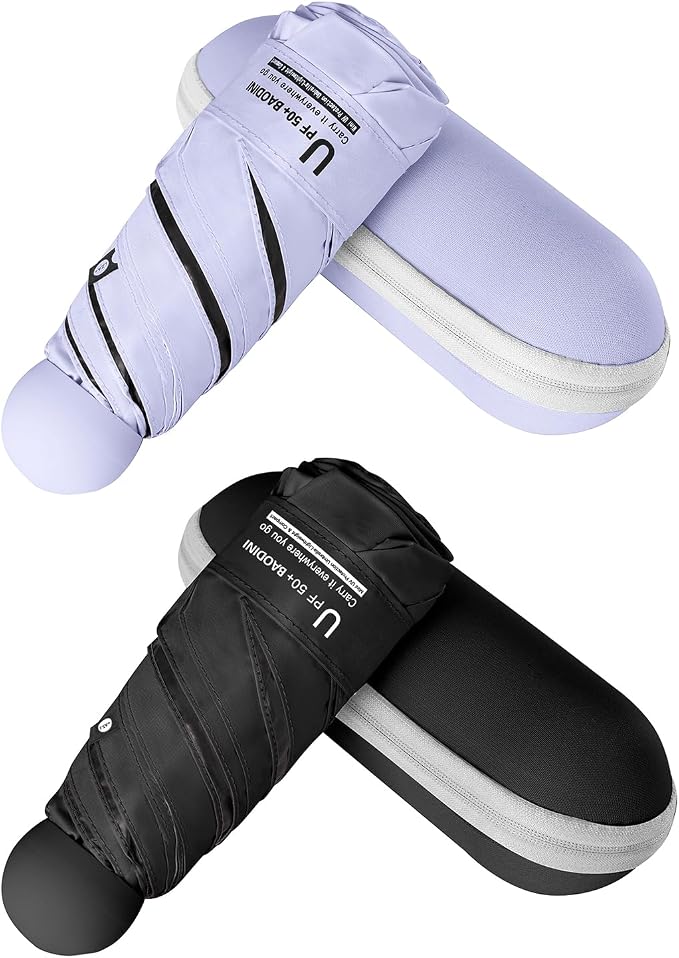
A packable rain jacket beats an umbrella for this trip — you’ll often be walking hilly, narrow streets where an umbrella is more hazard than help, especially in a group.

Water-resistant (not just water-repellent) shoes matter more than people expect; a sudden shower on a gravel vineyard path turns into serious mud fast.
Local tip: a small packable rain jacket that folds into its own pocket takes up less space than a paperback and has saved more than one of my trips from being cut short by weather.
Fabrics to Choose (and Avoid)
Fabric choice matters more in Tuscany’s shoulder season than almost any other packing decision, because you need pieces that regulate temperature rather than just insulate or cool.
Choose: merino wool (temperature-regulating, doesn’t wrinkle), cotton-linen blends (breathable but with enough structure for cooler days), corduroy (surprisingly versatile and season-appropriate), and mid-weight denim.
Avoid: pure linen on its own (it wrinkles instantly and doesn’t hold heat once evening hits), heavy pure wool (overheats fast on a warm afternoon), and anything purely synthetic for a full day of walking — it doesn’t breathe and tends to hold onto sweat smell by day three.
Local tip: a cotton-linen blend blazer is one of the single most useful pieces you can pack — it works over a t-shirt in the afternoon and over a sweater in the evening.
Building a Capsule Wardrobe for Tuscany in October
A capsule wardrobe isn’t just a packing trend — it’s genuinely the smartest way to handle Tuscany’s temperature swings without hauling a suitcase up three flights of stairs in a hill town with no elevator.
Aim for a base of neutral trousers and a pair of dark jeans, three or four tops that layer well together, one versatile dress, one blazer, one packable jacket, and a scarf that works for both churches and dinners. Stick to a warm, earthy colour palette — rust, olive, cream, burgundy — so every piece mixes with every other piece.
Local tip: lay everything out before you pack and count the outfit combinations on paper. If a piece doesn’t pair with at least three others, it’s not earning its space. For a longer breakdown of this approach across different Italian cities, our capsule wardrobe guide for Italy is worth a look before you start packing.
The Practical Packing Section
For a typical 7–10 day Tuscany trip, five or six tops, two or three bottoms, one dress, and a rotation of two jackets is genuinely enough — the goal is mixing and re-wearing, not a fresh outfit for every single day.
Overpacking is the single most common mistake I see (and made myself, the first time). It’s not just about suitcase weight — it’s dragging that extra weight up hill-town streets with no car access, which is a very specific kind of regret. Lay out a week’s worth of outfits before you pack and physically check that each piece pairs with at least two others; anything that only works with one outfit gets cut.
The other mistake: not accounting for laundry. Most agriturismos and Airbnbs have a washing machine, and a mid-trip load means you can pack for five days instead of ten.
Tuscany in October rewards a little planning more than almost any other trip I’ve taken — get the layers right, get the shoes right, and the rest is just enjoying golden hour over the vineyards with a glass of Brunello in hand. Pack smart, leave a little room in the suitcase for the ceramics you’ll inevitably buy in Deruta, and go fall in love with the Tuscan countryside the way it deserves.

