
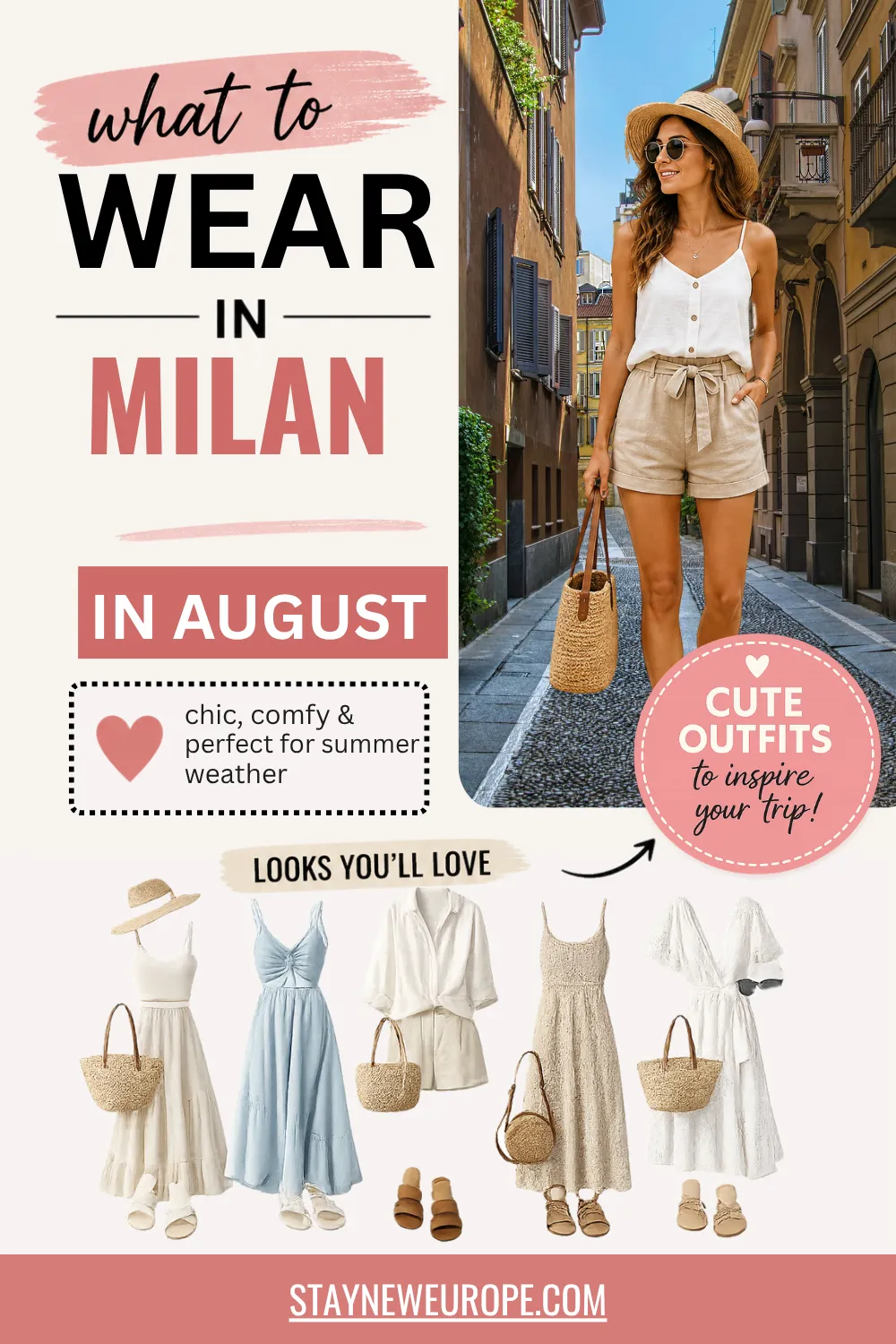
Milan in August is a strange, glorious paradox. The city that invented the concept of looking good — that gave the world Armani, Versace, Prada, and the entire idea of “fashion week” — empties out in the summer heat. Half the locals flee to the coast, the streets get quieter than you’d expect, and yet somehow the city still manages to feel effortlessly stylish. You walk down Corso Buenos Aires sweating through your linen shirt and a Milanese woman breezes past in a perfect silk dress, not a hair out of place. It’s both inspiring and deeply humbling.
August in Milan means serious heat. We’re talking temperatures that regularly push 32–35°C (90–95°F), occasionally climbing higher, with a thick, almost tropical humidity that makes you feel the warmth the second you step outside. There’s no ocean breeze, no mountain air — just the sun baking off the stone streets of the city centre. If you pack wrong, you’ll be miserable. I’ve seen tourists wilting on the steps of the Duomo in jeans and trainers and it’s genuinely painful to watch.
The good news? Packing for Milan in August is actually quite liberating once you know the rules. You need very little clothing, but it needs to be the right clothing. This guide will walk you through exactly what to bring, what to leave at home, and how to dress like you actually belong here — even when the heat is making you question every life choice that brought you to a city without a beach.
Before We Dive In: What You’re Actually Dealing With
The weather: August in Milan is hot and occasionally brutal. Average highs sit around 30–33°C (86–91°F), though heatwaves can push that to 38°C or beyond. Humidity is significant — this isn’t the dry, pleasant heat of somewhere like Lisbon. It’s the kind of heat that makes your phone overheat and your appetite disappear by midday. Rain is relatively uncommon but when it comes, it comes fast — sudden, short thunderstorms in the late afternoon are fairly typical in northern Italy in summer.
The city itself: Milan is a flat city, which is genuinely good news. Unlike Rome, Florence, or Venice, you won’t be climbing hills or navigating bridges and uneven cobblestones every five minutes. The streets are wide, the pavements are mostly smooth, and the metro is air-conditioned. That said, you will still walk a lot — easily 15,000–20,000 steps a day if you’re sightseeing.
The fashion culture: Let me be completely honest about this one. Milan is the fashion capital of the world. Not in a pretentious, judgemental way — Milanese people are actually quite relaxed and welcoming — but the culture of bella figura (looking good, presenting yourself well) is completely embedded in the city’s DNA. Wearing crumpled cargo shorts and a souvenir T-shirt won’t get you refused entry anywhere, but you will feel conspicuously out of place in ways that are worth avoiding. The standard of everyday dressing is just genuinely higher here.
Linen, Linen, and More Linen — The Non-Negotiable Fabric of August
If you own linen clothing, pack all of it. If you don’t own any linen clothing, buying some before your Milan trip is one of the best investments you’ll make.
Linen is the only fabric that makes August in Milan feel human. It’s breathable in a way that cotton can’t quite match, it doesn’t stick to your skin the way synthetic fabrics do, and it dries incredibly fast after you inevitably sweat through it. Yes, linen wrinkles. That’s fine — in fact, it’s more than fine, because in Italy a slightly rumpled linen shirt reads as relaxed and intentional, not sloppy. There’s a reason Italian men have been wearing linen since ancient Roman times.
For women: linen trousers paired with a simple linen or cotton top is a genuinely elegant combination that works from morning museum visits to afternoon aperitivo.
For men: a loose-fit linen shirt worn untucked over lightweight chinos (also ideally linen or a linen blend) is the default look you’ll see on every well-dressed Italian man over 30. Don’t fight it — join it.
Specific outfit idea: Cream linen wide-leg trousers, a white cotton sleeveless top, tan leather sandals, and a woven bag. You’ll look like you live there. Alternatively: pale blue linen shirt, stone-coloured chino shorts (knee-length, please — more on that shortly), and leather loafers.
Local tip: Linen blends — linen mixed with a small percentage of viscose or modal — wrinkle slightly less and have a slightly more polished drape. Worth seeking out if you’re shopping specifically for this trip.
Lightweight Dresses — The Easiest Thing You’ll Ever Pack
There is no single item of clothing more perfectly suited to Milan in August than a lightweight summer dress, and I say this as someone who wasted two trips layering outfits unnecessarily before I figured it out.
One good midi dress is one outfit, head to toe, with essentially no thought required. In 33-degree heat, the fewer decisions you make in the morning, the better. A flowy midi or maxi dress in a breathable fabric — cotton, linen, or viscose — keeps you cool, looks polished, respects church dress codes (more on that later), and transitions from daytime sightseeing to evening dinner without any changes.

What works: floral prints, solid neutrals (white, cream, terracotta, sage), and simple geometric patterns.
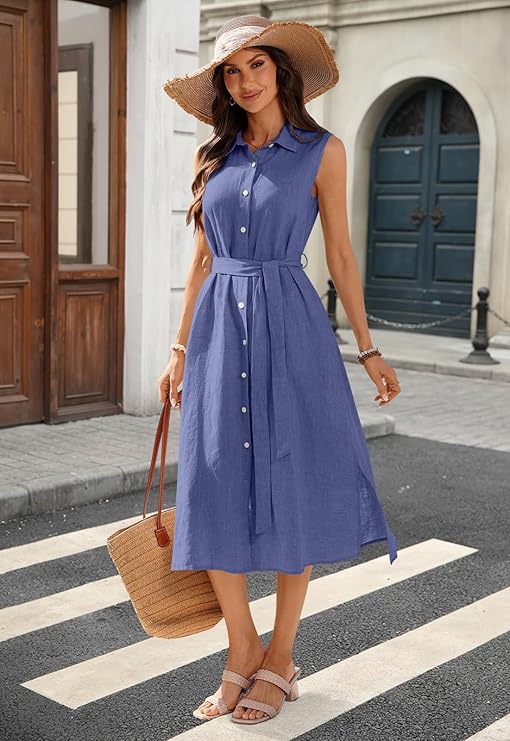
What doesn’t work: heavy cotton jersey, anything with a structured silhouette that doesn’t allow airflow, or anything so tight it creates friction against your skin when you walk.
Mini dresses can work for evening, but note that if you want to visit the Duomo di Milano or any major churches, you’ll need to cover your shoulders and knees — so a midi or maxi dress that already does both saves you carrying a scarf specifically for that purpose.

Local tip: The Milanese love a simple, elegant silhouette over anything fussy. One beautiful dress in a neutral colour with minimal accessories will always outperform three different trendy pieces from fast fashion brands. Quality over quantity is the genuine local ethos.
The Great Jeans Question — And Why the Answer is “Probably Not”
I know. You love your jeans. They go with everything. But let me be straight with you: jeans in Milan in August are a choice you will regret approximately forty-five minutes after leaving your hotel.
Denim is heavy, it traps heat against your legs, and it takes forever to dry if you sweat through it (which you will). The texture of denim against overheated skin is also genuinely uncomfortable in ways that are hard to describe until you’ve experienced them. In high summer, even the lightest jeans are simply not the right tool for the job.
That said — there are some nights where the temperature drops to a more manageable 24°C or so, and you want to go out to dinner somewhere slightly more dressed up.
A good pair of slim-cut, lighter-wash jeans worn with a structured blouse or a silk shirt can absolutely work for evening, when you’re going from air-conditioned taxi to air-conditioned restaurant without much outdoor time in between. But as a daytime sightseeing choice? Save yourself the suffering and choose linen trousers or a light dress instead.
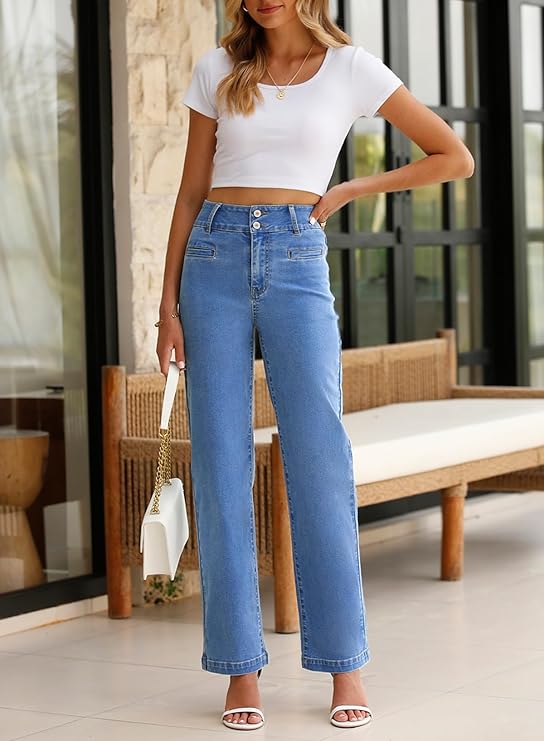
Outfit alternative: Wide-leg linen trousers in a dark navy or olive green will give you the same polished, pulled-together look as jeans without any of the heat misery. Pair them with a tucked-in sleeveless linen top and leather sandals and you’re done.

Local tip: If you’re planning a day trip from Milan (and you should be — Lake Como is spectacular, and if you’re curious about other best cities in Italy to visit worth adding to your itinerary, the options are wonderful), the same no-jeans rule applies everywhere in northern Italy in August.
Shorts — What’s Acceptable and What’s Not
Shorts are welcome in Milan in August. Anyone who tells you otherwise is either a snob or hasn’t been to the city in the height of summer. You will absolutely see locals in shorts. You will see stylish people in shorts. Shorts are fine.
The key is cut and length. The magic number is the knee. Knee-length or just above the knee reads as intentional and appropriate in almost any casual context in Milan. Very short shorts — the kind that would be perfectly fine on a beach in Sardinia (and if that destination interests you, what to wear in Sardinia in summer follows different rules entirely) — look out of place in an urban environment and will mark you immediately as a tourist.
For men: tailored chino shorts in neutral colours (khaki, sand, olive, navy) worn with a proper shirt are completely appropriate and will look good.

Avoid anything with logos, excessive pockets, or a baggy silhouette. Athletic shorts are for the gym, not the Navigli district.
For women: linen shorts, tailored cotton shorts, or even structured bermuda shorts in a solid colour all work well. Pair them with a simple top that’s tucked in or knotted at the front and flat sandals for a very Milanese summer look.

Local tip: A monochrome outfit — matching shorts and top in the same colour family — is something you’ll see a lot of Milanese women pulling off effortlessly in summer. Try cream on cream, or sage green on sage green. Simple, elegant, cool.
Shoes That Won’t Destroy Your Feet (Or Your Look)
Here’s where most tourists get it genuinely wrong, and I learned this the hard way on my first trip to Italy. You will walk so much more than you think. Milan’s Corso Magenta, the Brera neighbourhood, the Navigli canals — these are all best explored on foot, and the city rewards wandering. But it punishes the wrong shoes.
The classic tourist mistake is trainers — and look, I’m not saying trainers are evil. But a chunky pair of white athletic shoes will undermine an otherwise nice outfit in a city as style-conscious as Milan. If you want comfort (and you absolutely should), there are better options.
Leather sandals are your best friend in August. A simple pair of flat leather sandals — think the kind you’d find in a tiny cobbler’s shop in any Italian town — are comfortable enough for a full day of walking, cool enough for the heat, and elegant enough to wear to dinner. They pack flat, they’re versatile, and they look genuinely good with almost everything.

For women: espadrille wedges are another excellent choice — comfortable, chic, and very Italian summer. A low block heel sandal works well for evenings.

For men:leather loafers (yes, without socks, and yes, it’s comfortable in hot weather with the right loafer) are what you’ll see on every well-dressed Milanese man.

What to avoid: flip-flops (they’re beach shoes, not city shoes), brand-new shoes you haven’t broken in (Milan is not the place to get blisters), and very high heels for sightseeing (the streets are flat, but they’re still not comfortable for a 10km walking day).
Local tip: If you want comfortable but stylish trainers, the Italian approach is a clean, minimal trainer — white leather, simple silhouette, no maximalist sole. Think classic rather than sporty.
What NOT to Wear: The Tourist Uniform to Avoid
Let me save you some embarrassment and be honest about the things that will make you look conspicuously like a tourist in a city that takes aesthetics seriously.
The cargo short and souvenir T-shirt combo is the most visible tourist flag in any Italian city. The cargo short specifically — with its many pockets and utilitarian vibe — is not part of Italian summer dressing, full stop.
Matching sportswear sets worn as daytime outfits are a gym look, not a city look. A matching legging-and-crop-top set is absolutely fine for your morning run in Parco Sempione, but wear a dress or trousers for your actual sightseeing.
Excessively branded clothing with giant logos can work as a fashion statement in Milan (this is, after all, the city of Versace), but budget brand logos and streetwear brands worn as casual clothing tend to look out of place rather than intentional.
Overly casual beach wear — tiny halter tops, ripped denim, extremely distressed clothing — reads as holiday mode rather than city mode, and Milan, even in summer, is very much a city.
White trainers with formal clothes is the most specific mistake I’ve seen. Leather-soled shoes or elegant sandals with a nice outfit always looks better than even the cleanest trainers.
The rule of thumb: ask yourself if someone in the city’s fashionable Brera district would wear it for a leisurely Saturday afternoon. If the answer is probably not, leave it at home.
Evening Outfits in Milan: Getting the Tone Right
Milan has a dinner culture that’s genuinely lovely, and evenings here — especially in summer when it stays warm until well past 9pm — are made for lingering over food and wine. The vibe is a notch above casual but doesn’t require anything formal.

For women: the easiest evening outfit in August is a silk or satin slip dress (wear a bralette underneath if you’re concerned about coverage) with flat sandals and a simple gold chain necklace.

A linen midi dress you’ve already been wearing in the daytime becomes instantly more evening-appropriate with the addition of some jewellery and a small structured bag. A linen co-ord set in a solid colour is another strong choice.

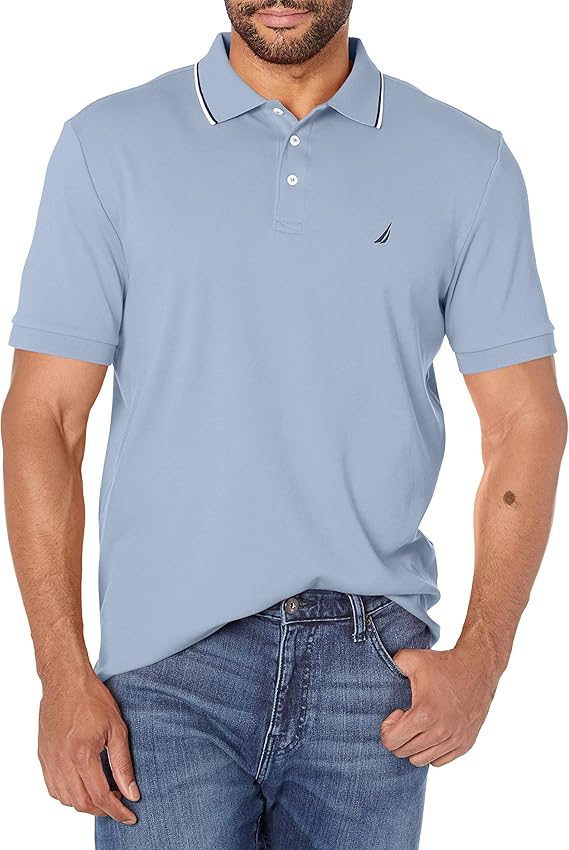
For men: a linen or lightweight cotton shirt worn tucked into tailored trousers (or untucked and slightly more casual depending on the restaurant) is the default. A light-coloured polo shirt is also perfectly acceptable. The key is that the clothes should look clean and intentional, even if they’re simple.
If you’re heading to the Navigli area for aperitivo — which you absolutely should, it’s one of the great pleasures of Milan in summer — the vibe is younger and slightly more casual. A nice top and your best linen trousers, or a summer dress, will serve you perfectly.
Local tip: Milanese dinner is late. If you want to eat alongside actual locals rather than just other tourists, aim for a reservation at 8:30pm at the earliest. You have time to get back to your hotel, rinse off the day, and change into something fresher before heading back out.
Church Dress Codes: What You Actually Need
The Duomo di Milano is one of the most spectacular Gothic cathedrals in the world, and if you visit (which you must), you’ll be required to cover your shoulders and your knees. This is non-negotiable — they will turn you away at the door, or rent you a shawl at the entrance for a small fee.
The easiest solution is to simply plan your church outfit. A midi dress that falls below the knee covers everything automatically. If you’re wearing shorts, carry a lightweight sarong or scarf in your bag — it weighs almost nothing, takes up no space, and can be tied around your waist to cover your legs.

For men: a shirt with sleeves (even short sleeves) is required, and shorts that fall to the knee are generally accepted. Sleeveless shirts or vests will get you turned away.
Specific outfit for church days: For women — a flowy midi dress in any solid colour, flat sandals. For men — a short-sleeved linen shirt, knee-length chino shorts, leather loafers.
This exact approach — planning outfits that already meet church requirements — also makes for a good general packing philosophy. Items that cover your knees and shoulders can always be dressed up or down, and they work everywhere from museums to restaurants to beaches.
Local tip: The Basilica di Sant’Ambrogio, the Church of Santa Maria delle Grazie (where you’ll find The Last Supper), and the Pinacoteca di Brera are all worth visiting, and all have similar modest dress requirements. If you’re planning a culture-heavy day, go fully covered from the start.
Bags: What to Carry and Why Your Choice Matters More Than You Think
This one surprised me when I first started paying attention to it, but the bag you carry in Milan genuinely changes how you look and how you feel moving around the city.
For daytime: a small to medium crossbody bag is ideal. It keeps your hands free, your valuables secure, and it looks more intentional than a backpack. In a city like Milan, which has some petty theft like all major European cities, a crossbody bag worn in front of your body is also simply safer than a tote bag or shoulder bag that can easily be grabbed.

For casual evenings: a small clutch or a structured mini bag elevates almost any outfit instantly. You don’t need to bring an expensive designer bag to achieve this — a simple leather or rattan style does the same job.

What about backpacks? A daypack is practical, but choose wisely. A sleek leather or canvas backpack looks intentional. A large hiking backpack or a brightly coloured travel backpack makes you look like you’re about to catch a train to a hostel, not have lunch at a trattoria in Brera.
What to avoid: plastic tote bags, transparent bags, and oversized luggage-style bags for day-to-day use. The Milanese carry small, good-quality bags. Follow the lead.
Local tip: A woven raffia or rattan bag is having a genuine moment in Italian fashion right now, and it’s genuinely practical — lightweight, airy, and the texture adds interest to even a simple linen outfit.
Accessories That Do the Heavy Lifting
In heat this intense, you’re naturally going to be wearing fewer clothes. Which means accessories do more of the work in making an outfit feel complete. This is actually one of the pleasures of dressing for Milan in August — a few well-chosen accessories make everything look pulled together without adding any weight or warmth.
Sunglasses are non-negotiable from both a practical and aesthetic perspective. The sun in Milan in August is fierce, and a good pair of sunglasses protects you while also being one of the most immediately effective style upgrades available. The Italian approach to sunglasses is classic shapes — round, oval, or traditional wayfarer — in neutral frames. Oversized is great. Neon frames are less so.

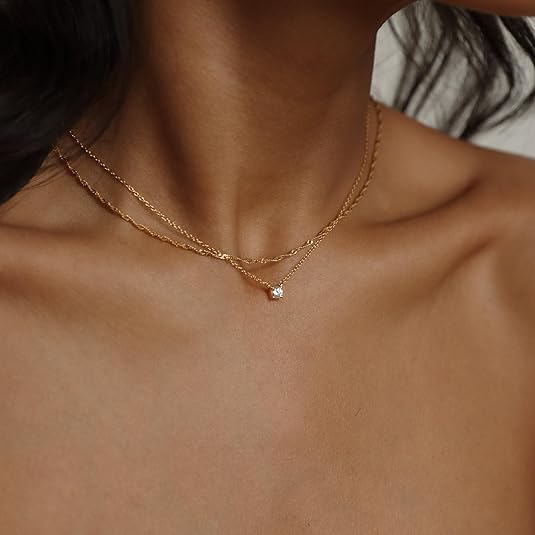
A simple gold or silver chain necklace is the easiest way to make a plain linen top or dress look more intentional. One layered necklace, or a couple of delicate chains worn together, reads as very current Italian style.
A lightweight scarf serves double duty — it covers your shoulders in churches and can be tied around your bag handle or head in a pinch. Choose a lightweight cotton or silk-blend in a neutral or classic print (something geometric or a traditional Italian floral works well).

A good hat is both practical and stylish. A straw or raffia wide-brimmed hat protects you from genuine UV exposure and looks fantastic with any summer outfit. A linen baseball cap is a slightly more casual option. Either is a genuine upgrade.

Local tip: Don’t over-accessorise in the heat. Two or three pieces maximum — sunglasses, a necklace, one bracelet or ring. The Milanese aesthetic is restrained, and less really is more here.
Rain Prep: The Thing Nobody Thinks About
Everyone packs for the Milan heat and nobody packs for rain, which is a mistake because August does produce occasional sudden thunderstorms. They’re usually brief — sometimes just 20–30 minutes — but they can be genuinely heavy while they last, and being caught without any protection means getting completely soaked.
The solution is not a full rain jacket. You don’t need one, and it’ll just take up space. What you need is a compact, packable umbrella — the kind that folds down to about the size of a large water bottle. Leave it in your bag every day and forget about it until you need it.

If you feel you need something more (say you’re doing outdoor activities or a day trip to the lakes), a very lightweight packable anorak in a neutral colour is worth considering. Some of these pack down smaller than a paperback book and weigh almost nothing.
What you don’t need: a heavy waterproof jacket, rain trousers, or anything specifically designed for serious weather. This is summer in northern Italy, not the Scottish Highlands.
Local tip: The local response to sudden rain in Milan is generally to take shelter at the nearest bar or café, order an espresso or aperol spritz, and wait for it to pass. This is, honestly, the correct strategy and I recommend adopting it wholeheartedly.
Fabrics to Choose (and Ones to Leave at Home)
In the heat of an Italian August, fabric choice is genuinely half the battle of comfortable dressing. Get this right and everything else follows naturally.
Choose: linen (the gold standard — breathable, quick-drying, classically Italian), cotton (good, especially in lighter weights and looser weaves), viscose/rayon (drapes beautifully and feels cool against skin, though it wrinkles easily), silk (luxurious, genuinely cool, the best choice for evenings), TENCEL/lyocell (modern, sustainable fabric that’s genuinely excellent in heat — soft, breathable, drapes well).
Avoid: polyester in any form (traps heat and smell with astonishing efficiency), nylon, acrylic, heavy denim, velvet (sounds obvious but I’ve seen it), or any thick knit fabric. Basically, if you hold the fabric up to the light and can’t see through it at all, it’s probably too heavy.
The layering insight that changed how I pack for hot destinations: instead of one thick item, bring two very thin items. A lightweight cotton camisole under an open linen shirt, for example, lets you remove the outer layer when you’re in the sun and add it back in air-conditioned museums or restaurants, without ever actually getting cold.
Local tip: Italian women have a genius move where they wear a lightweight silk scarf loosely around the neck, not for warmth but simply as a style element. It transforms the simplest outfit. Try it.
What to Wear for Day Trips (Lake Como, Bergamo, and Beyond)
Milan’s position in northern Italy makes it a perfect base for day trips, and if you’ve got more than a couple of days, you’d be mad not to use them. Lake Como is about an hour away and worth every minute of the journey. Bergamo’s upper city is spectacular and far less crowded than you’d expect.
For a day at Lake Como or any of the other lakes, the clothes you’d normally pack for Milan in August work perfectly — but add a proper swimsuit or bikini (and a compact, quick-dry towel) because the lakes are swimmable in August and utterly gorgeous. A light dress or cover-up over your swimsuit is completely normal for walking from the lakeside into town.
For Bergamo’s hilltop Città Alta, note that you will be walking uphill on cobblestones — so comfortable flat shoes are essential. This is not a place for new sandals or shoes you haven’t worn in.
If you’re thinking about extending your Italy trip beyond Milan, there’s a two-week Europe travel itinerary that covers how to connect Milan with other major destinations beautifully — worth a read if you’re in the planning stages.
Local tip: Pack your day trip bag the night before with your swimsuit, sun cream, a light layer for the (heavily air-conditioned) train, sunglasses, hat, and your compact umbrella. It takes five minutes and saves morning faff.
The Milan August Capsule Wardrobe
Here’s what an ideal, carry-on-friendly wardrobe for a week in Milan in August actually looks like. This is seven days’ worth of outfits with room to mix, match, and repeat without ever looking like you’ve run out of ideas.
For women (7 days): 3 lightweight tops (1 sleeveless, 1 short-sleeved, 1 linen shirt you can use as a layer) 2 linen or wide-leg trousers (one neutral, one a soft colour) 1–2 linen or cotton midi dresses (versatile enough for day and evening) 1 pair of knee-length shorts 1 pair of flat leather sandals (your main shoe for everything) 1 pair of slightly dressier sandals or low heels for evening 1 lightweight linen blazer or overshirt (for cool evenings and air-conditioned spaces) 1 swimsuit (if day trips to lakes are planned) Accessories: sunglasses, 2–3 jewellery pieces, 1 crossbody bag, 1 small evening bag, 1 hat, 1 lightweight scarf
For men (7 days): 3 linen or cotton shirts (mix of short and long sleeves) 2 linen or lightweight chino trousers (one light, one darker) 1 pair of tailored chino shorts 1 pair of leather sandals or loafers 1 pair of clean, minimal trainers (optional, for casual days) 1 lightweight linen overshirt or very lightweight jacket for evenings 1 swimwear (if day trips to lakes are planned) Accessories: sunglasses, 1 leather belt, 1 watch, 1 good-looking cap or hat
This wardrobe fits in a carry-on suitcase and covers every scenario August in Milan throws at you. If you want a deeper framework for making this work on the road, this guide to how to pack a carry-on for 10 days is genuinely excellent — the same principles apply directly to Milan in summer.
Practical Packing Tips: What I’ve Actually Learned
Pack for heat, not for “just in case.” The biggest packing mistake for Milan in August is hedging. People pack a jumper “in case it gets cold” and a heavier pair of trousers “just in case” and a jacket “for evenings that might be cool” — and then they carry 15kg of things they don’t need through a 33-degree city. August in Milan is reliably hot. The temperature drops maybe 5–8 degrees at night. A very lightweight linen overshirt or a single thin layer is all the “just in case” you need.
Stick to a colour palette. Choose 2–3 base neutral colours (cream, white, tan, navy, terracotta — all very Italian) and make sure everything you pack can be worn with everything else. This is how you get significantly more outfit combinations from fewer items.
Repeat outfits and don’t feel weird about it. No one in Milan is tracking your clothing. Wearing the same dress twice in a week is completely normal and sensible in the heat — particularly if you rinse it out overnight (light fabrics dry incredibly quickly in August).
Think in outfits, not items. Before packing any item, ask yourself: what will this actually work with in my suitcase? If an item only works with one other thing, it’s probably not worth the space.
Leave room for shopping. Milan is one of the greatest shopping cities in the world, and August sales (the saldi estivi) can be genuinely spectacular — up to 50–70% off at Italian brands. Bring a foldable tote bag in your suitcase and leave a little space for things you might bring home.
The Closing Thought
August in Milan is not the easiest place to dress for — the heat is relentless, the standards are quietly high, and the city tests your packing decisions in ways that more forgiving climates don’t. But there’s something genuinely wonderful about being forced to strip everything back to the essentials and discover that the essentials, done well, are actually enough.
A good linen dress. A pair of beautiful sandals. Sunglasses that fit your face. A scarf that you’ll tie three different ways in five days. A bag that holds everything you need and nothing you don’t.
Milan in August, dressed right, feels like stepping into a film — all golden light through the archways of the Galleria, aperitivo spritzes glowing orange on a Navigli terrace, the distant sound of someone speaking Italian in that particular Milanese way that makes everything sound like an instruction to enjoy yourself more.
Go. Dress well. Sweat a little. You’ll have the time of your life.
