
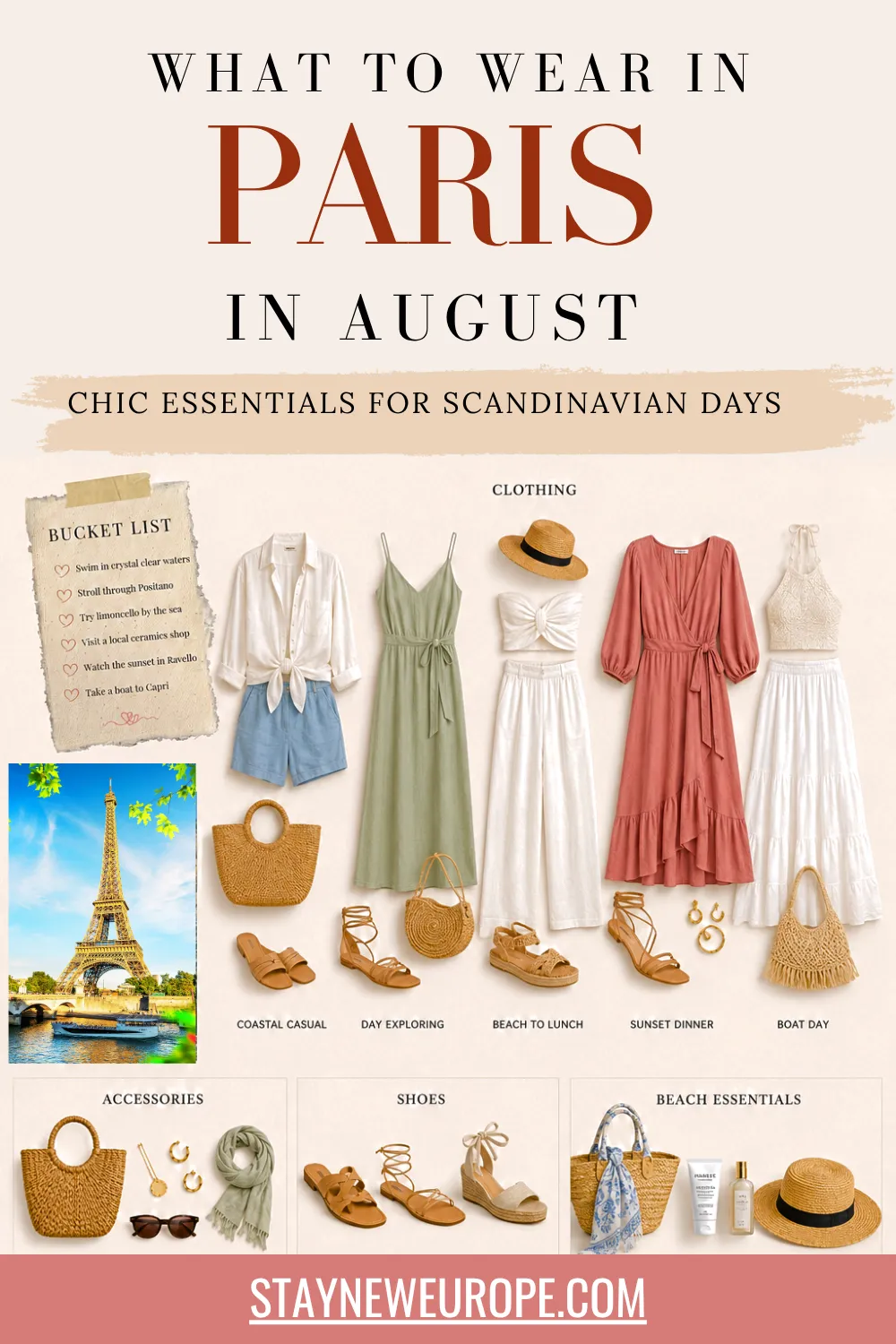
Let me be honest with you — Paris in August is not the Paris of the movies. Half the city packs up and disappears to the coast, the pavements practically shimmer by 2pm, and you’ll spend a surprising amount of energy just trying to look put-together while not melting into a puddle outside a boulangerie.
I learned this the hard way on my first August trip, when I showed up with the same outfits that had worked beautifully for me in Rome in June — and within an hour I understood my mistake. Paris heat is sticky, the metro platforms turn into saunas, and yet the second you step into a restaurant with air conditioning cranked to “meat locker,” you’re suddenly grateful for that cardigan you almost left at home.
This surprised me most: even in 35°C heat, Parisians still look like Parisians. Linen trousers, a simple top, good sandals, sunglasses that mean business — that’s the whole formula, and once you get it, August Paris dressing becomes almost stupidly easy. Here’s everything I wish someone had told me before I started overpacking my suitcase with things I never wore.
Before We Dive In
August in Paris runs hot — properly hot.
Daytime temperatures regularly sit between 24-30°C, and during a heatwave (which happens most years now) you can easily hit 35°C or higher. Evenings cool down a bit, dropping into the high teens, which is exactly why that one light layer matters more than you’d think. Humidity isn’t usually brutal like in some southern European cities, but the sun is strong and relentless from late morning through early evening, so shade becomes a precious commodity.
WALKING CONDITION:
Walking-wise, Paris is flat compared to Rome or Lisbon, which is a relief, but the cobblestones in the Marais and around Montmartre are no joke, and August’s heat makes every uneven surface feel like more effort than it should. You’ll also be doing a LOT of walking — between museums, parks, cafés, and the metro stations that always seem to require one more staircase than you expected.
PARIS CULTURE:
And then there’s the style culture. Parisians genuinely dress with intention even in summer — nothing flashy, nothing overly “done,” just clean lines, good fabrics, and a sense that they put thought into it without trying too hard. Tourists wearing gym shorts and flip-flops stand out immediately, and not in a good way. The good news? Dressing like a local in August is actually easier than in winter, because the formula is so simple: lightweight, breathable, a little bit elevated, always.
Lightweight Layers (Why They Matter More Than You’d Think)
You’d think layering is the last thing you need in a heatwave — and that’s exactly the trap I fell into.
Here’s the thing nobody warns you about: Paris in August swings between extremes within a single day. You’ll leave your apartment at 9am into pleasant warmth, find yourself sweating on the metro by 10am, then walk into a restaurant, museum, or department store at 1pm that’s so aggressively air-conditioned you’ll wish you’d brought a jacket. The Louvre, in particular, keeps its galleries noticeably cool, and I’ve shivered through entire wings of the Denon section in nothing but a tank top.
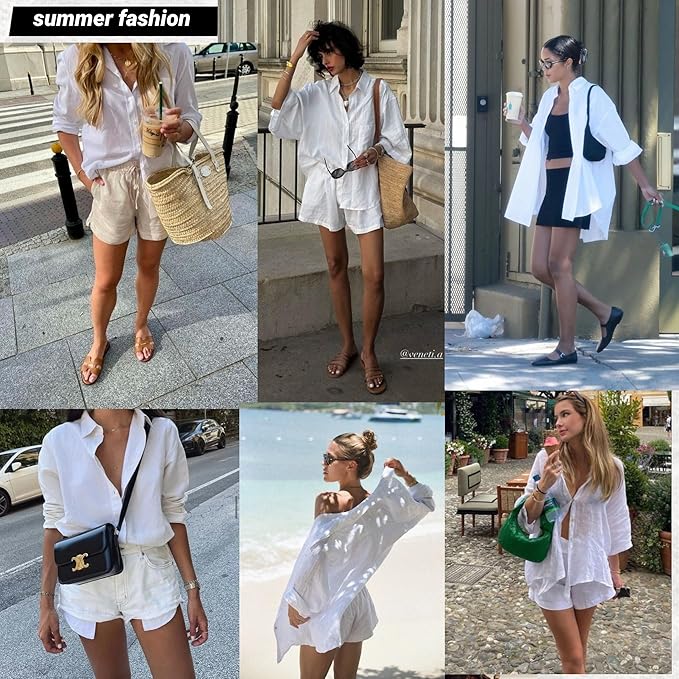
A thin, breathable layer — a linen shirt worn open over a camisole, a lightweight cotton cardigan, or an oversized button-down — solves this without adding bulk to your bag. The trick is choosing something that looks just as good tied around your bag or draped over your shoulders as it does worn properly, because you’ll be putting it on and taking it off constantly throughout the day.
For outfit combos: try a linen tank top with wide-leg trousers and a cropped linen shirt left unbuttoned over the top for that effortless, slightly undone Parisian look.
Local tip: If you’re planning museum days, check our packing essentials for a 10-day carry-on — the layering system we recommend there is exactly what saved me on my worst heatwave days, letting me go from sweltering streets to icy galleries without missing a beat.
Linen Is Your Best Friend (And Cotton Comes a Close Second)
This one surprised me because I’d always associated linen with looking “wrinkled and unfinished” — turns out that’s exactly the point in August Paris.
WHAT TO AVOID:
Synthetic fabrics are genuinely your enemy here. Polyester blends trap heat and sweat in a way that becomes uncomfortable within twenty minutes of walking, and you’ll notice it especially on the metro, where the air barely moves.
WHAT WORKS:
Linen, on the other hand, breathes beautifully, dries quickly if you get caught in a sudden summer shower, and — crucially — looks better slightly creased. That “just stepped off a yacht in Honfleur” rumple is basically the unofficial uniform of August in France.
Cotton poplin is your second-best option, especially for shirts and lighter dresses, because it holds its shape a little more if you want something slightly less relaxed for an evening out. I’ve found that a wardrobe built around 70% linen and 30% cotton, in a handful of neutral tones, mixes and matches itself almost without effort.
A combo I wore on repeat: an oatmeal linen midi skirt with a white cotton poplin shirt, sleeves rolled up, paired with simple leather sandals. Swap the shirt for a fitted black tank in the evening and the same skirt instantly feels like a dinner outfit.

Local tip: If you want to see how this same fabric logic plays out in a slightly cooler context, our what to wear in Paris in May guide covers the shoulder-season version of this approach — useful if you’re planning a return trip in spring.
Dresses vs Shorts: What Actually Works on the Street
Here’s something that took me an entire trip to figure out: shorts are fine in Paris in August, but the kind of shorts matters enormously.
Athletic shorts, denim cutoffs, or anything that reads as “beachwear” will mark you instantly as a tourist, and worse, they’re often not accepted for entry into churches or some upscale restaurants. Tailored linen shorts, on the other hand — knee-length or just above, with a slightly structured waistband — read as a genuine summer staple rather than loungewear, and they’re what I see actual Parisian women wearing on hot days.

Dresses, though, are the easier win, and they’re what I’d lean toward if you’re torn. A simple linen or cotton midi dress in a solid colour does double duty: it’s cool against the skin, it photographs beautifully against Haussmannian architecture, and it requires zero thought about “does this top match these bottoms.” The one thing to watch is fit — anything too clingy will feel unbearable by midday, so look for dresses with movement, a slight A-line, or a relaxed shift cut.
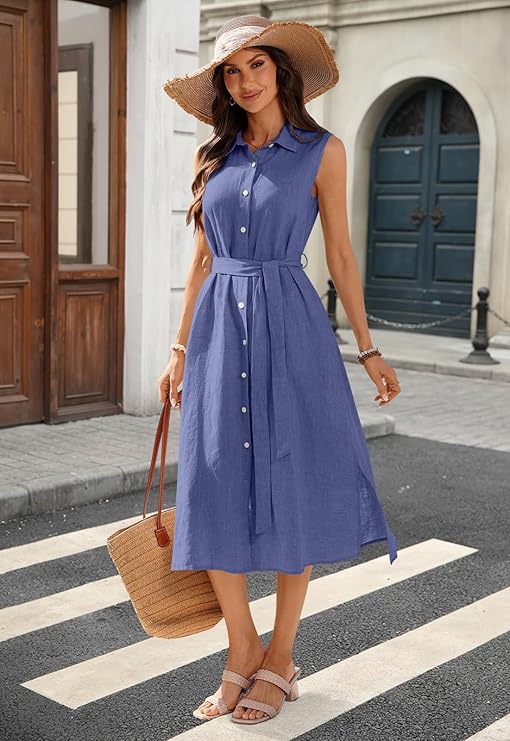
For a day of wandering the Marais and grabbing lunch at a café terrace, I’d go with —-
- midi shirt-dress in a warm terracotta or sage tone, espadrilles, and a straw tote.
- For tailored shorts, pair them with a fitted tank, a blazer draped (not worn) over your arm for evening, and loafers rather than sneakers.

Local tip: For more outfit-by-outfit breakdowns specific to Paris, our 12 Paris spring outfit ideas post has several silhouettes that translate beautifully into summer with lighter fabrics.
Comfortable but Stylish Walking Shoes
I’ll admit it — I brought white trainers on my first August trip thinking they’d be the “smart casual compromise.” By day three, they were grey, slightly damp from sweat, and clashing with literally every outfit I’d packed.
Paris demands a lot from your feet in summer. You’re walking on hot pavement, descending and climbing metro stairs multiple times a day, and probably covering 15,000+ steps without even trying.
Sneakers work, but only if they’re a clean, minimal pair — think leather or canvas in white, beige, or black, nothing chunky or sporty-looking. The “dad shoe” trend has its place, but Paris in August isn’t really it.

My actual favourite August Paris shoe is a good pair of leather sandals with proper arch support — not flip-flops, but something with a back strap or ankle tie that won’t slide off mid-stride.

Espadrilles are gorgeous but can get slippery on smooth marble floors (museums, hotel lobbies) and don’t love sudden rain. I always pack one pair of sandals for daytime and one slightly dressier flat — a ballet flat or a simple loafer — for evenings when sandals feel too casual.
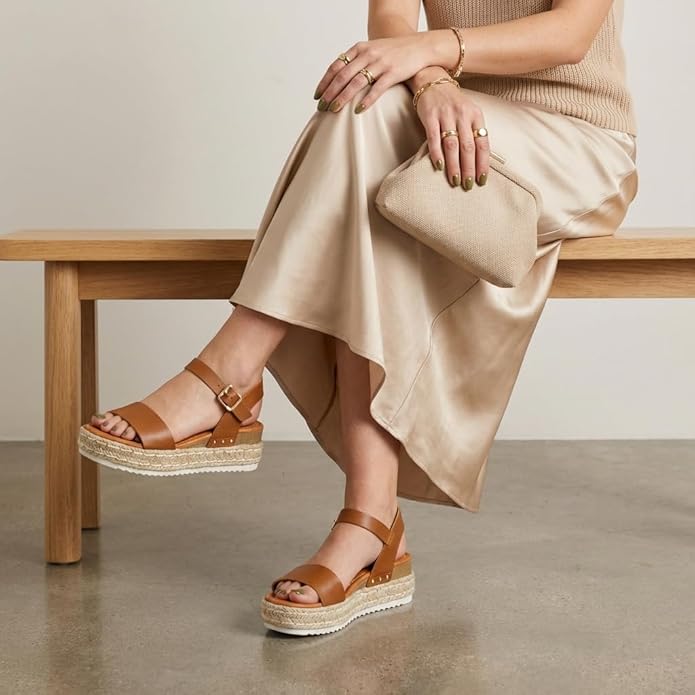
A practical combo: linen trousers, a fitted tee, sandals with a small block heel for daytime sightseeing; then the same trousers with a silk camisole and ballet flats for dinner. Same bottoms, totally different vibe, half the luggage space.

Local tip: Cobblestones around Montmartre and parts of the Marais are particularly punishing in flimsy shoes — if you’re heading up to Sacré-Cœur, do it in the morning before the heat and crowds peak, and you’ll want shoes with real grip on those slopes.
What NOT to Wear (Tourist Mistakes I’ve Made Myself)
This is the section I wish someone had handed me before my first trip, because I made nearly every mistake on this list.
Graphic tees and logo-heavy clothing are the biggest giveaway — not because there’s anything wrong with them, but because they instantly signal “tourist” in a city where even casual dressing tends toward solid colours and simple shapes. Similarly, anything overly athletic — branded gym shorts, performance tank tops, visible sports bras as outerwear — reads as workout clothes rather than summer clothes, even if the fabric is technically more breathable.
Flip-flops are another one. I get the appeal in 33°C heat, but they’re genuinely impractical for the amount of walking you’ll do, and they’re not accepted in a surprising number of restaurants and churches. Similarly, very short shorts or anything that could be mistaken for swimwear will get you side-eyed (or turned away) at religious sites — more on that below.
The last mistake, and one I’m slightly embarrassed by, is overdressing for the heat out of habit — packing jeans “just in case” and then wearing them once, sweating through an afternoon, and never touching them again. If you’re visiting in August, trust the forecast. You will not need jeans nearly as much as you think.
Local tip: If you want the full picture of cultural dos and don’ts beyond clothing, our things to know before traveling to Paris guide covers a lot of the etiquette details that pair well with this packing advice.
Sun Protection That Doubles as Style
I used to think of sun protection as purely functional — until I realised the right hat and sunglasses are doing about 60% of the “looking pulled together” work in every good August Paris outfit.
A wide-brim straw hat isn’t just sun-smart, it’s basically a Parisian summer accessory in its own right — you’ll see them on women heading to the markets, sitting at café terraces, and strolling through the Tuileries. It shields your face and neck during the brutal midday hours and adds instant texture to even the simplest white-tee-and-trousers combo.

Sunglasses matter too — oversized, slightly retro frames look intentional, whereas tiny sport sunglasses again tip into “athleisure” territory.

Don’t skip sunscreen as part of your “outfit” planning either — a lightweight, non-greasy SPF is essential given how strong the sun gets reflecting off the light-coloured stone buildings throughout the city. I keep a small one in my bag and reapply after lunch, especially before an afternoon in the Tuileries or Luxembourg Gardens.
For an outfit that leans into this: a linen jumpsuit in a pale colour, a wide-brim hat, oversized tortoiseshell sunglasses, and simple gold hoops. It photographs beautifully and keeps you genuinely cooler than you’d expect.

Local tip: If you’re spending an afternoon in the Jardin du Luxembourg or along the Seine, midday shade is scarce — plan your hat-and-sunglasses combo for those stretches specifically, and save the bare-faced, no-hat look for early morning or evening strolls.
Evening Outfits: Dressing for Paris After Dark
Here’s something that genuinely caught me off guard — Paris evenings in August can feel like a completely different climate to the afternoon.
Once the sun dips, temperatures often drop by 8-10 degrees, and a breeze tends to pick up along the Seine and in open squares. What felt unbearably hot at 3pm can feel almost chilly by 9pm if you’re sitting outside at a restaurant with bare shoulders. The solution isn’t to overdress — it’s to plan for that one transitional piece, again.
For dinner: I lean toward a slip dress in silk or a silky-feeling synthetic blend (genuinely fine for evening, since you’re not walking miles in the heat) with a lightweight blazer or oversized shirt over the top.

Paired with the ballet flats or loafers from earlier, this look transitions seamlessly from a sunset apéritif to a later dinner reservation without needing a costume change.

If dresses aren’t your thing, wide-leg linen trousers with a fitted black top and gold jewellery does the job just as well, and has the bonus of being comfortable if your evening involves a longer walk back to your accommodation along the river.
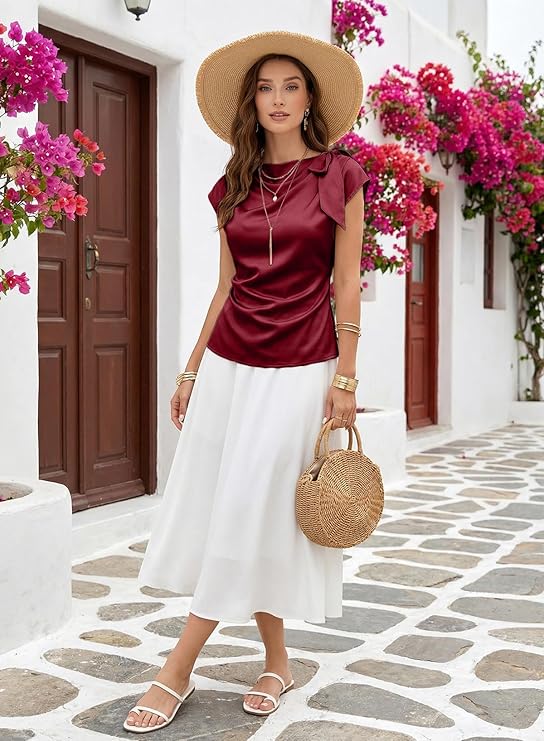
Local tip: For dinner reservations in areas like Saint-Germain or the Marais, “smart casual” is the unspoken dress code — you don’t need heels, but you do want to look like you made an effort, even a small one. Our things to do in Paris guide has some great evening spots worth dressing up slightly for.
What to Wear for Churches (Dress Code Realities)
I’ll be honest — I didn’t take this seriously enough on my first visit, and got quietly turned away from a side chapel in Notre-Dame’s predecessor exhibit because of bare shoulders. Lesson learned.
Most major churches in Paris — Notre-Dame (currently reopened after restoration), Sacré-Cœur, Sainte-Chapelle, and Saint-Sulpice among them — expect shoulders and knees to be covered, regardless of how hot it is outside. This doesn’t mean you need to carry a separate “church outfit,” but it does mean your daytime clothing should be adaptable.
The easiest solution is the lightweight layer from earlier — a linen shirt or scarf that can go from “draped over your bag” to “covering your shoulders” in seconds.

For shorts or skirts, knee-length is the safe zone; anything shorter and you risk being asked to cover up at the door (some churches keep paper ponchos for exactly this situation, but you don’t want to be relying on those).

A reliable church-friendly outfit: a midi linen dress with sleeves (or a sleeveless dress plus a thin scarf for shoulders), flat sandals, and a small crossbody bag that won’t bang against pews as you move through narrow chapel spaces.

Local tip: Sacré-Cœur in particular gets very crowded by midday in August — go early, dress modestly from the start (it saves you scrambling at the entrance), and you’ll also catch the basilica in much softer morning light for photos.
Bags: Crossbody vs Tote, and Why It Matters More Than You Think
I went back and forth on this for years, and August in Paris finally settled it for me: you need both, but for very different days.
A crossbody bag is non-negotiable for busy areas — the metro during rush hour, crowded markets, anywhere near major tourist sites. It keeps your hands free, sits securely against your body, and is simply safer in dense crowds where pickpocketing is a genuine (if often exaggerated) concern. Look for one with a zip closure and a strap that sits across your body rather than just over one shoulder.

A woven tote, on the other hand, is your daytime, market-day, park-picnic bag — roomy enough for a water bottle, a light scarf, sunscreen, and whatever pastries you inevitably end up buying. It’s also just the August Paris aesthetic; you’ll see them everywhere from the Marché des Enfants Rouges to the banks of the Canal Saint-Martin.

My system: crossbody for museum and metro days, tote for market mornings and park afternoons, and on evenings out, I downsize to a small structured bag that just holds essentials — phone, cards, lipstick, nothing else.
Local tip: If your itinerary includes day markets, our things to do in Paris piece has some excellent market recommendations — and trust me, you’ll want the tote bag capacity for what you bring home from them.
Accessories That Elevate Simple Outfits
This is where I genuinely think most travellers underpack, and it’s such an easy fix.
When your base outfits are simple — and in August heat, they should be — accessories are doing the heavy lifting for making things feel “finished.”
A few thin gold or silver layered necklaces, a couple of stacking rings.
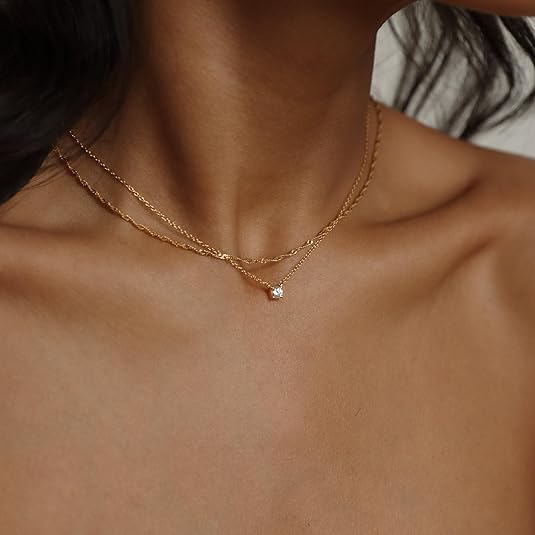
Belts are another underrated one — a simple leather or woven belt can completely transform a loose linen dress or a pair of wide-leg trousers, adding shape without adding heat. And don’t underestimate a good pair of earrings; with hair likely pulled back or up in the heat, your ears become much more visible than usual.
A silk scarf (worn around the neck loosely, tied to your bag, or as the church-shoulder-cover from earlier) can take the exact same white tee and trousers from “fine” to “actually look great.”

I tend to pack one “statement” accessory — a bold scarf or a pair of standout earrings — and build a few outfits around it, rather than packing five different accessory sets that never quite get worn.
Local tip: The vintage shops around the Marais and Canal Saint-Martin are wonderful for picking up exactly this kind of scarf or jewellery piece if you want a Paris-specific souvenir that’s also genuinely wearable.
Rain Preparation (Yes, Even in August)
This one might surprise you, given everything I’ve said about heat — but August storms in Paris are a real thing, and they tend to be sudden and dramatic rather than the gentle, all-day drizzle you might associate with Paris in spring.
These storms usually arrive as a brief, heavy downpour — sometimes with thunder — that clears the air and drops the temperature noticeably, before the sun comes back out within an hour or two. The problem is they’re hard to predict, and if you’re caught without protection, you can go from comfortably dressed to soaked through in minutes.

A compact umbrella that fits in your tote bag is honestly the single most useful item I never used to pack. I also keep a lightweight, packable rain jacket — not a heavy raincoat, just something that folds into a small pouch — for days when the forecast looks unstable.
Avoid suede shoes on days with storm warnings; leather and canvas dry out far more gracefully.
After a storm, temperatures often drop a few degrees and the air feels fresher, which is honestly one of my favourite times to be out walking — fewer crowds, softer light, and that distinctive just-rained-on-stone smell that I genuinely associate with Paris now.
Local tip: If a storm rolls in while you’re out, covered arcades like the Passage des Panoramas or Galerie Vivienne are perfect shelter spots — and worth a wander even in good weather.
Fabrics to Choose (and Avoid)
I touched on linen and cotton earlier, but it’s worth being specific about the full list, because fabric choice in August Paris isn’t just about comfort — it affects how you look by the end of a long day.
Choose: linen, lightweight cotton (especially poplin and voile), tencel or viscose blends (these drape beautifully and resist wrinkling more than pure linen), and silk for evening pieces — yes, even in summer, a silky camisole or slip dress feels luxurious without being hot, since silk is naturally breathable.
Avoid: polyester and most synthetic blends (they trap heat and often develop a sheen of sweat by midday), heavy denim (fine for one evening look, miserable for all-day wear), and anything with a tight, structured fit in non-breathable fabric — that includes some “smart” trousers that look great but turn into a sauna by 2pm.
The fabric test I use now: if I scrunch it in my hand and it springs back perfectly with no creasing, it’s probably synthetic and probably going to be too hot. A little wrinkle-prone is exactly what you want.
Local tip: Department stores like Le Bon Marché and Galeries Lafayette have excellent linen and cotton sections if you find yourself underpacked — both are air-conditioned, which is a nice bonus on a heatwave day.
The Air-Conditioning Paradox (Indoor vs Outdoor Dressing)
I’ve mentioned this a few times already, but it deserves its own section because it genuinely shapes how I pack now.
Paris doesn’t have the universal, blasting air conditioning you might find in, say, the US — but where it exists (major museums, high-end restaurants, some hotels, the newer metro lines), it’s often set quite cold, creating a jarring contrast with the 30°C street outside. This is different from the outdoor heat management most packing guides focus on, and it’s the reason a single lightweight layer earns its place in basically every outfit on this list.
The other side of this paradox is the metro itself — older lines without air conditioning can feel like a furnace during rush hour, while newer ones (like Line 14) are noticeably cooler. You genuinely can’t predict which you’ll get, so dressing in breathable layers that can be added or removed quickly is the only real solution.
My rule of thumb: if my itinerary includes a major museum (Louvre, Musée d’Orsay, Centre Pompidou), the lightweight layer goes in the bag, no exceptions — even if it feels unnecessary when I leave the apartment.
Local tip: The Musée d’Orsay in particular keeps its upper floors quite cool — if you’re spending a few hours there after a hot morning outside, you’ll be glad of that cardigan.
Capsule Wardrobe for Paris in August
After several trips, I’ve landed on a capsule that covers almost every scenario without needing more than a carry-on.
The base: two pairs of linen trousers (one neutral, one in a colour like sage or terracotta), one linen or cotton midi skirt, two midi dresses (one casual, one slightly dressier for evenings), and tailored linen shorts as a backup.
For tops: three lightweight tees or tanks in neutral tones, two button-down shirts (linen or cotton, for layering and church coverage), and one silk camisole for evenings.
Outerwear is just the two lightweight layers already discussed — a linen shirt-jacket and a packable rain jacket.
Shoes: leather sandals, ballet flats or loafers, and one pair of clean minimal sneakers if you’re doing a day trip that involves more rugged walking.
Accessories round it out: one statement scarf, layered jewellery, a wide-brim hat, sunglasses, crossbody bag, and tote.
Everything in this capsule mixes with everything else — the two-colour-family approach (neutrals plus one or two accent tones) means you genuinely can’t put together a “bad” combination, which takes so much mental load off your mornings.
Local tip: If you’re combining Paris with another destination on a longer European trip, our France itinerary and city guides are useful for figuring out how this capsule adapts as you move between cities.
Practical Packing: How Much Is Actually Enough
Here’s where I’ll save you from my own overpacking history: for a week in Paris in August, you genuinely need fewer outfits than you think, because of how mix-and-match the capsule above is.
A good rule is roughly one “outfit” per day if you’re counting combinations rather than individual pieces — meaning with around 10-12 versatile items, you can comfortably create 10+ different looks across a week-long trip, especially once you factor in accessories changing the feel of a piece. Doing laundry mid-trip (most apartment rentals have a washing machine, and linen dries fast in summer heat) means you really don’t need to pack for every single day individually.
The biggest mistake I see — and made myself — is packing “options” for weather you’re unlikely to get. One light layer and one packable rain jacket is enough; you don’t need a backup cardigan and a backup jacket and a backup scarf “just in case.” Trust the forecast, trust the capsule, and leave the extra 20% of your suitcase empty for whatever you inevitably buy while you’re there.
Plan your outfits loosely by activity rather than by day — “museum day” outfits, “market and park” outfits, “evening out” outfits — and you’ll find packing becomes less about counting days and more about making sure each category is covered two or three times over.
Local tip: For a deeper dive into the exact packing system (including how to fit everything into a single carry-on), our 10-day carry-on packing guide walks through the folding and layout approach that’s worked best for this kind of trip.
Before You Go
Paris in August has a rhythm all its own — quieter in some ways, with so many locals away, but buzzing with visitors who’ve come for exactly the romance you’re imagining. Dressing for it isn’t about chasing a perfect “Parisian” aesthetic so much as building a small, smart wardrobe that lets you move easily between a sun-drenched morning at a café, a cool afternoon in a museum, and a warm evening watching the light change over the Seine.
Pack light, choose fabrics that breathe, keep one layer within reach at all times, and trust that the simplest combinations — a linen dress, good sandals, a great pair of sunglasses — will carry you further than you expect. You’re going to have a wonderful time, and honestly, by day three you’ll probably wish you’d packed even less than you did.

