
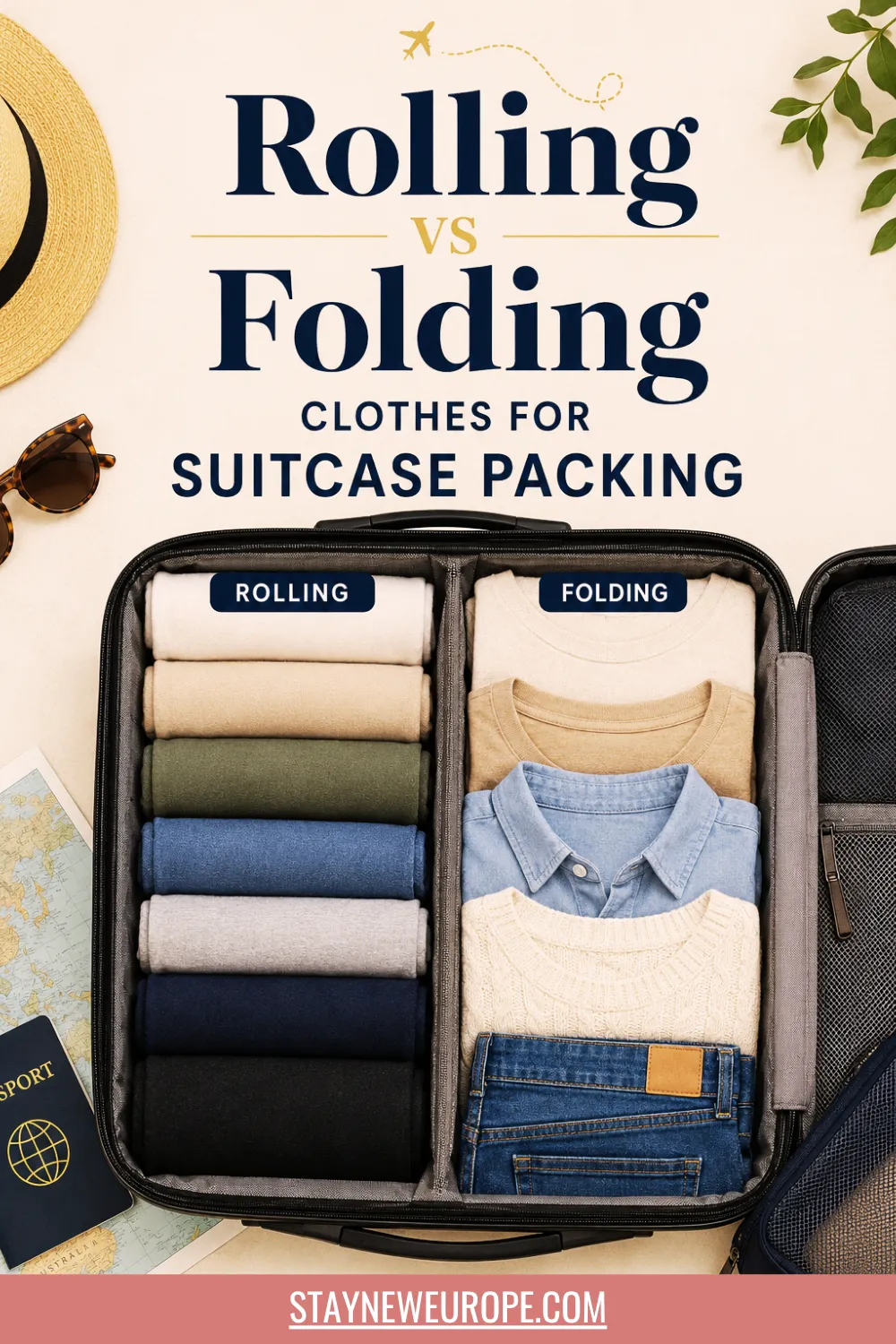
There are two types of travelers: the ones who fold everything neatly like they are packing a boutique shelf, and the ones who roll every piece of clothing like tiny fabric burritos. I have been both. I have folded outfits carefully before a trip, only to arrive with creased trousers, messy corners, and a suitcase that somehow looked full before I even packed shoes.
Then I tried rolling. At first, it felt a little too “travel hack” to be true. But after using both methods on weekend trips, long vacations, summer city breaks, and overstuffed carry-ons, I learned that the answer is not as simple as “rolling saves space” or “folding prevents wrinkles.” Both methods work, but they work best for different clothes.
So, if you are trying to pack smarter, keep your outfits looking good, and avoid sitting on your suitcase just to close it, here is the honest breakdown of rolling vs folding clothes for suitcase packing — and which one is actually better.
The Classic Packing Debate: Rolling or Folding?
Packing clothes sounds simple until you are standing in front of an open suitcase with five outfits, three pairs of shoes, toiletries, accessories, and absolutely no idea how everything will fit.
For years, folding was the default method. It is how clothes are stored in drawers, how stores display them, and how most of us learned to pack from our parents. Fold the shirt, stack the jeans, place dresses on top, and hope nothing shifts too much.
Rolling, on the other hand, became popular because of backpackers, frequent flyers, and carry-on-only travelers. The idea is simple: instead of stacking clothes flat, you roll each item tightly and line them up inside your suitcase. It looks more compact, and in many cases, it really is.
But when it comes to travel fashion, the goal is not only fitting more clothes. You also want your outfits to arrive wearable. A suitcase full of wrinkled linen, crushed blazers, and misshapen dresses is not exactly a packing success.
That is why the best method depends on three things:
- What type of clothing you are packing
- What kind of suitcase or bag you are using
- Whether your priority is space, wrinkle prevention, or outfit organization
After testing both methods many times, my honest opinion is this: rolling is better for most casual travel packing, but folding is still better for structured, dressy, or delicate pieces.
Which Method Saves More Space?
For most everyday travel clothes, rolling saves more space than folding.
This is especially true if you are packing lightweight summer outfits, casual basics, or lots of separates. T-shirts, tops, skirts, soft trousers, and casual dresses become much more compact when rolled.
The reason rolling works so well is that it reduces empty air pockets. Folded clothes often sit in uneven stacks. Some items are thick, some are thin, and gaps form between layers. Rolled clothes can be packed tightly together, which makes the suitcase feel more efficient.
For example, if I am packing for a summer trip, rolling works beautifully. A few cotton tops, linen shorts, a lightweight dress, sleepwear, and a swimsuit can take up surprisingly little space when rolled properly.
But folding can be better for bulky clothing.
Thick jeans, chunky knits, hoodies, and coats do not always roll well. They can become large, awkward cylinders that waste space instead of saving it. In that case, folding them flat may actually be better.
So the space-saving rule is:
Roll soft and lightweight clothes. Fold bulky and structured clothes.
That single rule makes packing much easier.
Which Method Prevents Wrinkles Better?
This is where the debate gets interesting.
A lot of people say rolling prevents wrinkles. That is partly true, but not always.
Rolling can reduce sharp fold lines because the fabric is curved instead of creased. This works well for casual cotton, jersey, knits, stretchy fabrics, workout clothes, and soft dresses.
But if you roll the wrong fabric, it can still wrinkle. Sometimes the wrinkles are not sharp lines, but they appear as soft crumples or twisted marks. This happens often with linen, silk, satin, rayon, and thin cotton shirts.
Folding, on the other hand, creates more obvious crease lines. But for structured pieces, folding carefully along the garment’s natural seams can actually protect the shape better than rolling.
For wrinkle prevention, here is what I have learned from experience:
Rolling is better for:
- T-shirts
- Jersey dresses
- Leggings
- Casual tops
- Soft skirts
- Knitwear
- Loungewear
- Activewear
Folding is better for:
- Button-down shirts
- Linen trousers
- Blazers
- Formal dresses
- Pleated skirts
- Silk or satin tops
- Structured garments
If wrinkles are your biggest concern, the best trick is not just choosing rolling or folding. It is choosing the right fabrics.
Travel-friendly fabrics like jersey, knit blends, viscose blends, ponte, soft cotton, and wrinkle-resistant polyester blends usually survive both methods better than pure linen or crisp cotton.
The Travel Fashion Problem: Packing Outfits, Not Just Clothes
One mistake I used to make was packing individual clothing pieces instead of packing outfits.
I would pack five nice tops, three bottoms, two dresses, and then arrive at my destination realizing that half of them did not actually go together. That is when packing becomes frustrating. You bring more clothes but have fewer wearable outfits.
Rolling helped me because it made me more intentional. When clothes are rolled, you can arrange them by outfit or category.
For example: you can roll a top and skirt together, or keep all tops in one packing cube and bottoms in another.
But folding also has its place in travel fashion. If I am packing a special dinner outfit, a nice dress, or tailored trousers, I do not want those pieces squashed at the bottom of the suitcase. I fold them carefully and place them near the top.
So the best travel fashion packing system is not just about saving space. It is about protecting the outfits that matter most.
The Best Method: A Hybrid Packing Strategy
After trying both methods many times, I do not believe in using only one.
The best packing method is a hybrid strategy:
Roll the soft clothes. Fold the structured clothes. Use packing cubes to keep everything controlled.
This gives you the space-saving benefit of rolling without ruining your nicer outfits.
Here is how I usually pack now:
Bottom layer:
Shoes, toiletry bag, hair tools, and heavier items go first. I place them near the wheel side of the suitcase so the weight sits at the bottom when the suitcase is standing.
Middle layer:
Rolled clothes go into packing cubes or directly into the suitcase. This includes casual tops, T-shirts, sleepwear, leggings, swimwear, and soft dresses.
Top layer:
Folded clothes go on top. This includes trousers, blouses, linen shirts, dresses, and anything I want to keep smoother.
Final layer:
I add accessories, scarves, belts, and small bags in the gaps. If I am bringing a hat, I stuff the inside with socks or underwear to help it keep its shape.
This method keeps the suitcase organized and protects the most important clothes.
Rolling vs Folding by Clothing Type
T-Shirts
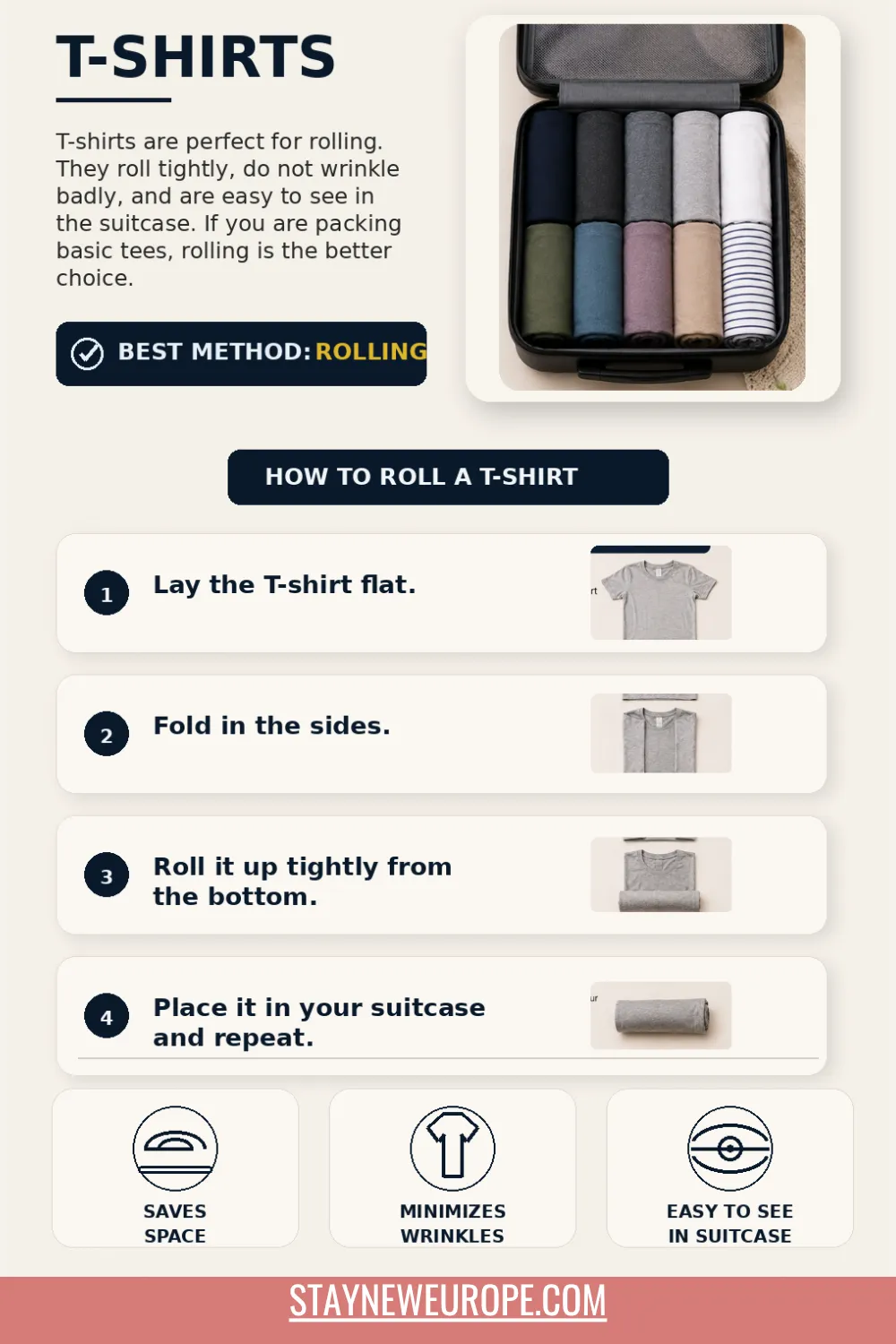
T-shirts are perfect for rolling. They roll tightly, do not wrinkle badly, and are easy to see in the suitcase. If you are packing basic tees, rolling is the better choice.
Best method: Rolling
Jeans
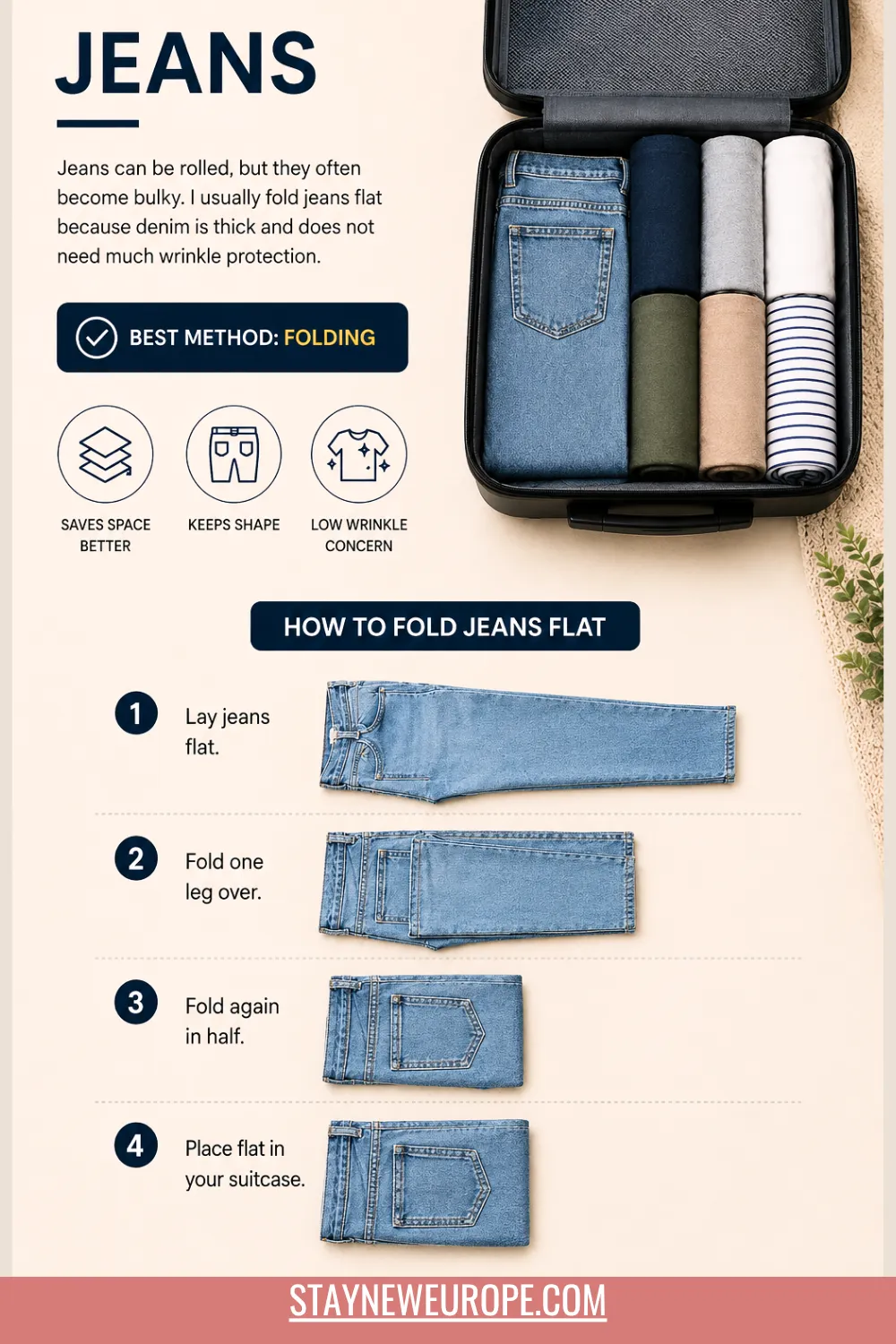
Jeans can be rolled, but they often become bulky. I usually fold jeans flat because denim is thick and does not need much wrinkle protection.
Best method: Folding
Linen Clothes
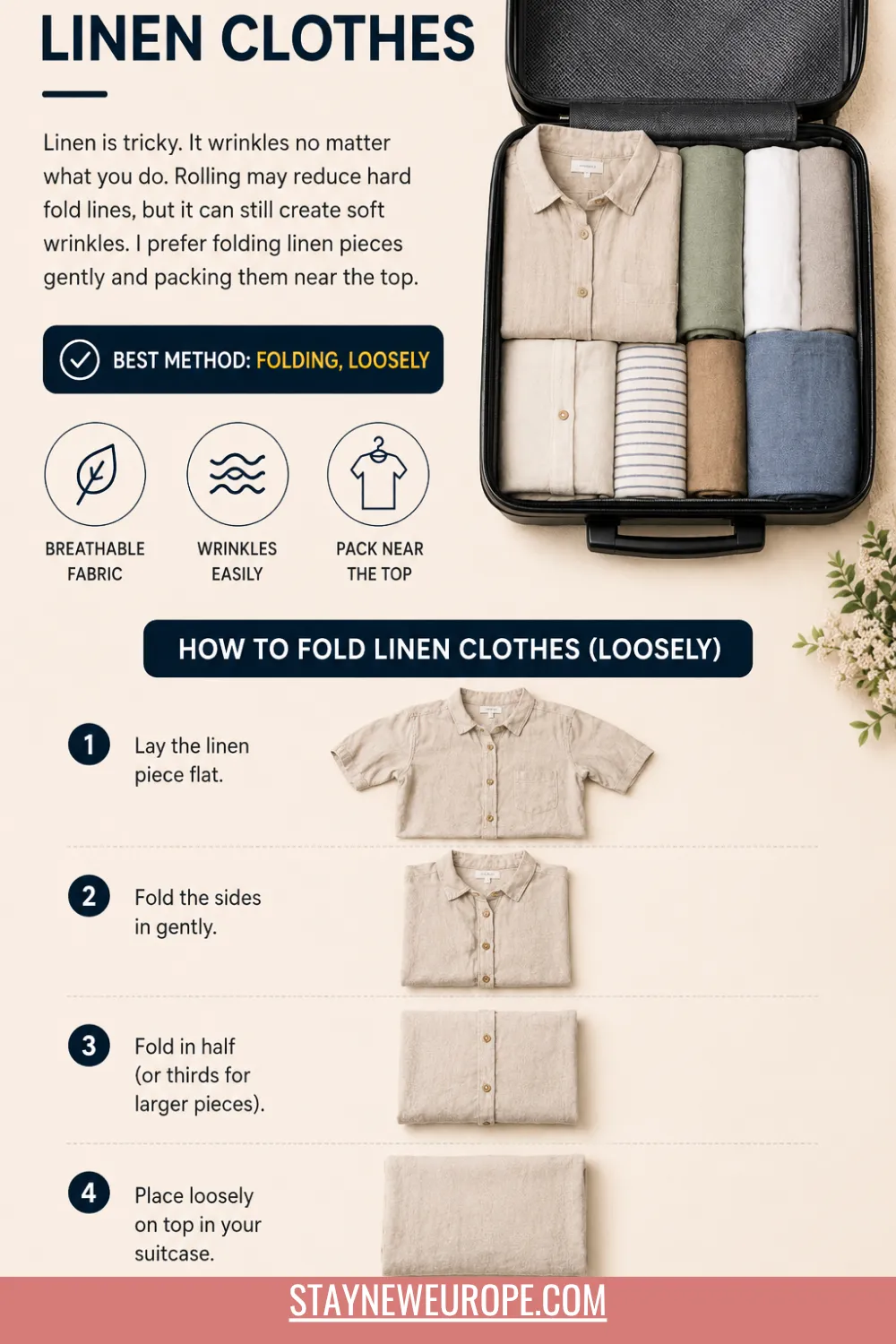
Linen is tricky. It wrinkles no matter what you do. Rolling may reduce hard fold lines, but it can still create soft wrinkles. I prefer folding linen pieces gently and packing them near the top.
Best method: Folding, loosely
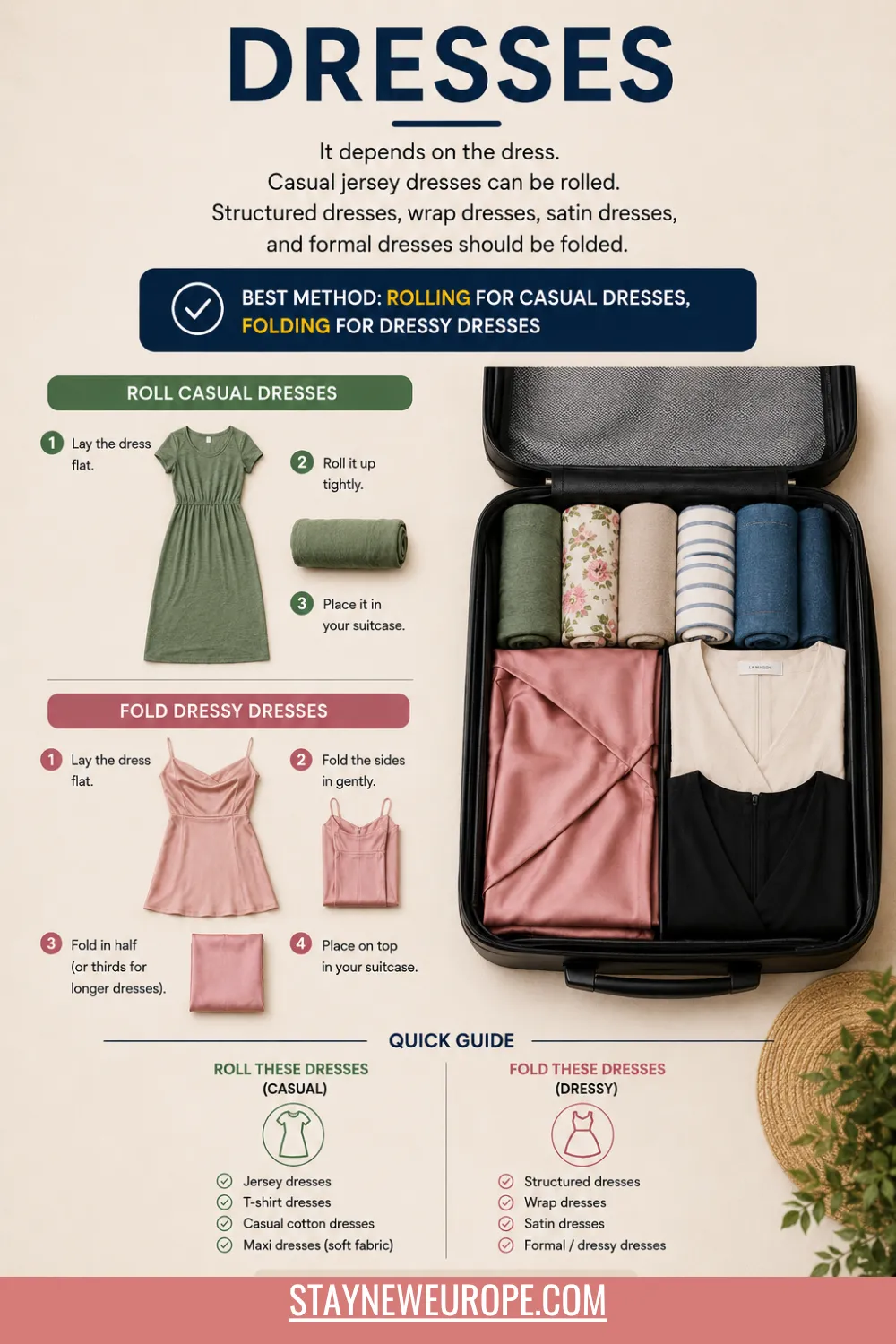
Dresses
It depends on the dress. Casual jersey dresses can be rolled. Structured dresses, wrap dresses, satin dresses, and formal dresses should be folded.
Best method: Rolling for casual dresses, folding for dressy dresses
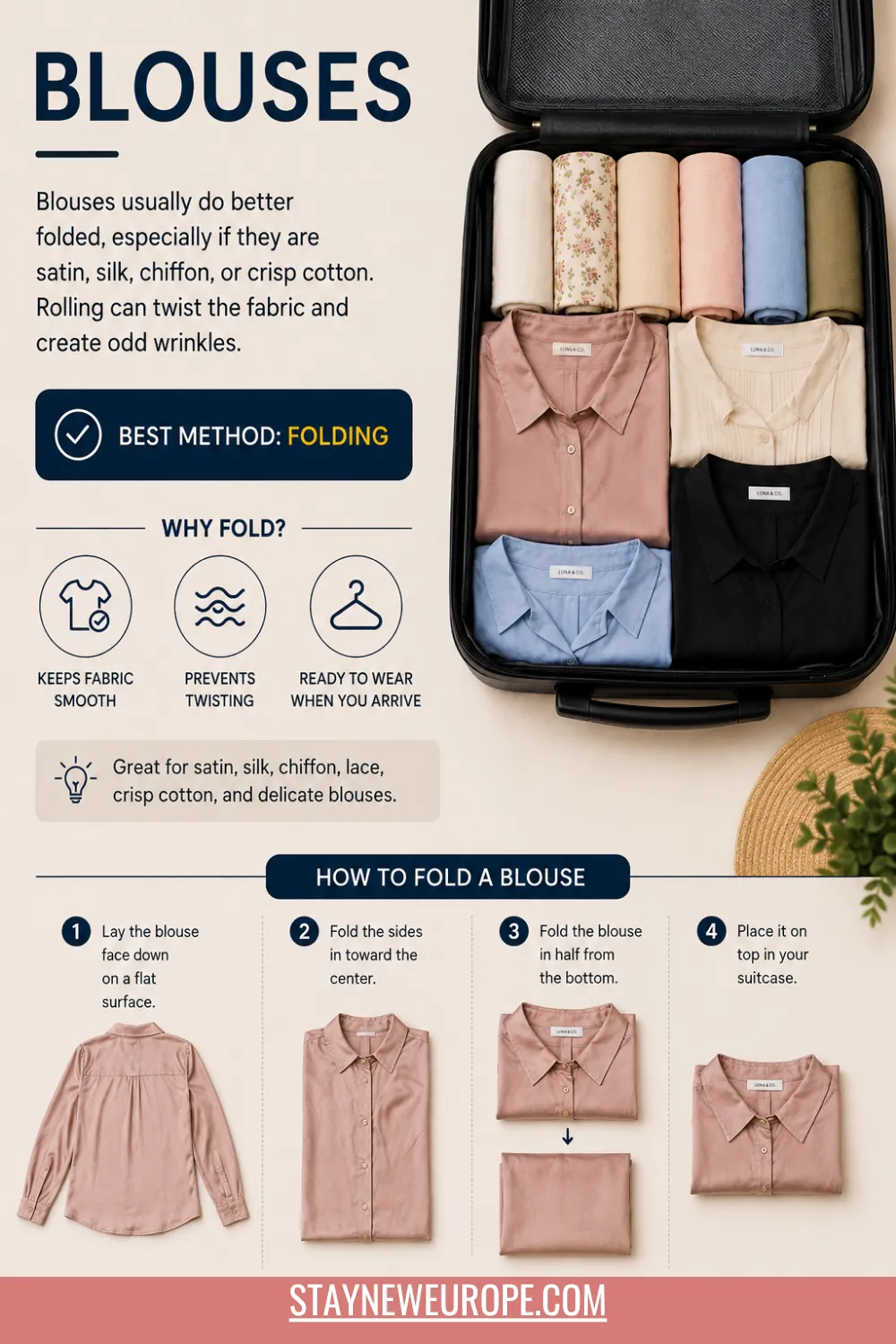
Blouses
Blouses usually do better folded, especially if they are satin, silk, chiffon, or crisp cotton. Rolling can twist the fabric and create odd wrinkles.
Best method: Folding
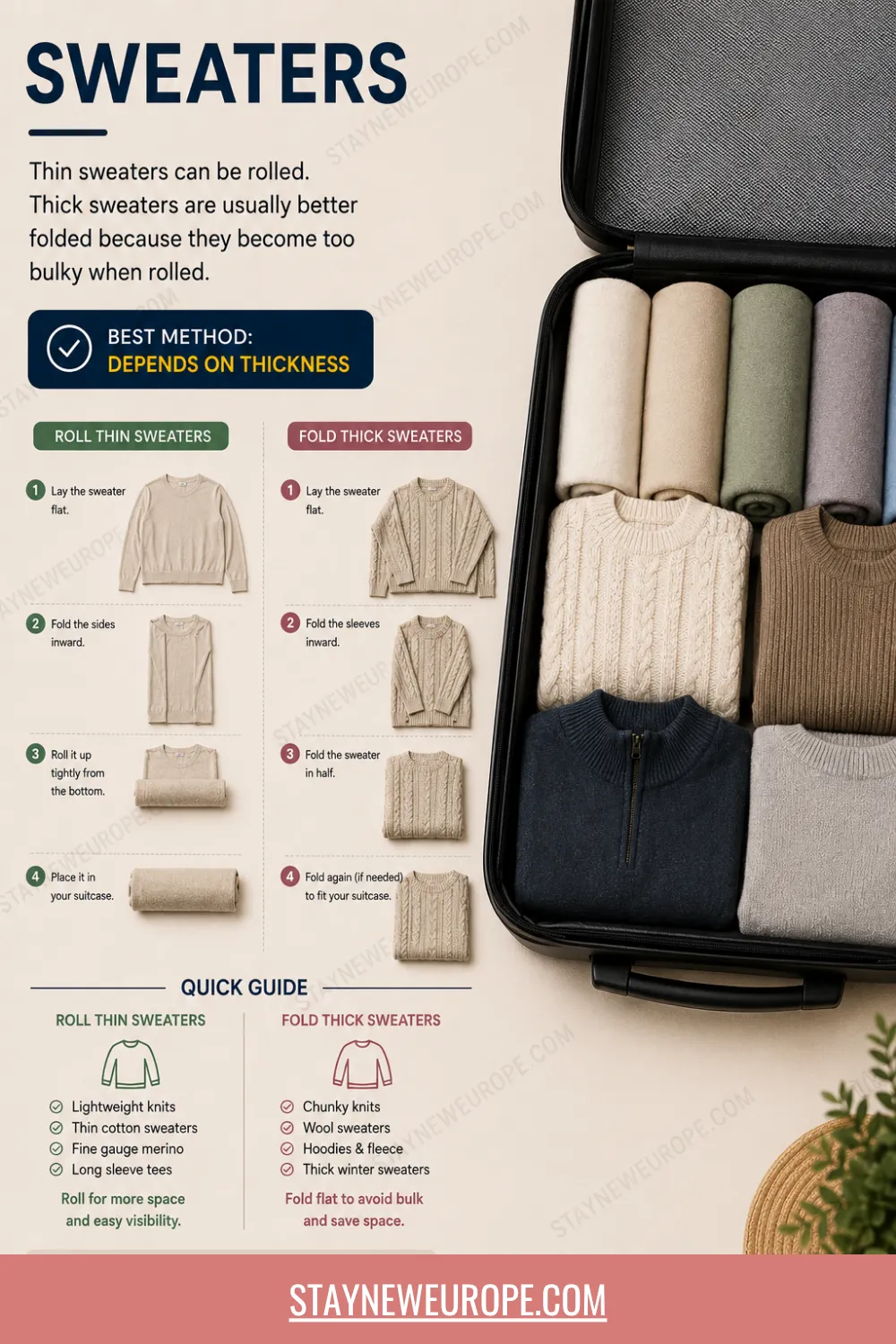
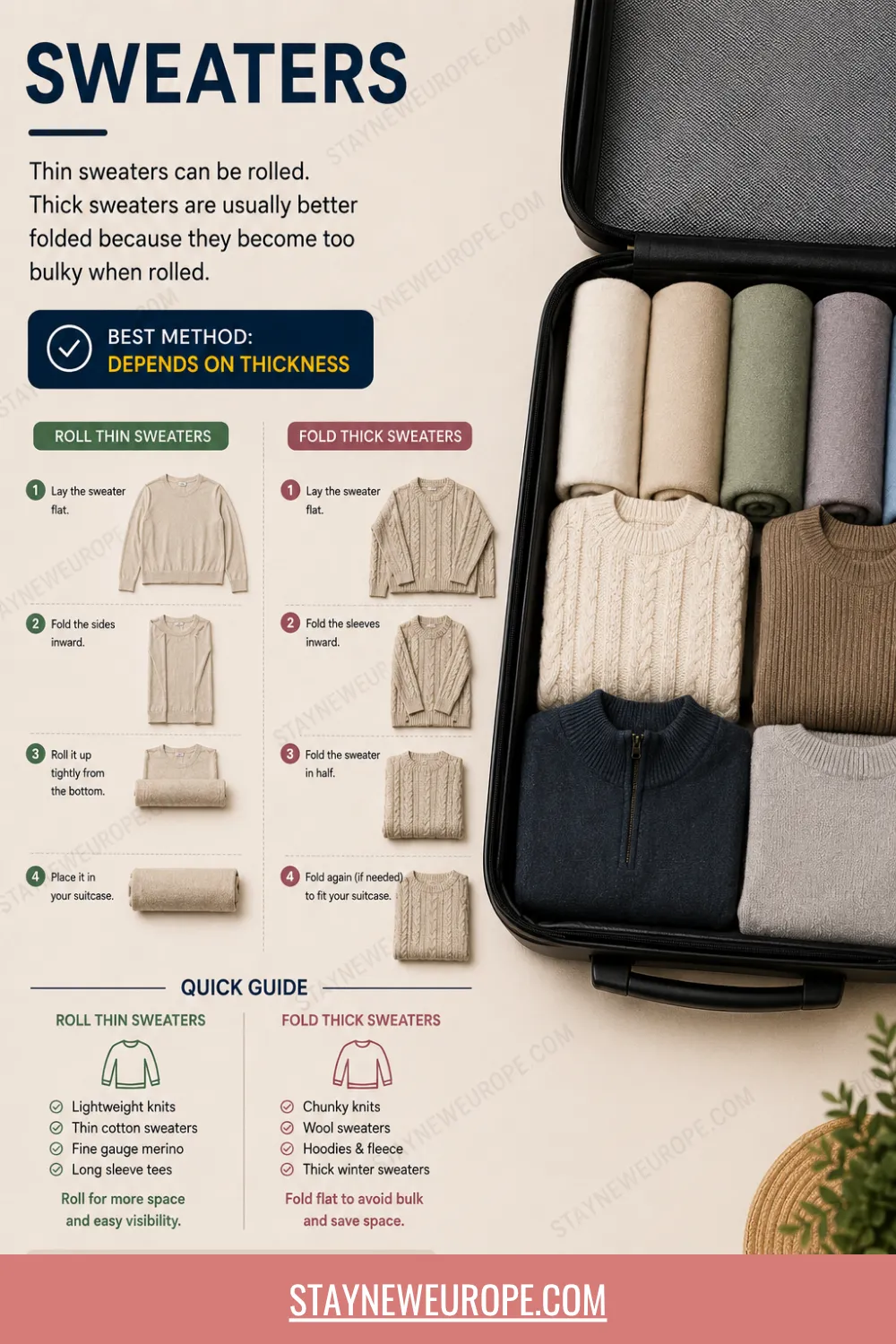
Sweaters
Thin sweaters can be rolled. Thick sweaters are usually better folded because they become too bulky when rolled.
Best method: Depends on thickness
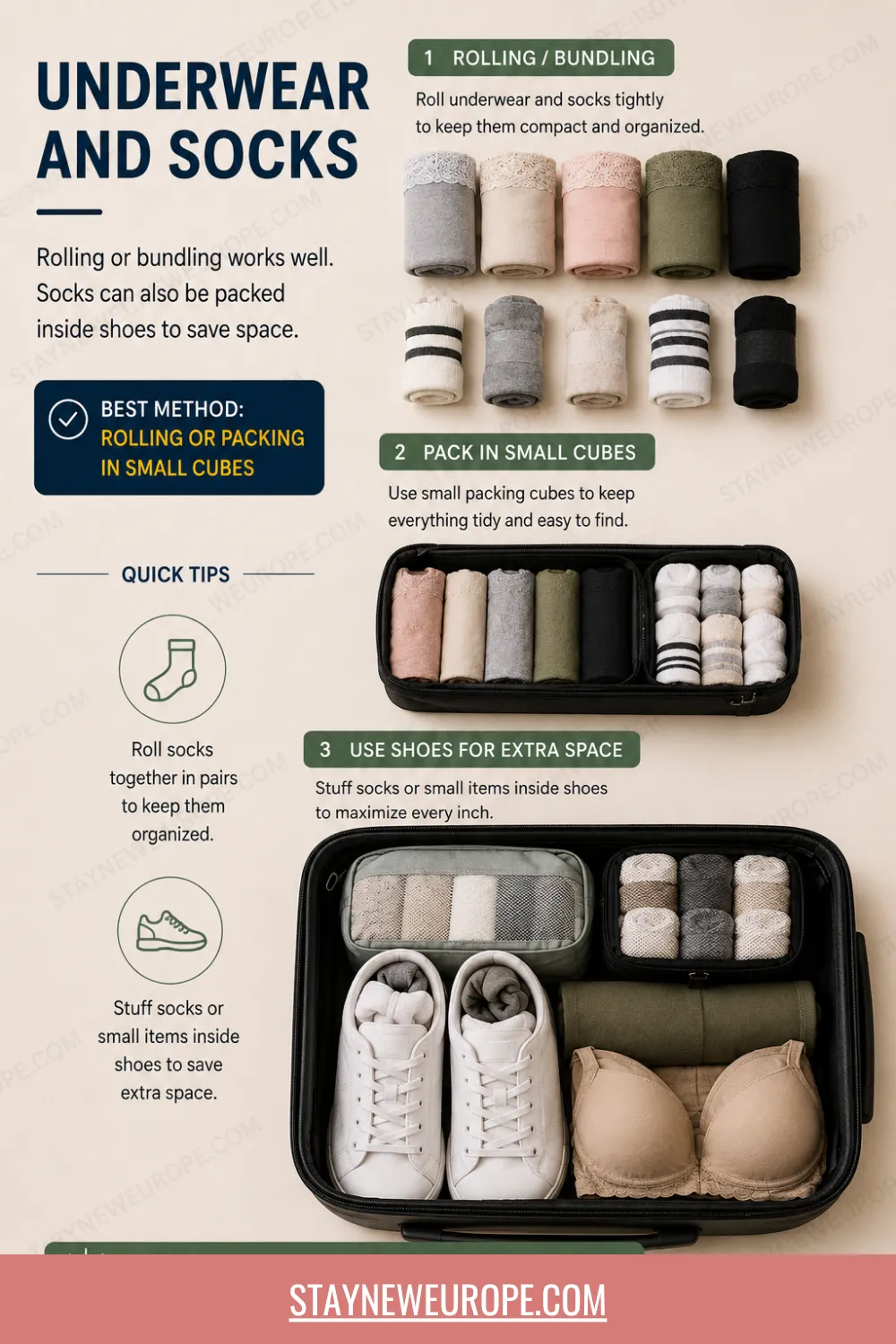
Underwear and Socks
Rolling or bundling works well. Socks can also be packed inside shoes to save space.
Best method: Rolling or packing in small cubes
Blazers
Do not roll a blazer unless you absolutely have no other choice. Fold it carefully or wear it during travel.
Best method: Folding or wearing
Where Packing Cubes Fit Into the Debate
Packing cubes make both rolling and folding better.
Without packing cubes, rolled clothes can loosen and folded clothes can shift. With packing cubes, everything stays compressed and organized.
For rolling, packing cubes are especially helpful because you can line up the rolls vertically. This makes it easy to see every item at once.
For folding, packing cubes help keep stacks from sliding around. They add structure to the suitcase and make unpacking easier.
If you travel often, packing cubes are worth it. You do not need a complicated set. Even two or three cubes can make a big difference.
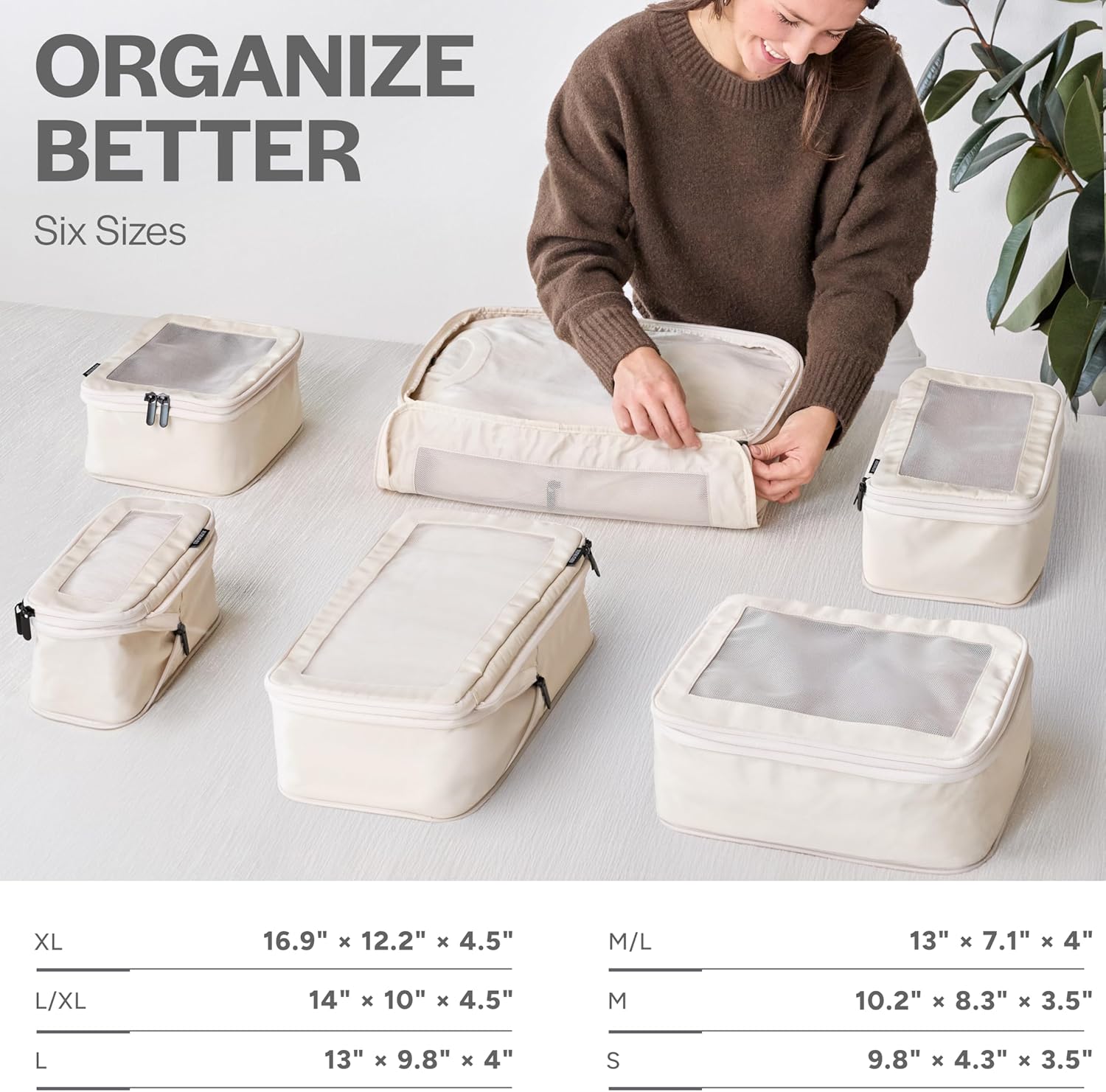
I like using them this way:
- One cube for tops
- One cube for bottoms
- One cube for underwear, sleepwear, or swimwear
- Folded delicate pieces placed outside the cubes or in a garment folder
This makes the suitcase feel less like a pile of clothes and more like a small wardrobe.
The Wrinkle-Free Packing Tricks That Actually Help
Whether you roll or fold, these small habits make a noticeable difference.
Do not overpack
Overpacking causes wrinkles because clothes are crushed under pressure. A full suitcase is fine, but an overstuffed suitcase is where problems begin.
Pack heavier items at the bottom
Shoes, toiletry bags, and heavy clothes should not sit on top of delicate items. Keep weight low and balanced.

Use tissue paper or dry-cleaning bags for delicate clothes
For silk, satin, or formal pieces, placing a thin layer between folds can reduce friction and wrinkles.
Hang clothes as soon as you arrive
This is one of the easiest fixes. Hang dresses, shirts, trousers, and blouses immediately after unpacking.
Use the bathroom steam trick
Hang wrinkled clothes in the bathroom while you take a hot shower. It will not replace ironing, but it can soften light wrinkles.
Plus to save space you can fit everything in a compact zip pouch —

Choose travel-friendly fabrics
The best packing method cannot save every fabric. If you hate ironing while traveling, avoid packing too much pure linen, crisp cotton, or delicate satin.
Which Method Is Better for Carry-On Travel?
For carry-on travel, rolling usually wins.
When space is limited, every corner matters. Rolled clothes are easier to fit into small gaps, and they make it easier to pack more outfit options without creating a huge mess.

Rolling also helps if you are traveling with a capsule wardrobe. You can roll each piece and see your color palette clearly. This makes outfit planning easier because you can quickly spot your tops, bottoms, and layering pieces.
For a carry-on, I recommend:
- Roll casual basics
- Fold one or two dressy pieces
- Wear your bulkiest items on the plane
- Use packing cubes
- Limit shoes to two or three pairs
This is the method that has worked best for me when I want to travel light but still look put together.
Which Method Is Better for Checked Luggage?
For checked luggage, you can use more folding.
Because checked suitcases are usually larger, you have more flat space for folded stacks. This is helpful if you are packing for a longer trip, a wedding, a work trip, or a destination where you need dressier outfits.
However, checked luggage gets handled roughly. Your suitcase may be turned sideways, stacked, tossed, or rolled around. So even in a checked bag, packing cubes are useful.
For checked luggage, I recommend a hybrid method:
- Fold structured clothes
- Roll casual clothes
- Use cubes for small items
- Place delicate outfits near the top
- Keep shoes in separate bags
- Avoid leaving empty space where clothes can shift
The bigger the suitcase, the more important it is to control movement inside.
Which Method Is Better for Fashion Travelers?
If you care about outfits, photos, and looking polished while traveling, the hybrid method is the clear winner.
Rolling alone can make packing efficient, but it may not protect your best pieces. Folding alone can keep some clothes smooth, but it often wastes space and becomes messy during the trip.
A fashion-focused traveler needs both.
For example, imagine packing for a summer trip to Italy, Greece, or Spain. You might bring:
- Linen trousers
- A few fitted tops
- A flowy midi dress
- A satin skirt
- A button-down shirt
- A swimsuit
- Sandals
- A dinner outfit
Rolling everything would not be ideal because the linen and satin pieces may wrinkle. Folding everything would take more space and make the suitcase harder to manage.
So the better strategy is:
- Roll the fitted tops, swimwear, sleepwear, and casual basics
- Fold the linen trousers, satin skirt, and button-down shirt
- Place the dinner outfit on top
- Use accessories to change the look of repeated pieces
This way, your suitcase stays compact, but your outfits still look intentional.
The Final Verdict: Rolling Is Better, But Not for Everything
So, which one is better: rolling or folding?
Rolling is better for saving space, staying organized, and packing casual clothes.
It is the method I would choose for most trips, especially if I am using a carry-on, packing summer clothes, or moving between destinations.
But folding is still better for structured, delicate, or dressy clothes. If an item needs to hold its shape, has sharp seams, wrinkles easily, or belongs to a polished outfit, folding is usually safer.
The real answer is this:
Rolling is the better everyday packing method, but the best suitcase uses both rolling and folding.
Roll what can handle it. Fold what needs protection. Use packing cubes to keep everything in place.
That is the method that saves space without sacrificing style.
My Simple Packing Formula
Underwear: Seven pairs for ten days. With a planned mid-trip laundry stop — more on this shortly — this is more than sufficient. Go for breathable natural fibres where possible; synthetic underwear in Italian summer heat is deeply uncomfortable by mid-afternoon. If you’ve never tried merino wool underwear for travel, Italian summer is an excellent testing ground — it wicks moisture, dries incredibly fast, and can genuinely be worn for longer without problems.
Bras: Two is enough for most people. A neutral-coloured bralette or bandeau for the hotter days and beach contexts, and one more structured option for evenings or when you want more support on walking-heavy days. If you’re planning significant physical activity, a third sports-style option is worth it.
Sleepwear: One lightweight set. summers are warm; you want the absolute minimum here. A soft shorts-and-cami set, or a lightweight cotton sleep dress, packs flat and keeps you comfortable in a warm room. If you typically run cold, a pair of lightweight knit lounge trousers pulls double duty as sleepwear and a layer for cool evenings.

Final Thoughts
Packing is not just about fitting clothes into a suitcase. It is about making your trip easier.
A well-packed suitcase means you can get dressed without stress. You can find what you need. Your outfits make sense. Your clothes are not destroyed by the time you arrive.
After trying both folding and rolling many times, I would never go back to folding everything. Rolling is simply more practical for modern travel, especially if you are trying to pack light.
But I also would not roll everything blindly. Some clothes deserve a little more care.
The best packing method is flexible. It works with your clothes, your suitcase, and your travel style.
So next time you pack, do not think of it as rolling versus folding. Think of it as building a suitcase that actually works: rolled basics, folded statement pieces, and enough breathing room for your clothes to arrive looking like outfits — not laundry.


14 Responses