
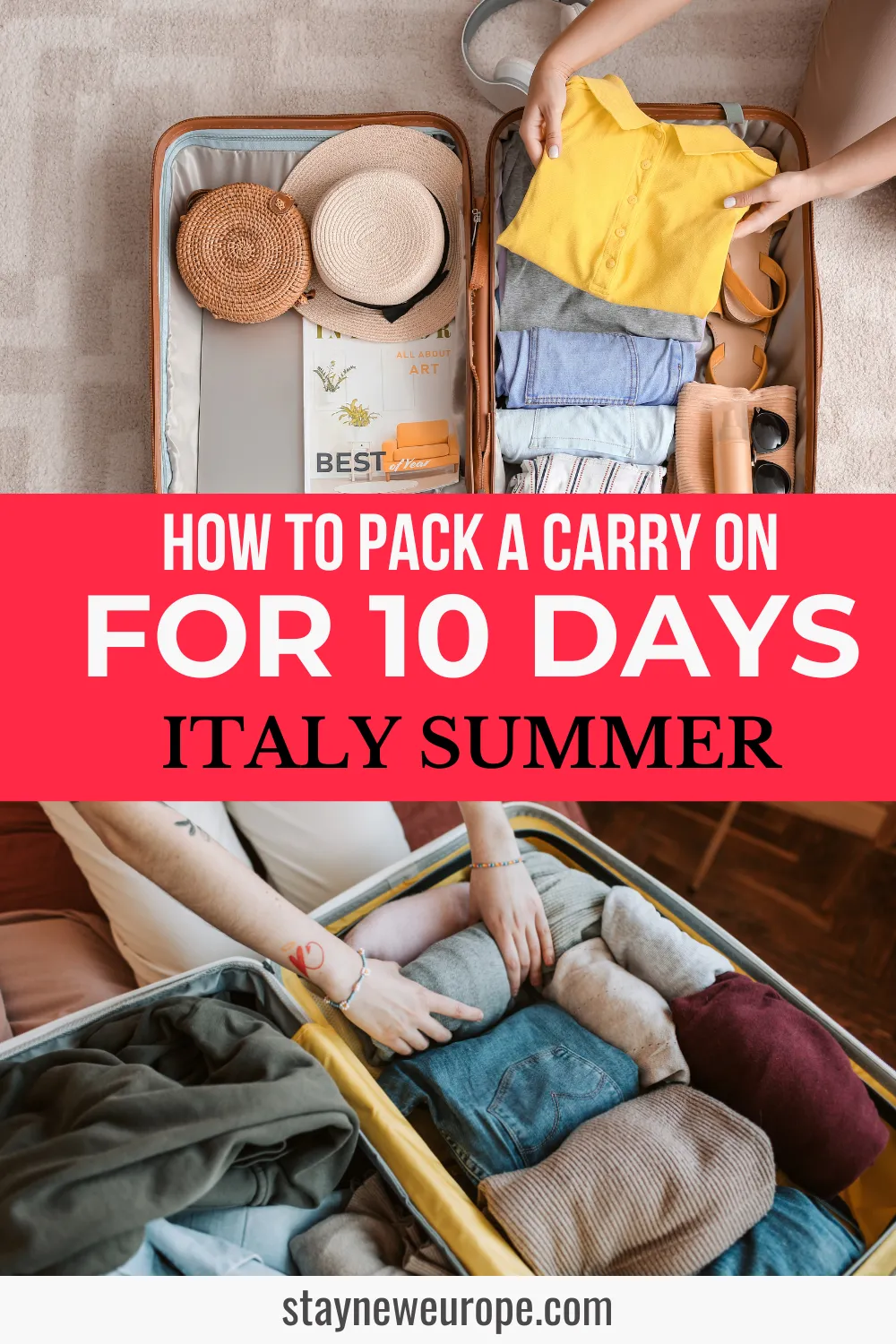
There’s a very specific kind of panic that sets in about three days before an Italy trip. You’ve got a carry-on sitting open on your bed, a weather app showing thirty-four degrees in Rome, a WhatsApp reminder from a friend that the Vatican has a strict dress code, and a voice in your head whispering: just check a bag, it’ll be easier.
Don’t listen to the voice.
I’ve done Italy in ten days with a carry-on more times than I can count at this point — a mix of cities, coastal days, evening dinners that absolutely required something better than the shorts I’d been walking in all afternoon, and at least one sweaty afternoon standing in a basilica queue wishing I’d packed lighter.
What I’ve learned is this: Italy in summer is actually one of the most forgiving destinations for carry-on travel, if you know the formula. The heat works in your favour. Fabrics are lighter. You need fewer layers. And there’s a specific kind of Italian ease — the way a linen shirt and a pair of good sandals can carry you from a morning at the Colosseum to a ten-o’clock dinner without a single outfit change — that you simply cannot access when you’re hauling a checked bag up a five-floor palazzo staircase.
This guide covers everything. The mindset, the clothing formula built specifically for Italian summer heat, what shoes actually survive cobblestones, how to handle church dress codes without packing an extra bag of cover-ups, and the full packing order so you arrive with a bag you can actually lift. Let’s get into it.
Before We Start: Why Italy in Summer Is Actually Ideal for Carry-On Travel
Here’s what most Italy packing guides don’t say upfront: the summer heat is your greatest ally as a carry-on traveller. When temperatures sit between twenty-eight and thirty-eight degrees — which is entirely normal across Rome, Florence, and Sicily from late June through August — you are not packing jumpers, heavy jackets, or thick-knit layers. Your entire clothing philosophy shifts toward lightness, breathability, and pieces that dry fast when you rinse them in the sink at midnight.
Italy is also a country that rewards looking good in simple clothes.
- A well-cut linen shirt.
- a floaty midi skirt.
- clean white trainers or leather sandals — this is the Italian summer aesthetic.
and it also happens to be exactly what carries you through ten days in a small bag. The culture accidentally aligns with minimalist packing in a way that, say, a Norwegian fjord trip or a Scottish hiking holiday simply doesn’t.
The logistical realities of Italy also strongly favour a carry-on. Many of the country’s most beautiful hotels, apartments, and B&Bs occupy historic buildings with no lift and narrow winding staircases. Budget airlines flying into Bergamo, Pisa, or Catania can make checked baggage fees genuinely eye-watering. And if you’re doing what most Italy travellers do — moving between two or three cities in ten days — the freedom of stepping off a Trenitalia train and walking straight out of the station without waiting at a baggage carousel is worth every careful packing decision you made at home. If you’re still deciding which regions to include in your trip, this guide to the best European countries to visit in summer is worth a read first.
So before you even open your wardrobe, accept this: learning how to pack a carry on for 10 days Italy summer is less about deprivation and more about editing. You’re not leaving things behind. You’re choosing smarter.
1. Start With the Right Bag — and Know Your Airline
The bag decision happens before anything else goes in it, and it is more consequential than most people realise.
Italy is served by a mix of major carriers and budget airlines, and the difference in carry-on allowances between them is significant. If you’re flying with Ryanair or Wizz Air into regional Italian airports — which is extremely common and often the cheapest option — cabin bag restrictions are stricter than standard. Ryanair’s free “small personal bag” allowance is just 40x20x25cm; anything bigger requires a paid priority boarding add-on. ITA Airways and British Airways are more generous, typically allowing 55x35x25cm and up to 10kg.
Check your specific airline before you buy a bag or before you start packing, not the day before departure.
For a ten-day Italy summer trip, a hard-shell spinner carry-on in the 20–22 inch range is the sweet spot. The four spinner wheels are non-negotiable — you will be wheeling this thing over Roman cobblestones, Florentine piazzas, and the slightly cursed streets of the Cinque Terre villages, and anything less than four wheels will make you work for every metre. Inside, compression straps and a zip divider are both essential. That divider sounds minor until you’re searching for your charger at the bottom of a fully packed bag at 6am before a train to Naples.

Weigh your empty bag before you start. Some hard-shell cases are heavier than they look, and with a 10kg limit you can’t afford to waste grams on your luggage itself.
Local tip: If you’re flying budget from northern Europe into Italy and then back from a different city (a perfectly sensible multi-city approach), check the carry-on rules for both flights before you pack. Ryanair’s rules on the way in mean nothing if you’re flying home on easyJet with a slightly different allowance.
2. The Italy-Specific Clothing Challenge (And How to Solve It)
Packing for Italy in summer is different from packing for, say, a week in Amsterdam or a long weekend in Edinburgh — and not just because of the temperature. Italy has a specific set of dress requirements and social contexts that affect what goes in your bag:
Church and religious site dress codes. Italy’s churches, cathedrals, and basilicas — and you will visit many — require covered shoulders and knees. The Vatican is particularly strict. Guards turn people away daily, and the shops outside selling emergency scarves and paper skirts will charge accordingly. You need a solution that doesn’t mean packing an extra dedicated outfit.
The heat itself. Thirty-five degrees in Rome in August is not hypothetical — it’s extremely likely. Fabrics that trap heat, hold moisture, or crinkle badly in humidity will make you deeply unhappy. Certain materials that work perfectly for spring travel become unwearable in Italian August.
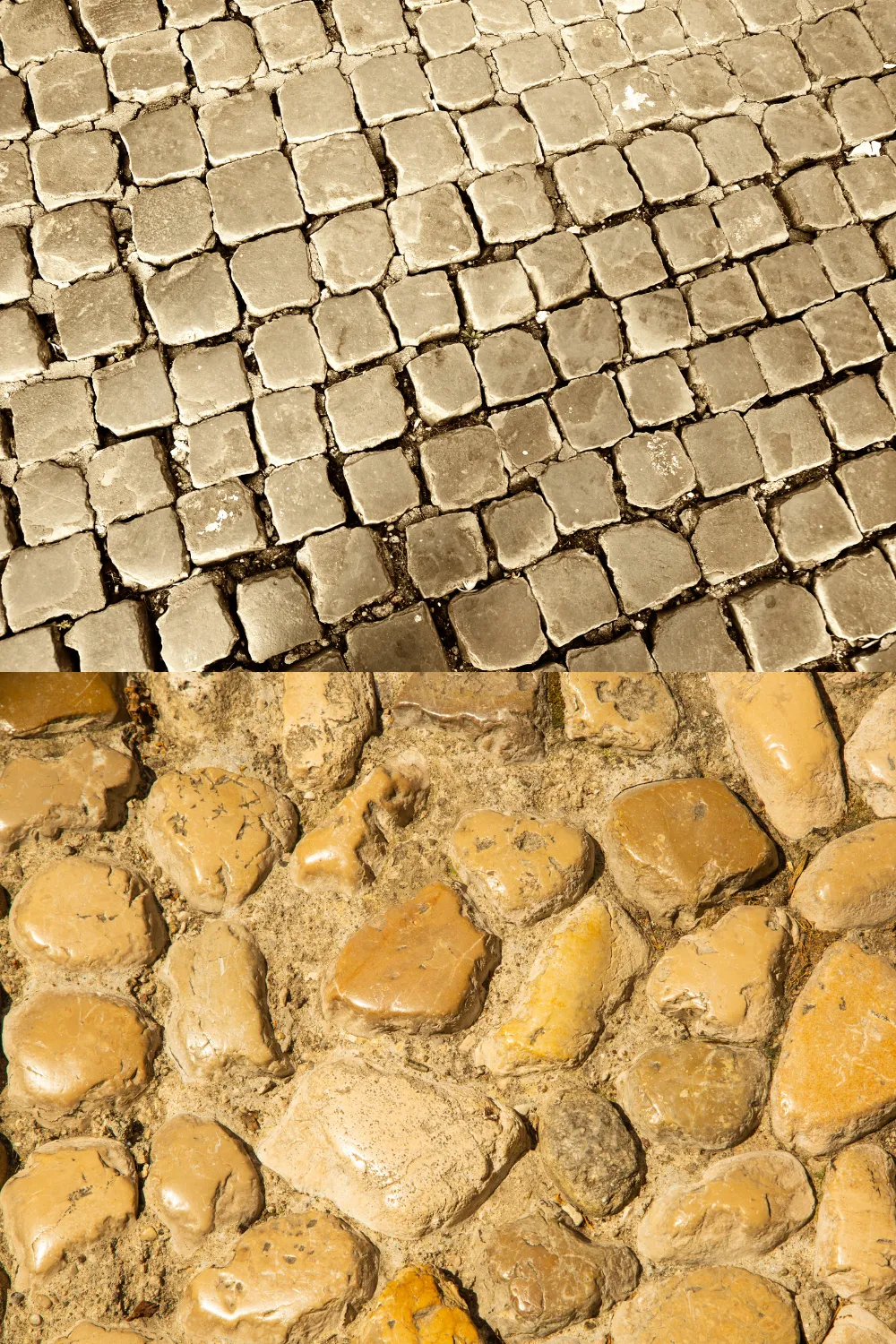
The cobblestones. They are everywhere, they are uneven, and they are ruthless on shoes that weren’t designed for them. Your footwear choices are directly influenced by Italian streets in a way that affects the whole packing equation.
Aperitivo and evening culture. Italians dress up for evenings in a way that’s not always reflected in northern European travel packing guides. You don’t need to bring ball gowns, but you do need at least one outfit that’s genuinely elevated, because a dinner in Florence or a rooftop bar in Positano requires something more than your walking clothes.
The formula I’ve developed solves all four of these realities at once. Here’s how it works.
3. Build a Summer Palette — The Italian Way
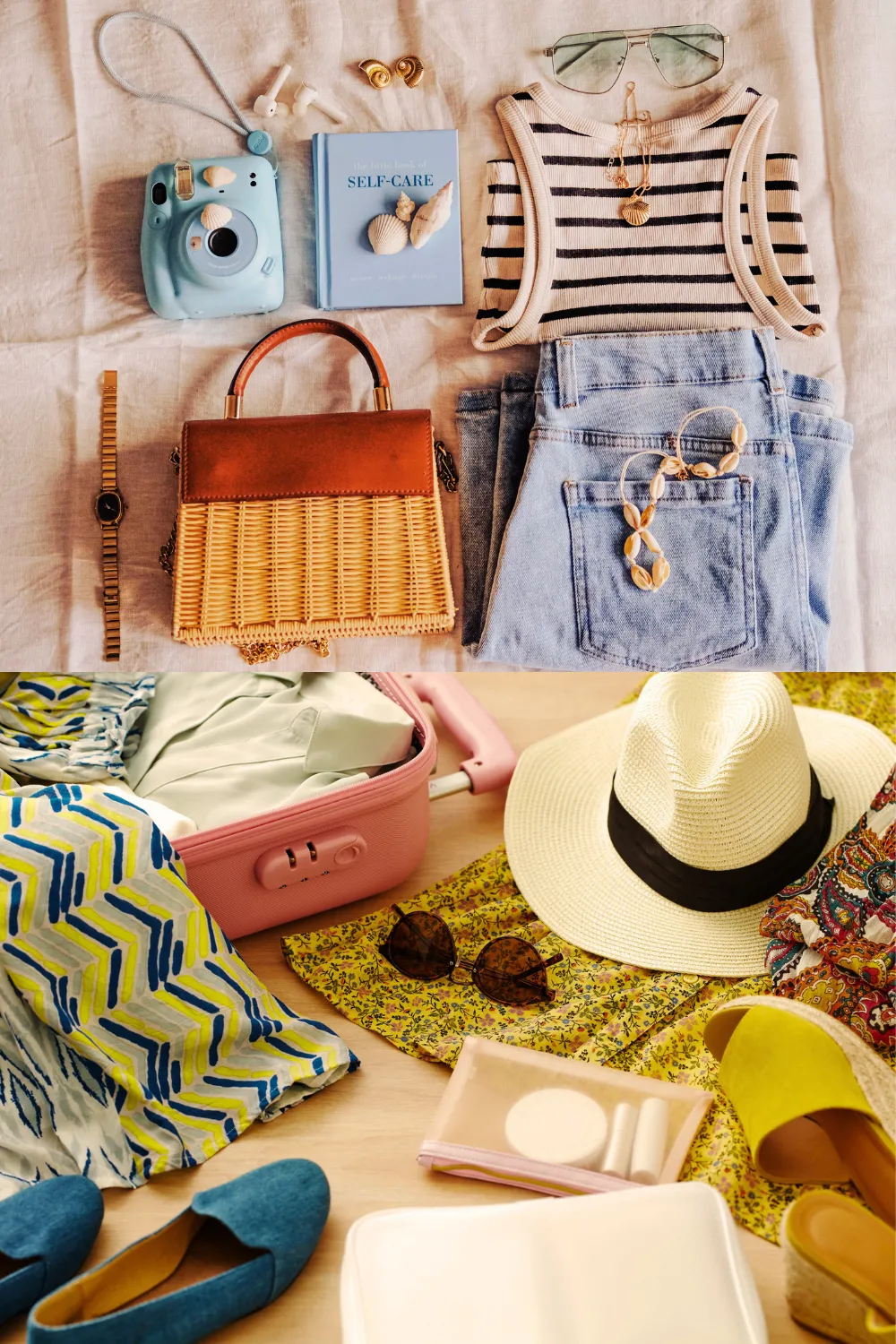
Before you open your wardrobe, commit to a colour palette. This is the single most important decision in the entire packing process, and it’s the thing most people skip. Without a palette, you end up with clothes that don’t mix, accessories that only match half your outfits, and a bag that looks full and still feels like you have nothing to wear.
For Italy in summer.
- I work within a base of white, off-white, and tan.
- with terracotta or dusty rose as a warm accent.
- and one deeper neutral — navy or black — for evenings.
Every piece has to fit within this palette, or it doesn’t make the cut, regardless of how much I like it at home.
The reason this palette works so specifically well for Italy in summer: it mirrors the visual language of the country itself. Cream-coloured linen against warm stone. Terracotta tones that echo the tiled rooftops. White cotton on a sun-bleached Sicilian terrace. You will photograph brilliantly. You will feel like you belong there. And practically, every top works with every bottom, every accessory does double duty, and you multiply your outfit options without adding a single extra item to your bag.
Wild card rule: Allow yourself one piece with genuine personality — a printed silk scarf in an ochre or sage, a boldly patterned blouse that still sits within the warm palette. It stops everything feeling too co-ordinated, and it gives you one outfit that feels genuinely different and fun even on day nine.
4. Tops: Six Pieces for Ten Italian Days
Six tops for ten days sounds like not enough. Combined with the laundry stop that comes later in this guide, it is absolutely more than enough — and in Italian summer heat, you’ll be grateful for every item you didn’t pack.
The six-top formula for Italy:
1. Two lightweight linen or cotton-blend tees — one white, one in your warm accent colour. Linen is the fabric of Italian summer; it breathes, it looks intentional, and it dries fast when you hand-wash it.
2. One linen button-down shirt. This is your most important item for the whole trip. Worn open over a tee, it covers your shoulders and arms for church visits without requiring you to change. Worn done up with your best trousers or skirt, it becomes an evening outfit. Worn tied at the waist over a dress, it’s a completely different look. The linen button-down does more work per square centimetre of bag space than any other item you will pack.
3. One slightly elevated blouse or silky top for dinners and evening outings. Something that shakes out of your bag looking intentional rather than crumpled.

4. One fitted or slightly cropped top in a neutral — for the days when you want to look put-together without visible effort.
5. One striped or patterned top that carries the aesthetic weight of the week. The piece that makes photos look good and that gives your outfits variety when everything else is fairly neutral.

6. One long-sleeve lightweight layer — a thin cotton knit or a silk blend — for overly air-conditioned restaurants, night trains, or the genuinely surprising cool of a Roman evening in late September.
The fabric rule for Italian summer cannot be overstated: linen and natural fibre blends only, wherever possible. Synthetic fabrics in thirty-five-degree heat become unwearable within an hour of putting them on. Test everything at home: wear it for a couple of hours on a warm day, or scrunch it in your hand for thirty seconds and see what happens to the shape. If it comes out looking like a receipt, it belongs in a different trip.
Local tip: Wear your linen button-down on the travel day. It’ll arrive as fresh as it’ll ever be, it covers you for any airport chapel you might wander through, and it sets the tone for the trip.
5. Bottoms: Four Is the Number
Four bottoms for ten Italian summer days. I will stand by this number under any questioning.
The four-bottom formula:
1. One pair of straight-leg or wide-leg linen trousers in a neutral — tan, white, or off-white. These are the most versatile item in your whole bag for Italy specifically. They’re cool in the heat, they cover your legs for churches without feeling heavy, they look elevated enough for dinner, and they go with every top you’ve packed.

2. One midi skirt — floaty, lightweight, in your palette. For hot days, beaches, Amalfi Coast terraces, and the evenings when you want to feel properly dressed without putting any effort in. A wrap skirt is particularly good here because it adjusts as needed and packs to almost nothing.

3. One pair of dark or mid-wash jeans. Yes, jeans in Italy in summer. You’ll thank yourself for the evenings when the temperature drops, for the air-conditioned museums that genuinely go arctic, and for the city days in September when twenty-five degrees feels almost cool. Wear them on the plane so they take up zero bag space.
4. One pair of lightweight shorts or a second casual skirt for days that are simply too hot for anything else — beach towns, Sicily, the Amalfi Coast at peak August.

People notice your tops and accessories far more than your bottoms. The linen trousers will be worn at least three times. Nobody will notice, and nobody will care.
Local tip: Italian white linen trousers are a travel investment, not a liability. Yes, they show marks more readily than dark trousers — bring a small stain removal pen. The versatility and the aesthetic reward are worth the slight extra care.
6. Dresses: Two, and They Do All the Heavy Lifting
Dresses are where Italy packing gets interesting, because a good dress in Italy is genuinely four or five different outfits depending on how you style it. One dress plus a linen shirt thrown over it covers you for a church, a market, a casual lunch, and a slightly smarter dinner. One dress with a blazer or leather-look jacket becomes a genuinely evening-appropriate outfit.
Pack two:
One casual day dress — floaty, lightweight, in your palette. Something you’d wear to wander a hilltop village, eat lunch at a harbour, or spend an afternoon at a vineyard. Jersey and cotton-voile dresses both work brilliantly because they pack flat and shake out well. Wrap styles are particularly good because they’re adjustable, universally flattering, and incredibly packable.

One slightly elevated dress for the evenings and occasions that call for something more considered. This doesn’t need to be formal — Italy’s evening culture is stylish but not stiff — but it should be the piece that makes you feel genuinely great when you put it on, because it will carry the weight of every dinner, rooftop bar, or cultural evening on your trip.

The golden rule for Italian summer dresses: if it requires ironing at home, leave it behind. Structured shift dresses, heavy crepe, anything with volume that needs pressing — these are not carry-on summer fabrics. Linen wrinkles deliberately and charmingly; structured cotton wrinkles apologetically and badly. Know the difference before you pack.
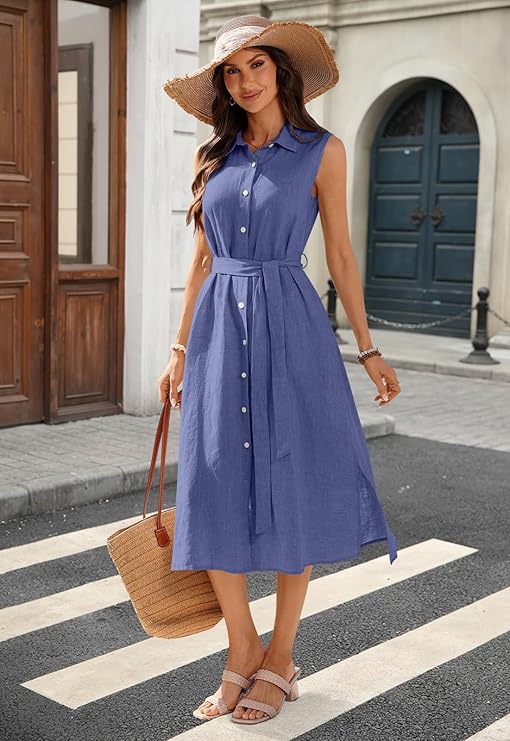
Local tip: A lightweight day dress worn with white trainers, a canvas tote, and your linen shirt tied loosely around the waist is one of the most effortlessly Italian summer looks going. It’s practical, it’s comfortable in the heat, and it photographs beautifully against any Italian backdrop.
7. The Church Cover-Up Strategy (Specific to Italy)
This section exists because Italy has a dress code consideration that most other summer destinations don’t — and getting it wrong costs you time, money, and occasionally entry to a place you’ve been planning to visit for years.
Italian churches and religious sites require covered shoulders and knees. The Vatican Museum and St Peter’s Basilica in Rome have their dress code enforced strictly by guards at the entrance. The Duomo in Florence, the Basilica di San Marco in Venice, and almost every significant church across the country have similar requirements. Some enforce it, some post reminders, and some are relaxed — but you can never guarantee which is which until you’re standing at the door.
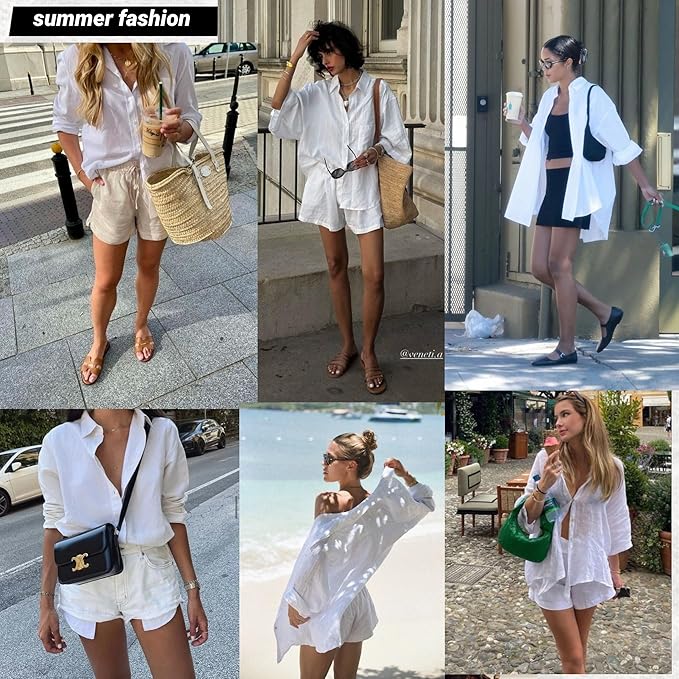
The solution is not to pack a dedicated church outfit. It’s to make your linen button-down shirt your church cover-up. Open over any sleeveless top or dress, it covers your shoulders and arms instantly. If your dress is shorter than knee-length, the combination of a longer shirt and positioning it loose over the front will often satisfy less strict dress code enforcement.
A large lightweight scarf does the same job for your legs when draped over them.

This way you’re not carrying anything extra — you already have the shirt and the scarf. They just happen to serve two purposes.
Local tip: Keep your linen shirt and scarf accessible in your personal item on any day that involves church visits. The worst possible scenario is arriving at the Vatican queue, realising your cover-up is at the very bottom of your bag, and having to unpack in a piazza while a tour group watches.
8. Shoes: The Three-Pair Rule for Italian Cobblestones
Let me be honest with you about shoes and Italy: I used to pack four pairs for Italian trips specifically, reasoning that the variety of contexts — ruins, beaches, dinners, walking days — justified it. I was wrong. Three pairs cover everything, and the key is choosing three pairs that are specifically suited to Italy rather than generic travel footwear.
Pair one: Your main walking shoe. This is the most important shoe choice you’ll make, and in Italy it’s particularly consequential because Italian streets are merciless. Roman cobblestones (sampietrini) are large, rounded, and uneven. Cinque Terre paths are rocky. Amalfi is steep. White leather trainers are the classic answer —

they go with everything, they look intentionally stylish rather than just practical, and modern trainer soles handle cobblestones much better than dress shoes. A well-cushioned sandal with ankle support is an excellent alternative for peak heat. Whatever you choose, they must be broken in before you travel. New shoes on a walking-heavy Italian trip is one of the most reliable ways to have a completely miserable afternoon.
Pair two: Your elevated shoe. A leather loafer, a block-heeled sandal, clean leather mules, or low heeled strappy sandals — the shoe that takes your linen trousers or your dinner dress from day to evening. It doesn’t need to be uncomfortable. It just needs to look like you made an effort. For Italy specifically, flat leather sandals in a tan or nude tone do this brilliantly and transition seamlessly between casual and smart.

Pair three: Your flat sandal or slide. For the beach, for wandering back from dinner on warm evenings, for the hotel or apartment, for days when your feet simply need liberation from proper shoes. These pack flat and weigh almost nothing. Birkenstock-style sandals are popular for good reason — comfortable enough to actually walk in, stylish enough to not look like resort wear.

What you are not packing: heels. I know. But here is the truth about heels and Italian cobblestones — they are not friends. Stilettos get stuck in sampietrini. Kitten heels wobble. Block heels fare better but are still genuinely uncomfortable on uneven surfaces. The block-heeled sandal in Pair Two covers any occasion that might previously have called for heels, and it does so without requiring you to carry your shoes home from a restaurant in your hand.
Local tip: Stuff your shoes with rolled socks, underwear, or accessories to use every cubic centimetre of space. Pack shoes along the edge of your bag near the wheels — this is the bottom when the bag is standing up, and the heaviest items naturally sit better down here.
9. Underwear, Swimwear & Sleepwear
Underwear: Seven pairs for ten days. With a planned mid-trip laundry stop — more on this shortly — this is more than sufficient. Go for breathable natural fibres where possible; synthetic underwear in Italian summer heat is deeply uncomfortable by mid-afternoon. If you’ve never tried merino wool underwear for travel, Italian summer is an excellent testing ground — it wicks moisture, dries incredibly fast, and can genuinely be worn for longer without problems.
Bras: Two is enough for most people. A neutral-coloured bralette or bandeau for the hotter days and beach contexts, and one more structured option for evenings or when you want more support on walking-heavy days. If you’re planning significant physical activity, a third sports-style option is worth it.
Swimsuit: Always pack one. Even if you’re not planning a beach trip. Italy surprises you — a hotel in Florence with a rooftop pool you didn’t know about, a spontaneous boat trip off the Amalfi Coast, a natural lido outside Rome that a local recommends at breakfast. One swimsuit (or a bikini that packs flat) takes up almost no space and opens an enormous number of possibilities.
Sleepwear: One lightweight set. Italian summers are warm; you want the absolute minimum here. A soft shorts-and-cami set, or a lightweight cotton sleep dress, packs flat and keeps you comfortable in a warm room. If you typically run cold, a pair of lightweight knit lounge trousers pulls double duty as sleepwear and a layer for cool evenings.

Local tip: A swimsuit cover-up that also works as a beach dress or a casual daytime piece is one of the most efficient items you can pack for any Italian coastal section of your trip. One piece, many contexts.
10. Toiletries: Italy Has Pharmacies Everywhere
Italy’s farmacia system is one of the best arguments for packing minimally on toiletries. Italian pharmacies are numerous, well-stocked, excellent value, and carry high-quality European skincare, sun protection, haircare, and medication. If you forget something, you will almost certainly find it within a ten-minute walk of wherever you’re staying.
This knowledge should liberate you from packing every contingency into your toiletries bag.

The essentials list:
Travel-size shampoo and conditioner. Decant your favourites into silicone travel bottles — the leak-proof kind — rather than buying travel-specific brands you don’t know. Face cleanser, and a moisturiser with SPF because you will be in direct Italian sun for hours daily and sunburn on day two ruins the whole trip. Toothbrush and toothpaste. Deodorant — and in Italy in August, pack a good one. A small first-aid kit: paracetamol, antihistamine, blister plasters (genuinely essential for cobblestone-heavy days), and a small stain remover pen that will save your white linen trousers at least once.

Sunscreen gets its own mention: pack a full-size tube or pick one up at an Italian pharmacy on arrival. You need more sunscreen in Italy in July than you think you do, and a travel-size tube will not last ten days of proper daily application.
Everything that’s a liquid goes in your transparent liquids bag. For most people, all of it fits comfortably. The discipline is not buying products specifically for travel — it’s decanting the products you already love.
Local tip: Resist packing a hairdryer. Every Italian hotel, B&B, and Airbnb I’ve stayed in across fifteen years of travel has had one. If you genuinely need a specific styling tool that isn’t a basic dryer, a travel-size version is worth packing. But the full-size dryer stays at home.
11. Makeup: Less in Italian Light
Italian summer light has a particular quality that makes almost everyone look better than they do at home. Golden-hour light bouncing off ancient limestone, warm terracotta walls creating perfect backscatter at dusk — you genuinely need less makeup in Italy than in most other travel contexts, and you’ll photograph better with a lighter hand.
A workable ten-day Italy makeup kit:
A tinted SPF moisturiser — this is the single most efficient beauty product for any summer travel and does triple duty as coverage,
- sun protection, and glow.
- A concealer for the dark circles that arrive on long travel days.
- A mascara and a single warm-toned eyeshadow palette with four or five shades.
- Brow product.
- A highlighter that doubles as eyeshadow for evenings.
- Two lip options — a comfortable, slightly tinted lip balm for every day.
- and one proper lipstick for evenings.
- A small setting spray to keep everything in place when the temperature hits thirty-five.

Everything fits in a compact zip pouch. If it doesn’t fit in the pouch, something is getting left behind. The temptation to bring a full foundation routine and contouring setup is real — but here’s the truth: you will not do a full face every morning on a hot Italian trip. By day four, you’ll have stripped back to tinted moisturiser and mascara anyway. Acknowledge this truth at home and pack accordingly.
Local tip: A bold red lip is the single most powerful Italian evening upgrade and takes up approximately zero space. One red lipstick does more for an evening outfit in Italy than any amount of additional packaging.
12. The Accessories That Earn Their Place
Accessories are where carry-on packing either gets clever or gets wasteful. In Italy specifically, the right accessories can entirely transform the same outfit three different ways — which is exactly the kind of multiplication you’re looking for when you’re working with a small bag.
The accessory formula:
One large lightweight scarf. This does so many things. Church cover-up. Shoulder cover on cool evenings. Beach sarong. Picnic blanket on the grass of the Borghese Gallery. Makeshift bag liner when you buy too much at a market. Aesthetic piece that elevates a simple white tee and linen trousers into a properly Italian-looking outfit.

Two or three sets of earrings. A simple small pair for every day, one statement pair for evenings, and one spare. Earrings take up almost no space and do enormous aesthetic work.
One belt in a tan or natural leather. It elevates linen trousers, cinches a floaty dress, and makes any outfit look intentional.
Sunglasses. One good pair. Non-negotiable. The Italian sun is not gentle.

One small crossbody bag or leather clutch that lives in your personal item and becomes your Italy daypack. An anti-theft crossbody is worth its weight — pickpocketing in Italian cities, particularly Rome and Florence, is a genuine consideration and a zippered, slash-resistant bag removes most of the risk.

Local tip: A simple gold necklace or two — delicate, layered — is the Italian accessory move. It works for every context, adds warmth to the neutral palette you’ve built, and takes up absolutely no bag space.
13. Tech and Documents: What You Actually Need
Tech is where bags become quietly heavy without you noticing, and in Italy specifically there are a few things worth thinking through before you pack.
Non-negotiables: Phone and charger. Power bank for long sightseeing days away from sockets. Universal EU travel adapter — Italy uses the standard two-pin EU plug with some exceptions for older Italian sockets (the three-pin Italian format), so a universal multi-adapter that covers both is worth it. Noise-cancelling earphones for flights and long train journeys.

Italy-specific tech note: If you’re planning to use Italy’s Trenitalia or Italo train system between cities — and you should, it’s genuinely excellent — download the apps and book tickets in advance before you leave. Trains between Rome, Florence, Venice, and Milan run frequently and fast, but popular routes on peak summer dates sell out. Having your bookings offline avoids the scramble on arrival.
Documents:
- Passport (valid for at least six months, and with sufficient blank pages).
- travel insurance details in both digital and printed form.
- accommodation bookings printed or screenshotted offline.
- and an EU travel health card if applicable..
- A copy of your passport photo page stored separately from the passport itself — in your phone photos and in your email — is a small insurance policy that costs nothing.
The laptop question: If you’re not working remotely, do you actually need your laptop for ten days in Italy? A tablet with a keyboard covers most things — email, booking management, maps, writing, reading. It weighs significantly less and takes up far less bag space. If the work genuinely requires a laptop, pack it in your personal item, not your carry-on.
Local tip: Download offline maps for every Italian city on your itinerary before you leave home. Data roaming can add up quickly, and standing in a piazza trying to load a map with one bar of signal while the heat radiates off the cobblestones is not the Italian experience you planned for.
14. Your Personal Item: Italy Edition
Your personal item — the bag under the seat in front of you — is your secret weapon for ten days in Italy, and it deserves deliberate planning rather than just being a bag you throw things into.
For Italy specifically, your personal item also becomes your daypack once you land. You’re not going to wheel your carry-on to the Uffizi. You need a bag that works for full days of sightseeing, is secure enough for busy Italian museums and piazzas, and is comfortable in the heat.
What goes in the personal item for Italy:
- Travel documents (always on your person).
- The toiletries you need on the flight.
- Your linen shirt and scarf (accessible for church visits).
- Phone, portable charger, earphones, and travel adapter.
- Sunscreen.
- Snacks.
- A collapsible water bottle to fill after security.
- Any medication. Sunglasses.
- One change of clothes if you’re arriving on a long flight and want to change immediately.
A medium-sized structured backpack works brilliantly for this dual role — plane personal item and daily Italy bag. An anti-theft design with hidden zips and a lockable main compartment is worth the slight extra cost given Italian pickpocket statistics.

Local tip: Keep your passport and wallet in an inside zip compartment that sits against your body. Touristy areas of Rome and Florence — around the Trevi Fountain, on the Metro, near the Vatican — have a well-documented issue with pickpocketing, and a bag that keeps your valuables genuinely inaccessible from the outside removes the stress entirely.
15. Packing Cubes: Non-Negotiable
If you haven’t yet started using packing cubes, this is your sign. They are the difference between a carry-on that’s theoretically organised and one that’s actually retrievable at 6am in a hotel room before a train to Venice.
The magic is not compression alone — it’s that your bag becomes modular. Each cube is a category. When you arrive at a new city, you unpack four cubes into four drawers and you’re done in three minutes. When you leave, you repack four cubes and you’re done in five.

For ten days in Italy: One cube for tops. One cube for bottoms and dresses. One smaller cube for underwear and sleepwear. A flat accessory pouch for scarves, belts, and jewellery. Shoes in separate dust bags or small pouches along the sides of the bag.
Compression cubes — the ones with a secondary zip that squeezes out air — are worth having for your linen shirt and any slightly bulkier items. For tees and underwear, standard cubes are perfectly sufficient.
Local tip: Unpack your cubes into the hotel drawers every time you arrive somewhere, even if you’re only staying two nights. Living out of a suitcase in a warm, slightly chaotic Italian hotel room makes everything feel messier and more stressful than it needs to be. The five minutes of unpacking is always worth it.
16. The Mid-Trip Laundry Stop That Makes Everything Possible
Here it is — the section that makes the whole formula work. Without a planned laundry stop around day five or six, ten days in a carry-on is a genuine stretch. With one, it’s completely comfortable.
Italian cities are full of lavanderie — laundromats — at every price point. Many hotels offer same-day or overnight laundry service. Apartments and Airbnbs increasingly have washing machines. And for the essentials — underwear, tees, the linen shirt — a sink wash with travel detergent and an overnight dry works brilliantly in Italian summer heat, where fabrics dry in three to four hours rather than the twelve you’d wait in northern European drizzle.
The mental reframe is this: you’re not packing for ten days, you’re packing for five and refreshing. That’s the equation. Once you accept the laundry stop as part of the plan rather than a concession or an inconvenience, the whole carry-on packing project becomes dramatically more manageable.
What to pack for laundry: A small bar of travel laundry soap takes up almost no space and means you’re never dependent on finding a laundromat at exactly the right moment. For larger loads, detergent sheets are even more compact and work in both machines and sinks. A few metres of travel washing line — the kind with built-in loops that doesn’t need pegs — means you can dry things over a bath or between two fixed points on a terrace.
The one caveat: Jeans take forever to dry in a sink situation. They need a machine or a service wash. Plan your laundry stop to coincide with when the jeans need attention, rather than leaving it to chance.
Local tip: Many Italian apartment hosts are happy to let you use the washing machine for a small fee or for free, especially on longer stays. It’s worth asking when you check in rather than hauling your laundry to a public lavanderia if you don’t need to. If you’re managing your Italy travel budget carefully, check out our guide to how to travel to Italy on a budget — laundry strategy fits right into the bigger cost picture.
17. How to Pack the Bag: The Order That Actually Works
The contents of your bag are sorted. Now let’s talk about the order, because this matters more than most packing guides admit.
Heaviest items at the bottom (nearest the wheels when the bag is standing upright). This means shoes and any heavier tech that lives in the carry-on. Heavy at the bottom makes the bag stable and means it doesn’t want to tip over when you release the handle.
Packing cubes next. Layer them methodically — bottoms flat first, then the tops cube, then the underwear cube on top where it’s accessible without disturbing everything else.
Toiletries bag in a side pocket or accessible top pocket if your bag has one, or across the top of the cubes where it can come out easily for security. Your liquids bag needs to be accessible for the security tray — know where it is before you get to the conveyor belt.
Accessories and the scarf wherever they fit — in gaps alongside cubes, in side pockets, tucked into the corners where the hard shell curves.
Roll where you can, fold flat where you must. Soft items like tees and knitwear roll tightly and save space. Linen and silk-look fabrics are better folded flat inside a cube with compression applied from the outside — rolling them tends to create permanent crease lines that don’t shake out even overnight.
Once everything’s in: engage the compression straps firmly. Then lift the bag above your head and hold it for thirty seconds. If you can manage this without strain, you’ve nailed it. If not, something needs to come out.
Local tip: Do a test pack at home three days before you leave. Fully pack everything, lift it, carry it around the house for five minutes including up a flight of stairs. Whatever makes you reach for it to lighten the load is exactly what should come out.
18. What to Leave Behind (The Italy-Specific List)
“Just in case” outfits. The same advice that applies to every trip applies doubly to Italy, because Italian cities have incredible clothes. If you forget something or leave behind something you realise you needed, buying a replacement linen blouse in Florence or a new scarf in Rome is not a tragedy — it’s practically a cultural experience.
A second pair of jeans. One pair, worn on the plane, is enough. Two pairs of jeans in an Italian summer carry-on is a heat and a space crime.
High heels. We’ve covered this. Italian cobblestones and heels are enemies. The block-heeled sandal covers any heel-appropriate occasion.
Full-size books. Your e-reader holds everything. Take it.
Matching pyjama sets. One lightweight sleep option. Not two.
Multiple “nice” dinner outfits. You have one elevated dress and your linen trousers plus a blouse. That’s two dinner-appropriate options already. You don’t need more. Italy’s evening culture is stylish but forgiving, and repeating an outfit with different accessories is genuinely not a problem.
Anything that requires ironing before you wear it at home. If it’s high-maintenance at home, it is three times as high-maintenance in a suitcase, and there are no irons in Italian hotels that are worth trusting with linen.
19. Italy Summer Packing List: The Full One-Bag Checklist
Clothing
- Linen tee × 2 (white + accent colour)
- Linen button-down shirt × 1
- Elevated blouse or silky top × 1
- Fitted neutral top × 1
- Patterned or striped top × 1
- Lightweight long-sleeve knit × 1
- Linen wide-leg or straight-leg trousers × 1
- Midi wrap skirt × 1
- Dark jeans × 1 (worn on travel day)
- Lightweight shorts or casual skirt × 1
- Casual day dress × 1
- Elevated evening dress × 1
- Underwear × 7 pairs
- Bras × 2
- Swimsuit or bikini × 1
- Lightweight sleepwear × 1 set
- Swimsuit cover-up/beach dress × 1 (optional, doubles as casual dress)
Shoes
- Main walking shoe (trainers or supportive sandal) × 1 pair
- Leather loafer or block-heeled sandal × 1 pair
- Flat sandal or slide × 1 pair
Accessories
- Large lightweight scarf × 1
- Earrings × 2–3 sets
- Tan or neutral belt × 1
- Anti-theft crossbody bag × 1
- Sunglasses × 1 pair
- Delicate necklace × 1–2
Toiletries
- Travel shampoo + conditioner
- Face cleanser
- SPF moisturiser
- Full-size sunscreen
- Toothbrush + toothpaste
- Deodorant
- Razor
- Small first-aid kit (paracetamol, antihistamine, blister plasters, stain pen)
- Travel laundry soap or detergent sheets
- Silicone travel bottles
Makeup
- Tinted SPF moisturiser
- Concealer
- Mascara
- Neutral eyeshadow palette
- Brow product
- Highlighter
- Tinted lip balm + one evening lipstick
- Setting spray
Tech & Documents
- Phone + charger
- Portable power bank
- Universal EU travel adapter
- Noise-cancelling earphones
- E-reader
- Passport + copies
- Travel insurance details
- Accommodation bookings (offline)
- Trenitalia/Italo app with offline bookings
Organisation
- Packing cubes × 4
- Clear liquids bag
- Shoe dust bags × 3
- Travel washing line
- Collapsible water bottle
20. The Night Before: Your Final Italian Summer Checklist
You’ve done the hard work. The cubes are packed, the toiletries are in their clear bag, the shoes are in their dust bags along the sides of the bag. Now — the night before — is when you do the final check that prevents the panicked Fiumicino airport moment.
Documents: Passport (valid for six months beyond travel date), travel insurance details both digital and in print, EU health card if applicable, accommodation addresses saved offline, payment cards plus one backup method.
Medication: Anything prescription in original packaging. Your first-aid kit in your personal item.
Phone: Fully charged. Offline maps downloaded for Rome, Florence, Venice, or wherever you’re going. Airline app with boarding passes. Trenitalia app with train bookings. Hotel confirmation with the address in your notes app.
Carry-on compliance: Check your airline’s current rules one more time. Liquid bag accessible. Nothing in the carry-on that shouldn’t be there — lithium batteries in personal item, not checked hold; lighters technically fine in hand luggage in most EU countries but check.
The bag: Can you lift it comfortably above your head? If you can’t, something needs to come out. This is the honest moment.
Your outfit for travel day: Wear your heaviest and best items — jeans, your good trainers, your linen shirt. It’s your most secure location, it frees up bag space, and arriving in Italy feeling put-together rather than crumpled is a genuinely nice way to start ten days.
Practical Things Nobody Else Will Tell You About Packing for Italy
On buying things when you arrive: Italian markets are extraordinary. If you’ve left behind a scarf, a pair of sandals, or a linen shirt, you can almost certainly find something better and more interesting in Italy than you would have packed from home. Remove the anxiety of forgetting from the equation.
On the heat and outfit repeating: When it’s thirty-five degrees, you’re going to want to wear the lightest possible thing every single day. The linen tee and linen trousers will be worn every other day and nobody, including you, will care. The whole concept of “outfit repeating” becomes irrelevant when what you’re really trying to do is not die of heat.
On the dress code anxiety: It is manageable. Your linen shirt is your solution. Keep it accessible, throw it on before any church, throw it off immediately afterwards. This is how Italians handle it too.
On carrying your bag in Italian cities: Cobblestones are terrible for wheeled luggage. If your accommodation is a significant walk from a train station — which is extremely common in Italian city centres — your spinner wheels will hate you. Consider briefly: is a carry-on backpack a better format for your specific Italy itinerary? For heavily historic city centres with no vehicle access and lots of staircase hotels, the answer is sometimes yes.
On what Italy gives you back: The moment you arrive at your hotel, dump your one small bag, and walk straight out onto an Italian street in the golden afternoon sun wearing something light and feeling genuinely unburdened — that’s the payoff for all the careful packing decisions you made at home. You can check out tips for planning an Italy trip on a budget and combine them with your carry-on strategy for the most financially and logistically efficient Italian adventure possible.
If you’re still building your Italy itinerary alongside your packing list, check our dedicated packing list for Italy in summer for a destination-specific deep dive. And if Italy is one stop on a broader European summer — which it very often is — the guide to best European countries to visit in summer will help you think through how the Italy formula adjusts when you cross into France, Croatia, or Greece.
Final Thoughts: Pack Light, See More of Italy
Here’s the thing about learning how to pack a carry on for 10 days Italy summer: the trip you take with one small bag is fundamentally different from the trip you take with a checked suitcase, and not just because of the logistics.
When you’re not managing a large bag, you move differently. You’re quicker to take the spontaneous detour, more willing to change cities on a whim, more relaxed about tight train connections and surprise staircases and the general beautiful chaos of Italian travel. You walk into hotels and apartments looking like you meant to arrive exactly the way you did, with exactly as much stuff as you need and nothing more.
The formula in this guide — six tops, four bottoms, two dresses, three shoes, one linen shirt that does everything — isn’t a compromise. It’s a considered, deliberate choice to travel the way Italy actually rewards: light, present, and completely unburdened by the luggage carousel.
Ten days is long enough to fall in love with a city, short enough that you really only need to be practical. The linen will look better by the end of the trip than when you packed it. The sandals will have earned their place. The one linen shirt you nearly left behind will have saved you at three church entrances, two cool evenings, and a morning on the Amalfi Coast when the breeze came in off the sea and everything felt exactly right.
Pack well. Travel light. Italy is waiting.
Planning the rest of your European summer? Check out our guides to the best places to visit in Italy and cheap European summer destinations that won’t break your budget.

