
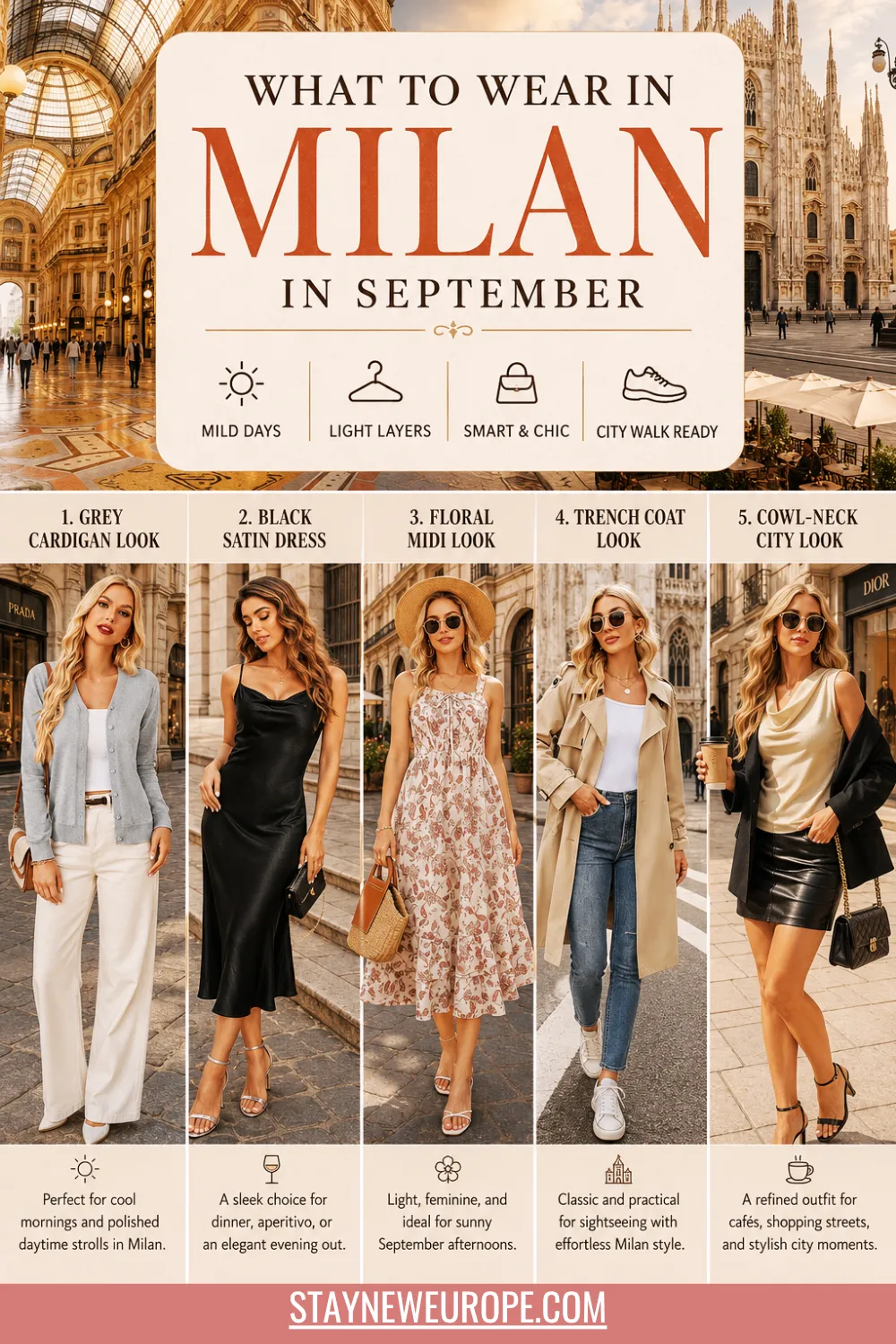
Milan in September is its own kind of magic. The brutal August heat has lifted, the locals are back from holiday, and the city hums with a quiet, confident energy that is almost impossible to describe until you’ve felt it yourself. Fashion Week may be wrapping up or just beginning depending on the week you arrive, and the streets genuinely look like a moving mood board.
Here’s what I wish someone had told me before my first September visit: the weather will trick you. Mornings can feel almost autumnal — cool enough that you’ll reach for a jacket — and then by 2pm you’ll be sitting outside a café wondering why you packed that hoodie. Layering is not optional; it’s survival. And if you show up in a graphic tee and flip-flops, the Milanese will notice. Not rudely. Just… notice.
This guide is everything you actually need to know about what to wear in Milan in September — from the right shoes for those beautiful, unforgiving cobblestones to the exact kind of bag that makes sense for a city where looking put-together is practically a civic duty.
Before We Dive In: Milan in September at a Glance
Weather: September is genuinely one of the best times to visit Milan. Temperatures hover between 16°C and 26°C (61–79°F), with early September feeling more summery and late September leaning into proper autumn. Rain is possible — not a daily occurrence, but not unusual either. The humidity that plagues August is mostly gone, which makes the whole city more bearable.
The walking situation: Milan is flat, which sounds like great news, and it mostly is — but the city centre is paved in sanpietrini (those irregular stone tiles) and polished marble that gets slippery when wet. Cobblestones aren’t as dramatic as, say, the hills in Florence, but your shoes still matter enormously.
Style culture: Milanese dress well. Not in a showy way — more in a quietly considered, I-know-exactly-what-I’m-doing way. Loud tourist gear reads as exactly that. You don’t need to spend a fortune, but effort is appreciated and noticed. If you’re planning a broader Italian trip, check out the what to wear in Italy in June guide for how the same principles apply across the country.
The Right Bag for Milan (This One Matters More Than You Think)
Let me be honest: I’ve made the backpack mistake in Milan and I will not be repeating it. Not because backpacks are wrong in principle, but because in a city where fashion is effectively a local religion, a giant hiking pack makes you look exactly like what you are — a tourist who didn’t think about their bag.
A structured tote or a leather crossbody is the move in September. Something that sits flat against your body, has a zip or secure closure (the city is busy and pickpockets exist), and doesn’t look like it came free with a laptop purchase. A medium-sized crossbody works beautifully for day exploring — it keeps your hands free, fits your essentials, and doesn’t scream “please rob me.”

For evenings, a small clutch or a sleek mini bag over the shoulder looks intentional.

If you genuinely need more space — camera, extra layers, a book — a structured canvas tote in a neutral colour (black, tan, forest green) is the compromise. Just avoid the oversized mesh beach bag energy. This is Milan, not the Amalfi Coast. Speaking of which, if you’re adding the coast to your trip, the what to wear in Cinque Terre guide has you covered for a completely different vibe.
Local tip: Keep your bag in front of you on the Metro (line M3 especially near Duomo) and use a bag with a proper zip. Beautiful city, normal big-city caution required.
Lightweight Layers — The Secret Weapon of September Dressing
Here is where most people go wrong. They either pack for summer (too light) or prepare for autumn (too heavy) and then spend the whole trip miserable in the wrong direction. September in Milan is genuinely a two-phase day: morning and evening feel like a different season from midday.

The magic formula is light layers that can be added and removed without making you look like you’re dismantling your outfit. A linen or cotton button-down shirt worn open over a simple camisole is perfect — it functions as a top in the heat and a light jacket in the cool. A lightweight knit (not a chunky jumper, a fine-knit) draped over the shoulders is peak Milanese chic and actually useful.
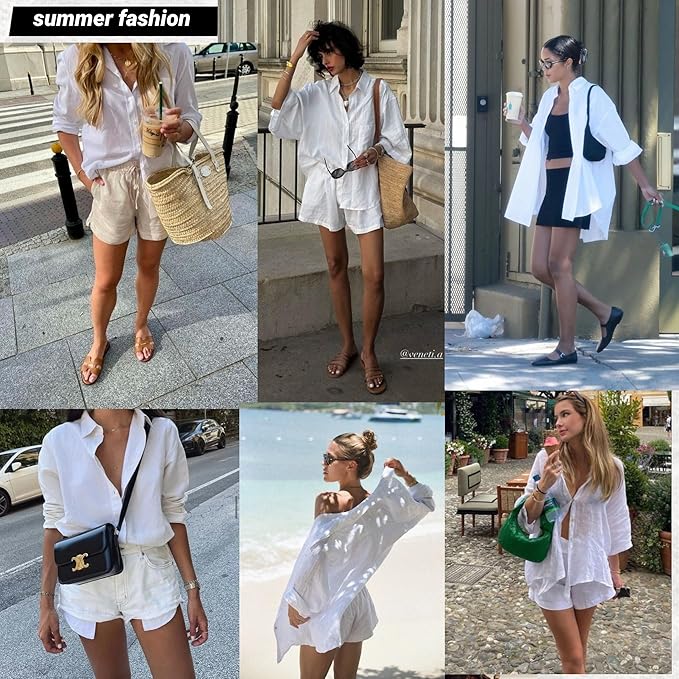
I cannot overstate how useful a thin merino cardigan is in this context. It weighs almost nothing in your bag, doesn’t wrinkle, works over dresses and trousers, and looks deliberately styled rather than thrown on for warmth.

Local tip: Italians are masters of the shoulder-drape. A blazer or knit worn over the shoulders rather than on your arms is both practical and completely on-brand for Milan.
Trousers, Jeans, or Something Else? The Bottom Half Decision
Jeans are fine in Milan — locals wear them — but not all jeans are created equal in this context. Stiff, dark, straight-leg jeans in a slim cut look intentional. Baggy, distressed, or pale-washed jeans with visible rips tend to read tourist-casual in a city that does casual with more precision.
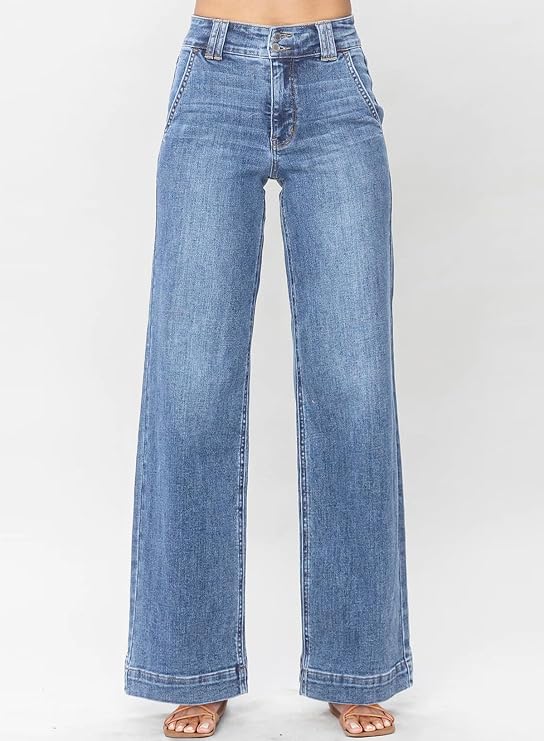
Tailored trousers are honestly the September sweet spot. Wide-leg linen trousers in cream, olive, or camel are comfortable in the warmth, elegant enough for dinner, and pair with almost everything. I wore the same pair of ecru wide-legs four days running in Milan once, styled differently each time, and nobody noticed — because nobody was looking at the trousers.

Cropped trousers (think a neat cigarette pant) with a tucked-in blouse are very Milanese and effortlessly appropriate from morning galleries to evening aperitivo.
If you want to pack light for an Italian multi-city trip, this style of trouser is the one that travels best — check out the how to pack a carry-on for 10 days guide for the full strategy.

Local tip: Avoid shorts in the city centre for anything other than a very casual daytime explore. Milanese don’t really do shorts beyond the weekend, and in September the temperatures usually don’t demand them anyway.
Dresses That Actually Work in Milan
A silk or satin slip dress is one of those pieces that looks like it was designed for Milan in September. In the warmth of midday it’s light and elegant; throw your linen blazer over it in the evening and you’re restaurant-ready without changing outfits. Midi length hits the right note between casual and dressed-up.
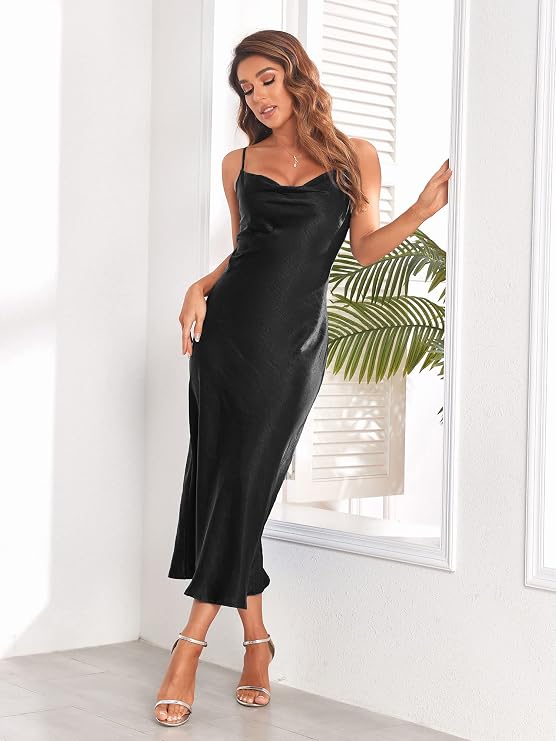
Wrap dresses in muted, sophisticated prints — think abstract florals, geometric patterns, terracotta tones — are great because they’re inherently adjustable and look considered without being fussy. What doesn’t work as well: very short bodycon styles (they don’t suit the aesthetic of the city) and anything with excessive logos or loud tourist graphics.

If you’re visiting the Duomo or any church (and you should — they’re extraordinary), you’ll need covered shoulders and knees. A maxi dress or midi dress solves this automatically, or pack a light scarf that doubles as a cover-up. That scarf will earn its spot in your bag multiple times over.
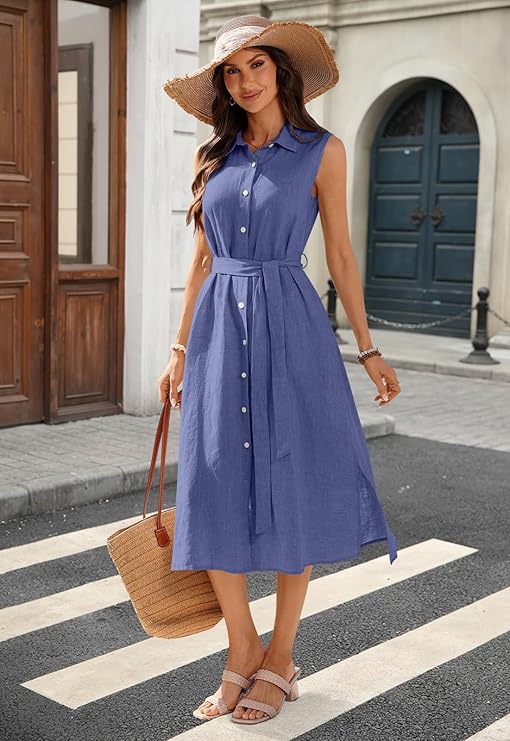
Local tip: A wrap midi dress in a solid deep colour — rust, burgundy, forest green — worn with block-heeled mules is one of the most effortlessly Milanese looks you can put together without overthinking it.
Shoes: The Milanese Walking Test
I learned this the hard way on my first trip. I wore beautiful shoes that were not made for cobblestones, and by noon I was limping around the Brera district like someone twice my age. Milan will not care how pretty your shoes are if you can’t walk in them.
White trainers remain a permanent Milan staple — Italian women wear them in a way that feels deliberate rather than sporty, usually with a tailored trouser or a midi skirt.

Block heels are your friend — they look polished and stay stable on uneven surfaces. A block-heeled loafer or a modest ankle boot (September evenings genuinely call for ankle boots by the last week of the month) works for almost every situation.

Avoid flat sandals with thin straps on the cobblestones — your feet will slide and your ankles will regret it. If you love sandals, choose ones with a proper footbed and some grip.

Birkenstocks and similar chunky sandals have somehow crossed into stylish territory in recent years and are genuinely comfortable for a long day of walking.
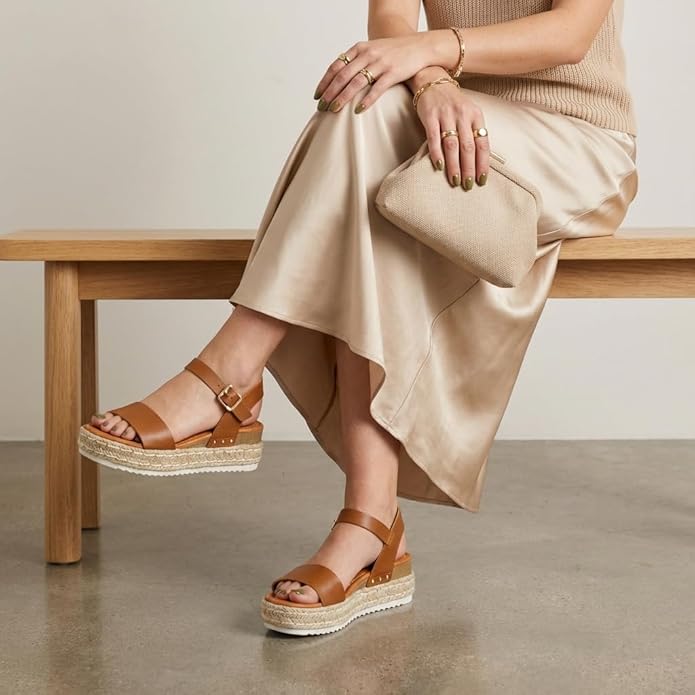
Local tip: One pair of smart ankle boots covers all your September bases — day exploring, evening aperitivo, cooler mornings. Pack them even if it seems early for boots. You will use them.
The Capsule Wardrobe for Milan in September
This is the outfit framework I come back to for every Milan trip. It packs light, mixes endlessly, and keeps you looking intentional without requiring an enormous suitcase.
Start with two or three neutral bottoms:
- one pair of tailored wide-leg trousers (cream or camel),
- one pair of dark straight-leg jeans, and optionally a midi skirt in a solid colour.
- Add three tops that all work together: a quality white fitted t-shirt, a silk or satin camisole, and a loose linen shirt.
- Layer with one fine-knit cardigan, one structured blazer (linen or cotton, not heavy), and one lightweight jacket for rain.
- Two dresses that work day-to-night.
- Two pairs of shoes: white trainers and block-heel ankle boots or loafers. One crossbody bag.
That’s your entire wardrobe for a week. If you’re building out a broader Italian trip, the ultimate printable Italy travel checklist is worth bookmarking.
Local tip: Stick to a tonal colour palette — neutrals, earthy tones, one or two deeper autumn shades. Everything mixes, nothing clashes, and you’ll look like you planned it that way even if you got dressed in five minutes.
What NOT to Wear in Milan
Milan is forgiving — it’s not unfriendly — but a few choices will mark you out as someone who didn’t do their research. First: trainers are fine, but not sports trainers worn with shorts and a performance t-shirt. That’s running gear, not city wear. Second: very casual beach-style outfits (wrap-over pareos, string bikini tops, foam slides) are genuinely inappropriate for the city centre and you will feel out of place immediately.
Overly logoed tourist gear is a quick way to become a target for pickpockets as well as slightly out of step with the local aesthetic. Clothes that are visibly creased or look like they were balled up in the bottom of a bag suggest you didn’t think about this trip — and in a city like Milan, that registers.
The classic tourist mistake is over-packing formal wear because “it’s Italy” and then discovering that Italians don’t dress as formally as the movies suggest. Smart-casual is the sweet spot for almost every occasion in modern Milan.
Local tip: When in doubt, lean into the Milanese concept of sprezzatura — studied nonchalance. Looking effortless takes effort, but less effort than you think. A clean, well-fitted outfit in a simple colour always beats overdressed or underdressed.
Jackets for Unpredictable September Weather
Early September: a lightweight denim jacket or an unlined blazer is usually all you need. Late September: a trench coat becomes genuinely necessary, especially in the evenings. The temperature can drop to 14–16°C after dark in the last week of the month, which is genuinely chilly in the wind.
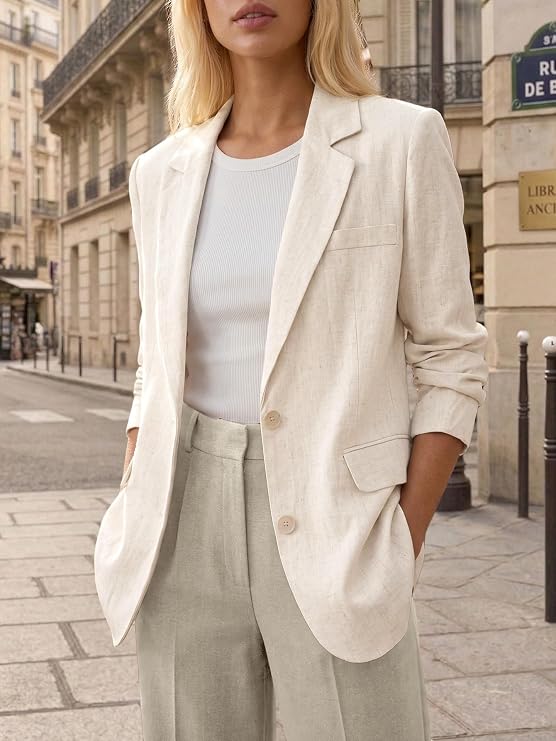
A trench coat is perhaps the single most Milanese item you can own. It works over everything — jeans, dresses, tailored trousers — and photographs beautifully against the backdrop of the city’s porticoes and piazzas. If you’re investing in one piece for this trip, this is it.

For rain, which can arrive without much warning in September, a compact packable rain jacket that folds into its own pocket is worth its weight. Not a cagoule — something sleek that doesn’t make you look like you’re about to summit something. You want it to disappear into your bag until needed.

Local tip: A structured blazer does more work in Milan than almost any other single item. It dresses up jeans instantly, layers over dresses, and gives even a simple t-shirt outfit a polished edge.
Evening Outfits in Milan
Milan’s aperitivo culture is real and it is wonderful, and it deserves a slightly better outfit than your daytime exploring look. The good news is that the transition doesn’t need to be dramatic — a few deliberate swaps take you from “exploring Navigli” to “looking entirely at ease at a beautiful bar.”
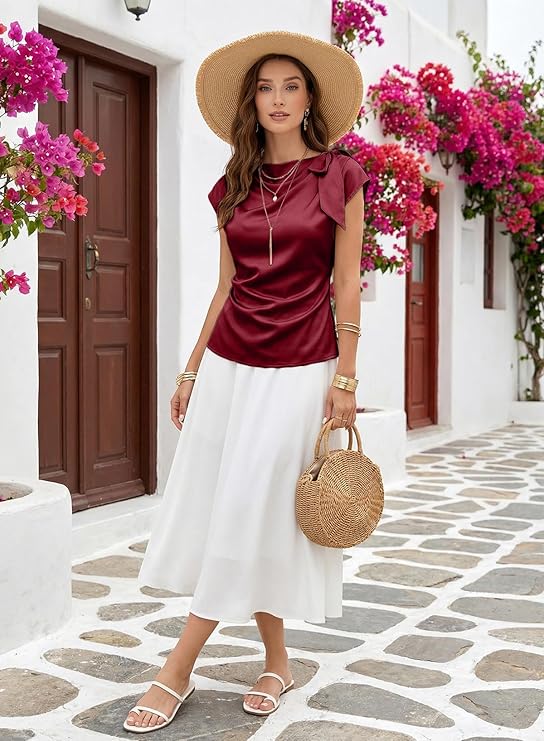
Swap trainers for your block heels or ankle boots. Add a silk scarf or change out your casual layer for a blazer. If you’ve been in jeans all day, a two-minute refresh and a slightly more considered top makes the difference. If you’re in a dress, that dress is probably already dinner-appropriate — just upgrade the bag and shoes.

For more formal evenings — a proper restaurant, an opera, a rooftop bar — a sleek midi dress or silk trousers with a blouse is right. Milan dresses up in a way that feels natural rather than forced; the key is looking like you made a choice, not like you grabbed whatever was clean.
Local tip: Aperitivo (usually 6–9pm) is smart-casual. Dinner at a nice restaurant edges toward smart. Combine them in one outfit by starting with the dinner-ready version in the evening rather than changing twice.
Church Dress Code (Don’t Get Caught Out)
Milan’s churches are spectacular — the Duomo alone is worth a visit that takes at least an hour — and they have dress codes that are enforced with varying levels of enthusiasm depending on the day. The rules are consistent: covered shoulders, covered knees.
If you’re in a dress or shorts that don’t cover your knees, carry a scarf. A lightweight sarong or square silk scarf wraps around your shoulders or waist in under a minute and folds flat in any bag. This is genuinely the easiest solution and means you don’t have to plan your outfit around every church you might spontaneously decide to visit.

- A midi wrap dress covers knees and can be adjusted to cover shoulders.
- Linen wide-leg trousers with any top covers knees; add your blazer or scarf for shoulders.
- A maxi dress in a non-sheer fabric often covers everything by itself.

Local tip: The Duomo security is the strictest — they will turn you away at the door if you’re not appropriately dressed. Other churches are more relaxed but it’s not worth the gamble.
Accessories That Elevate Everything
Accessories are where Milan comes alive. The city’s streets are an education in how a simple outfit with the right scarf, watch, or earrings looks completely different from the same outfit without them.
A silk scarf is your Swiss Army knife accessory in Milan — it works in your hair, around your neck, tied to your bag, draped over your shoulders in a church, or wrapped around your waist over a dress. Get one. One is enough if you choose a versatile colour (earthy tone, neutral, or a classic print).

Gold jewellery reads more Italian than silver in my experience — simple gold hoops, a thin chain, a single bold ring. Sunglasses are functional and stylish (September is still bright and warm enough to need them) — a classic frame in tortoiseshell or black is the Milanese standard.
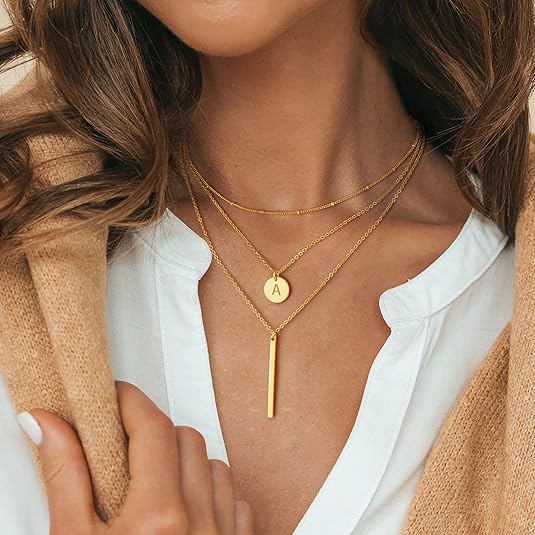
Local tip: A structured belt worn over a blazer or a loose shirt is a very Italian styling trick that instantly makes an outfit look more intentional. It costs nothing extra if you already own one.
Rain Preparation — Don’t Skip This Section
Milan can get significant rainfall in September — it’s not a dry month. Rain tends to come in quick, heavy showers rather than sustained drizzle, which means you can often wait it out under a portico (Milan has beautiful covered walkways designed for exactly this purpose), but you want to be prepared.
A compact fold-up umbrella that fits in your crossbody bag is essential. The ones that actually work in wind are worth the extra few euros — the cheap tourist ones turn inside out in the first gust. Alternatively, a rain-resistant outer layer means you can keep walking through a shower without looking bedraggled.

Avoid suede shoes in September unless you’re watching the forecast obsessively. Wet suede is a specific kind of holiday heartbreak. Leather or synthetic materials that dry quickly are the sensible call for your main walking shoes.
Local tip: Rain in Milan often clears within 30–40 minutes. The porticoes around Piazza dei Mercanti and along Via Dante are genuinely useful shelter spots, and there’s usually a café nearby to wait it out with an espresso.
Fabrics to Choose (and Avoid)
This is less glamorous advice than “pack this dress” but it might be the most practical thing in this guide. Fabric choice determines whether you’re comfortable and looking fresh at 6pm or wilted and creased by noon.
September’s warmth means breathable fabrics are still important for daytime:
Choose: linen, cotton, lightweight viscose, silk, and merino wool (which also works in cooler evenings). These all travel reasonably well and feel comfortable in warmth.
Avoid heavy synthetic fabrics that trap heat and don’t breathe — you’ll feel it on a warm September afternoon in the sun. Thick denim is harder going than a tailored linen trouser in the same situation. Anything that creases very easily (crinkled linen is one thing; crushed velvet is another) requires careful packing or you’ll spend your trip looking slightly slept-in.
Local tip: Merino wool is genuinely magical for European travel. It resists odour, doesn’t wrinkle, wicks moisture, and works across a wide temperature range. A fine merino knit earns its spot in any Milan September packing list.
Packing Smart: How Many Outfits, How Much Luggage
Let me say something slightly controversial: most people pack too much for Milan. The city has laundry facilities, dry cleaners, and — crucially — shops. If you forget something or make a packing error, you’re in one of the world’s great retail cities.
- For a four to seven-day trip, think in terms of outfits rather than individual items.
- Three or four bottoms,
- five or six tops that all mix together,
- two dresses, two pairs of shoes,
- one bag for day and one for evening.
- That’s it. You can rewear jeans and outerwear. You should rewear jeans and outerwear.
Pack in a carry-on if at all possible — navigating Milan’s Metro and the city’s cobblestone streets with a massive suitcase is genuinely miserable.

A structured carry-on or a well-made duffle that fits in the overhead locker keeps you mobile, fast, and stress-free. The rolling-vs-folding debate for fitting more in your bag is something we’ve gone deep on at how to pack a carry-on for 10 days.
Local tip: Leave a little space in your bag for Milan. The city’s shopping — from the Golden Triangle designer boutiques to the wonderful independent stores in the Brera and Navigli neighbourhoods — is too good to resist entirely, and you’ll want room for something you didn’t expect to buy.
Go Enjoy It
Milan in September is genuinely one of those travel experiences that earns its reputation. The light is golden, the queues have thinned from August’s peak, and there’s an energy to the city that feels specifically like early autumn in a place that takes seasons seriously.
Pack well, dress with intention, and don’t overthink it. The Milanese don’t actually judge tourists as harshly as the stereotype suggests — they’re mostly too busy looking impeccable themselves. Your job is simply to show up with a few considered pieces, comfortable shoes, and enough layers to handle whatever the day throws at you.
The rest will take care of itself.

