
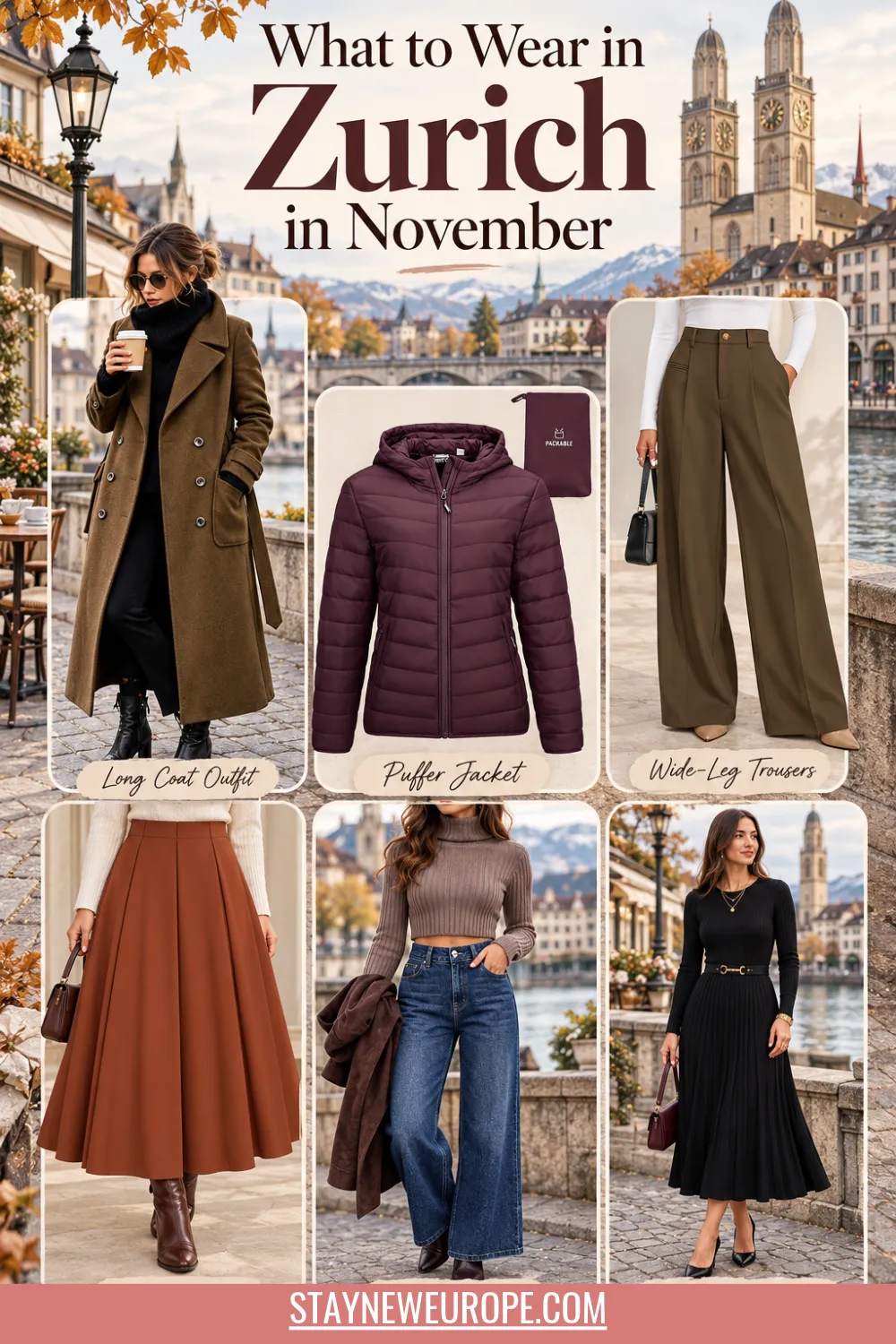
Zurich in November is a mood. The lake turns the colour of pewter, fog drifts between the old town rooftops, and by about half past four the whole city switches on its lights like someone flicked a very expensive switch. Trams glide past, coat collars go up, and everyone looks effortlessly put together while you stand there wondering why your fingers have stopped working.
It’s not brutally cold, but it’s damp, grey and sneaky. The temperature on your phone says 6°C and your body says “absolutely not.” Add cobbled lanes in the Niederdorf, hills that come out of nowhere, and the world’s best-dressed commuters, and packing gets interesting fast.
The classic mistakes? Overpacking bulky sweaters, wearing white sneakers that die by lunchtime, and trusting a “water-resistant” jacket in a Swiss drizzle. Let me save you from all three.
Before We Dive In
Let me set the scene so you can pack with your eyes open.
Weather: Expect roughly 2–9°C (36–48°F) through the month, colder at night and colder still by the lake. Rain is more drizzle than downpour, and fog is a regular guest. First snow flurries are possible late in the month, though they rarely stick in the city itself.
Daylight: Short. Sunset lands around 4:30–5pm, so your “evening outfit” starts earlier than you think.
Walking conditions: Zurich is very walkable, with trams for the rest. The old town has cobbles, wet leaves and a few steep staircases and lanes, so your shoes need grip.
Style culture: Zurichers dress understated and well. Think dark neutrals, good fabrics, clean lines and almost no visible logos. Nobody is dressed up, yet nobody looks sloppy. This matters more than you’d think.
Heading elsewhere? If you’re travelling to other cities and regions in Europe, check our other monthly guides: What to Wear in Switzerland in October, What to Wear in Munich in November, What to Wear in Vienna in November and What to Wear in Milan in November.
A Carry-On Bag That Won’t Fight You
Swiss public transport is so good that you’ll be hopping on and off trams with your luggage, and nothing ruins the mood like dragging a giant suitcase over wet cobbles.
I’m firmly Team Carry-On for Zurich. A hard-shell spinner with four wheels glides through the airport train station, but if your hotel is in the old town, a soft-sided duffle with a shoulder strap is easier to lift over kerbs and up tram steps. Whichever you pick, give it a bright luggage tag, because black bags multiply at the baggage belt.

Winter clothes are bulky, so use packing cubes and compress your knitwear. If you’re stuck on what fits, our carry-on packing tips will help.
Local tip: Zurich’s airport station is directly under the terminal, and trains to the main station take about ten minutes. Your bag will be in your hotel room before you’ve finished your coffee.
Lightweight Layers: Your Real Zurich Wardrobe
Let me be honest: one big coat will not save you here. Layers will.
Zurich swings from a chilly street to a boiling tram to a toasty café within ten minutes. I learned this the hard way when I wore a thick wool jumper on a tram and spent four stops quietly overheating. A thin base layer, a mid-layer and a coat you can open or close gives you control.
Start with a merino long-sleeve top. Merino is soft, warm, barely smells after a day of walking and packs down to nothing. A brand like Icebreaker or Smartwool is a reliable choice, and even a thin one under a shirt changes everything. On top, a fine-knit jumper or a light fleece-style cardigan does the heavy lifting.

Picture a typical morning: merino tee, a crisp shirt, a slim knit and your coat. By noon, the knit comes off and goes into your bag.
Local tip: Cafés and shops here crank the heating up. Dress so you can shed a layer in seconds, not so you look good for the photo and sweat through it.
The Coat: One Good Choice Beats Three Mediocre Ones
This is where you spend your effort, so let’s make it count.
If you want to blend in, a knee-length wool coat in black, camel, grey or navy is the Zurich uniform. It looks right at dinner and over a sweater at breakfast. If your trip includes a day trip up to the hills or mountains, a lightweight down puffer works better, and it packs small enough for a carry-on.

I’d pick one of these, not both. A slim packable down jacket, such as the Uniqlo Ultra Light Down style, goes under a wool coat on freezing days or on its own on milder ones. A longer, hooded down coat is warm enough for evenings by the lake, though it reads a bit more “sporty.”

Look for a coat with a collar you can pop up, because the wind off the lake is real.
Local tip: Skip bright puffers and anything covered in logos. Swiss locals stick to quiet colours, and you’ll look instantly more local in charcoal than in neon.
Dress Code: What Actually Works in Zurich
Here’s the thing about Zurich. It is rich, practical and slightly allergic to showing off.
What works is polished casual. Dark jeans or tailored trousers, a quality knit, clean boots and a good coat. Everything fits well, nothing screams. I’ve seen businesspeople in sneakers and puffer vests at nine, and the same people in impeccable black at a restaurant at eight.

A simple formula: one dark neutral base (black, navy, charcoal), one soft neutral (cream, grey, camel), and one small pop of colour in a scarf or sweater. It looks intentional and mixes with everything in your bag.
Morning exploring, a museum afternoon, a fondue dinner? The same outfit works for all three with a quick scarf swap or a nicer top.
Local tip: Swiss shops and cafés tend to be quiet and civilised. Dress a notch smarter than you would in a beach town and you’ll get warmer service.
What NOT to Wear (Tourist Mistakes)
Some things make you stand out for all the wrong reasons.
Skip the oversized “I ♥ Switzerland” sweatshirt, the full hiking-gear look on city streets, and any clothing that screams brand names. Thick technical boots belong on Uetliberg, not on Bahnhofstrasse. And please, no shorts, no flip-flops, no flimsy ballet flats. Cobbles and puddles will win.
The biggest mistake, though, is dressing for the number on your weather app. The “feels like” temperature near the water is lower, and standing still at a tram stop in damp air is colder than walking in a mountain breeze.
Also, avoid white shoes. The grey slush and wet leaves will turn them into a sad grey mess before you’ve seen the Grossmünster.
Local tip: If you don’t want to look like a tourist, remove the large bright backpack and the matching rain poncho. A slim umbrella and a coat with a hood say “I live here.”
Jeans, Trousers and Skirts: What Works in the Cold
Your legs get cold faster than you expect, so choose fabrics that block the wind.
Dark jeans in a straight or slim cut are a Zurich staple. Skip distressed or light-wash denim, which looks rather summery in a grey November. Wool-blend trousers, tailored cords or lined trousers are even better and feel dressier at dinner.

For skirts, go midi or longer in wool or heavy knit and pair them with opaque tights and boots. Thermal or fleece-lined tights are a secret weapon: sheer ones look elegant but do nothing against a 3°C wind. I wear thermal tights under trousers on the coldest days, no one’s ever noticed.

Outfit idea: dark jeans, a cream roll-neck, a camel coat and leather boots. Add a long wool skirt and thick tights for dinner.
Local tip: Skip leggings as trousers. They look fine on a plane and a bit flimsy out in the city’s damp breeze.
Tops, Knits and Blouses for Women
This is the “what do I put under the coat” question, and the answer is texture.
Think fine-gauge merino or cashmere-blend knits in neutral colours, silky or crisp blouses to layer under them, and roll-necks or turtlenecks for warmth. A classic button-up shirt under a jumper looks sharp and lets you peel off layers. Slip a thin long-sleeve tee under it all if the day looks cold.

Zurich loves a monochrome look: all-grey, all-camel or all-black with different textures. It’s chic, easy to pack and never looks like you tried too hard.
Try this one: a silk-feel blouse, a cashmere-blend jumper, tailored trousers and ankle boots. You’re ready for a gallery and a glass of wine without changing.
Local tip: Bring one dressier top for evenings. A dark satin blouse takes up almost no space and turns any knit-and-trousers look into dinner wear.
Comfortable but Stylish Walking Shoes
Your feet decide whether you enjoy this trip, so be strict.
Zurich is a city for walking: the lake path, the old town lanes, the climb up to Lindenhof for the view. I’d bring one pair of waterproof leather ankle boots with a sturdy, grippy sole. A pair of Blundstone-style Chelsea boots is a perfect example: they slip on easily, look neat and handle rain without fuss.

A second option for dry days is a pair of clean, dark leather sneakers. They’re comfortable and blend in with the locals, though you’ll want to waterproof them with a spray before you leave.

Wear them in before you travel. Blisters on cobbles are no one’s idea of a good trip.
Local tip: Wet cobbles and polished stone steps get slippery. Pick a rubber sole with proper tread, not smooth leather soles.
Rain Preparation (Unexpected but Important)
November in Zurich is wetter than most people realise, and it’s the kind of rain that creeps in sideways.
A compact, sturdy umbrella is the star here. Pick one that survives lake wind (a vented design helps), and keep it in your bag. A waterproof coat or a coat with a hood is also useful because umbrellas are awkward on busy pavements and crowded trams.

Also bring a small waterproofing spray for your shoes and bag. It takes two minutes at home and saves you from soggy socks on day one.
I once left my umbrella in the hotel because the sky looked fine at breakfast. By lunchtime I was buying an overpriced one on Bahnhofstrasse. Don’t be me.
Local tip: Swiss hotels often lend umbrellas at reception. Ask before you buy, and return it so the next person stays dry too.
Evening Outfits That Don’t Scream Tourist
Zurich evenings are lovely: candlelit restaurants, warm wine bars and fondue by the fireplace.
For women, a knit dress or midi skirt with thick tights and knee-high or ankle boots is perfect. For men, dark trousers, a fine knit and a clean pair of boots look just right. Add a smart wool coat and a statement scarf and you’re done. Nobody expects glitter.

Keep your colours low-key: black, navy, burgundy and forest green all look great in dim restaurant light. A pair of simple earrings or a classic watch is plenty.
For a Christmas market evening (the first ones start opening in the last week of November), wear your warmest boots and bring gloves, because you’ll be standing outside holding hot mulled wine.
Local tip: Fondue smell clings to everything. Wear a layer you can wash easily, and don’t wear your best cashmere to the cheese pot.
What to Wear for Churches
Zurich’s churches are some of the city’s loveliest sights, and the dress code is easy.
For the Grossmünster, Fraumünster (don’t miss the Chagall windows) and St. Peter, there are no strict rules, but respectful is the way to go. Cover your shoulders, avoid very short shorts or skirts, and take off your hat when you step inside. In November you’ll be wearing sleeves anyway, so you’re already fine.
A scarf or lightweight wrap is useful for any extra cover and does double duty on cold days.

Outfit idea: jeans, a knit, your coat and a scarf. No changing required.
Local tip: Churches are chilly inside. Keep your coat on and your gloves in your pocket.
Bags: Crossbody vs. Backpack
For Zurich, I’d go crossbody every time.
A leather or sturdy fabric crossbody keeps your hands free for an umbrella and a coffee, and it’s easy to reach on a crowded tram. It’s also what you’ll see on most locals. Choose one with a zip closure and enough room for your phone, wallet, gloves and a small umbrella.

A backpack is fine for a day trip to the mountains or the lake, but on the city’s trams it can be awkward. If you do bring one, pick a small, plain one in a dark colour and wear it on your front when it’s busy.
I carry a crossbody plus a foldable tote in my luggage. The tote handles market shopping, chocolate hauls and any other temptations.
Local tip: Swiss chocolate is the best souvenir, and it’s heavy. Leave room in your bag or pack a foldable tote.
Accessories That Elevate Simple Outfits
Accessories are where cold-weather style happens, and where you can look local for almost no money.
A wool or cashmere-blend scarf is non-negotiable. Pick a neutral one in grey, camel or navy and you’ll wear it with everything, and you can wrap it round your head in a pinch. Add a beanie or a simple knit hat for windy lakefront strolls, and gloves, preferably touchscreen-friendly, because phones don’t mind the cold but fingers do.

A classic leather belt, a simple watch and a pair of small earrings dress up an outfit in seconds. Skip anything very chunky or flashy.
Thermal socks are a quiet hero. Merino blends keep your feet warm and dry, and they take up almost no space.

Local tip: Wear your scarf looped, not draped. It stays in place in the wind and looks very Swiss.
Fabrics to Choose (and Avoid)
Fabric choice matters more than style in damp weather.
Choose wool, merino, cashmere blends, leather and down. They hold warmth even when slightly damp and look good in a city. Fleece-lined tights and thermal base layers are fine under your clothes where nobody can see.

Avoid cotton-heavy sweaters, thin jersey and anything that soaks up water and stays cold. Cotton socks are a trap: when they get wet, they stay wet. Also skip stiff, thin synthetic fabrics that trap sweat on warm trams.
If a label says “wool blend,” check the percentage. Anything over 50% real wool has a much better chance of keeping you warm.
Local tip: Natural fibres also hide the “I’ve worn this for three days” look better, a great help in a carry-on-only trip.
What to Pack for Zurich in November (Non-Clothing)
A few non-clothing items will make your trip smoother.
Bring a universal adapter, as Switzerland uses its own plug type (Type J), and it isn’t the same as most of Europe. A power bank is useful because cold weather drains phone batteries quickly, and you’ll rely on your phone for tram tickets and maps. A reusable water bottle is handy too, since Zurich has hundreds of public fountains with drinkable water.
Also pack lip balm and hand cream (heated rooms and cold air dry you out), a small first-aid kit with blister plasters, and a swimsuit if you plan to visit a thermal spa, which is a wonderful rainy-day idea.
Local tip: Download the SBB app before you go. It makes buying tram and train tickets a breeze, and you’ll feel like a local.
Practical Packing: How Many Outfits and What to Skip
You need fewer clothes than you think. For a 4–5 day trip, I’d pack:
- 1 wool or down coat
- 2 pairs of trousers or jeans (plus 1 skirt if you like)
- 4 tops: two knits and two lighter layers
- 1–2 merino base layers
- 1 dressier top for evenings
- 1 pair of waterproof boots and 1 pair of sneakers
- A scarf, a hat, gloves and thermal socks
Mix and match within one colour palette (black, grey, camel, cream) and everything works with everything else. That’s a mini capsule wardrobe, and it fits in a carry-on.
Packing light vs overpacking: Overpacking is the number one mistake. Heavy clothes take up space, and you’ll end up wearing the same coat and boots daily anyway. Plan one outfit per day, add one spare, and stop.
Outfit planning tip: Lay everything out on your bed before you pack. If a piece doesn’t go with at least three other things, leave it behind.
Mistakes to avoid:
- Packing only one pair of shoes
- Forgetting an umbrella
- Bringing white or suede shoes
- Choosing style over warmth, then freezing
- Leaving no room for chocolate
FAQs About Packing for Zurich in November
Is Zurich cold in November? It’s cool and damp, usually between 2°C and 9°C. It feels colder than the number because of the humidity, fog and wind off the lake.
Do I need a winter coat? Yes. A warm wool coat or a down jacket is essential, ideally with a hood or a collar that protects your neck.
Will it snow in Zurich in November? Light flurries are possible, mostly late in the month, but snow rarely settles in the city centre. It’s more likely in the mountains, so pack accordingly if you’re heading up.
What shoes are best? Waterproof leather ankle boots with a grippy sole. Skip high heels and smooth soles on wet cobbles.
Are jeans okay? Absolutely. Dark, well-fitting jeans are perfectly normal in Zurich, even at nicer restaurants, when you pair them with a smart top and boots.
Do I need to dress up for dinner? Not really. Smart casual is enough: a good knit, dark trousers or a skirt, and clean boots. A scarf and a nice coat do the rest.
Should I pack an umbrella? Yes. Rain is common in November, and a compact umbrella is a lifesaver.
One Last Thing
Here’s what I love about Zurich in November: it’s the season of cosy. Steamy cafés, the glow of the lake at dusk, warm chocolate in your hands and the quiet confidence of a city that knows exactly who it is.
Pack a good coat, a pair of boots you trust and a scarf that makes you feel like yourself, and you’ll walk through those misty lanes feeling like you belong. You won’t be thinking about the weather. You’ll be thinking about the next café, the next view, the next fondue.
So go. Wrap up, step out into the fog and let the city surprise you. You’ve got this, and you’re going to look great doing it.

