
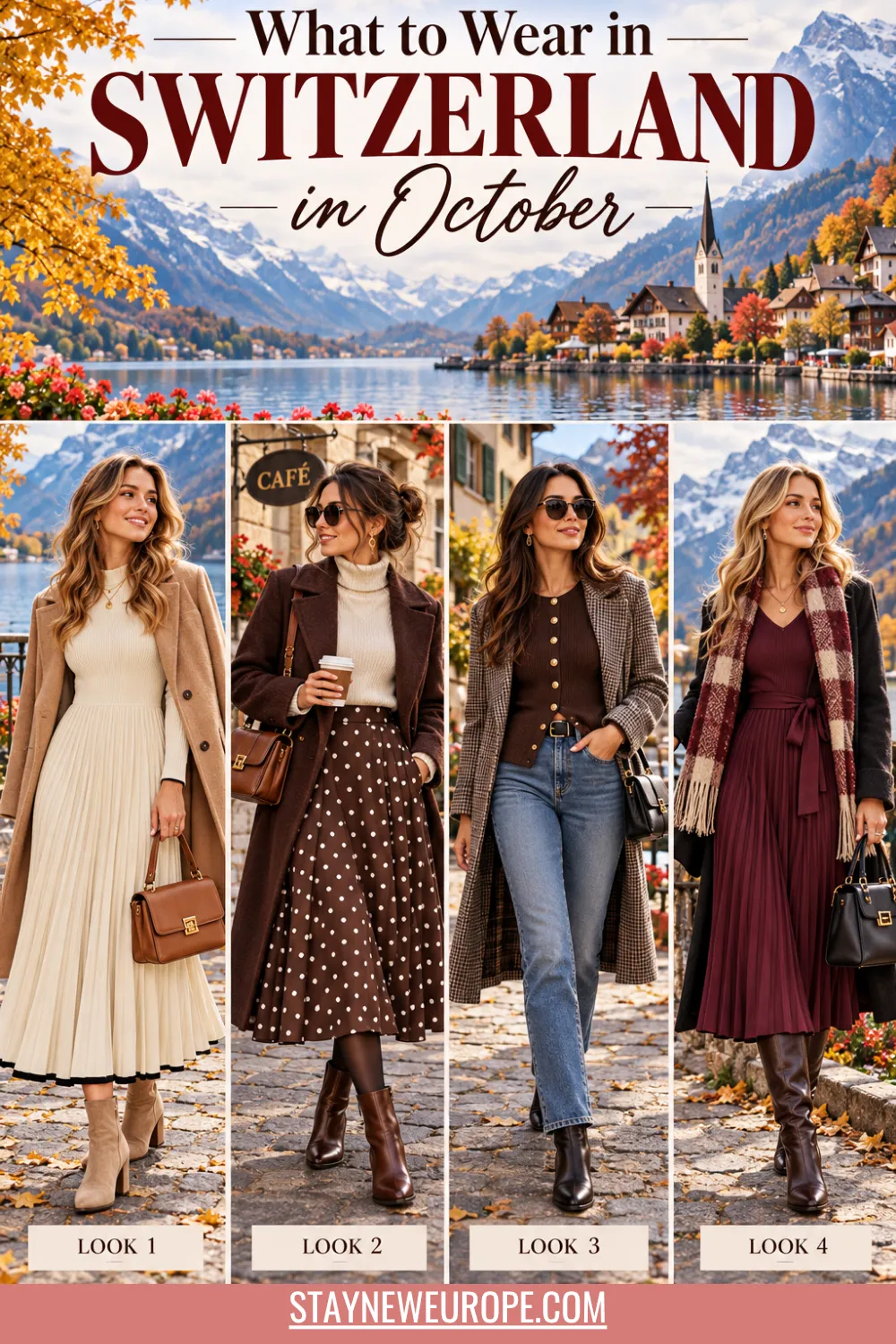
Let me set the scene. It’s 8 a.m. in Lucerne, the lake is wearing a thick blanket of fog, the larch trees up the hillside have turned the colour of marmalade, and a woman in a perfectly pressed linen dress is shivering beside me at the bus stop. She told me she’d checked the forecast. It said “15°C.” It did not say “15°C and damp enough to wilt a baguette.”
October in Switzerland is gorgeous and completely unpredictable. You can sip coffee in a sunny Lugano square in the morning, ride a cable car into actual snow by lunch, and be dodging rain on a Zurich tram by dinner. Most people pack for one of those days and then suffer through the other two.
So here’s what I actually wore, what I wish I’d left at home, and the few pieces that earned their space in my bag. Spoiler: it’s all about layers, decent shoes, and not trying to look like you’re on a ski holiday when you’re really just walking around Bern.
Before We Dive In
A quick reality check before we talk clothes.
Weather: Expect 5–15°C in the cities (Zurich, Lucerne, Bern, Basel), a little warmer in Geneva, and a surprisingly mild 14–18°C in Ticino around Lugano and Locarno. In the mountains (Zermatt, Grindelwald, St. Moritz) it hovers around freezing at night, and snow above roughly 2,000 metres is normal. October is also one of the rainier months, and lowland mornings are often foggy. Sun, when it shows up, is glorious. Plan for both.
Walking conditions: Swiss Old Towns are all cobblestones, covered bridges and hills. Add Swiss public transport, where you’ll be hopping on and off trains, trams and boats all day, and you’ll be walking more than you expect. Wet cobbles are slippery, so your soles matter.
Style culture: The Swiss dress understated and well-made: dark neutrals, good knitwear, clean lines, zero logos screaming for attention. In Zurich and Geneva, people look quietly polished even in rain gear. In the mountains, practical wins, but it’s still tidy. Dress like you mean it, just not loudly.
Daylight: Evenings arrive fast in October, and the clocks go back at the end of the month. Pack for dusk temperatures, not just midday sunshine.
1. A Carry-On or Soft Duffle Bag (Your Trains Will Thank You)
Swiss trains are magical, but nobody wants to haul a 28-kilo suitcase up the steps of a regional train while a very punctual commuter waits behind them.
I travel Switzerland with a 40-litre carry-on-size duffle that has backpack straps, and honestly it’s the best decision I’ve made for this country. You’ll change trains, climb station stairs and walk to your hotel more than you think.

A soft bag squeezes into overhead racks and tight cable car cabins, and the backpack straps save your shoulders on cobblestone streets where wheels just rattle.
If you prefer a roller, pick a small hard-shell carry-on with big, smooth wheels. Either way, aim for hand luggage only if you can. Swiss transport is brilliant at moving you around, but only if you’re not wrestling a huge case. Here’s my carry-on packing guide if you need a method.
Local tip: Many Swiss train stations offer luggage storage lockers, and the SBB app can send your bags ahead between stations. Handy if you’re heading up a mountain for one night and don’t want to carry everything.
2. Lightweight Layers (The Real Secret to October)
Let me be honest: one big coat is the mistake I see most. You’ll be roasting on the train and freezing at the lake within the hour.
The fix is thin layers you can peel off. Start with a merino or merino-blend long-sleeve base layer. It’s warm without bulk, doesn’t smell after two days, and works under a blouse for dinner or under a fleece for a hike. Then add a mid-layer, such as a light fleece or a thin knit. Finally, top it with a jacket (more on that below).

I learned this the hard way in Interlaken, when a brilliant sunny morning turned into a sideways drizzle at the top of a viewpoint. The people in layers just zipped up. I stood there in a single chunky sweater, shivering and slightly offended by the weather.
Local tip: Mountain stations and boat decks are always colder than the town you left. Keep your thin layer in your day bag, not buried in your suitcase.
3. Knitwear That Looks Good Everywhere
A good sweater is the closest thing to a Swiss uniform, and it’s the piece I wore most.
A fine-gauge merino or wool-blend crewneck in navy, charcoal, camel or forest green goes with everything. It looks smart in a Zurich café, warm in a mountain hut, and pretty in photos with the autumn colours behind you. I took two: one dark, one cream. The cream one survived exactly one fondue night, so go darker if you’re messy like me.

Skip the bulky cable-knits for city days. They’re heavy to pack, hot on trains, and they steal half your suitcase. Save one cosier knit for evenings at higher altitudes.
Local tip: Swiss homes and restaurants are well heated. A thinner knit usually beats a thick one indoors, and you can always add a scarf outside.
4. Jackets for Unpredictable Weather
You need two things here: warmth and rain cover. Ideally from two separate pieces.
For warmth, a light packable down or synthetic puffer is magic. It squishes into your bag and gives you serious insulation when the temperature drops by the lake or on a mountain railway.

For rain, a lightweight waterproof shell (hooded, ideally with a drop tail) will save you more than once. Together they cover almost every October scenario. Layered over a fleece, they handle even a snowy summit.

If you’re mostly in cities, a sleek trench or a wool-blend coat can replace the puffer and look far more Swiss-chic, but only if you’re also packing a compact umbrella. Waterproof is the one thing wool can’t promise.
Local tip: Check that your shell is truly waterproof, not just “water resistant.” Swiss rain isn’t dramatic, it’s persistent, and the difference shows up around hour two.
5. Trousers and Jeans (What Actually Works)
Dark, comfortable and quick-drying wins.
I wore dark straight-leg or slim jeans most days, and they blend in everywhere from Basel to Bern. They do take forever to dry, though, so I’d limit myself to one or two pairs. Add one pair of stretch travel trousers in a dark neutral, which handle rain, long train rides, and casual dinners without complaint.

If you’re planning hikes, bring proper hiking trousers or technical leggings instead of jeans. Wet denim on a mountain path is miserable, I promise. And leave the shorts at home. Even on a warm Ticino afternoon, you’ll want your knees covered by dinner.

Local tip: Swiss locals tend to wear darker colours and avoid anything too distressed. Clean, simple and well-fitted blends in best.
6. Dresses and Skirts (Yes, Really)
You can absolutely wear a dress in Switzerland in October. You just need to treat it like a layering piece.
A midi dress in knit, jersey or a heavier crepe, paired with opaque tights and ankle boots, looks lovely in Zurich or Geneva and feels completely appropriate. Throw on a tailored coat or your shell, and you’re set for dinner.

A long wool skirt with boots and a fine knit is another winner, and it’s more comfortable than it sounds.

Skip anything flimsy, strappy, or mini. Think of dresses as a fresh-air-meets-cosy option, not a summer holdover. If it needs a tan to look right, leave it at home.

Local tip: Tights with a bit of fleece lining are a game changer on cold lake boat rides, and nobody can tell they’re there.
7. Comfortable but Stylish Walking Shoes
This is where I’d spend money first.
Swiss streets are cobbled, wet and often steep, so I wore leather or leather-look sneakers with real grip, or waterproof ankle boots with a decent tread. Those two pairs handled everything from city strolls to boat docks.

Avoid flat, smooth-soled shoes, because wet cobblestones and polished station floors are slippery in a way that gets personal.
White canvas sneakers look great for about an hour. Then the first puddle arrives and they become a lesson in regret. Choose dark, water-resistant materials, and break them in before the trip.
Local tip: If you’re switching between city and hiking, wear the sturdier pair on travel days and pack the lighter one. It saves bag space and your feet.
8. Hiking Boots and Socks (If You’re Heading Up)
If your itinerary includes any mountain trails, don’t try to wing it in fashion sneakers.
Light hiking boots or trail shoes with a Gore-Tex style lining are the safest bet in October, when trails can be wet, muddy or even snowy. I wore mine on a trail above Grindelwald and was very smug about it, as other hikers slid around in town shoes. Make sure they’re already broken in, because new boots plus ten kilometres equals blisters.

And socks. Please pack merino hiking socks. They keep your feet warm even when damp, they don’t smell after a day, and they make a bigger difference than most people expect. Bring at least three pairs, and keep one clean pair in your day bag for emergencies.

Local tip: Even marked “easy” trails can have snow patches by late October. Check the local trail conditions on the Switzerland Tourism or SBB apps before you head up.
9. What NOT to Wear (Tourist Mistakes)
I’ve seen all of these, and I’ve made a couple myself.
Don’t wear head-to-toe technical gear in the cities unless you’re literally about to hike. Full neon ski outfits in Zurich make you stand out for the wrong reasons. Don’t pack only summer clothes because “Europe is warm.” Don’t bring heels for cobbled Old Towns, and don’t rely on a single heavy coat or fashion sneakers with no grip.
The biggest mistake, though, is skipping rain protection. It doesn’t matter if the forecast says dry. Fog, drizzle and mountain showers can appear in minutes, and “it looked sunny when I left” has never kept anyone dry.
Local tip: If in doubt, choose understated and practical. Swiss style is calm, not showy, and you’ll feel more comfortable (and look more local) for it.
10. Evening Outfits (Fondue, Wine Bars and City Dinners)
Evenings in Switzerland are cosy, not flashy, and the dress code is usually smart-casual.
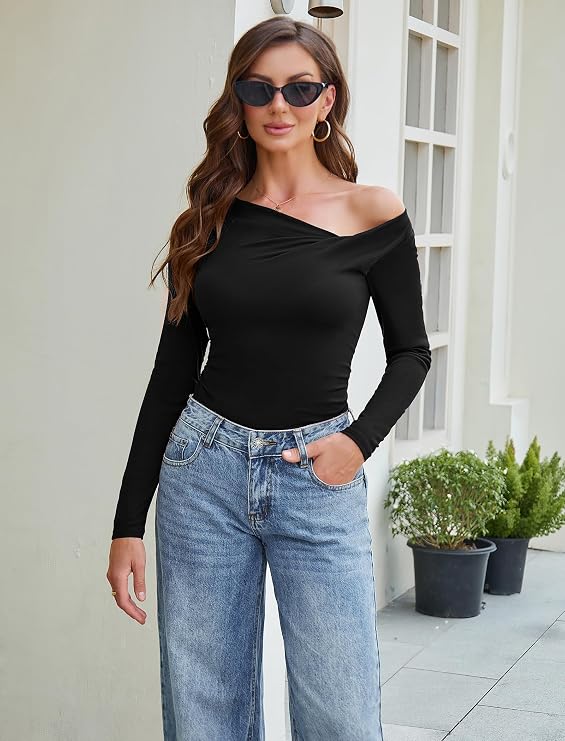
My go-to was dark jeans or tailored trousers, a fine knit or silk-blend top, a blazer or wool coat, and ankle boots.

Add a scarf and some simple jewellery, and you’re ready for a Zurich wine bar, a Lucerne lakeside restaurant or a Bern cellar. In a mountain village, swap the blazer for a nicer sweater and keep your boots.

Here’s a fun fact I learned the hard way: fondue is a full-body experience. You’ll smell like melted cheese for about 12 hours. Wear something you don’t mind washing, and maybe skip the white blouse.
Local tip: Restaurants in Swiss towns often fill up early, and the heating is generous. Dress in layers you can remove, and you’ll be comfortable from the first course to dessert.
11. Bags: Crossbody vs Backpack
You’ll want something hands-free, secure and rain-friendly.
I carried a small crossbody bag with a zip for city days. It keeps your phone, wallet and SBB tickets within reach and looks tidy with any outfit. Choose leather or a water-resistant fabric, and avoid anything with a flimsy flap that lets in drizzle.

For hiking days or longer day trips, a small 15–20 litre backpack is the better call. It holds your layers, a water bottle, snacks and your rain shell without making your shoulders cry. Pick one with a chest strap and rain cover if you can.

Local tip: Swiss cities feel very safe, but train stations and tourist hotspots still attract the odd pickpocket. Keep your bag zipped and in front of you, as you would anywhere.
12. Accessories That Make Everything Warmer (and Better Looking)
These are the small things that do the heavy lifting.
A wool or cashmere-blend scarf is my number one accessory. It adds warmth, covers your neck on windy boat rides, and instantly makes a basic outfit look styled.

A beanie or ear-warming headband is essential for early mornings and anywhere higher than 1,500 metres.

Lightweight gloves, ideally touchscreen-friendly, are the thing you’ll thank yourself for when you’re waiting for a cable car at 7 a.m.

Sunglasses matter too. Alpine sun in October is bright, especially with snow around. A simple pair does the job.
Add a small pair of stud earrings or a simple watch to dress things up, and leave the chunky costume jewellery at home.
Local tip: Pack these in your day bag, not your suitcase. You’ll need them at the exact moment the weather changes.
13. Rain Preparation (Unexpected but Essential)
Rain in Switzerland isn’t dramatic. It’s patient, and it wins.
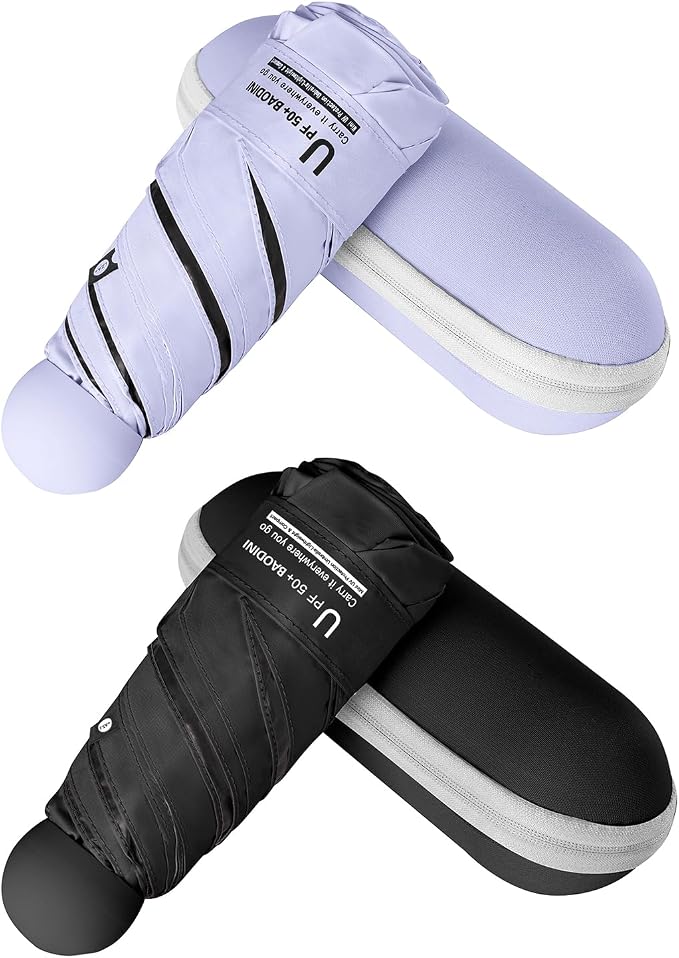
A compact travel umbrella is the best 20 francs you’ll spend, especially in cities where you need your hands free for a camera or coffee. A hooded waterproof jacket does more for mountains and boat decks, where umbrellas get shredded by wind.
Waterproof shoes or a spray-on protector will keep your feet dry through puddles and wet grass, and a small dry bag or plastic bag protects your electronics.
If you’re doing a big mountain day, check the weather the night before and again that morning. Swiss forecasts are famously accurate, and the MeteoSwiss app is the one locals actually use.
Local tip: Rain often means fog, and fog often means the view you paid for disappears. Be flexible with your plans and swap a mountain day for a museum day if needed. It’s more fun than standing in a cloud.
14. Fabrics to Choose (and Avoid)
Fabric makes more difference than fashion in this climate.
Choose merino wool, wool blends, fleece, down or synthetic insulation, and quick-drying technical fabrics. They keep you warm without bulk, they cope with damp air, and they look better after being squashed in a duffle. Cotton blends are fine for tees, but don’t rely on them for warmth.
Avoid pure cotton hoodies and heavy denim for hiking, linen and thin viscose for anything outdoors, and anything that takes ages to dry. Damp cotton in cool air is the quickest route to feeling thoroughly miserable. Check out my tips on rolling vs folding clothes to keep your wool and knits crease-free.
Local tip: Merino can be washed in a hotel sink and dries overnight on a radiator. It’s the secret to packing light for a week.
15. A Capsule Wardrobe for Switzerland in October
Here’s the formula I swear by, and it fits in one carry-on.
Bring two fine knits, one long-sleeve merino base layer, two tees or thin tops, two pairs of dark jeans or trousers, one midi dress or skirt, one light puffer, one waterproof shell, one scarf, one beanie and gloves. For shoes: waterproof sneakers or ankle boots, plus hiking boots only if you’re hitting the trails. Stick to a palette of navy, charcoal, camel, forest green and cream, and everything mixes with everything else.
That’s roughly eight to ten outfits from about twelve pieces. If you want more ideas, my travel capsule wardrobe guide goes deeper, and my what to wear in Europe in fall post helps if you’re stringing several countries together.
Local tip: Pick a colour palette before you pack. It makes getting dressed in a tiny hotel room ridiculously easy.
Practical Packing: How Much to Bring
How many outfits: Aim for 7–9 outfits for a week, built from about 12 pieces. Swiss laundry is easy to find, and merino dries fast, so you don’t need a different outfit for every day.
Packing light vs overpacking: Light wins every time here. You’ll be on and off trains, up station stairs, and across cobbles. If you can’t lift your bag overhead with one hand, it’s too heavy.
Outfit planning tips: Lay out your outfits on the bed before packing and take out anything that doesn’t work with at least three other pieces. Wear your bulkiest items (boots, puffer) on travel days to save space.
Mistakes to avoid: Packing for one weather type, bringing brand-new shoes, skipping rain gear, and forgetting a day bag for layers. If you’re combining Switzerland with other stops, my guides for what to wear in Munich in October and what to wear in Milan in November cover the nearby routes.
Go and Get Cold Cheeks (the Good Kind)
Switzerland in October is one of those rare trips where the weather doesn’t ruin anything, it just adds to it. Steam rising off a lake at sunrise, a cosy knit and a hot chocolate on a train platform, golden trees against a fresh dusting of snow. It all looks better when you’re warm, dry and comfortable in your own clothes.
So pack your layers, break in your boots, tuck an umbrella in your bag, and don’t overthink it. You’ll look effortless, you’ll feel prepared, and you’ll be far too busy staring at the mountains to worry about what you’re wearing. Go and enjoy every misty, golden, wonderfully unpredictable minute.

