
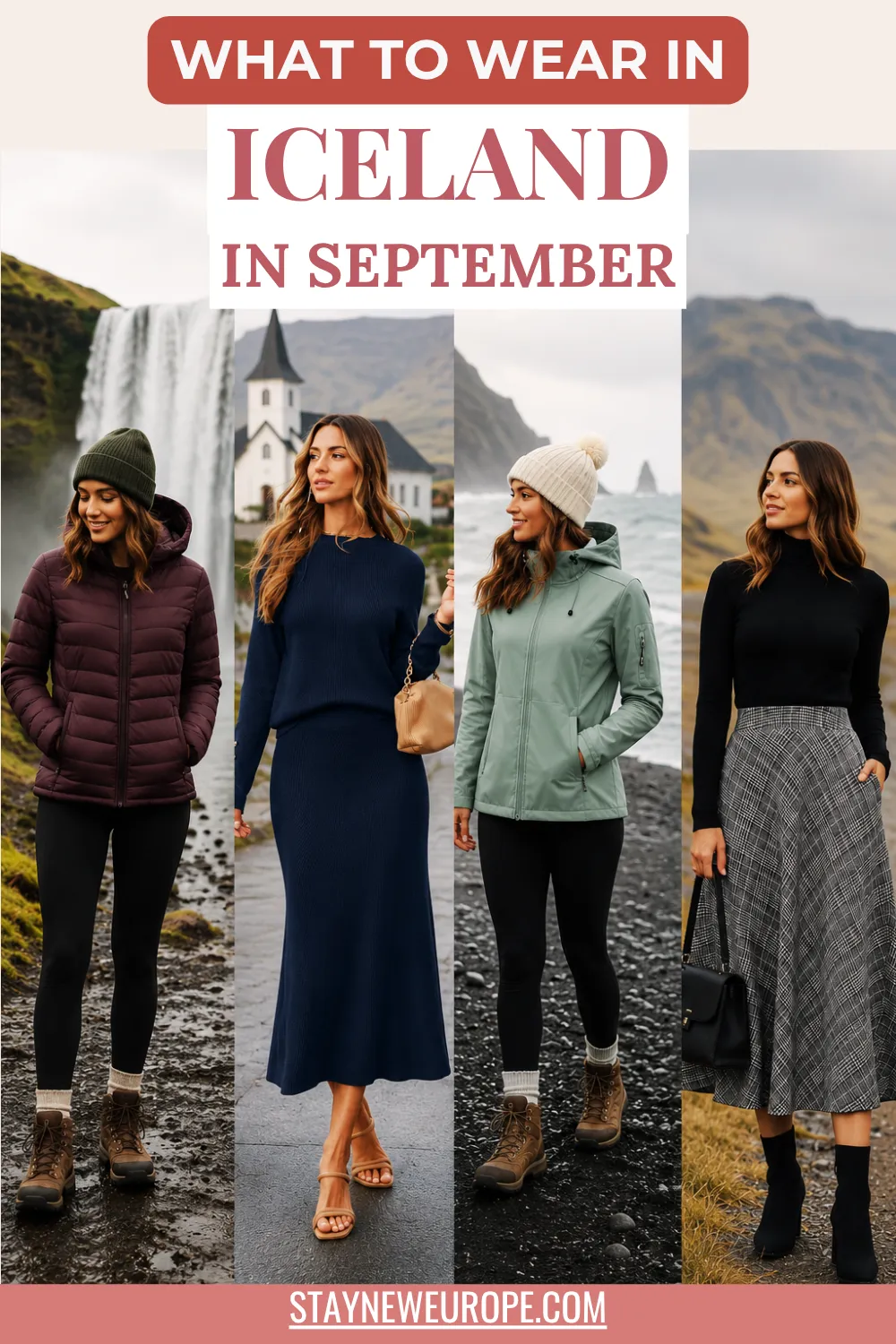
Let me be honest — I packed for Iceland in September like I was still half-thinking about summer, and I paid for it. One afternoon in Reykjavik I was down to a t-shirt in surprising sunshine, and by evening I was standing at Seljalandsfoss getting sideways rain in my face, hands numb, silently negotiating with a waterfall I’d been so excited to see ten minutes earlier.
September in Iceland is the in-between season, and that’s exactly what makes it tricky. The tourist crowds have thinned out from summer, the light is doing something genuinely magical — golden, low, occasionally streaked with the first northern lights of the season — and the temperatures are still, technically, mild. But “mild” in Iceland means something different than it does almost anywhere else, and the sky does not care about your outfit plans.
This surprised me the most: it’s not really a cold-weather problem, it’s a changeable-weather problem. You need clothes that can go from bright and breezy to wet and biting within the same walk. Here’s what actually works.
Before We Dive In
Weather in Iceland in September hovers roughly between 4°C and 12°C (39–54°F), but the number on the forecast matters less than the wind, which is near-constant and genuinely bites. Rain is frequent — not always heavy, but the kind of fine, blowing mist that soaks you slowly if you’re not prepared. Daylight is still generous early in the month (around 13 hours) and shrinks noticeably by the end, which is also when your northern lights odds start climbing.
Walking conditions are a mix of paved city streets in Reykjavik and genuinely uneven, often wet or muddy terrain the moment you head toward waterfalls, black sand beaches, or the Golden Circle. Cobblestones aren’t really the issue here — loose gravel, boardwalks, and slick volcanic rock are.
Style culture in Iceland is refreshingly low-pressure. Icelanders dress for function first, and there’s real pride in doing that stylishly — think well-cut wool sweaters, quality outerwear, and clean, neutral layering rather than anything flashy. Nobody is judging your hiking boots in a Reykjavik café. If you’re coming from a country like Sweden, the aesthetic will feel familiar: understated, practical, quietly put-together.
The Base Layer You Actually Need
Cotton is the first thing to leave at home, and this is the one packing rule in Iceland I’d call non-negotiable.
A merino wool or technical base layer — top and bottom — is what stands between you and a miserable day.

Merino regulates temperature so you’re not sweating on an uphill stretch and then freezing the second you stop moving, which happens constantly when you’re pausing every five minutes for a waterfall photo. It also doesn’t hold onto odour the way synthetic layers do, which matters when you’re re-wearing the same base layer for a week.

I wear mine under everything — jeans, hiking pants, even under a dress on colder days with tights layered over. Nobody sees it, nobody cares, and it’s doing more work than any single item in your suitcase.
Local tip: Icelandic brand 66°North makes excellent base layers if you want to buy on arrival rather than pack — their Reykjavik flagship store is a genuinely useful stop even if you just want to see what serious cold-weather gear looks like.
Lightweight Layers, Not Bulky Ones
This is where a lot of people overpack, and I understand why — “Iceland” and “cold” get mentally filed together and suddenly everyone’s packing a single giant parka and calling it done.
The better approach is three or four thinner layers instead of one heavy one.

A base layer, a light fleece or wool jumper, and a shell jacket will keep you warmer across more conditions than one bulky coat, because you can actually adjust as the day changes — and in Iceland, it will change.

Take off the fleece when the sun comes out at a geothermal stop, put it back on twenty minutes later at a windy cliff edge.

It also just packs better. A duffle bag or a soft-sided weekender works well here since you’ll be adding and removing layers constantly and want easy access, rather than digging through a rigid suitcase at a gas station car park.
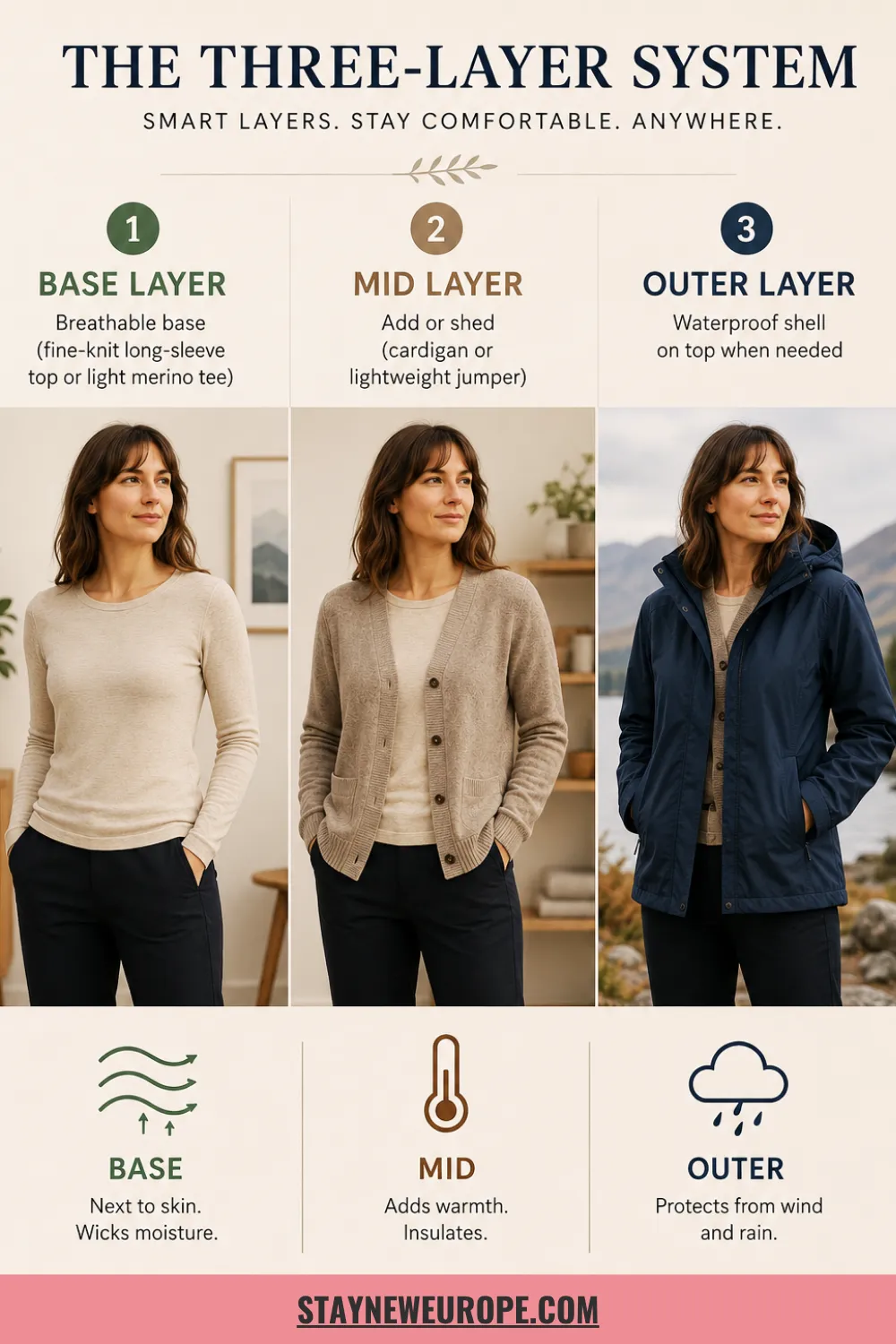
Local tip: Do the layering test before you fly — put on your full stack of thinner layers and check you can still move your arms freely. You’ll be getting in and out of a rental car a lot.
The Jacket That Does the Real Work
Your outer shell is the single most important item you’ll pack, full stop.
You want something windproof and waterproof — not water-resistant, which is a marketing distinction that becomes very obvious the first time you’re standing near a waterfall’s spray zone.
A proper rain shell with a hood that actually stays up in wind (drawstring, not just elastic) will save more of your trip than anything else on this list.

Down jackets are warm but genuinely bad in Iceland’s wind and wet unless they’re paired with a waterproof shell over the top.

I made the mistake of bringing a “fashion” raincoat on my first trip — cute, city-appropriate, useless the second real wind hit it. Now I travel with an unglamorous but bombproof hardshell and just style around it with what’s underneath.
Local tip: A jacket with pit zips is worth the slightly higher price. You’ll be hiking in layers and need to vent heat without taking the whole thing off in the wind.
Trousers That Can Handle Getting Wet
Jeans are fine for city days in Reykjavik, but the moment you’re near waterfalls, black sand beaches, or the Golden Circle, denim becomes a liability — it holds water, gets heavy, and takes forever to dry.

For anything outdoorsy, a pair of quick-dry hiking trousers or technical leggings under a skirt is a better call. Fleece-lined leggings are a genuine secret weapon for September — warm without bulk, and they layer invisibly under a dress if you want to look a bit more put-together for dinner in town. Shorts have essentially no place here, even on a warm-looking day; the wind chill makes them uncomfortable within minutes.

For an evening out in Reykjavik, dark, well-cut trousers or jeans work perfectly — this is where you can dress more normally, since you’re indoors and off the volcanic rock.

Local tip: Pack one pair of trousers you don’t mind getting genuinely dirty. Somewhere between a black sand beach and a moss field, you will sit or kneel on something wet.
Dresses and Skirts (Yes, They Still Work)
I’ll admit I was skeptical about packing a dress for Iceland before my first trip, assuming it would just sit unworn. It didn’t.
A midi dress in a warm fabric like wool blend or brushed cotton, worn over thermal leggings with boots and a proper coat, works beautifully for dinner in Reykjavik or a day mostly spent in the city.

The key is treating it as one piece within a layered outfit rather than something you wear alone — nobody is doing bare-legged dresses here in September, but a dress over leggings under a coat photographs just as well and keeps you warm.
Skip anything flowy or lightweight; the wind will not be kind to it, and you’ll spend the whole day fighting your own hemline at outdoor viewpoints.

Local tip: Darker colours and heavier fabrics photograph better against Iceland’s grey-green landscape than pale pastels, which tend to wash out against the light.
Comfortable, Genuinely Waterproof Shoes
This is not the trip for stylish-but-impractical footwear, and I say that as someone who usually tries to make it work anyway.
Waterproof hiking boots or sturdy waterproof trainers are the standard here, and for good reason — you’ll be walking on wet grass, loose volcanic gravel, and boardwalks that get slick with spray.

Ankle support matters more than you’d think, since a lot of the terrain is uneven rather than flat. In Reykjavik itself, a clean pair of waterproof sneakers or Chelsea boots handles both the cobbled old-town streets and any surprise showers.

Leave the pure fashion boots and anything with a smooth leather sole at home. I learned this one on a very undignified slide near a geyser.

Local tip: Break your boots in before you arrive. Iceland is not the place to discover a blister two hours from your accommodation.
What NOT to Wear in Iceland in September
A few honest mistakes I’ve made or watched other travellers make, so you don’t have to.
Cotton hoodies and jeans as your entire outerwear system — they get wet, stay wet, and offer almost no wind protection.
Umbrellas are close to useless here; the wind will turn yours inside out at the first proper viewpoint, so a hood is your actual rain plan.
Anything strappy or sleeveless as a standalone top will leave you cold the moment you step outside, even on a sunny-looking day. And heels, obviously — Iceland’s pavements and volcanic terrain have no patience for them.
The overall tourist tell is dressing for the temperature on your phone rather than the wind on the ground. Icelandic weather apps are famously unreliable for a reason; the country’s weather changes faster than any forecast updates.
Accessories That Actually Earn Their Space
A warm beanie and gloves aren’t optional extras in September — they’re closer to essential gear, especially once you’re outside city limits.

Wind chill on an exposed cliff or waterfall platform drops the felt temperature fast, and your hands and ears will tell you about it first.

A scarf or buff does double duty as neck warmth and wind protection for your face on the more exposed hikes. Sunglasses are worth packing too, oddly enough — low autumn sun reflecting off water and wet rock is brighter than you’d expect.

Keep jewellery minimal and simple; anything delicate gets lost under layers anyway, so a single statement piece for evenings in Reykjavik does more than a full jewellery box.
Good UV-blocking sunglasses are essential, especially if you’re near snow, ice, or glaciers (all of which reflect sunlight and intensify UV exposure). This isn’t vanity — it’s eye protection.

Local tip: Touchscreen-compatible gloves are worth the small extra cost — you’ll be taking your phone out constantly for photos, and un-gloving cold hands every time gets old fast.
Bags: Crossbody vs. Backpack
For Reykjavik days, a crossbody bag keeps your hands free and sits securely under a jacket, which matters when the wind picks up and you don’t want anything swinging around or catching air.

For anything involving waterfalls, hikes, or the Golden Circle, a small backpack wins — you need both hands free for uneven terrain, and it holds an extra layer, gloves, and a water bottle without digging through a bag at your hip.

A rain cover or a backpack with a genuinely water-resistant base is worth checking before you buy, since bags get set down on wet ground more often than you’d expect.
Local tip: Pack a spare dry bag or large ziplock inside your backpack for your phone and camera near waterfalls — the spray reaches further than it looks like it will.
Rain Preparation (More Important Than You Think)
I put this near the end deliberately, because it deserves its own space rather than being folded into “jacket.”
Iceland doesn’t really do dramatic downpours as much as it does relentless, sideways, fine rain that soaks through anything that isn’t genuinely waterproof. Waterproof rated footwear, a hooded hardshell, and quick-dry trousers cover most of it. A packable rain cover for your daypack is a small, easy addition that prevents a soggy camera at exactly the wrong moment.
Don’t rely on an umbrella as your plan B — I’ve watched more than one get turned inside out and abandoned at Skógafoss within about ninety seconds of arriving.
Fabrics to Choose (and Avoid)
Merino wool, fleece, and technical synthetics are your friends — they insulate even when damp and dry quickly overnight, which matters if you’re doing laundry mid-trip. Wool sweaters are genuinely iconic here for a reason; a proper Icelandic lopapeysa is both a great souvenir and a legitimately warm layer.
Cotton is the fabric to minimise. It’s slow to dry, offers little insulation once wet, and in a climate this damp, that’s a real problem rather than a minor inconvenience. Save cotton tees for layering under wool, not as a standalone outer piece.
A Simple Capsule for Iceland in September
You genuinely don’t need a huge suitcase for this. A workable capsule looks like: two merino base layer tops, one base layer bottom, two mid-layers (fleece and wool jumper), one waterproof hardshell, two pairs of trousers (one hiking, one for evenings), one warm dress for city dinners, waterproof boots plus one pair of clean trainers, and the accessories above.
Everything here mixes with everything else, which is the whole point — you’re not packing outfits, you’re packing a system you rebuild each morning depending on what the sky is doing that day.
If you’ve packed for Spain in summer before, this will feel like the opposite exercise — fewer statement pieces, more functional layering, and everything chosen for how well it performs rather than how it looks on its own.
Packing It All Without Overdoing It
Five to six days of outfits is plenty for most trips, since you’ll be re-wearing base layers and outerwear regardless of trip length — nobody is checking, and merino genuinely doesn’t smell after repeat wears the way cotton does.
The biggest mistake is packing for the Iceland you’re imagining rather than the one you’ll actually get — sunny hero-shot Instagram Iceland instead of blustery, changeable, real Iceland. Pack for the wind and the rain and let any sunshine be a pleasant bonus rather than your baseline assumption.
You’ll get days here that feel like nowhere else on earth — steam rising off a hot spring while your breath fogs in the cold air, low gold light hitting a waterfall just right, maybe even a green flicker overhead if you’re lucky with the aurora. Dress for the weather Iceland actually has, not the one you’re hoping for, and you’ll spend your whole trip looking at the view instead of thinking about your feet.
