
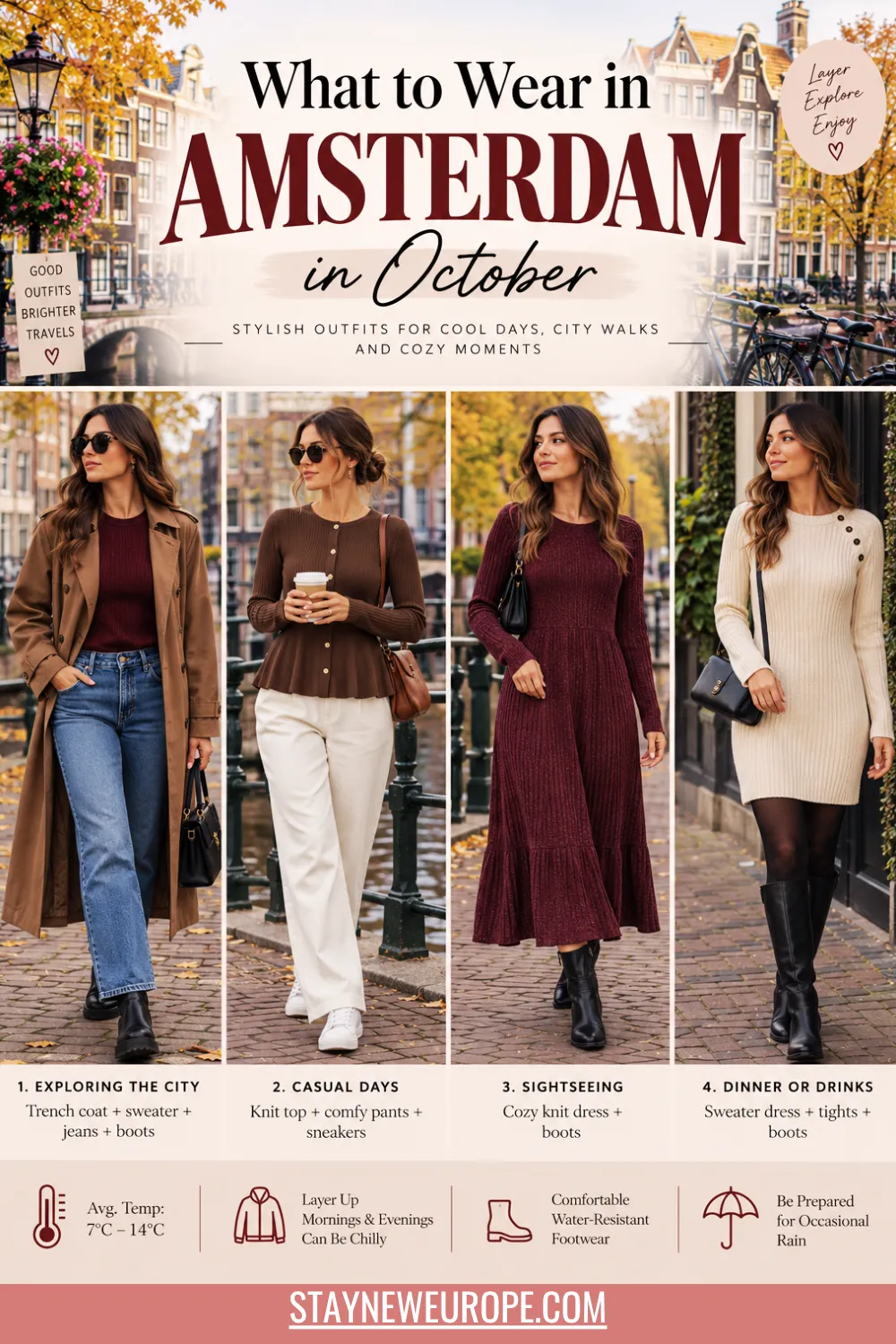
Amsterdam in October is a mood swing wearing a trench coat. One hour it’s crisp and golden, canal light bouncing off the water like something out of a film — the next it’s sideways rain and wind that seems personally offended by your umbrella. I learned this on my first trip when I packed for “autumn” the way I’d pack for autumn back home. Big mistake.
The city doesn’t care that your Instagram moodboard said “cozy sweater weather.” It’ll test every layer you own, usually within the same afternoon. And because Amsterdam is a walking-and-biking city — cobblestones, bridges, tram tracks that eat your heels alive — what you wear actually matters here in a way it doesn’t in a lot of other places.
So let’s skip the vague “bring layers!” advice everyone repeats and get into what actually works, what I got wrong, and what I’d pack again in a heartbeat.
Before We Dive In
October in Amsterdam sits right in that shoulder-season no-man’s-land. Days usually hover between 9-15°C (48-59°F), mornings can dip closer to 6°C, and rain shows up uninvited more often than not — this is one of the wetter months in the Dutch calendar. Humidity clings to everything, so what feels “fine” at 11am can feel damp and chilly by 4pm once the sun starts dropping.
Then there’s the walking. Amsterdam is flat, which sounds easy, but you’ll be covering serious distance on uneven cobblestones, over hump-backed bridges, and dodging bikes that have zero patience for tourists who stop mid-path to check a map. Your shoes carry more weight in this city than in almost any other European destination.
And style-wise — the Dutch dress well, but quietly. Think clean lines, muted colors, good boots, minimal fuss. Nobody’s dressed up for the sake of it, but nobody looks sloppy either. It’s less about trying hard and more about looking like you have your life together, even if you don’t.
The Coat You’ll Actually Live In
This surprised me: your coat isn’t just outerwear in Amsterdam in October, it’s basically your whole outfit’s personality.
A proper mid-weight coat — something that handles wind and light rain without turning into a soggy blanket — is the single most important thing in your suitcase. I brought a wool-blend trench my first year and it did absolutely nothing against the wind coming off the canals. The second year I switched to a longer, water-resistant parka-style coat and suddenly the whole trip felt easier.

Look for something that hits mid-thigh or longer, has a hood (even a packable one), and isn’t precious about getting a little wet. You’ll wear this coat over almost everything else, so build your outfits around it rather than as an afterthought.
Local tip: Dutch locals favor dark, structured coats — navy, charcoal, olive — over bright colors. It’s not a rule, but a black or camel coat will blend in and photograph beautifully against the canal houses either way.
Layers, Layers, Layers (But Smart Ones)
I used to think “layering” just meant bringing extra clothes. It doesn’t. It means building an outfit you can add to or strip down in about ninety seconds flat, because that’s how fast the weather changes here.
The formula that’s worked for me every single trip: a breathable base layer (a fitted long-sleeve tee or thin merino top), a mid layer with actual insulation (a chunky knit or fleece), and then your coat on top. Skip cotton for the base — it holds onto sweat and cold in a way that makes you miserable the second you step into an overheated museum or café.

A morning canal walk might need all three layers. By 2pm, ducking into a warm bookshop, you’ll be shedding the middle one within minutes. This system means you’re never stuck sweating through a museum or shivering on a bridge.
Local tip: Merino wool base layers are worth the splurge — they don’t hold odor the way synthetics do, which matters when you’re re-wearing pieces across a multi-day trip.
Jeans, Trousers, or Leggings — What Actually Survives the Day
Shorts are a hard no here in October, so let’s not pretend otherwise.
Straight-leg or slightly wide jeans are the workhorse of this trip — sturdy enough for long walking days, warm enough for the wind, and dressy enough that you’re not underdressed at dinner. I’d avoid anything too skinny or too stiff; you’ll be sitting on trams, bike taxis, and low café stools more than you’d expect, and rigid denim gets old fast.

If jeans aren’t your thing, a good pair of wool-blend trousers does the job just as well and dries faster if you get caught in a downpour — which, statistically, you will.

Leggings work too, but only under a longer coat or tunic; on their own in this wind, they’re just not warm enough. So you can also wear them under skirt if you are thnking of bringing one.

Dresses (Yes, Really — Just Not the Summer Kind)
Here’s the thing nobody tells you: dresses absolutely work in Amsterdam in October, they just need backup.
A midi dress in a heavier knit or corduroy, paired with opaque tights and ankle boots, looks genuinely great against the city’s brick and canal-house backdrop — and it photographs better than jeans ever will.

I wore a rust-colored knit dress with tights, boots, and a long coat on a trip a few Octobers back, and it worked for a museum morning, a canal-side lunch, and dinner without a single outfit change.

The rule is simple: if the dress alone would be fine in a 65°F room, it’s not warm enough for Amsterdam in October without tights and a proper coat over it.

Shoes That Won’t Betray You on Cobblestones
Let me be blunt: your feet decide whether this trip feels magical or miserable.
Amsterdam’s cobblestones are uneven, the bridges are steep and slick when wet, and you’ll likely walk 15,000+ steps a day without trying. Cute-but-impractical shoes get punished here fast.
What works: waterproof or water-resistant leather boots with actual tread, broken in well before you land (please don’t debut new boots on cobblestones — I did this once and paid for it in blisters for four days straight).

Ankle boots are the sweet spot — versatile enough for day and night, warm enough with thick socks, and low-maintenance if they get rained on. Sneakers work too if they’re a weatherproofed pair, not your gym trainers.

Local tip: Avoid anything with a smooth or completely flat sole — wet cobblestones and tram tracks are genuinely slippery, and Amsterdam locals notice a tourist wobble from a mile away.
What NOT to Wear (Save Yourself the Regret)
A few things I’ve either done myself or watched other tourists suffer through:
Flip-flops or open sandals — the temperature and rain make these borderline miserable past September.
Head-to-toe bright, logo-heavy athletic wear — it reads as tourist instantly and the Dutch aesthetic leans quiet and minimal.
A single flimsy umbrella as your only rain plan — the wind off the canals turns cheap umbrellas inside out within minutes; you’ll want a coat with a hood as backup.
And skip anything you’re not willing to get a little damp or muddy — Amsterdam in October isn’t a “keep everything pristine” kind of trip.
Rain Prep (Because You Will Get Rained On)
I used to treat rain gear as an afterthought. Now it’s one of the first things I pack.
A compact, wind-resistant umbrella is fine as a backup, but your real defense is a hooded coat, since wind here makes umbrellas borderline useless half the time.

Waterproof or water-resistant boots matter more than people think — wet socks for six hours will ruin your day faster than almost anything else.
I also always throw a packable rain shell into my day bag, even on days that start sunny, because Amsterdam’s weather has a genuine sense of humor about forecasts.

Evening Outfits That Don’t Require a Whole Extra Suitcase
Dinner in Amsterdam doesn’t demand formalwear, which is a relief, but it does reward a little intention.
Swap your daytime boots for a slightly sleeker pair, add a statement earring or a silk scarf, and you’re set — no full outfit change required.

For me, this usually means the same knit dress or trousers from the day, minus the bulky coat, plus a blazer or a nicer wool coat if the venue’s a step up. Think “elevated, not overdressed” — the Dutch dinner crowd is stylish but never flashy.

Museum and Church Dress Codes
Amsterdam isn’t strict about dress codes in the way, say, Rome’s churches are, but a couple of spots do care.

The Anne Frank House and larger churches like the Westerkerk don’t require covered shoulders or anything formal, but showing up in soaking wet, dripping outerwear or beach-casual gear (think swim cover-ups or crop tops) will get you side-eyed.

Basically: dress like you respect where you are, and you’ll be fine everywhere.
Bags: Crossbody Over Backpack, Almost Always
A crossbody bag is genuinely the better call here over a backpack, and it’s not just about theft prevention (though pickpocketing does happen in busy tourist zones like Dam Square).
A crossbody keeps your hands free for holding an umbrella, a coffee, or a bike handlebar if you end up renting one — which, let’s be honest, you probably will.
Look for one with a zip closure and a slightly structured shape so it doesn’t collapse and spill everywhere when you’re weaving through a crowded market.

Accessories That Actually Earn Their Suitcase Space
A few small things that punch way above their weight in October:
a wool scarf that doubles as an extra layer around your neck on windy bridge crossings,

a beanie or structured wool hat for the days that dip closer to 6°C, and gloves — thin touchscreen-friendly ones so you’re not fumbling to check a map with bare, freezing hands.

I skip statement jewelry entirely on travel days; it’s one more thing to keep track of while you’re focused on not losing your footing on wet cobblestones.
Bellts are also nice if you wish to elevate your boring outfit or spice up a loose dress with it.

Fabrics to Pack (and the Ones to Leave Home)
Wool, corduroy, denim, and merino are your friends this month — they insulate even when slightly damp and don’t cling uncomfortably. Cotton is fine for base layers but terrible as your only defense against wind and rain; it soaks through and stays cold. And skip anything linen or overly lightweight — beautiful in July, useless in October.
If you’re building a capsule wardrobe for Amsterdam, lean toward pieces that layer easily in these fabrics rather than one statement piece per day — it’ll save serious suitcase space.
How Many Outfits You Actually Need
For a five-day trip, I bring roughly three bottoms (two jeans/trousers, one dress) and five tops, all designed to mix and match with a rotation of two sweaters and one coat. That’s it. Everything repeats at least twice, and nobody notices or cares.
Overpacking is the single most common mistake I see — people bring an outfit for every day like they’re doing a fashion show, then end up hauling a suitcase over cobblestone bridges they can barely lift. Pack less, plan combinations before you go, and leave room for the stroopwafels you’ll inevitably bring home.
If you’re figuring out logistics beyond the outfits themselves, this guide on shoulder-season packing has some solid crossover tips on carry-on strategy that apply just as well here.
Amsterdam in October has this specific kind of beauty — golden leaves drifting into the canals, fewer crowds than summer, that soft grey light that makes even a rainy afternoon feel cinematic. Dress for the weather it actually has, not the weather you wish it had, and you’ll spend your whole trip present in the city instead of distracted by cold feet or a coat that’s let you down. Pack smart, layer well, and go enjoy every soggy, beautiful minute of it.
