
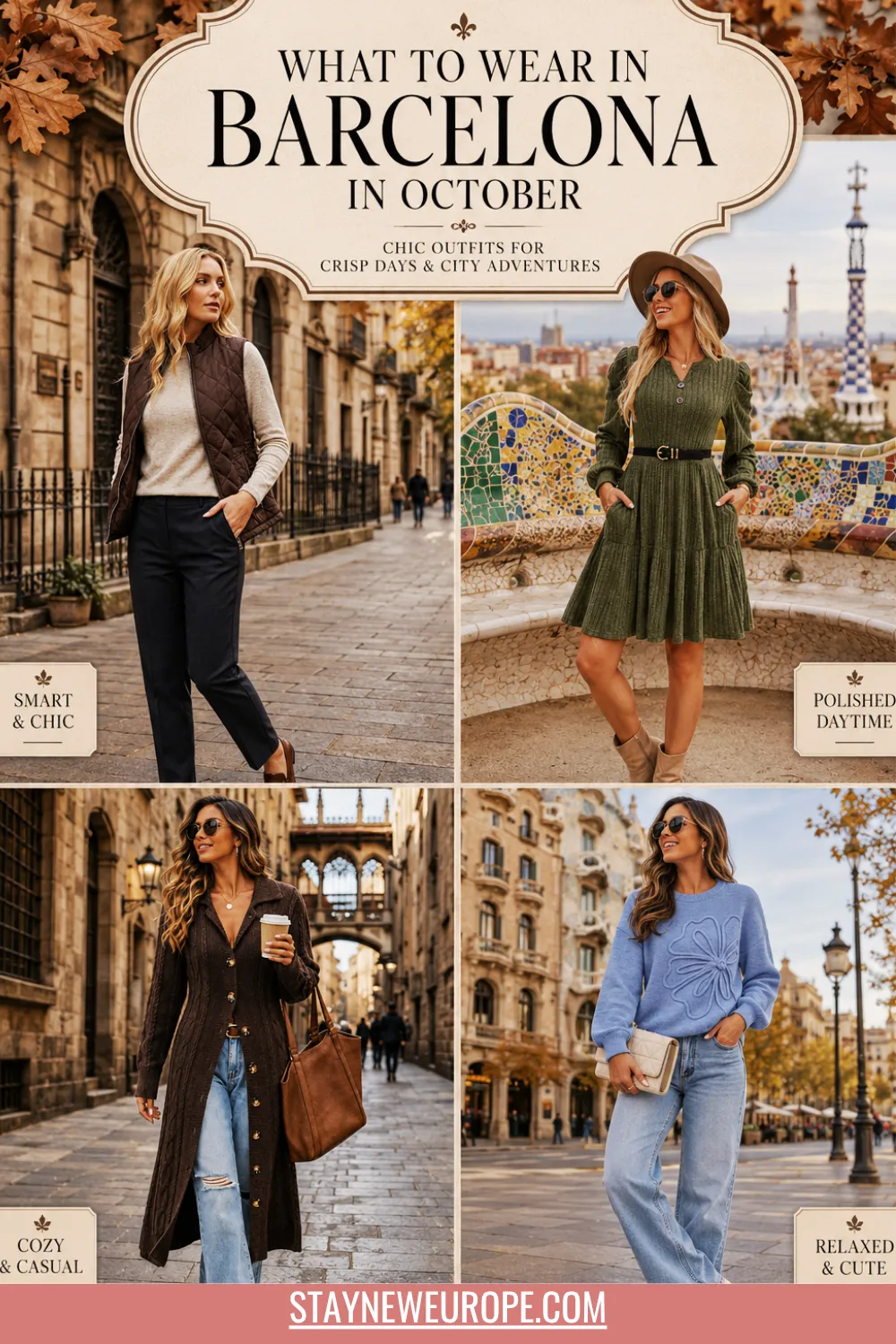
Barcelona in October is the city finally exhaling. The summer crowds have thinned out, the heat has backed off from “melting on Las Ramblas” to something genuinely pleasant, and the light does this golden, low-angle thing over the Gothic Quarter that makes every photo look accidentally good.
But here’s the thing nobody tells you: October in Barcelona is a shapeshifter. You can start the morning in a light jacket, be down to a t-shirt by 1pm on a sunny terrace, and be reaching for that jacket again the second the sun dips behind a building. I learned this the hard way on my first trip — I packed like it was still summer and spent three evenings cold on rooftop bars, pretending I was fine.
So let’s fix that before you go. This isn’t a “12 outfits for 12 days” spreadsheet. It’s what actually works when you’re walking the Gothic Quarter’s uneven stone, riding the metro, sitting down for a two-hour dinner that starts at 9pm, and maybe sneaking in a beach afternoon if the weather cooperates.
Before We Dive In
Weather in Barcelona in October: think mild, not cold. Daytime highs generally sit in the low-to-mid 20s°C (around 70–75°F) at the start of the month, easing down toward the high teens°C (mid-60s°F) by late October. Mornings and evenings are noticeably cooler than the afternoons, sometimes by 8–10 degrees, which is exactly the gap that catches people out. Rain becomes more of a factor than in summer — October is one of Barcelona’s wetter months, though it tends to arrive as short, sharp showers rather than all-day drizzle.
Walking conditions: Barcelona is an extremely walkable city, and October is arguably the best month to do it in, since you’re not sweating through your shirt by 10am. That said, the Gothic Quarter and Born neighborhoods have narrow, uneven cobblestones, and Passeig de Gràcia’s tiled sidewalks get slick when wet. You will walk more than you expect.
Style culture: Barcelona — and Spain generally — has a “put together but not trying too hard” dress code. Locals lean into good denim, quality knitwear, leather goods, and a neutral palette rather than logos or loud prints. You don’t need to dress like a local, but showing up in head-to-toe activewear will mark you as a tourist faster than a map in your hands.
The Bag Situation: What Actually Survives a Day of Barcelona Walking
Let me be honest — I went through three different bags before I found the right approach for this city.
A big backpack feels practical until you’re squeezing through a crowded tapas bar or sitting at a tiny café table with nowhere to put it.

What actually works is a mid-size crossbody bag, worn in front rather than behind — Barcelona has a well-earned reputation for pickpocketing in tourist-heavy areas like Las Ramblas and the metro, and a bag on your back is an open invitation. For daytime,
I carry a structured crossbody just big enough for a phone, a slim wallet, sunglasses, and a folded light layer.

For arrival, a soft-sided duffle or a carry-on with some give in the fabric packs down easier for the inevitable extra scarf or jacket you’ll want by the trip’s end. If you’re also stopping elsewhere in Spain, our Spain packing list goes deeper on what earns a spot in the suitcase.

Local tip: Skip the fanny pack unless it’s genuinely stylish — Barcelona’s pickpockets know exactly what a tourist “security” pouch looks like, and it does the opposite of blending in.
Lightweight Layers Matter More Than Any Single Item You Pack
This surprised me the first time: in October, your single most useful piece of clothing isn’t a coat or a dress — it’s a good midweight layer you can add or remove five times in one day.
Barcelona’s daily temperature swing means you’ll be comfortable in a t-shirt at 2pm and genuinely chilly by 8pm, especially near the water at Barceloneta.

A fine-knit cardigan, a lightweight quilted vest, or an unlined jacket in cotton or a cotton-linen blend solves this better than one “warm enough” coat that you end up carrying anyway.

Pack two or three of these rather than one heavy jacket.
Layer a long-sleeve tee under a t-shirt for the morning market run, drop the extra layer as the day warms, then add a cardigan back on for dinner. It’s the same logic I use writing about what to wear in Stockholm, just dialed down about ten degrees — the principle of flexible layering matters just as much in a mild Mediterranean autumn as it does somewhere properly cold.

Local tip: Neutral colors — camel, navy, cream, black — mix and match across every layer, which means you can pack fewer pieces and still get a different look each day.
Dresses That Actually Match Barcelona’s October Vibe
A breezy sundress that was perfect in July starts to feel slightly wrong by October — not incorrect, just a beat off-season, like showing up to a bonfire in flip-flops.
What works instead is a midi dress in a heavier cotton, a cotton-linen blend, or a light knit — something with a bit more structure and a richer color story.

Think rust, olive, terracotta, deep burgundy, or chocolate brown instead of the pastel florals of summer. A long-sleeve or three-quarter-sleeve shirt dress is close to unbeatable here: dressy enough for a late dinner in El Born, casual enough for wandering the Gothic Quarter all afternoon with sneakers.

I wore one simple knit wrap dress on repeat for four days on my last trip — sneakers and a denim jacket during the day, ankle boots and a blazer over the top at night — and it did more work than anything else in my suitcase.

Local tip: A dress with pockets is not a small detail in a city where you’ll be dodging rain showers and want your hands free for gelato.
Jeans, Trousers, or Shorts — What the October Weather Actually Calls For
Shorts are not off the table entirely in early October, especially if you’re catching a warm spell or a beach afternoon, but by mid-to-late month they start to feel like a gamble against the evening chill.

Jeans are the reliable workhorse here — a mid-wash or dark denim in a straight or slightly wide leg handles the temperature swing, the cobblestones, and dressier dinners without missing a beat.

If denim isn’t your thing, a pair of tailored trousers in a mid-weight cotton or a wool-cotton blend gives you the same versatility with a touch more polish, which matters for Barcelona’s dinner culture.

Avoid anything too heavy or wool-dominant — you’ll regret it the moment the sun comes out at 1pm and you’re stuck in trousers built for a Northern European winter.
Local tip: One pair of well-fitted jeans and one pair of trousers will outperform four “just in case” bottoms every time. Fewer, better pieces is the whole game here.
Comfortable, Genuinely Stylish Walking Shoes
I will not accept any compromise on this one: do not bring brand-new shoes to Barcelona.

The Gothic Quarter’s cobblestones are uneven, narrow, and hard on feet that haven’t broken in a shoe yet, and you will easily clock 15,000+ steps on a sightseeing day. Bring sneakers you’ve already worn in — white or off-white leather sneakers look intentional with almost everything and hide dust better than you’d expect.

A pair of leather loafers

or ankle boots covers you for dinners and slightly dressier evenings without sacrificing comfort.

Skip anything with a thin, unsupportive sole. Skip brand-new anything. Your feet are doing the real work of this trip.
Local tip: Pack a thin pair of cushioned insoles if your sneakers are more style than substance — it’s a two-euro fix for a problem that can otherwise ruin day three of your trip.
What NOT to Wear in Barcelona (Tourist Mistakes I’ve Actually Seen)
Head-to-toe athleisure is the biggest tell. Locals wear activewear for actual exercise, not for sightseeing — if you’re not going for a run, skip the leggings-and-technical-jacket combination entirely.
Logo-heavy clothing is another one; Barcelona’s aesthetic leans toward quiet, quality basics over branded pieces. Flip-flops away from the beach are a hard no — the cobblestones and general grime of a big city will make you regret it within the hour. And matching tourist tracksuits, while comfortable, mark you out instantly in a way that also, unfortunately, marks you as a target for pickpockets.
Local tip: If you wouldn’t wear it running errands at home, it’s probably not the right call for wandering Passeig de Gràcia either.
Jackets for Barcelona’s Unpredictable October Weather
A single “warm enough” coat is the wrong instinct here — you need something you can take on and off five times a day, not one heavy piece you end up sweating in or carrying around.

A lightweight trench or a cotton overshirt handles the majority of October days.
For cooler evenings or an unexpected rain shower, a packable rain jacket that folds into its own pocket is worth the small suitcase space — it takes up almost nothing and saves you when a shower rolls in off the Mediterranean with little warning.

A denim or leather jacket adds a bit of edge for evenings out and layers well over a dress.

Local tip: Leave the heavy wool coat at home. Even on Barcelona’s coldest October days, it’s rarely cold enough to justify the bulk, and you’ll spend half your trip carrying it over your arm.
Evening Outfits: Dinner Doesn’t Start Until 9pm Here
Barcelona’s dinner culture runs late, and the temperature drop by 9pm is real, especially if your table is on a terrace.

For women, a midi dress with tights and ankle boots, or trousers with a silk or fine-knit top and a blazer, both read as put-together without overdoing it.

For men, dark jeans or chinos with a button-down or a fine-knit sweater covers most restaurants comfortably — Barcelona is generally not a black-tie city, but there’s a clear step up from “beach casual” once the sun goes down.
Local tip: Bring one slightly dressier top or blazer that packs flat — you’ll use it more than you expect, and it instantly elevates the same jeans you wore sightseeing all day.
What to Wear for Barcelona’s Churches (Yes, There’s a Dress Code)
If Sagrada Família or any of the city’s other churches and cathedrals are on your list, know that shoulders and knees generally need to be covered to enter, and this is enforced more strictly than you might expect from a beach city.

A lightweight cardigan or scarf thrown over a sleeveless top solves this instantly, and a midi-length dress or trousers avoid any issue with knees. Keep a scarf in your bag on sightseeing days specifically for this — it’s the easiest fix and takes up zero extra planning.
Local tip: Sagrada Família and Barcelona Cathedral both enforce this dress code at the door, so don’t assume you can talk your way past it.
Accessories That Elevate a Simple October Outfit
Barcelona rewards a few well-chosen accessories over a pile of small ones.
A good pair of sunglasses does double duty — the October sun is still strong enough at midday to need them, even with the cooler air.

A scarf is arguably the most useful single accessory of the trip: dress code backup for churches, an extra layer for cool evenings, and a way to dress up a plain t-shirt in about ten seconds.
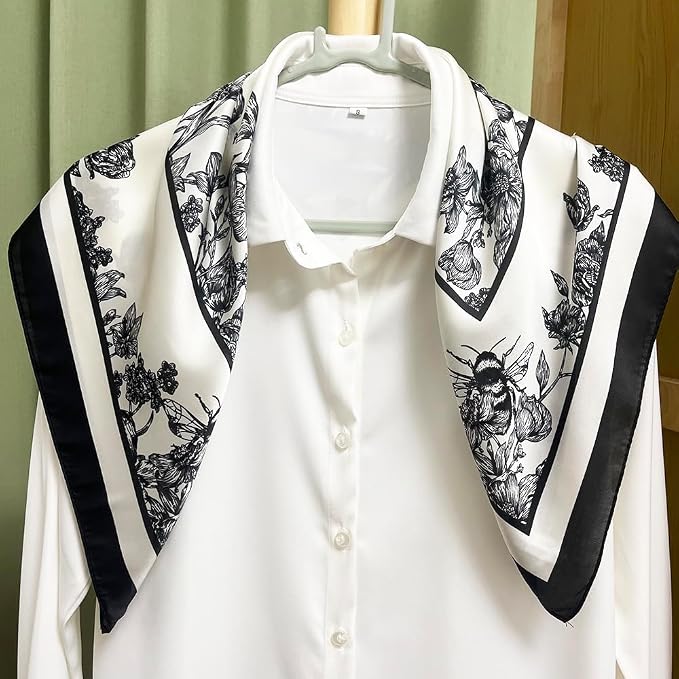
a leather belt to define your coat or a looser sweater to make it look more classy.

One quality bag and one or two pieces of jewelry go further here than a full accessory drawer.
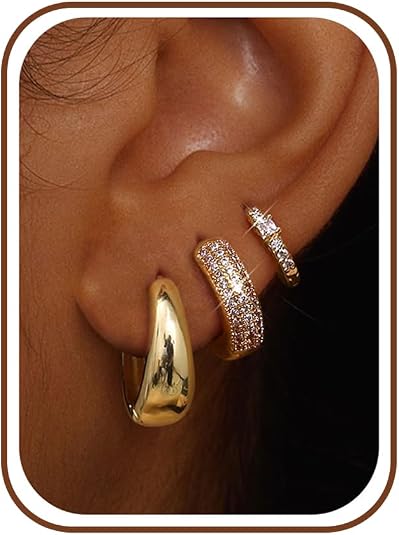
Gold or warm-toned metals tend to suit the city’s golden-hour light better than silver, if you’re deciding between the two.
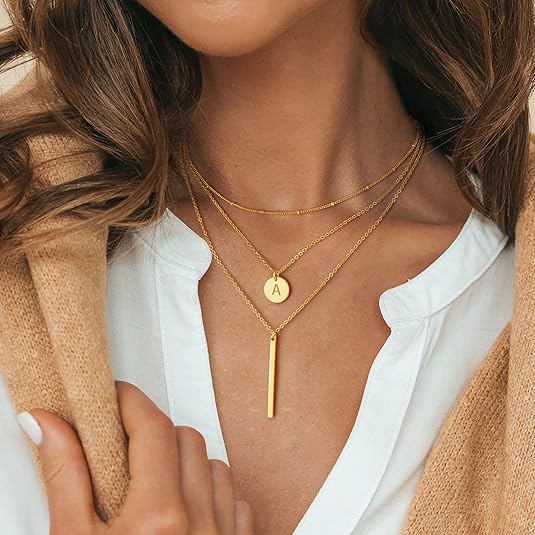
Local tip: A crossbody bag that also doubles as your “dressy” evening bag saves you from packing a second one entirely.
Rain Preparation (More Important in October Than You’d Think)
October sits toward the wetter end of Barcelona’s calendar, and the rain tends to arrive fast and heavy rather than as a gentle all-day drizzle — the kind of shower that soaks you in the two minutes it takes to find shelter.
A packable rain jacket is genuinely more useful than an umbrella here, since it keeps your hands free on cobblestones that get slippery fast when wet.
If you do bring an umbrella, a compact one that fits in a daybag beats a large one you’ll never actually be carrying when the rain starts.

Waterproof or water-resistant shoes are a smart call too, particularly if sneakers are doing most of your walking.
Local tip: Check the forecast the night before rather than the morning of — Barcelona’s October showers often build overnight and clear by midday, so planning indoor activities around the wettest hours saves you from getting caught out.
Fabrics to Pack (and the Ones to Leave at Home)
Cotton, linen-cotton blends, and lightweight wool or wool blends are the trio that carries this trip. They breathe on the warm afternoons, layer well for cool evenings, and don’t wrinkle into oblivion after a day folded in a bag.
Skip heavy pure wool and thick synthetics — both trap heat the moment the afternoon sun comes out and take up disproportionate suitcase space for how little they’re actually needed. Pure polyester in warm weather is also a fast track to feeling sticky by early afternoon, even in October’s milder heat.
Local tip: A fine merino knit is the unsung hero of shoulder-season packing — thin enough not to overheat, warm enough for the evening drop, and it doesn’t hold odor the way synthetics do after a few wears.
Building a Barcelona Capsule Wardrobe for October
Here’s roughly what earns a spot in the suitcase for a 5–7 day trip: two pairs of bottoms (one jeans, one trouser), one midi dress, four to five tops that mix and match with everything, two light layers (a cardigan and a jacket), one packable rain jacket, one pair of broken-in sneakers, one pair of boots or loafers, and a scarf that does triple duty as an accessory, a layer, and a church-visit fix.
Everything in a tight neutral palette — camel, navy, black, cream, with one or two accent colors like rust or olive — means nearly every top pairs with nearly every bottom, which is really the whole trick to packing light without packing boring. It’s a similar approach to what works for a Paris trip in September — same shoulder-season logic, slightly different palette for the Mediterranean light.
Practical Packing: How Much Is Actually Enough
For a week in Barcelona, five to six tops, two to three bottoms, one dress, and two outerwear layers is genuinely enough — you will rewear pieces, and nobody you meet will notice or care.
The most common mistake I see (and made myself, more than once) is overpacking for “just in case” scenarios that never materialize — an extra pair of shoes for an event that doesn’t happen, a heavy coat for a cold snap that doesn’t come. Plan outfits loosely by day rather than packing every possible combination, and leave a little room in the suitcase for the leather bag or the ceramic souvenir you didn’t know you needed until day four.
Barcelona in October doesn’t ask for a complicated wardrobe — it asks for a flexible one. A few good layers, shoes you’ve actually broken in, a scarf that can do triple duty, and you’re set for whatever the day decides to throw at you, whether that’s golden afternoon light on Passeig de Gràcia or a sudden shower over the Gothic Quarter. Pack less than you think you need, layer smarter than you’re used to, and let the city — and that particular quality of October light — do the rest.

