
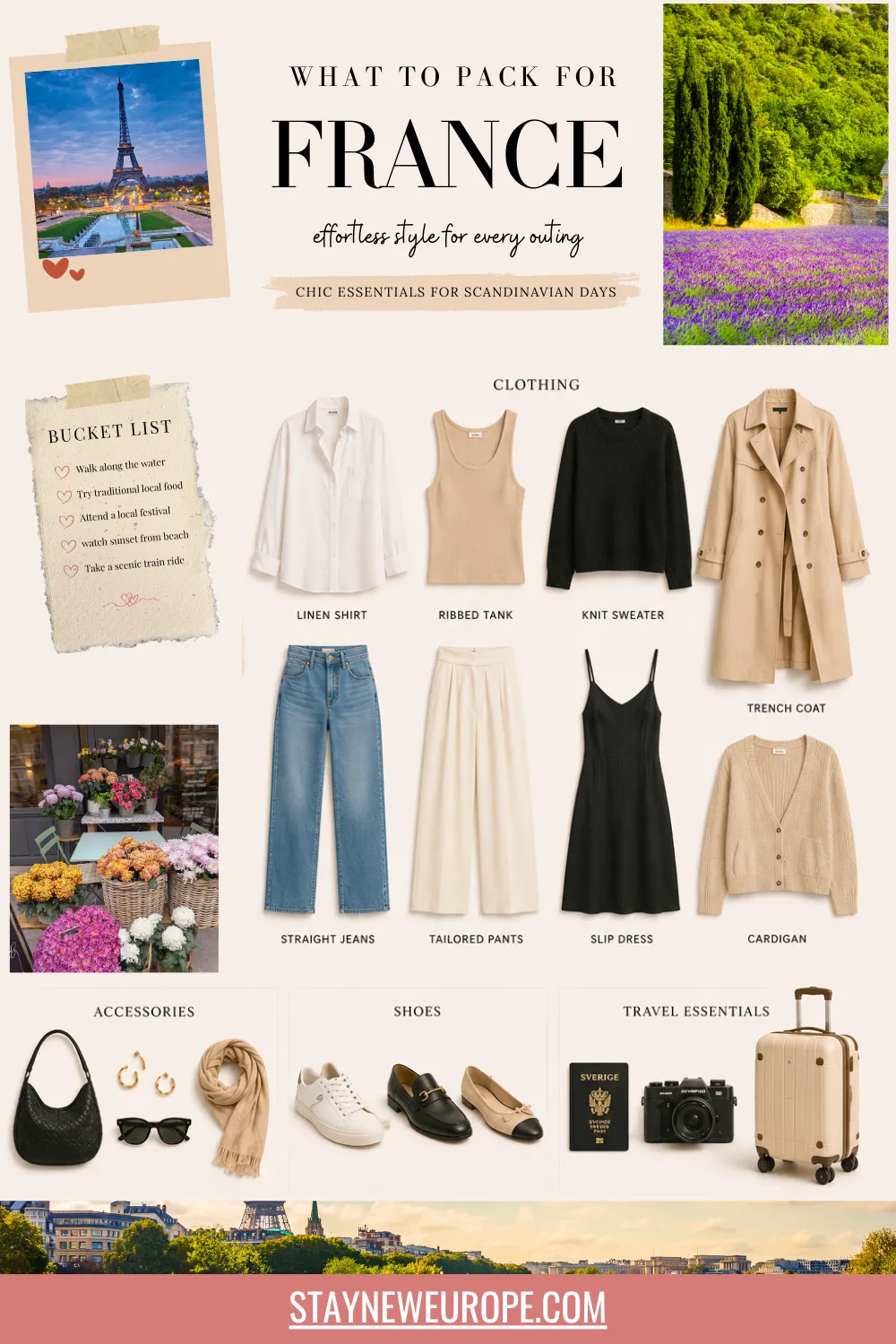
August in France sounds like a dream. And it is — mostly. The lavender fields in Provence are winding down but the light is golden and cinematic. Paris is quieter than usual, with half the locals escaped to the coast. The Riviera is buzzing, sun-soaked, and unashamedly glamorous. The Dordogne is lazy and delicious. But here’s what nobody warns you about: August in France is hot. Properly, aggressively, sometimes relentlessly hot — especially in the south.
I’ve spent several Augusts in France across different regions, and I’ve made every packing mistake there is. I’ve sweated through a silk blouse in Avignon because I thought it looked chic. I’ve worn trainers to a Riviera restaurant and regretted it the second I walked in. And I’ve over-packed by about four outfits because I couldn’t commit. This guide is everything I wish someone had told me before I zipped up that suitcase.
The thing is, knowing what to wear in France in August isn’t just about staying cool — it’s about not looking hopelessly tourist-ish in a country where style is practically a civic duty. France rewards the well-dressed traveller. Let’s make sure that’s you.
Before We Dive In: What August in France Is Actually Like
The Weather
Let me be honest about the temperatures first, because they genuinely affect every packing decision you’ll make. August is France’s hottest month.
Paris typically sits around 25–28°C (77–82°F) on an average day, but heatwaves — and they’re increasingly common — can push that to 35°C or higher. Head south to Provence, the Languedoc, or the Côte d’Azur and you’re looking at 30–38°C as a baseline, sometimes higher.
The south is also significantly drier than the north. In Paris, you’ll still get occasional summer showers — brief, dramatic, and totally inconvenient when you’re halfway to the Marais. In Provence and the Riviera, rain is rare but not impossible, and the Mistral wind can catch you completely off guard. In the Alps or Brittany, temperatures are cooler and cloud cover is more common. France in August is not one weather situation — it’s four or five, depending on where you’re going.
Humidity varies wildly too. Paris in August can feel thick and muggy. Nice, by contrast, often has a dry heat that’s actually bearable. Plan your fabrics accordingly.
The Style Culture
Here’s the thing about France that nobody quite prepares you for: looking good here is genuinely cultural. It’s not that French people are snooty (well, not entirely) — it’s that dressing with intention is simply part of daily life. You’ll notice it in the way a woman in her 60s walks through a Provençal market in a perfectly cut linen dress and low heels. Or how a Parisian man somehow makes a simple navy tee and tailored shorts look like a magazine shoot.
This doesn’t mean you need to pack a designer wardrobe. It means you should pack thoughtfully. A few well-chosen pieces that actually work together will serve you far better than a bag full of “just in case” options. Think simple, think quality fabrics, think colours that mix and match without effort.
Lightweight Linen: Your Non-Negotiable August Essential
Nothing — and I mean nothing — will save you in the south of France in August like linen. I learned this the hard way one summer in Aix-en-Provence when I spent the first two days in cotton and felt like I was wearing a warm damp towel. The third day I bought a linen shirt from a market stall and the world made sense again.
Linen breathes in a way that cotton simply doesn’t at 35°C. It absorbs moisture, it dries quickly, and it has this gorgeous, slightly rumpled quality that reads as effortlessly elegant rather than accidentally sloppy — which in France is basically the highest compliment.
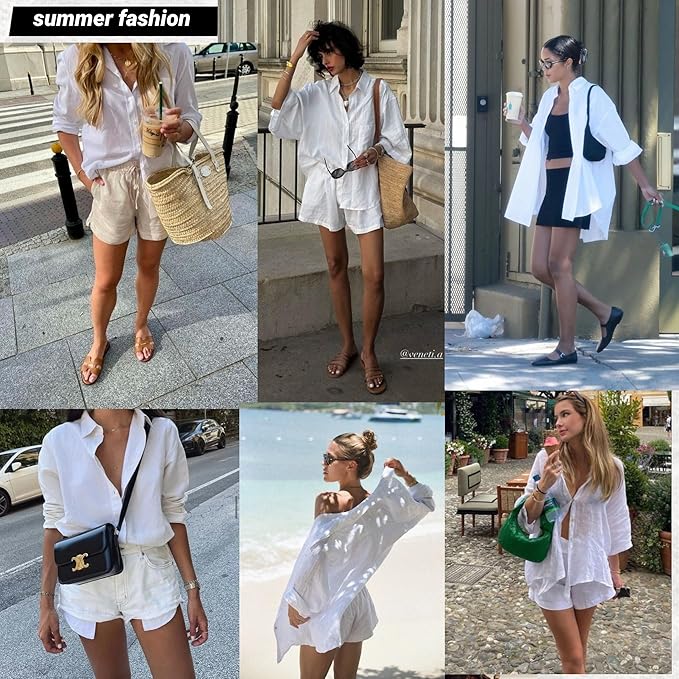
A loose linen shirt works over shorts in the morning, tucked into wide-leg trousers for an afternoon museum visit, and knotted at the waist over a dress for dinner.
The slight drawback? It creases. Enormously. But here’s the French attitude: linen is supposed to crease. Wear it with confidence and it looks intentional. Wear it apologetically and it looks like you slept in it. Choose neutral tones — ecru, white, soft sand, dusty blue — and they’ll pair with almost everything else you’ve packed.
Local tip: Look for linen blend fabrics (linen-cotton or linen-viscose) if you want something slightly less stiff. They wrinkle a little less and feel softer against sunburned skin.
Dresses: Your Hardest-Working August Piece
A good summer dress in France in August might genuinely be the single item that earns its place most in your suitcase. I’m slightly biased because I pack at least two for any summer trip, but hear me out.
A midi or maxi dress in a breathable fabric is an entire outfit in one piece. No decisions, no combinations, no wondering if the top and bottom work together. You wake up, you put it on, you walk to a boulangerie for your croissant, and you already look like you belong.

For exploring the cobbled streets of Lyon’s Vieux-Lyon or wandering around a Provençal village market, a floaty dress is ideal — comfortable, cool, and completely appropriate.

The key is choosing the right style. Bodycon anything is a bad idea in 35-degree heat — for reasons both practical and visual. Look for something with a bit of swing to it, ideally with thin straps or a loose fit through the shoulders.
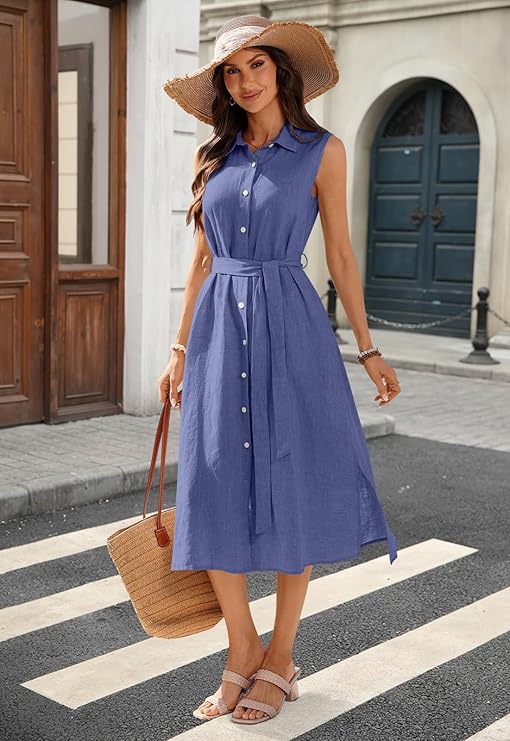
A wrap dress is brilliant for France because it’s adjustable and transitions beautifully from daytime exploring to a bistro dinner with the simple addition of a necklace or earrings. For church visits (more on that later), pick one that hits at or below the knee and covers your shoulders, or carry a light layer.

Local tip: French boutiques in smaller towns are wonderful for finding simple summer dresses that feel locally made and aren’t the same ones everyone at home owns. Budget €30–€60 and treat it as a holiday purchase rather than just a travel item.
The White or Striped Tee: More French Than You Think
There’s a reason the classic Breton stripe has never gone out of fashion in France — it genuinely works. A simple marinière (the French navy-and-white stripe top) is essentially a cheat code for looking effortlessly appropriate wherever you are in the country.
But beyond the Breton stripe, a simple white or light-coloured tee is one of the most useful things you can pack for August in France.

- Worn with tailored shorts and sandals for daytime, tucked into a flowy skirt for evening, knotted at the waist over wide-leg trousers — it’s infinitely versatile.
The French are masters of the simple tee done well, and the secret is fit: it should be fitted through the shoulders, not baggy or oversized, and made of a fabric that doesn’t go see-through the second you sweat.

Avoid dark colours for daytime in August. Black, navy, and deep burgundy absorb heat in a way that’s genuinely uncomfortable when you’re walking three kilometres through sun-baked Arles. Save darker tones for evenings when the temperature drops and they actually look sophisticated rather than just hot.
Local tip: Pack two or three of these and rotate them. They wash easily in a hotel sink, dry overnight, and take up almost no space.
Shorts: What Works and What Doesn’t
Shorts are absolutely appropriate in France in August — just maybe not every pair you own. Let me be specific about what I mean.
Denim cut-offs: fine for casual daytime exploring, but they get heavy and uncomfortable in real heat. If you pack denim shorts, keep them for early mornings or days when you’re near the coast with a breeze.

Linen or cotton-blend tailored shorts are significantly more comfortable and look far more pulled-together. A pair in a neutral tone — beige, white, stone — will mix with half your suitcase and look polished rather than beach-ready.

The length question: France isn’t prudish, but very short shorts attract attention in a way that can feel uncomfortable in certain contexts — particularly in rural villages or smaller towns where the vibe is more conservative. Mid-thigh works everywhere without issue. Much shorter than that, and you might find yourself conscious of it in certain situations.
If you’re going to the south of France — Nice, Cannes, Antibes — slightly dressier shorts in silk or satin are actually a thing and look fantastic for promenade walking or aperitif hour. Just pair them with something a bit more structured on top.
Local tip: Leave the athletic shorts at home. They read as gym wear, not travel wear, and in France that distinction matters more than it might elsewhere.
Comfortable But Stylish Walking Shoes: The Decision That Will Make or Break Your Trip
I cannot stress this enough: shoe choice for France in August is life or death for your feet. Okay, that’s slightly dramatic. But I’ve watched so many people limp through the streets of Paris in August in new sandals they thought they’d “break in” on the trip. Reader, you will not break them in. They will break you.
France involves enormous amounts of walking. The streets in many historic centres — think the old quarters of Montpellier, Bordeaux’s médiatheque district, or the cobbled lanes of any Provençal village — are uneven, sometimes steep, and occasionally slick in ways that are hard to predict. You need something that combines grip and support with enough style that you don’t look like you’re about to complete a 5K.
White leather sneakers have become universally accepted in France and are genuinely one of the smartest choices you can make — they look sharp with almost everything, they’re comfortable, and the French actually wear them too, which matters. Avoid cheap white canvas ones that go grey in the heat. A slightly more structured leather or leather-look sneaker holds its shape better and looks intentional.

For evenings or slightly smarter situations, a low block heel sandal or a simple leather flat sandal works beautifully.

The key word is broken-in. If you haven’t worn those sandals for at least a few full days before your trip, leave them at home. Blisters in the south of France in 35°C heat are a special kind of misery.

Local tip: Pack a pair of ballet flats or simple leather slides for restaurants and evening strolls. They take up almost no space and instantly elevate an outfit that you spent the day walking around in.
What NOT to Wear: The Tourist Mistakes That Give You Away
Let me just say it plainly: there are certain things that will instantly mark you as a tourist in France, and while that’s not a crime, it does affect how you’re received — and frankly, how you feel about your own experience.
Matching activewear sets as everyday outfits are the big one. I understand the appeal — they’re comfortable, they’re practical — but in France, they read as “I’m treating a beautiful medieval city like a gym”, and you’ll feel out of place in any restaurant that has tablecloths. Similarly, cargo shorts stuffed with every item from your day bag look practical but visually communicate that comfort was the only priority.
Flip-flops on cobbled streets are a bad idea for reasons both stylistic and practical — they provide zero support and a rolled ankle on an uneven Provençal street is not the souvenir you want. Huge logoed tote bags, baseball caps worn backwards, and matching “Paris” printed outfits round out the hall of shame.
This isn’t about being judgmental — it’s about the fact that dressing slightly more intentionally in France actually enriches the experience. You get treated better at restaurants. You feel more confident. You engage more naturally with the locals. And you take better photos.
Jackets and Evening Layers: Yes, Even in August
Here’s something that surprises almost everyone: even in peak August heat, you’ll want an evening layer in France. In Paris particularly, air-conditioned restaurants and the Métro can be aggressively cold. In Provence, the nights cool down rapidly once the sun goes, and sitting outside for dinner at 9pm in a sleeveless top can leave you genuinely chilly.
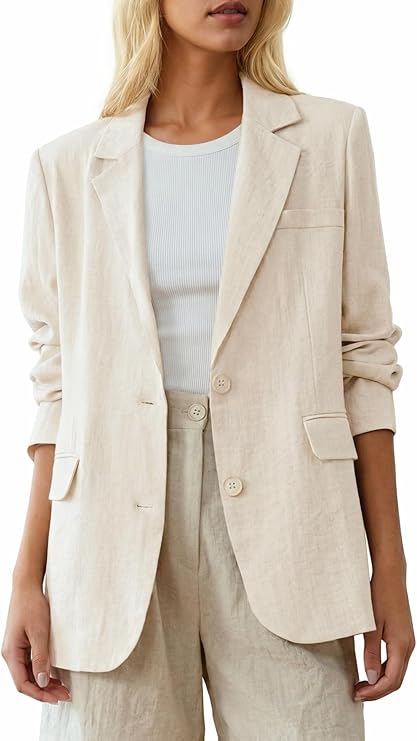
My absolute go-to for France in August is a lightweight linen or cotton blazer. It packs relatively flat, transforms any casual outfit into something you’d be comfortable wearing to dinner, and provides just enough warmth for air-conditioned interiors without being heavy or bulky. A cream or beige linen blazer over a slip dress is one of those combinations that just works in France in a way that feels effortlessly right.
If you’re heading to the Alps or Brittany — or planning any early morning outdoor activities — pack one slightly more substantial layer. A lightweight packable down jacket or a drapey waterfall cardigan takes up almost no space and covers the temperature swings you’ll encounter between a cool morning and a roasting afternoon.

Local tip: Skip the denim jacket for August. It’s too heavy for daytime and not quite elegant enough for French evening situations. Linen or cotton is the smarter call.
Evening Outfits in France: Dinner, Wine, and the Right Amount of Effort
France takes its evening meals seriously, and I adore that about it. Dinner isn’t a quick refuelling stop — it’s a two-hour ritual of wine and conversation and proper food, and the context calls for a bit more effort than your daytime exploring outfit.

The good news is “dressed up” in France doesn’t necessarily mean formal. It means put-together.
- A simple slip dress with strappy sandals.
- Wide-leg trousers with a fitted linen top and low heels.
- A tailored midi skirt with a simple blouse and mules.
These combinations look elegant without being overdressed, and they work in everything from a casual Parisian bistro to a beachside restaurant in Saint-Tropez.

For men: a clean linen shirt with chinos or tailored shorts and leather sandals or loafers covers almost every evening situation in France. Leave the trainers in the hotel room for dinner — even in casual settings, it lifts the whole look significantly.

If you’re spending time in Paris and want to go a bit further with evening outfit ideas, the 12 Paris outfits for spring guide on this site has some genuinely useful inspiration that translates well to summer evenings too.
Local tip: In fancier restaurants along the Riviera, there is often an actual dress code. Look up the venue before you go and don’t assume that because it’s hot, smart-casual is optional.
What to Wear for Churches and Sacred Sites
France has some extraordinary religious buildings — Chartres Cathedral, the Sacré-Cœur, the Papal Palace in Avignon, countless medieval churches in every village — and most of them have dress codes that are strictly enforced.
The basic rules: shoulders covered, knees covered. That means no sleeveless tops without something over them, no very short shorts or skirts. This applies to everyone, regardless of gender.
The practical solution is simple: carry a lightweight scarf or pashmina with you.

On a hot August day, you don’t want to wear a cardigan into a church, but a large scarf draped over your shoulders and tied loosely at the waist solves the problem in about 10 seconds. In a pinch, many churches sell or lend wraps at the entrance, but having your own is obviously more practical.
A loose linen shirt worn open over a dress or tank top is another elegant solution — it gives you coverage without making you sweat, and the moment you leave the church you can take it off and tie it around your waist or stuff it in your bag.
Local tip: If you’re visiting Versailles in August, the crowds inside mean it can feel even hotter than outside despite the high ceilings. Dress in your most breathable outfit and carry your cover-up rather than wearing it from the start.
Bags: What to Carry Without Screaming “Tourist”
The bag question matters more than people realise, particularly from a safety and practicality standpoint. August is peak pickpocket season in French tourist hotspots — around the Eiffel Tower, Sacré-Cœur, in Marseille’s Vieux-Port, and on any crowded promenade. A large unsecured tote or an unzipped backpack is an invitation.
My strong recommendation for daytime is a crossbody bag with a zip closure. It keeps your hands free, sits against your body, and is significantly harder to access without your knowledge than a shoulder bag or backpack. A small leather or canvas crossbody also looks far more chic than a large tourist-y backpack, which is a bonus.

That said, if you’re planning a day trip to a market or a beach where you genuinely need to carry more stuff — sunscreen, a book, snacks, a change of clothes — a structured tote or a small backpack is fine. Just be mindful of where it is in crowded spaces.

For evenings: a small clutch or a mini bag is all you need. You’re going to dinner — you need your phone, your cards, and your keys. The miniature bag trend is genuinely practical in France because evenings are social events, not logistical challenges.

Local tip: Avoid anything with obvious luxury logos in busy tourist areas. It attracts the wrong kind of attention. A simple, well-made bag in a neutral colour is both safer and more stylish.
Accessories That Elevate Everything
French style lives or dies in the accessories, and this is honestly where the magic happens. A plain white linen dress with nothing is just a plain white dress. The same dress with a gold necklace, slim belt, and sunglasses becomes something you’d see in a street style photograph. The items are inexpensive; the impact is enormous.
Sunglasses are non-negotiable in August — practically and aesthetically. A classic tortoiseshell frame or a sleek black pair works with everything and reads as effortlessly stylish in a way that a sporty wrap-around does not. A wide-brimmed hat for sun protection is both practical and genuinely beautiful, particularly in the south where you’ll spend a lot of time outdoors.

A silk or cotton scarf — the kind you can wear around your neck, in your hair, tied on a bag, or as a light layer — is one of those accessories that is almost embarrassingly French and also genuinely, practically useful. Markets in France sell them inexpensively and beautifully. Buy one when you get there.

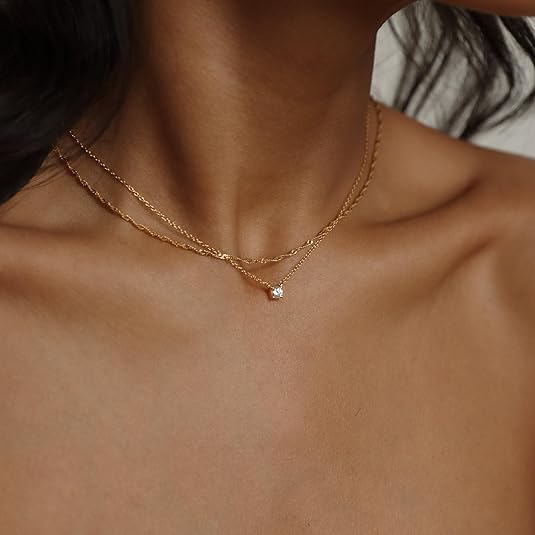
Simple gold or silver jewellery adds finish to even the most basic outfit. Forget statement pieces — a fine chain necklace and small hoop earrings are all you need. They don’t weigh anything in your bag and the effect on the overall look is disproportionate.
Local tip: A slim leather belt transforms wide-leg trousers and loose dresses into something structured and intentional. It’s the single most underused accessory in travel wardrobes.
Swimwear and Beach-Ready Outfits (If the Riviera Is Calling)
If any part of your August in France involves the Côte d’Azur — Nice, Cannes, Antibes, Saint-Tropez, Cassis — you need to think seriously about beach and poolside dressing, because people actually dress up for the beach on the French Riviera in a way that doesn’t happen on most coastlines.
A simple, well-cut one-piece or a bikini in a solid colour or a subtle print looks infinitely more elegant than the neon floral situation. French beach style tends toward the understated — a simple swimsuit, a linen cover-up or an unbuttoned shirt dress, flat sandals, big sunglasses, and a straw hat. That’s it. That’s the whole thing. It works because the quality of the light and the location do the rest.
A cover-up that works as a dress is genuinely one of the smartest purchases for a Riviera trip. You can wear it on the beach, walk to a beachside café for lunch, and stroll the promenade afterward without needing to change. A lightweight shift dress or a long kaftan-style top in a neutral or soft print covers all of that in one piece.

Pack a beach bag that’s separate from your day bag — a large tote or a wicker basket-style bag looks great and is practical for sand and sunscreen situations.
Rain Preparation: The Surprise Factor
I’ll be honest — you probably won’t need this in Provence or the Riviera. But Paris in August does get rain, and Brittany or Normandy even more so. A sudden late-afternoon thunderstorm can appear from nowhere and drench you completely before you’ve processed what’s happening.

The trick is not to pack a full rain jacket that takes up a third of your bag, but to carry a compact packable rain jacket or a good-sized umbrella on days when rain is forecast. I use a lightweight windbreaker-style jacket in a neutral colour that packs into its own pocket and takes up almost no space. It works as a light layer in cold restaurants too, which makes it doubly useful.
Leave the plastic poncho at home. They are deeply unflattering, they make you sweat more than the rain would, and in France specifically, they will make you feel like the most obvious tourist on the street.
Local tip: Check the weather each morning in your French city. Paris and northern France forecast rain more reliably than the south. If there’s a 40%+ chance of rain, slip the packable jacket in your day bag.
Fabrics to Choose — and the Ones to Leave at Home
This section might sound niche but it genuinely changes everything. In France in August, fabric choice is one of the most impactful decisions you make when packing.
Choose: Linen (obvious by now), lightweight cotton, cotton voile, Tencel/lyocell (incredibly breathable and soft), silk and silk-feel fabrics for evenings, ramie, and linen-cotton blends.
Avoid or minimise: Polyester is the enemy. It traps heat, doesn’t breathe, and after a long walking day in 32°C heat, you will know it. Thick denim is heavy and gets uncomfortable quickly. Anything described as “stretch” in a synthetic blend is similarly questionable in serious heat. Heavy knits or jersey fabrics, while comfortable, hold warmth in a way that becomes unpleasant.
The nuance here is that a small amount of stretch in a linen blend can actually help with movement and wrinkling, so it’s not about avoiding synthetic entirely — it’s about ensuring breathability is the priority. If a fabric feels even slightly suffocating in an air-conditioned shop, imagine wearing it in direct southern French sun. Act accordingly.
Your France in August Capsule Wardrobe
If you want a concrete starting point, here’s what a well-edited capsule wardrobe for 7–10 days in France in August actually looks like. This is based on the principle that everything mixes with everything, which is the only principle worth following when you’re trying to pack light.
Tops: 2–3 simple fitted tees in white, cream, or stripe; 1–2 linen shirts (one neutral, one slightly more interesting); 1 silk or satin blouse for evenings.
Bottoms: 1 pair of tailored shorts in a neutral; 1 pair of wide-leg or straight-leg linen trousers; 1 midi skirt that transitions from day to night.
Dresses: 2 summer dresses — one casual (for daytime), one slightly dressier (for evenings and smarter restaurants).
Footwear: 1 pair of broken-in white sneakers; 1 pair of comfortable flat sandals; 1 pair of slightly smarter sandals or low heels for evenings.
Layers: 1 linen blazer or drapey jacket; 1 packable rain layer; 1–2 scarves doubling as church cover-ups.
Accessories: Sunglasses, wide-brimmed hat, crossbody bag for day, small evening bag, simple jewellery.
That’s it. It sounds sparse but it genuinely works. For a useful reference on packing this efficiently, the guide on how to pack a carry-on for 10 days has some brilliant practical advice on making fewer items do more work.
Practical Packing Tips: The Mistakes to Avoid
Pack to a palette, not to an outfit. Choose 3 neutral base colours — say, white, beige, and navy — and make sure everything in your bag works with those. This is how you end up with 15 possible combinations from 8 items instead of 8 outfits that only work exactly as planned.
Assume you’ll do laundry. Even if you’re not staying anywhere with laundry facilities, hotel sinks and a small bar of travel laundry soap means your tees and linen shirts can be washed and dried overnight. This halves the number of basics you need to pack.
Don’t pack “just in case” items. I know you’re convinced you might need that cocktail dress for a random formal dinner. You almost certainly won’t. And if you do, France is a wonderful place to buy something.
Shoes take the most space and cause the most problems. Be ruthless. Three pairs maximum. If an item requires a completely separate pair of shoes that you’re not already packing, reconsider the item.
The biggest packing mistake for France in August? Bringing too many options rather than too few great pieces. Five items you love and that all work together will serve you better than ten items you’re ambivalent about. This is true of travel in general, but it’s particularly true in France, where simplicity and quality always win over volume.
If you’re planning a multi-country trip with France as one stop, the Spain packing list on this site is a brilliant companion for building a European summer wardrobe that works across different climates and dress cultures without over-packing.
A Final Note on Dressing for Different Regions of France
France is a big, diverse country, and what works in Paris in August isn’t identical to what works in Saint-Tropez or in the Alsatian wine villages near Strasbourg. A few quick notes:
Paris: More fashion-forward, slightly less beach-casual. Parisians dress with intent even in summer. Fitted, polished, and simple wins here.
The Riviera (Nice, Cannes, Saint-Tropez): More glamour is acceptable — and sometimes expected. The Riviera has its own relaxed luxe aesthetic. Add a slightly dressier dress and better sandals to the mix.
Provence (Avignon, Aix, Arles): Relaxed but still stylish. This is linen and floaty dress territory, pure and simple. Heat is serious here.
Brittany and Normandy: Cooler, windier, possibly rainier. Pack an extra layer and trade sandals for sneakers more often. Still beautiful; just a different kind of beautiful.
The Alps (Chamonix, Annecy): Even in August, mountain altitudes mean cooler mornings and evenings. Add a proper mid-layer and closed shoes to your kit.
For a broader sense of how to dress across different European summer destinations, this Portugal summer outfits guide covers similar terrain and is worth reading alongside this one — the heat and style culture have surprising overlap.
France in August is one of those travel experiences that gets under your skin and doesn’t fully leave. The evening light lasting until 10pm. The slow, long dinners. The way a simple café au lait and a croissant feels like the most civilised thing in the world. The sunflower fields, the lavender fading at the edges of the season, the Riviera glittering and completely unrepentant about its own beauty.
You deserve to experience all of it feeling comfortable, feeling confident, and feeling like you belong — not like you packed in a panic the night before. Take the linen. Wear the sunglasses. Carry the good bag. And leave a little room in that suitcase, because French markets are entirely wonderful and completely impossible to resist.
Bonne chance, and bon voyage.

