
July in France is many things at once. It is long golden evenings on café terrasses, lavender fields shimmering under a punishing Provençal sun, and cobblestoned Parisian streets that look effortless and feel absolutely brutal on your feet by hour three. It is the kind of month that rewards the prepared traveller and quietly humiliates the one who packed wrong.
And here is the thing nobody warns you about before you land: France in July has a dress code. Not an official one, nothing posted on a sign at Charles de Gaulle airport. But there is a cultural expectation woven into the air of every French city, village, and beach town that you will turn up looking like you gave at least some thought to what you put on your body today. The tourist in neon trainers and a novelty T-shirt from a souvenir shop near the Eiffel Tower? The French see them. They notice. They say nothing, but they notice.
The good news is that dressing well for France in July is genuinely easy once you know the rules. The heat is real, the terrain is often unforgiving, and the social stakes feel higher than anywhere else in Europe. But with the right pieces in your bag, you will feel comfortable, confident, and like you actually belong there. Let me walk you through everything.
Before We Dive In: Weather, Walking, and French Style Culture
July is one of France’s hottest months, and the range across the country is significant. Paris typically sits between 18°C and 28°C (64°F to 82°F), with occasional heatwaves pushing temperatures above 35°C (95°F). The south is a different story entirely. but Paris can feel muggy during a heatwave in a way that catches visitors off guard. Rain is possible everywhere but not especially common in July. A brief afternoon storm is the most likely scenario, not a full washout.
Weather
- Paris: 18–28°C; heatwaves can go above 35°C.
- South France (Nice / Marseille / Provence): 30–38°C, strong sun.
- Rain is usually brief, not all-day.
Walking in France is unavoidable and often more demanding than visitors expect. Paris alone will have you covering ten to fifteen kilometres a day on foot if you are doing it properly. The pavements are largely flat but paved in stone or concrete, which transmits every impact straight up into your joints.
Walking
- Expect 10–15 km/day.
- Cobblestones, stairs, and hills are common (especially Montmartre and village areas).
- Wear comfortable broken-in shoes.
French style culture is its own education, and July reveals it at full tilt. French people, particularly in cities, dress with restraint. The palette tends toward neutrals: beige, white, navy, black, soft terracotta, dusty rose. The silhouettes are relaxed but intentional. A French woman in a simple linen shirt tucked loosely into high-waisted trousers looks effortless because that simplicity is a deliberate choice, not an accident. The sweet spot is what the French call “casual chic” — dressed, but not overdressed; relaxed, but not sloppy.
Lightweight Linen: The Fabric France Was Made For
Let me be direct: linen is the answer to approximately eighty percent of your France-in-July packing questions. If you arrive in Paris in July wearing a polyester blouse, you will be sweating through it by ten in the morning and you will spend the rest of the day aware of nothing else. It absorbs moisture, releases it quickly, and manages to look better slightly rumpled than most other fabrics look freshly pressed.
The creasing thing — yes, linen wrinkles. This is the part that puts people off and I want to address it head-on. In France, this is not a problem. In fact, a slightly lived-in linen shirt reads as perfectly stylish there. The French are not folding their linen into pristine rectangles before leaving the house. They are throwing it on, tying a fine-knit jumper around their shoulders in case the evening turns, and heading out the door looking entirely put together despite the wrinkles. The crumpled look is not a bug — it is a feature.
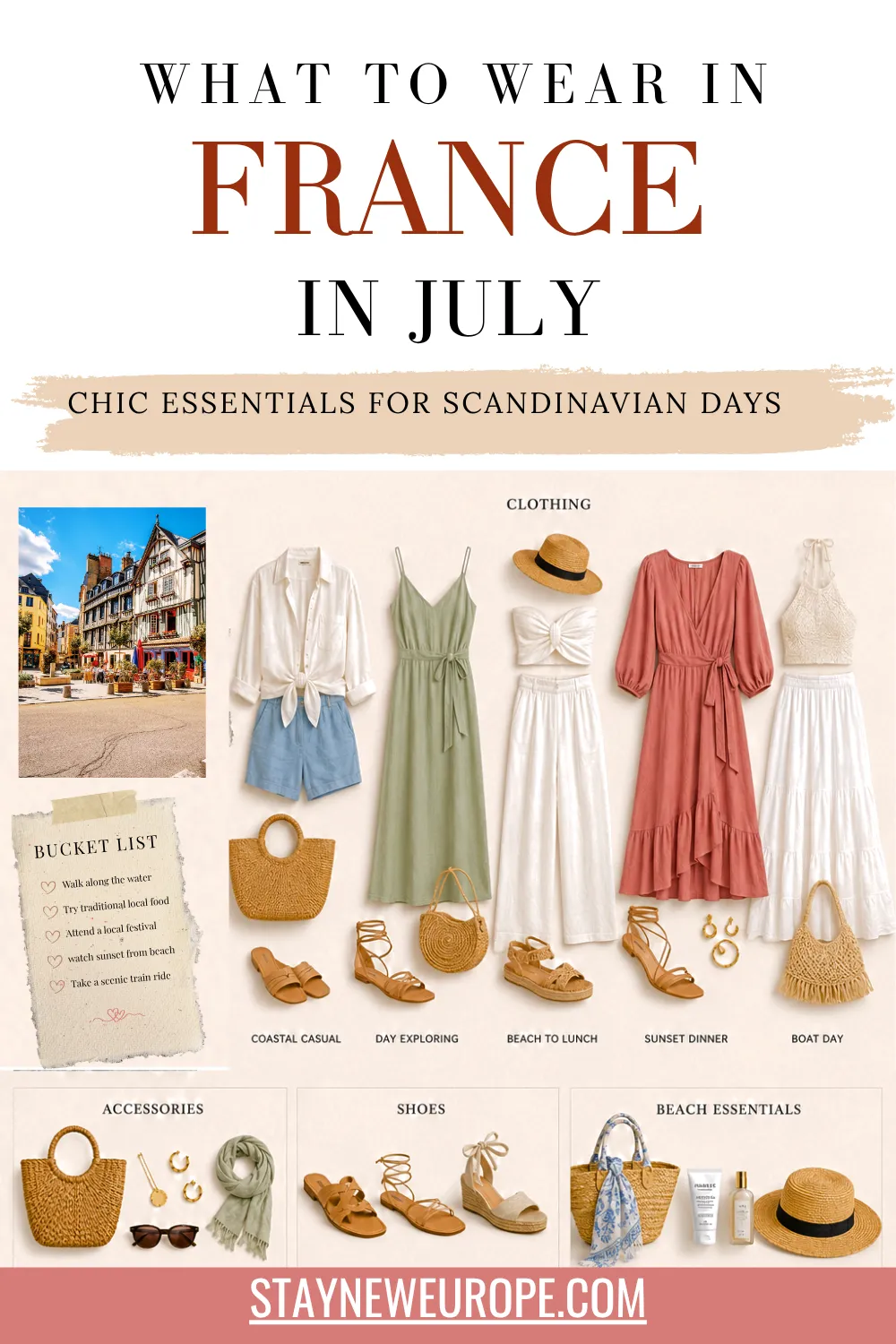
Linen works across everything: trousers, shirts, midi skirts, dresses, shorts. A linen dress in white, camel, or a dusty sage green will take you from morning sightseeing in the Marais to a late lunch at a good bistro without a single wardrobe change. Pair it with clean leather sandals and a woven bag and you are, genuinely, doing France correctly.
For men: a linen shirt in a neutral colour worn untucked over linen or cotton shorts is the uniform of the well-dressed male tourist in France in July. It works everywhere except the most formal dinner reservations, and even then, tucking in the shirt and adding clean leather shoes is usually sufficient.
Pack two or three linen pieces as the backbone of your wardrobe. Everything else builds around them.
Local tip: French linen tends to run more natural and less treated than fast-fashion versions — if you want the texture and breathability to actually work in the heat, invest in quality linen before you go rather than grabbing something synthetic-blended from a high street chain.
Lightweight Dresses: The One-Piece Wonder
A single, well-chosen dress can do more work in France in July than six separate outfit pieces. This surprised me the first time I really leaned into it — I packed three dresses on one trip almost as a backup plan, and I ended up wearing them nearly every single day because they solved the heat problem so efficiently. One piece, no decisions, no waistband digging in when you are forty minutes into a Versailles queue in thirty-degree heat.
The silhouette that works best is not fussy. A midi length is practical for walking — no risk of sitting down somewhere cobblestoned and regretting a mini. A loose, slightly flowy fit in linen, cotton voile, or TENCEL keeps you cool while still looking intentional. Sleeveless or thin-strapped works for daytime; if you plan to visit churches or cathedrals, carry a light scarf that can cover your shoulders in under ten seconds.
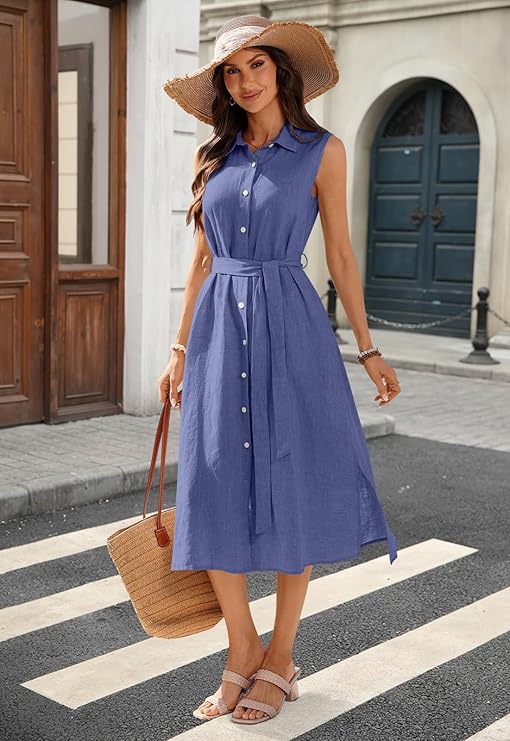
Prints do work, but keep them in the French register: small florals, subtle stripes, abstract blobs in muted tones. A dress with a large tropical print announces itself in a way that French summer dressing does not. The goal is to look like you might possibly live there. Vibrant maximalist prints make that very difficult.
For evenings, the same dress elevated with leather mules, a simple gold necklace, and a small structured bag shifts the look entirely. This is one of the great French tricks — the outfit does not change, but the finishing pieces do. A daytime sandal swaps for something with a slight heel. A canvas tote is put away in favour of a leather clutch. The dress itself is suddenly evening-appropriate with almost no effort.

Local tip: In smaller Provençal towns, restaurants are slightly more formal than you might expect. A simple dress in a neutral tone avoids any ambiguity — you will always be appropriately dressed without being overdressed.
The Trouser Question: When Dresses Are Not Your Thing
Not everyone is a dress person, and France does not require you to be. A well-cut pair of trousers will serve you equally well, and in some contexts — a long day of city walking, an evening bar crawl, a day trip with unpredictable terrain — trousers are actually the more practical choice. The key is fabric and fit.
Wide-leg linen or cotton trousers in a neutral colour are the gold standard for July in France. They look put-together, they move with you, and they have enough volume that your legs are not trapped in fabric that heats up through the day. Avoid slim-fit or tapered trousers in synthetic fabrics — they will be uncomfortable before noon. A looser silhouette reads more elegant in the French context anyway.

High-waisted cropped trousers paired with a loose linen shirt, either tucked or half-tucked, is one of those outfits that looks like it required thought but actually takes forty seconds. In white or stone with a navy or black top, it works for the Musée d’Orsay in the morning and a glass of Rosé on a terrace in the Marais in the afternoon.

For more casual days, lightweight cotton jogger-style trousers in a solid neutral — not athleisure branded ones, but a clean, unbranded shape — can work, particularly in Paris where the line between casual and styled is deliberately blurry. Pair them with clean white trainers and a crisp top and you are in the zone.
Local tip: French women favour trousers that hit at the ankle or slightly above — the full-length trouser that drags slightly on the ground reads as a bit undone in July. A clean, intentional cropped length looks sharper and breathes better in the heat.
The Footwear Problem (Yes, It Is a Problem)
France in July requires you to walk. A lot. On surfaces that are not forgiving. The shoes have to actually work.
The good news is that comfortable shoes and stylish shoes are no longer mutually exclusive. The French have largely solved this problem themselves. Clean white leather trainers from brands like Veja or common projects have been adopted by stylish French women of all ages and they are genuinely comfortable for a full day on Paris streets.

Leather sandals with a flat or low block heel and proper arch support — think Birkenstock’s more elegant models, or Italian leather slide sandals — work for a full day of walking without destroying your feet.

What not to bring: flip-flops for city walking (they offer nothing on cobblestones), canvas trainers without support (charming but useless after an hour), and any sandal held together primarily by willpower and a single thin strap across the top of your foot. These will fail you.
For evenings, a low leather mule or a kitten heel sandal both work and both travel relatively flat in a suitcase. They elevate an outfit without requiring you to walk on tiptoe for four hours. The French do not do towering heels for an evening out in July — they do something elegant and walkable.

Local tip: Pack a second pair of socks even if you plan to wear sandals all trip. Your feet will need a day off the straps, and there will be a morning that calls for trainers. Running out of clean socks on day four is its own unique misery.
What NOT to Wear in France in July
Let me be honest with you, because I think travel articles are too polite about this. There are things that will mark you immediately as someone who did not think about France when they packed, and while the French will not say anything directly, you will feel it in the absence of the warmth that tends to appear when you look like you belong.
The first is branded sportswear as general daywear. A full tracksuit, a branded hoodie over leggings, logo-emblazoned athletic shorts — these belong on a running track, not on the streets of Lyon or at a table at a good Parisian café. This does not mean sportswear is never acceptable in France — it means wearing it outside its context signals a kind of carelessness that France specifically finds jarring.
The second is excessive logoed clothing of any kind. Giant brand logos across your chest, novelty slogans, loudly printed everything — this style draws attention to itself in a way French dressing actively avoids. The French preference is always for quality over display.
The third is socks with sandals, particularly sports socks. I know this has had a moment in fashion discourse. I know some people love this look. In France in July, in the context of a trip where you are already navigating a cultural style expectation, it is not the hill to die on.
Finally: the matching tourist couple look — identically dressed in matching colours, matching sunhats, matching backpacks. French people in couple contexts do not match. They dress as individuals who happen to be in the same place. It sounds like a small thing. It is not a small thing.
Local tip: If you are unsure whether an outfit is too casual for a French context, ask yourself: “Would a Parisian wear this to a Saturday morning market?” If yes, you are fine. If no, upgrade something by one notch.
T-Shirts and Tops: Getting the Basics Right
Almost everyone packs T-shirts for a summer trip to France and almost everyone packs slightly the wrong ones. The fabric matters more than you would think. A 100% cotton T-shirt in a loose, slightly oversized fit is comfortable and looks right. A tight-fitting synthetic jersey T-shirt in a bold colour is hot, clingy by noon, and reads as more casual than French summer dressing typically allows.
The French approach to the basic T-shirt is to treat it as a foundation piece rather than a statement. It should be a clean, unbranded crew or V-neck in white, navy, black, or a soft natural tone. The fit is not body-hugging but not shapeless either — it sits with a gentle relaxed ease that looks intentional. Tucked into high-waisted trousers or worn loose over a midi skirt, it becomes part of an outfit rather than just a thing you grabbed.

For women: a loose linen shirt worn half-unbuttoned with the sleeves rolled up does most of the heavy lifting that T-shirts are asked to do, but with significantly more French credibility. If you are someone who lives in T-shirts at home, bring your nicest ones — not the oldest or the most comfortable, but the ones that look cleanest and most considered.

Local tip: A striped Breton top (marinière) in navy and white is, yes, a cliché — but it is a cliché because it actually works in France. The French genuinely wear them, especially in Normandy and coastal regions. Wearing one is not embarrassing; wearing it with full tourist kit is a different matter.
Lightweight Layers: Do You Actually Need Them?
Short answer: a little, yes — but probably fewer than you think. France in July is hot. Packing a heavy cardigan because you heard France can be cool is a mistake you will carry around in the bottom of your bag all trip without ever using it. That said, a thin layer is genuinely useful in two specific situations.
The first is air conditioning. French shops, museums, and restaurants run the air conditioning aggressively in July, and if you have been walking in 32-degree heat and you step into the Louvre in a sleeveless dress, the temperature contrast is sharp enough to make you wish you had something with you. A thin cotton or linen shirt to pull on over a dress or tank top solves this problem completely.
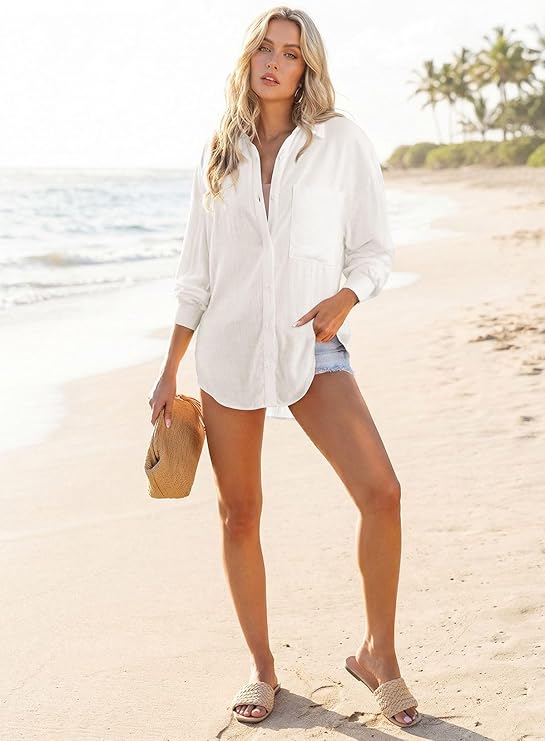
The second is evenings. In Paris, July evenings cool down to around 18 to 20 degrees — perfectly pleasant but not warm enough for a sleeveless dress without something over it. In the south of France, evenings stay warmer, often above 24 degrees, so a layer is less necessary there. A very fine-knit cotton cardigan or an oversized linen shirt in a neutral tone covers both scenarios.
What you do not need: a waterproof rain jacket (a silk scarf tucked in your bag covers any brief summer shower and takes no space), a fleece or heavy knit, or anything with down or insulation. France in July is warm. Dress for warmth and bring a single thin layer for contrast situations.
Local tip: A very lightweight cotton or linen long-sleeved shirt doubles as sun protection during long outdoor days — useful in Provence where the sun is relentless between noon and three — and as an evening layer. One piece doing two jobs is the kind of efficient packing France rewards.
Evening Outfits: Dining Out in France in July
Dinner in France is a ritual, not just a meal. Even a casual bistro is a two-hour commitment involving multiple courses, a real conversation about the wine list, and a general sense that you are here to eat seriously. The French do not come to dinner in their walking clothes and they do not quite understand why anyone would want to. Dinner calls for a slight gear-change, and getting this right makes the experience noticeably better.

For women: swap the flat sandals for leather mules, replace the canvas tote with a smaller leather bag, and add one piece of jewellery that catches the light. A simple gold necklace or small hoop earrings against a linen dress in the candlelight of a good Parisian restaurant is exactly right. If you want to go a step further, a silk or satin slip-style dress is the French summer evening choice — effortless, elegant, requiring absolutely nothing else.

For men: the elevation is equally uncomplicated. Clean chinos or linen trousers, a plain shirt (linen or poplin) tucked in or half-tucked, and leather shoes or clean leather loafers. A blazer is not necessary but is never wrong in France. If your trip includes any genuinely formal dinner — a good restaurant in the 7th arrondissement, a Michelin-starred place in Lyon — a blazer in a neutral linen or cotton elevates the outfit appropriately without being excessive.

The one thing to avoid at French dinners: anything that looks like you are dressed for the gym, the beach, or a music festival. Very short shorts, flip-flops, branded sportswear, or a big logo T-shirt at dinner will make you feel underdressed throughout the meal in a way that is genuinely uncomfortable.
Local tip: French restaurants, even fairly casual ones, look at the full picture when you walk in. If you show up dressed like you thought about it, the service warms immediately. This is not pretension — it is simply a cultural signal that you are taking the experience as seriously as the chef is.
Sun Protection and Hats: The Practical Side of French Summer Style
The sun in France in July is not playing games. UV levels are high across the whole country and extreme in the south. Without SPF and some kind of physical sun protection, a week in Provence will age your skin in ways you will still be discussing in November.
Hats are your friend here, and the good news is that hats look genuinely stylish in France if you choose the right ones. A wide-brimmed straw hat in a classic shape — the kind sold in every French market for about fifteen euros — is the quintessential French summer accessory. It works with a linen dress, with a shirt-and-trousers combination, and even slightly over a Breton stripe. It folds almost flat for packing if it is the flexible woven type.

What to avoid in the hat category: baseball caps in branded colours, novelty sun hats with slogans, or anything that reads as themed. A simple, well-shaped hat reads as intentional. Everything else reads as afterthought.
Local tip: The pharmacies in France sell excellent SPF products that are lighter and less greasy than many international equivalents. Pick up a French SPF 50 sunscreen once you land — La Roche-Posay and Avène are both pharmacie staples and work beautifully in the heat without leaving a white cast.
Bags: Style, Safety, and What Actually Works
Let me be honest about something I learned the uncomfortable way in the south of France: tourist-heavy areas have pickpockets and they are good at their job. The bag you choose is partly a style decision and partly a safety one, and both matter in equal measure.
The crossbody bag is the gold standard for France in July. Worn in front of your body in busy areas, it stays against you, it keeps your hands free, and it looks appropriate across most contexts from morning sightseeing to an evening aperitif. A leather or quality canvas crossbody in a neutral colour — tan, black, cream, or a dark earth tone — is perfect. Avoid bright-coloured bags that catch the eye in crowded markets or tourist sites.

For the beach or a market morning, a woven or raffia tote is both practical and exactly what French women carry. It fits a towel, a book, a water bottle, and a jacket, and it looks entirely right on a Côte d’Azur beach or at a Provençal antiques fair. Just do not rely on a tote alone in Paris — it is not a secure option in Metro crowds.

A small leather belt bag or bum bag worn in front of the body is underrated as a France-in-July option. The stigma is largely gone and the security benefit is real. Choose a clean, minimalist style in a quality material and wear it front-facing in crowded situations.
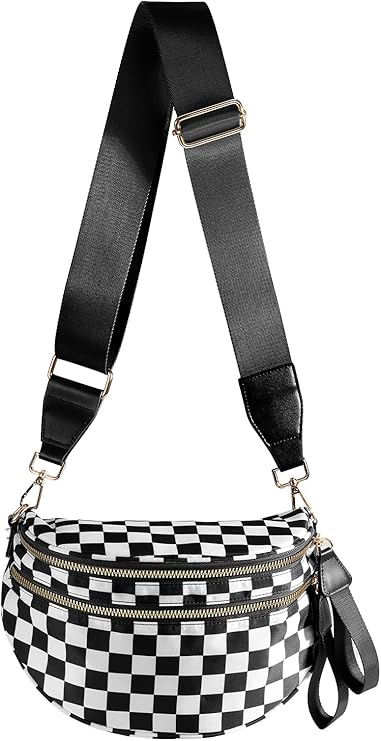
Local tip: French markets — and there are wonderful ones throughout July in every region — are best navigated with a smaller bag rather than a large tote that collides with every stall. A medium crossbody that sits close to the body is the market bag of choice.
Swimwear and the French Riviera Question
If your France trip includes any time on the coast — and honestly, you should try to make it include that — you need swimwear that is both functional and not visually chaotic. France’s Mediterranean coastline is a place where people look at each other. The beach is social in a way it perhaps is not in Northern Europe, and showing up in a loud printed two-piece with matching sarong when everyone else is in understated separates in sandy neutrals is a small but noticeable thing.

The French Riviera swimwear aesthetic is restrained in the same way French fashion more broadly is restrained. Simple one-pieces in block colours. Bikinis in solid tones or very subtle prints. Sophisticated rather than exuberant. Black, white, cream, terracotta, and soft olive all work beautifully. The heavily logoed swimwear or the neon tropical print is technically fine but will feel slightly out of register.

A cover-up that can function as an outfit for wandering from beach to a seafront café without requiring a full wardrobe change is extremely useful on the Riviera. A loose linen shirt over your bikini works perfectly. So does a simple cotton smock dress. The French tie a pareo or thin sarong around the waist as a skirt over bikini bottoms as they walk from beach to town — it is a practical and stylish solution.

Local tip: Topless sunbathing is still common on many French Mediterranean beaches, particularly the more established natural beach areas outside of resort zones. No comment required — but it is worth knowing if it affects your packing choices.
Fabrics to Leave at Home
The heat in France in July will make certain fabrics feel like punishment, and identifying them in advance saves you real misery. Polyester is the main offender. It traps heat against your skin, it does not breathe, it retains odours more quickly in hot weather, and it wrinkles badly under the kind of heat you will experience in Provence or on a warm Paris day. Any fabric that is predominantly polyester — this includes much of what fast fashion produces as “satin,” “crepe,” and “jersey” — will be uncomfortable by midday.
Viscose or rayon is a mixed story. It feels cool when you put it on and can work for a few hours. But in the persistent heat of a July day with walking involved, viscose tends to cling as it warms, and it wrinkles catastrophically when you sit down anywhere. A viscose midi dress might last you through a morning gallery visit before it loses the battle.
What to lean into: 100% cotton (particularly poplin and voile for shirts and dresses), linen and linen-cotton blends, TENCEL or lyocell (genuinely excellent in heat — silky, breathable, and drape-friendly), and for swimwear or activewear only, performance-grade technical fabrics. These are the materials that actually manage the heat rather than fighting it.
Local tip: Merino wool, despite sounding absurd for July, works as a very fine-knit layer for air-conditioned interiors. A single thin merino T-shirt takes almost no space and genuinely regulates temperature better than most alternatives. Do not pack a thick one — a 150-weight superfine merino only.
Accessories That Elevate Everything
This is where French dressing truly distinguishes itself from other European styles. The French understand that a plain linen outfit becomes stylish through the right accessory choices, not through complication in the clothing itself. And because accessories are small and light, there is no packing excuse for ignoring them.
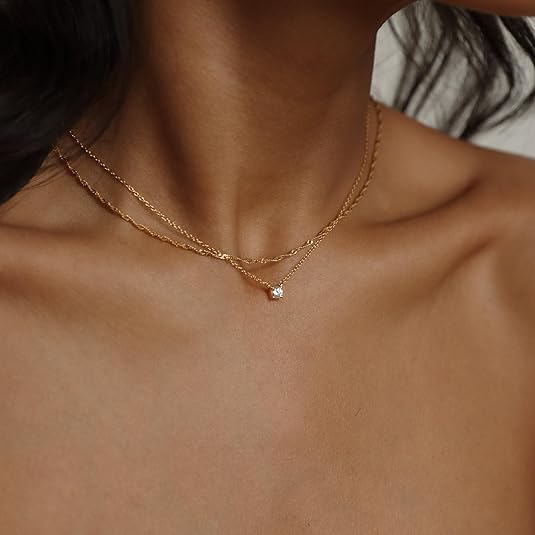
A simple gold necklace — a delicate chain, a thin layered set, a single small pendant — does more for a plain white linen dress than any pattern or embellishment. French women are not loading up on statement jewellery for a summer day. They choose one thing: one necklace, or small hoop earrings, or a thin bracelet. One thing done well.
Sunglasses are both practical and an accessory that genuinely makes or breaks an outfit in France. Oversized frames in classic shapes — the round tort, the square black, the vintage cat-eye — all work and all look right. Mirrored sport sunglasses do not work with most French summer outfits. They look sporty where nothing else does, and the dissonance is visible.

A silk scarf, folded into a small rectangle and tied in your hair, around your neck, or on the handle of your bag, is arguably the single most powerful French styling trick you can bring on a trip. It is practically weightless, it packs flat, it can function as a head covering at religious sites, and it signals effortlessly that you have thought about your outfit in the specifically French way that France finds reassuring.

Local tip: French women often wear a very thin gold bracelet — sometimes a single one, sometimes two or three — that they barely appear to notice. This level of restraint in jewellery is hard to explain and impossible to fake with heavy costume jewellery. Keep it minimal and it will always look right.
What Men Should Pack for France in July
Men often get underserved in France packing guides and arrive underprepared, which is a shame because dressing well in France as a man requires very little effort if you know the shortlist. The French man in July is wearing something clean, something that fits reasonably well, and something that is not a slogan or a sports brand. That is genuinely most of the requirement.
The core of a men’s France wardrobe in July:
- two to three linen shirts in neutral tones (white, pale blue, olive, ecru)
- one or two pairs of linen or cotton trousers in stone or navy.
- one pair of clean dark shorts (not athletic shorts — Bermuda-length chino shorts in a solid colour).
- and a plain poplin shirt for evenings.
- Trainers that are clean and white or clean and neutral-coloured.
- one pair of leather sandals, and one pair of leather loafers or clean leather shoes for evenings.
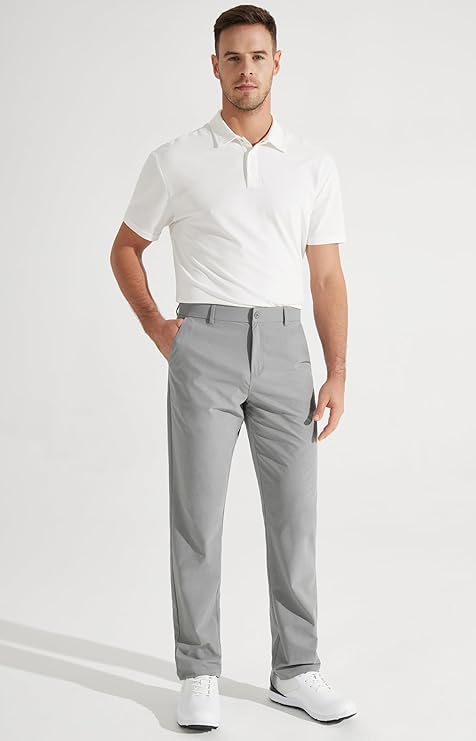
The mistake most men make is packing their regular holiday kit without thinking about the French context. Cargo shorts, branded T-shirts, flip-flops, and a casual cap are the specific combination that will mark you as a tourist from the first step outside the hotel. None of these items is inherently shameful — together, in France, they create a particular impression that is hard to shake.
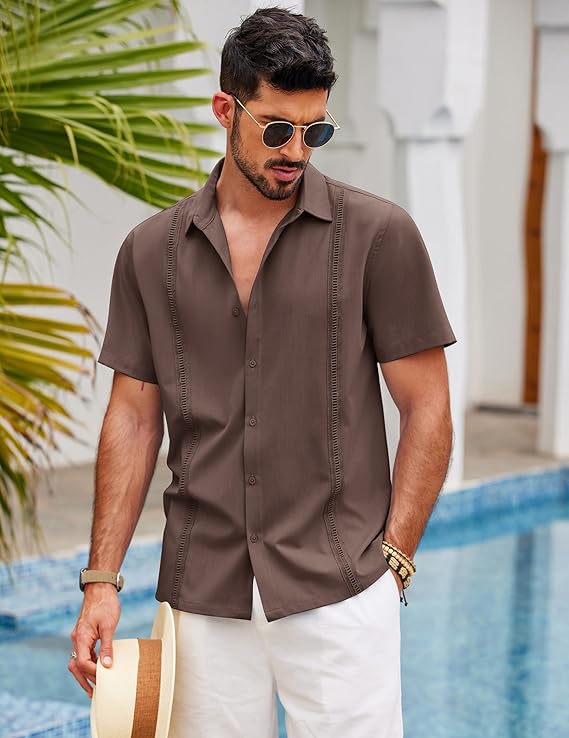
For day trips and market mornings, linen shirt plus cotton shorts plus leather sandals is the uniform. For evening dinner, linen trousers plus a tucked shirt plus loafers. This requires very little luggage and covers almost every situation France in July will throw at you.
Local tip: If you are heading to a restaurant where the dress code says “smart casual,” France means it slightly more seriously than the UK or US does. A linen blazer folded into your day bag takes almost no space and answers any smart casual question instantly.
Dressing for Religious Sites and Cultural Venues
France is a predominantly secular country but it has an enormous number of active and significant religious buildings that require covered shoulders and knees to enter. Notre-Dame, Sacré-Cœur, the Sainte-Chapelle, abbeys throughout Normandy and Burgundy, churches in every village in Provence — most of them have a dress code, even when it is not prominently displayed, and some have staff at the door who will turn you away or offer you a disposable paper covering if you are in a short skirt and sleeveless top.
The practical solution is simple: carry a light scarf at all times. A medium-weight cotton or silk scarf that can be wrapped around your shoulders or tied around your waist as a skirt covers both the shoulder requirement and the knee requirement. It takes no space, costs nothing extra in your packing, and means you are never standing outside a beautiful twelfth-century abbey wishing you had thought ahead.

For museums and galleries, there is no dress code — but it is worth noting that the major Paris museums can feel cold in their air-conditioned galleries, particularly after a hot morning walk to get there. Having a light layer on you prevents the experience of shivering through an hour at the Musée d’Orsay in your sundress while everyone else in their linen shirts looks perfectly comfortable.
Local tip: In some of the smaller Provençal villages, entering a church during a service in minimal summer clothing is considered genuinely disrespectful by the local community, regardless of tourist status. Covering up before stepping inside is not just a rule — it is a courtesy that tends to be appreciated and occasionally rewarded with the warm kind of welcome these villages reserve for respectful visitors.
The One-Week France Capsule Wardrobe in July
One week in France does not require a large suitcase. In fact, the freedom of a small bag — something carry-on-sized — makes the trip better in practical terms because you spend no time at baggage reclaim and you can navigate the Paris Metro without colliding with other passengers.
For women:
Clothing
- 3 dresses
- Casual daytime dress
- Versatile dress (easy to dress up or down)
- Slightly elevated dress for evenings
- 2 linen or cotton tops
- Breathable, easy to mix with bottoms
- 1 pair of linen trousers
- Lightweight and polished
- 1 pair of quality shorts
- Comfortable for daytime/walking
- 1 lightweight layer
- Thin button-up shirt or fine cardigan
- 1 swimsuit (if relevant)
Shoes
- 1 pair walking sandals
- 1 pair leather mules or evening sandals
- 1 pair clean trainers
Accessories
- 1 crossbody bag
- 1 small evening bag
- Scarf
- Hat
and you have covered seven to ten days with outfit repeating working naturally. Five outfits that rotate across ten days is exactly what the French themselves do, and it works.
For men:
Clothing
- 3 linen shirts
- 1–2 pairs chino-style shorts
- 1–2 pairs linen or cotton trousers
- 3–4 plain T-shirts
- 1 versatile poplin shirt
- For evenings or a smarter look
Shoes
- 1 pair leather sandals
- 1 pair clean trainers
- 1 pair leather loafers
That should fit comfortably in a carry-on and still leave room to spare—especially if you wear the bulkiest shoes in transit and keep to a coordinated color palette (navy/white/beige/olive, for example), so everything mixes easily.
The item most people forget: a reusable water bottle. France in July is genuinely hot, French tap water is perfectly safe and drinkable, and a refillable bottle saves you significant money over a week while solving the constant dehydration problem that affects tourists who have not planned for the heat.

Local tip: France has a system of public drinking fountains (fontaines à eau or boutons) in most cities, including beautiful old-fashioned ones throughout Paris. Fill your bottle constantly and you will feel better for the whole trip.
Packing Smart: How to Actually Fit France Into Your Bag
The temptation before any Europe trip is to overpack. You imagine every scenario, you pack for them all, and you arrive with a suitcase you cannot comfortably carry and shoes you never wear. France in July is a destination that genuinely rewards packing light, because you will be walking everywhere, often in heat, and a heavy bag becomes its own punishment.
you can also check our article:
The number of outfits to pack for one week is five to six, not seven or eight. Outfit repeating is not only acceptable — it is what people with taste actually do. Nobody at a Paris café has kept a spreadsheet of what you were wearing on Tuesday versus Thursday. Wear your best linen trousers twice. Wear that good dress three times. Nobody cares except you.
The mistake that catches most people is packing for the trip they imagined rather than the trip they will actually take. You will probably not wear the very formal dress. You will definitely not need three pairs of shoes you have not worn in six months. Pack what you actually reach for at home on warm days, and then edit that down by twenty percent.
The one item most people forget — beyond the reusable bottle mentioned above — is a compact, lightweight rain layer for Paris specifically. Not a full waterproof jacket. A very thin, packable cagoule that folds into its own pocket.
Avoid packing multiple pairs of heavy jeans. Denim in July in France is not impossible but it is uncomfortable, it takes forever to dry if it gets wet or needs washing, and it adds significant weight to your bag for limited payoff. One pair of lighter trousers or shorts does the practical work of denim in much more comfort.
Your Last Morning in France
Imagine this: it is your last morning in France. You have packed everything except what you are wearing today. You pull on your best linen dress, step into the leather sandals, tie the scarf loosely around your neck, and walk down the stairs of your hotel into a July morning in Paris — or Nice, or Lyon, wherever you ended up. The light is already warm by nine. A café has its terrace chairs arranged in rows, and someone is wiping down the little tables. You stop for a coffee and a croissant. Nobody looks at you with tourist-spotting eyes. You look like you might possibly belong there, and that feeling is better than it has any right to be.
That is what packing correctly for France in July actually does. It does not change the trip — the Eiffel Tower is still the Eiffel Tower, the lavender fields still smell extraordinary, the wine is still very good. But looking and feeling comfortable in a place this stylish, this specific, this quietly demanding in its aesthetic expectations, lets you relax into the experience instead of spending mental energy feeling self-conscious about what you are wearing.
The French have a word, dépaysement, for the pleasurable disorientation of being in a place that is not yours. France in July will give you that in abundance — in the best possible way. Show up dressed like you thought about it, and France will welcome you in the specific, understated way it welcomes people it considers to be paying attention.
If you are planning to continue your trip beyond France — heading south into Spain, for instance, our guide to Spain packing tips covers the slight wardrobe adjustments worth making as the culture shifts. Or if Paris has you planning a longer stay, things to know before travelling to Paris has everything else you need to know before you land.
Pack light, dress with intention, and enjoy every single minute of France in July.

