
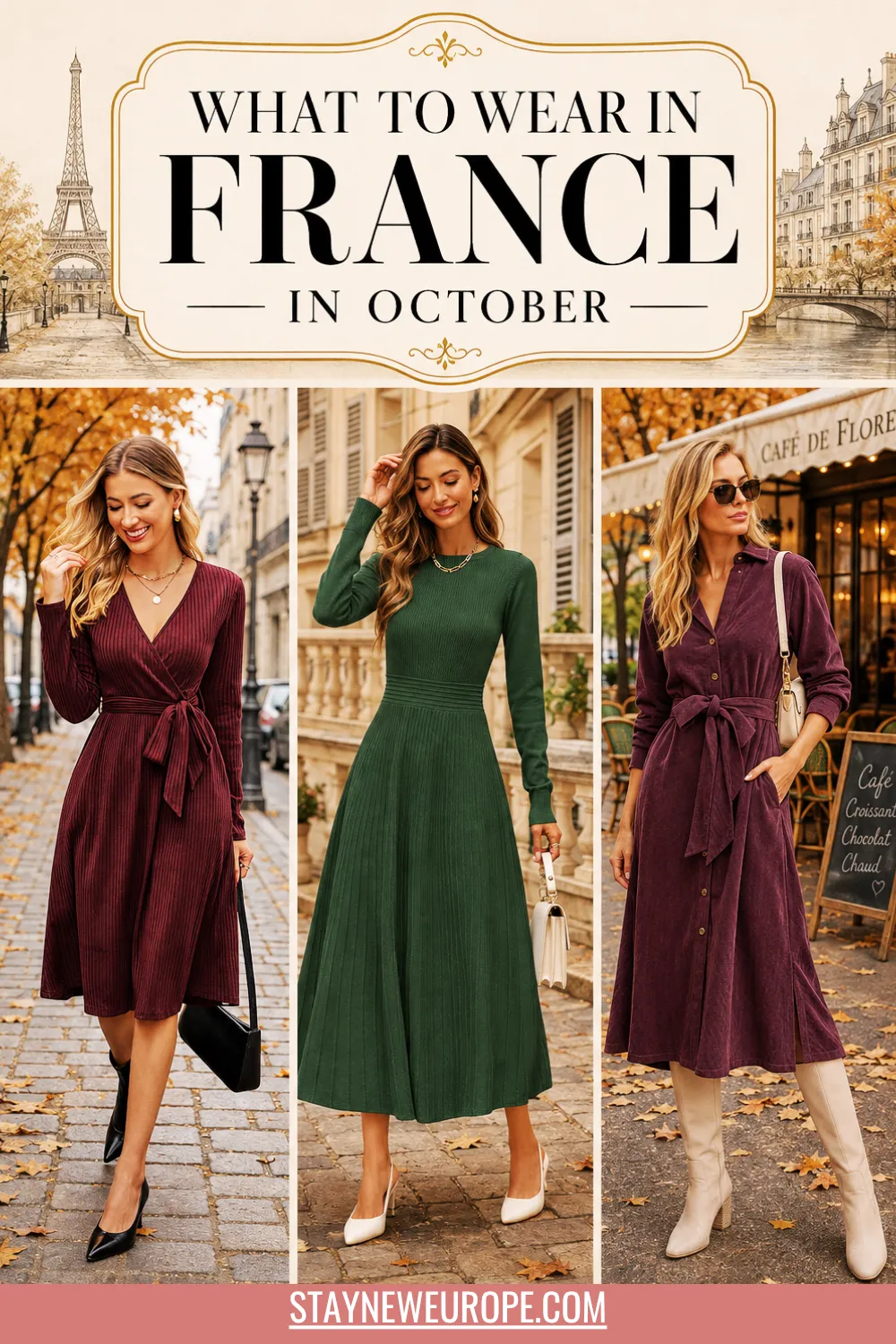
Let me be honest — I packed for my first October trip to France like I was still chasing summer. Two sundresses, one cardigan, sandals I wore exactly once before my toes went numb on a stone bridge in the Loire. I learned the hard way that October in France isn’t a season you can wing.
It’s a strange, beautiful in-between month. Golden light, half-empty streets, café terraces still open but with blankets draped over the chairs now. One day feels like a warm hug, the next like someone left a window open. And the French — always the French — somehow look effortlessly put together through all of it, while the rest of us are digging through our suitcase wondering why we didn’t bring a real jacket.
This is what actually works, built from more than one trip where I got it wrong before I got it right.
Before We Dive In
Weather in France in October: This depends enormously on where you’re going, and that’s worth sitting with for a second. Paris and the north typically sit between 9–16°C (48–61°F), with grey skies and a real chance of rain most days. The Loire Valley and central France run similar, maybe a touch milder. The south — Provence, the Côte d’Azur, Nice — is a different story entirely, often still hitting the low 20s°C (low 70s°F) in early October before cooling down by the end of the month. Humidity is moderate everywhere, but the feeling of cold is amplified by wind, especially in Paris and along the coast.
Walking conditions: France is a walking country, and October means wet cobblestones, slick metro stairs, and pavements that hold onto rain longer than you’d expect. Comfortable shoes aren’t optional here — they’re the difference between enjoying your trip and limping through the Marais by day three.
Style culture: This matters more in France than almost anywhere else in Europe. The French don’t dress for the weather so much as they dress despite it — a well-cut coat, a good scarf, shoes that are practical but never sloppy. You don’t need a new wardrobe to fit in, but a few intentional pieces will change how you’re treated, not just how you look.
The Bag You Actually Need for October
Here’s the thing nobody tells you about packing for October in France: you’re straddling two seasons, which means your bag needs to hold both a linen scarf and a wool sweater without looking like it’s about to burst.

I’d steer away from a soft duffle for anything longer than a long weekend. October’s mix of lighter layers and bulkier knitwear needs structure to keep from turning into a wrinkled heap by the time you land. A semi-structured or hard-shell carry-on holds its shape and makes packing cubes actually useful, which matters when half your clothes are thin cotton and the other half are chunky knits.

Local tip: if Paris is one stop on a longer trip, the layering logic barely changes as you move south — the same core pieces just get reshuffled, which is worth knowing before you overpack for “two different climates” that really aren’t that different.
Lightweight Layers (Why They Matter More Than You Think)
This surprised me the most on my first proper October trip: I didn’t need heavy clothes, I needed smart clothes. A single thick coat gets you through maybe half your days. The rest is a layering game.

A thin merino tee under a button-down, a linen shirt left open over a tank on a warmer afternoon, a light cardigan tied around your bag for the moment the wind picks up on the Seine — these small, stackable pieces do more work than one heavy jumper ever will, because the temperature genuinely shifts across a single day in October. Morning starts cold enough for a coat, midday warms up enough to shed it, and by evening you’re reaching for it again.

Pack three or four thin layers you can mix freely rather than two thick ones you can’t adjust. It sounds like more effort. It’s actually less.
Local tip: merino wool is worth the splurge here — it regulates temperature far better than cotton and doesn’t hold onto smell the way synthetic layers do after a long day of walking.
The One Coat That Does All the Work
If you bring one “investment” piece, make it this. A structured wool or wool-blend coat — trench-length or knee-length — is the single item that will carry you through every October scenario: rain, wind, a chilly museum, dinner somewhere nice.

I used to think a puffer was the smarter choice for versatility. It isn’t, not in France. A puffer reads as athletic gear the second you walk into a restaurant or a church, and it doesn’t layer well over the kind of outfits you’ll actually want to wear. A camel or navy wool coat, on the other hand, works over jeans in the morning and a dress at night without you having to think twice.

Local tip: go one size up from your usual fit so it comfortably layers over a sweater — French coats are cut close, and a too-tight coat over knitwear looks (and feels) wrong.
Sweaters and Knitwear That Earn Their Suitcase Space
Knitwear is doing more heavy lifting in October than any other single category, so it’s worth choosing carefully rather than grabbing whatever’s clean.

A fine-gauge merino or cashmere-blend sweater in a neutral tone works as a base layer under your coat, a standalone top with jeans, or even tucked into a skirt for dinner. Chunky knits look cozy in photos but take up enormous suitcase space and tend to overheat you the second you step into a heated café or metro car — which, in Paris in October, is often.

Bring two or three fine-knit pieces rather than one bulky statement sweater. You’ll wear the thin ones on repeat; the giant cable-knit will sit in your bag after day two.
Local tip: a turtleneck in a rich color — burgundy, forest green, chocolate — reads instantly more “Parisian” than the same sweater in grey, and photographs beautifully against stone architecture.
Dresses That Still Work in October
Dresses don’t disappear in October — they just need backup.
A midi dress in a substantial fabric (not summer cotton, more like a wool jersey or a heavier viscose) paired with tights and boots is one of the most reliable outfits you can pack, because it’s one decision that solves an entire day.

Where people go wrong is bringing summer sundresses and hoping a cardigan will save them. It won’t, not at 10°C with wind off the river. Choose dresses with sleeves, or dresses you’re genuinely happy to layer under a coat and over opaque tights without it looking like an afterthought.

A slip dress also earns its place here — worn over a fine-knit turtleneck during the day, it becomes a completely different, more polished outfit at night with the sweater removed.
Local tip: black opaque tights are non-negotiable in October France. Pack two pairs; they run more than you’d think from all the walking.
Jeans, Trousers, and What Actually Handles the Weather
Denim earns its keep in October more than any other month — it’s substantial enough for the cold without being as fussy as wool trousers, and it goes with everything you’ve already packed.

A dark, well-fitted straight or slightly wide-leg jean does the most work. Avoid anything distressed or overly casual; it reads more tourist than intentional, especially in cities.

Wool or wool-blend trousers are a strong second option, particularly for dinner, since they hold a crease and don’t wrinkle from a day of walking the way cotton chinos do.

Shorts, frankly, don’t belong on this list. Even in the south of France, October evenings cool down fast enough that you’ll regret them by sunset.

Local tip: a single pair of dark, tailored trousers can substitute for “smart casual” almost anywhere — restaurants, evening museum events, a nicer dinner — without you needing to pack a separate “fancy” outfit.
Walking Shoes That Won’t Betray You
Let me be blunt, because this is the section people skip and then regret. October cobblestones are wet, uneven, and unforgiving, and no outfit survives a blister.

A leather or suede low boot — ankle height, block or flat heel, closed toe — is the single most useful shoe you can bring. It handles rain better than canvas sneakers, looks intentional rather than athletic, and works from a morning at the market to an evening at dinner without a shoe change.

White sneakers have become the default “stylish but comfortable” choice for a lot of travelers, and they’re fine for a day or two, but they soak through in October rain fast and start looking rough by day four of a wet trip. If sneakers are your only comfortable option, choose a leather or suede pair over canvas or mesh.

Local tip: break in any new shoes at home for at least a week before you leave. October in France is not the trip to test-drive new boots.
What NOT to Wear (Tourist Mistakes)
A few things mark someone as a tourist in France almost instantly, and while that’s not a crime, dressing a bit more intentionally genuinely changes how you’re treated — more warmth from waitstaff, more patience from shopkeepers, fewer people assuming you don’t speak a word of French before you’ve even said hello.
- Skip head-to-toe athleisure, oversized branded logo wear, flip-flops of any kind, and shorts once the sun sets. Skip the flimsy going-out heels that can’t handle cobblestones
— you’ll be miserable by 9pm. And skip bringing only summer fabrics and hoping for the best; October does not negotiate.
None of this means dressing formally. It means dressing like you planned for the trip you’re actually taking.
Rain Prep (Unexpected but Important)
October in France means rain more days than not, especially in the north, and most travelers underestimate how much this affects everything else in their suitcase.

A proper rain jacket — not just a coat that resists a light drizzle — is worth the space it takes up. Look for something packable that still looks like clothing rather than outdoor gear; a trench with a water-resistant finish does double duty as your everyday coat and your rain layer.
A small collapsible umbrella lives in your bag every single day, not just the ones with rain in the forecast, because French weather changes its mind fast.

Local tip: avoid suede shoes on days with heavy rain forecasts — they stain and don’t dry evenly. Save suede for drier days and default to leather or a water-resistant boot when the forecast looks grim.
Evening Outfits for Dinner in France
Dinner in France, even a casual one, tends to feel a notch more put-together than dinner most other places, and October is a good excuse to lean into that rather than fight it.

A slip dress with your turtleneck removed and swapped for a light jacket, tailored trousers with a silk or satin top, or a midi skirt with a fitted sweater tucked in — any of these read as “made an effort” without requiring a separate cocktail outfit taking up suitcase space.

Add a bold lip or a statement earring and you’ve elevated the whole thing without adding a single extra garment.

Local tip: trainers at dinner, even nice ones, will get you seated at the door table in a lot of smaller French restaurants. Bring at least one pair of proper shoes for evenings.
What to Wear for Churches (Dress Codes)
France’s churches and cathedrals — Notre-Dame, Sacré-Cœur, the countless smaller ones you’ll wander into along the way — generally expect covered shoulders and knees, and this is genuinely easy to plan for in October since you’re already layering.
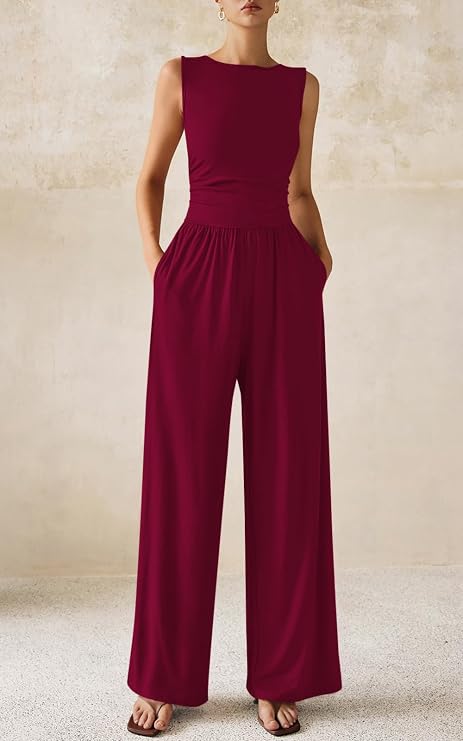
A midi dress or trousers with a sweater covers you without a second thought. If you’re wearing something sleeveless underneath a coat, just keep a light scarf in your bag to throw over your shoulders once the coat comes off inside. It takes ten seconds and saves you from being turned away or, more likely, just feeling awkward and underdressed in a genuinely beautiful space.

Local tip: the scarf you’re already carrying for warmth does double duty here — one more reason to never leave it in the hotel.
Bags for the Day: Crossbody vs Backpack
Both work in France, but they serve different days. A structured crossbody in leather or a good vegan leather handles city days, museums, and dinners — it sits close to your body, which matters in crowded metro cars, and it looks intentional rather than purely functional.

A backpack makes more sense for day trips outside the cities — the Loire châteaux, a coastal walk in the south — where you’re carrying more and comfort matters more than polish. If you’re only bringing one, a crossbody with a longer strap and enough room for a scarf, umbrella, and phone covers more scenarios than a backpack will.

Local tip: keep it zipped and worn across your body, not on one shoulder, in crowded areas like the metro or major tourist sites — pickpocketing is a real, well-documented issue in touristy pockets of French cities.
Accessories That Elevate Simple Outfits
October is the month accessories earn their keep, because they’re doing real functional work, not just decoration.
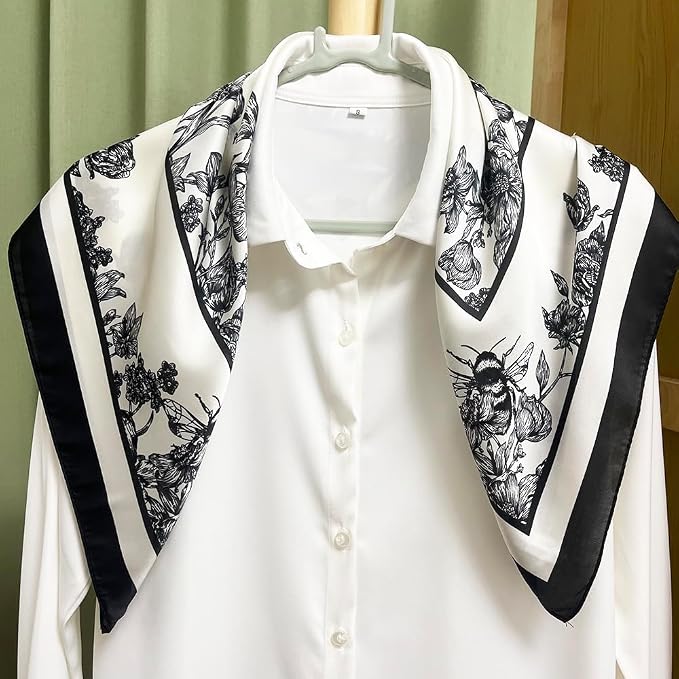
A quality scarf — It adds warmth exactly where you need it, and it instantly makes a simple sweater-and-jeans outfit look finished rather than thrown together.
a leather belt to define your coat or a looser sweater,

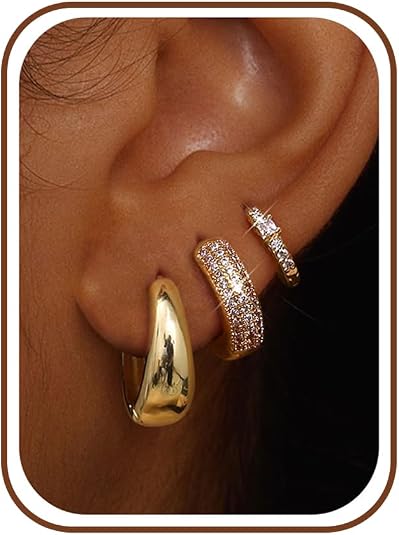
simple gold or silver jewelry that doesn’t compete with a busy print, and a beret if you genuinely want to wear one — not as a costume, just as a warm, practical hat that happens to also look good.
Local tip: one statement scarf in a print or color you love does more for “looking put together” across ten days than three separate jewelry pieces would.
Fabrics to Choose (and Avoid)
October rewards fabric choices that hold their shape and actually keep you warm, rather than ones that just look good in a suitcase photo. Wool, wool blends, merino, cashmere, and heavier cotton twill are your friends — they layer well, resist wrinkling, and handle the temperature swings within a single day.
Avoid pure linen as anything other than a light layer under a coat — it wrinkles fast and doesn’t hold heat. Avoid thin synthetic athletic fabrics; they don’t breathe the way you’d want under a coat and can look distinctly non-French the moment you’re indoors somewhere heated.
Local tip: if you’re combining France with a warmer stop, pack your linen pieces at the bottom of the case — you genuinely won’t reach for them until you’re somewhere the weather calls for it.
A Capsule Wardrobe for France in October
Here’s the actual framework, not a random list. Build around a tight neutral palette — camel, navy, black, cream, one deep accent like burgundy or forest green — so that every piece works with every other piece.
Core pieces: one wool coat, two fine-knit sweaters, one turtleneck, two pairs of trousers or jeans, one midi dress, one slip dress, black tights, one scarf, one pair of boots, one pair of leather sneakers or flats.
That’s roughly ten pieces that combine into well over a dozen distinct outfits, which is the whole point — you’re not packing more, you’re packing smarter.
Practical Packing: How Much to Actually Bring
For a week to ten days in France in October, five to six tops, two to three bottoms, one dress, one coat, and one rain layer is genuinely enough — the mix-and-match math works out to more outfits than you’d expect from that short a list.
The mistake most people make isn’t packing too little, it’s packing too many versions of the same thing — three near-identical sweaters, two pairs of jeans that serve the exact same function. Before you zip the case, lay everything out and count how many outfits each piece can realistically contribute to. Anything that only works one way is the first thing to cut.
There’s a particular kind of confidence that comes from stepping off the train in Paris or Lyon or Aix knowing your suitcase actually matches the trip you’re taking. October in France rewards a little planning — not because the weather is punishing, but because getting it right means you spend your days actually present in the golden light and the half-empty streets, instead of distracted by cold feet or a coat that’s doing nothing for you. Pack thoughtfully, layer like you mean it, and go enjoy the season the locals quietly think is the best one.

