
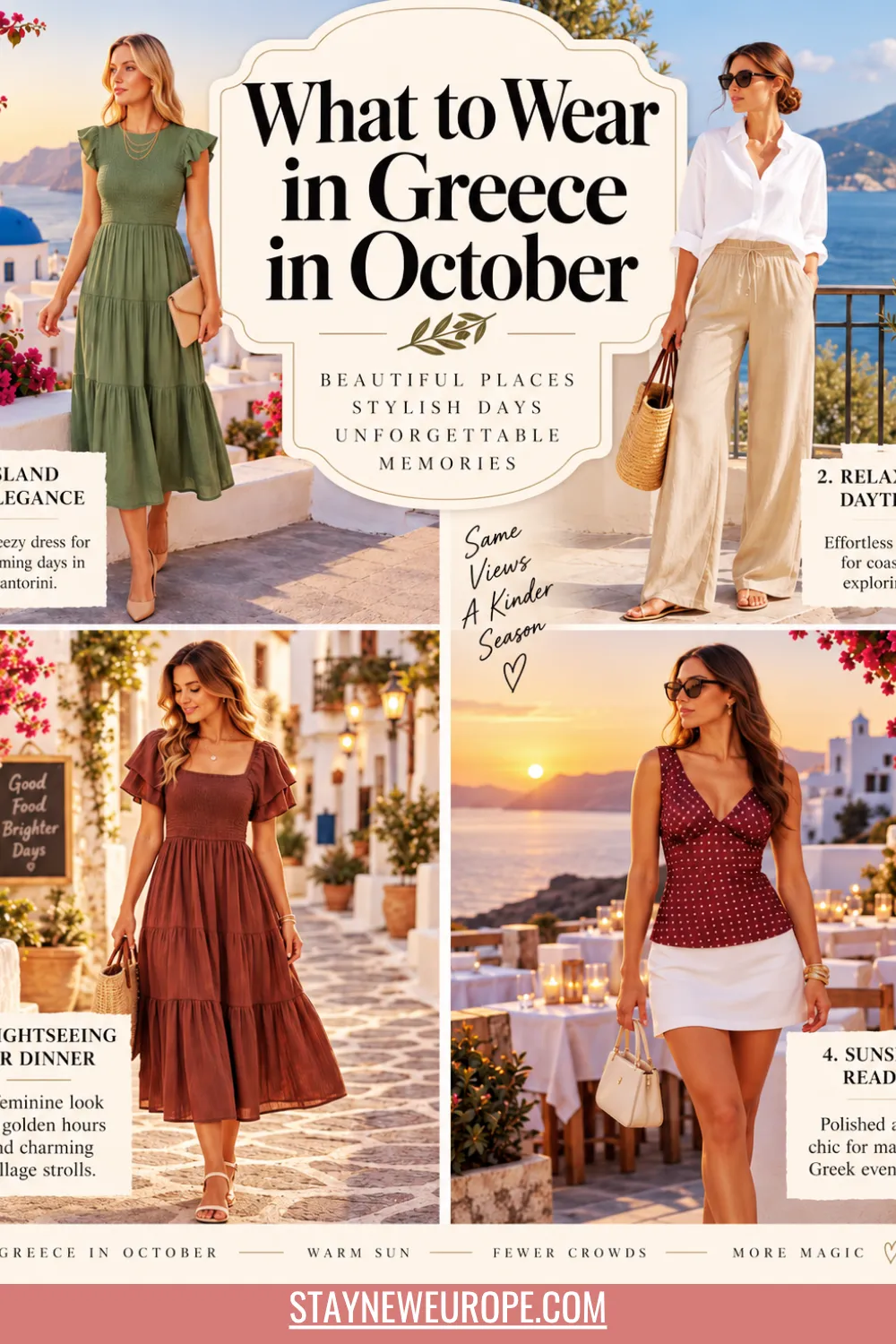
Let me be honest — I almost missed my flight to Athens because I was standing in front of my open suitcase at 6am, holding a sundress in one hand and a wool scarf in the other, genuinely unsure which country I was packing for.
That confusion is basically the entire personality of Greece in October. The days can feel like the tail end of summer — warm sun, blue sky, sea still tempting you in — and then the sun drops behind a hill around 6:30pm and suddenly you’re doing the “arms crossed, regretting your life choices” walk back to the hotel. It’s a beautiful month to visit. It’s also the month most people pack completely wrong for, because they either bring their July suitcase or, worse, they overcorrect and show up looking ready for a Scottish autumn.
This surprised me the first time I did it: October in Greece isn’t one climate. It’s two, stacked on top of each other, and you need a wardrobe that can slide between them without a costume change every three hours.
Before We Dive In
October in mainland Greece and Athens usually sits somewhere around 22–25°C in the daytime, dropping to a genuinely cool 14–16°C once the sun’s gone. The islands run a touch warmer for longer — Santorini, Crete, and the southern Cyclades can still feel like proper summer well into the month — but even there, evenings ask for more than a t-shirt. Rain becomes more likely as October goes on, especially in the back half, so this isn’t quite the bone-dry Greece of July anymore.
Walking-wise, you’re dealing with a lot: uneven cobblestones on the islands, polished (and slippery when wet) marble at the Acropolis, steep whitewashed steps in Oia, and long stretches of ancient stone at places like Delphi. Comfortable shoes aren’t optional here — they’re the whole trip.
And style culture matters more than visitors expect. Greeks — especially in Athens — dress with quiet effort. Think good denim, a well-fitted top, decent shoes. Nobody’s expecting couture, but the baggy cargo shorts and worn-out trainers combo will mark you as a tourist faster than your accent will. A little intention goes a long way.
Layers Are Doing More Work Than You Think
I used to treat “pack layers” as the most boring, generic packing advice on earth. Then I spent one October morning sweating in a courtyard in Athens and one October evening actually shivering on a rooftop bar three hours later, and I became a convert.
The trick isn’t packing more clothes — it’s packing pieces that stack.
A fine cotton or linen tank as your base, a breathable long-sleeve shirt or light knit over it, and something you can throw on top for the evening. This lets you start the day in the sun feeling comfortable, then adjust piece by piece as the temperature drops, rather than lugging around one heavy jacket you only need for two hours a day.

What doesn’t work: thick layers you can’t easily remove, or synthetic fabrics that trap heat the second the sun comes out. If you sweat through it at 1pm and freeze in it at 7pm, it’s the wrong layer.
Local tip: Pack one genuinely warm layer — a proper knit, not just a cardigan — for evenings on the islands near the water, where the breeze off the sea cuts through anything thin. If you’re building a full capsule around this idea, our what to wear in Italy in August guide has a similar layering logic for Mediterranean heat that dips at night.
The Dress That Actually Earns Its Suitcase Space
A breezy little sundress that felt perfect in July starts to look slightly out of place by October — not wrong exactly, more like showing up to a bonfire in flip-flops.
What works better is a midi dress in a slightly heavier cotton or a linen-blend, ideally in a shade with more depth to it — terracotta, olive, deep mustard, navy. It still feels easy and holiday-appropriate, but it reads as season-aware rather than stuck in summer.

I wore one rust-colored shirtdress on repeat through Athens and Nafplio — sandals and a denim jacket by day, heeled flats and gold jewellery by night — and it did more heavy lifting than anything else in my case.

For island stops, a lighter cotton dress still works fine in the afternoon warmth, just pair it with something to throw over your shoulders once the sun starts sliding down.

Local tip: Wrap dresses are quietly brilliant here — they adjust for bloating after a long taverna lunch, work as a beach cover-up if you’re still swimming, and don’t wrinkle as badly in a packed suitcase as you’d expect.
Trousers, Jeans, or Shorts — What Actually Wins
Shorts aren’t off the table in October, especially in the first half of the month or on the warmer islands, but they stop being the obvious daily choice once temperatures dip in the evening or you head somewhere with more elevation.
Straight-leg or slightly wide jeans are the real workhorse of a Greek October trip — comfortable for long walking days, warm enough for cool mornings, and dressy enough for dinner with the right top.

Lightweight trousers in linen-cotton blends are my personal favorite, especially in a beige or olive tone that hides travel-day creasing and dust from ancient sites better than white ever will.

I learned this the hard way: white linen trousers looked incredible in photos and looked exactly like a napkin that had been dragged across the Acropolis by 3pm.
Local tip: Bring one pair of proper trousers you can dress up for dinner and one pair of shorts for the warmer island afternoons — you genuinely don’t need more variety than that.
Shoes That Won’t Betray You on Marble or Cobblestones
Here’s the thing nobody tells you about the Acropolis: that marble is centuries old, polished smooth by millions of feet, and it gets slippery, even in dry weather. Add a light October drizzle and it turns into a genuine hazard in anything with a smooth or worn sole.
Bring shoes with real tread — a good pair of leather sneakers,

sturdy sandals with grip, or walking shoes that have already been broken in before your trip.

Save the delicate strappy sandals for dinner, not for a day that includes Delphi, Meteora, or a hike up to a hilltop village. Your feet, and your dignity, will thank you.

Local tip: Bring one dressier flat shoe (not a heel) for evenings — you’ll still be walking on cobblestones to get to dinner, and nothing ruins a good outfit faster than wincing your way across a village square.
The Jacket That Saves the Trip
You don’t need a heavy coat. What you need is one genuinely reliable mid-layer that handles wind off the sea, a sudden evening chill, or the odd rain shower — a lightweight trench, a denim jacket, or a soft bomber all do the job without eating your suitcase space.

I brought a heavier coat on my first October trip to Greece “just in case” and wore it exactly zero times, because it was too warm for the actual weather and too bulky to carry around during the day. The jacket you’ll actually use is the one that’s light enough to tie around your bag at noon and warm enough to matter by 7pm.
Local tip: A packable rain jacket earns its space more than a stylish trench does if you’re island-hopping in the second half of October, when short, sharp showers become more common.
What NOT to Wear (The Mistakes I See Constantly)
Full technical hiking gear for a city day in Athens.
- Head-to-toe athleisure with a giant logo across the chest.
- Flip-flops for anything beyond the beach itself — they offer zero grip and zero support for the kind of walking a Greek trip demands.
The other one, gently: swimwear worn as regular clothing away from the beach or pool. It’s common in July, but by October you’ll stand out for the wrong reasons wearing a bikini top as a top in a village square.
Local tip: Skip the oversized branded t-shirt from home too — a plain tee in a good color photographs better and blends in far more naturally with how locals dress.
Dressing for Churches and Monasteries
Greece takes this seriously, and Meteora in particular will turn you away at the door if you show up in shorts or a sleeveless top — shoulders and knees need to be covered for both men and women, and some monasteries ask women to wear a wrap-around skirt over trousers.
Pack one lightweight scarf that can cover your shoulders in a pinch, and keep at least one outfit in rotation that covers knees comfortably —

a midi dress or trousers do this without a second thought. Most monasteries do provide wraps at the entrance if you turn up unprepared, but relying on a shared cloth that’s been worn by two hundred tourists that morning isn’t exactly appealing.

Local tip: If Meteora or a monastery visit is on your itinerary, plan that day’s outfit around the dress code first, then build everything else around it — not the other way round.
Evening Outfits Worth Getting Dressed Up For
Greek dinners run long and start late, and the temperature has usually dropped by the time you’re seated. This is where a slightly elevated outfit earns its keep — a linen shirt-dress with sandals swapped for flats, jeans with a silk-feel top and gold jewellery, or trousers with a fitted blouse and a light blazer.
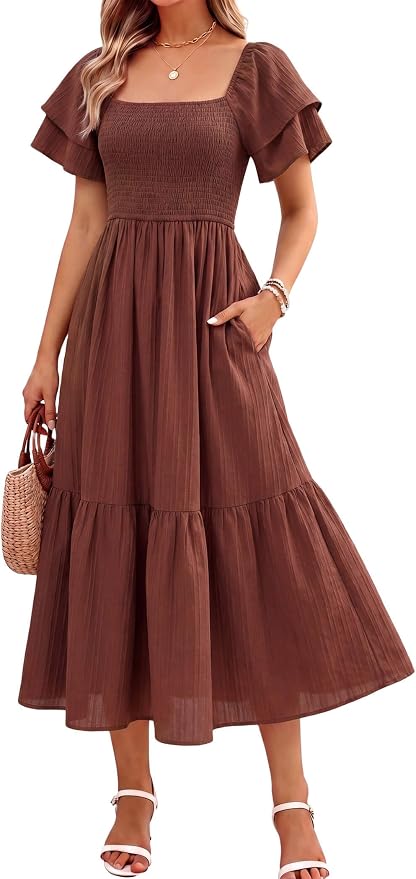
Santorini sunset dinners specifically deserve a bit more effort than you’d think — not formal, just considered.
I wore the same navy midi dress to three different tavernas that trip and changed nothing but the shoes and earrings each time.

Local tip: One good gold hoop earring and a scarf can turn a daytime outfit into an evening one in under two minutes — useful when you’re not going back to the hotel to change between the sunset and dinner.
Bags: Crossbody, Tote, or Backpack
A crossbody bag is the most practical option for daily sightseeing — hands-free, secure, and it doesn’t scream “tourist” the way a large backpack sometimes does. For beach days or market mornings, a woven or canvas tote does double duty as a beach bag and a day bag without looking out of place.

Save the backpack for actual hiking days — Meteora, longer coastal walks, Delphi — where you genuinely need both hands free and more storage for water and layers.

Local tip: A small crossbody with a zip closure is worth the slightly higher price in busy spots like the Plaka in Athens or Mykonos Town during peak season.
Accessories That Do the Heavy Lifting
Sunglasses,

a woven hat for the still-strong October sun,

and one or two pieces of jewellery you actually reach for — that’s genuinely most of what you need.
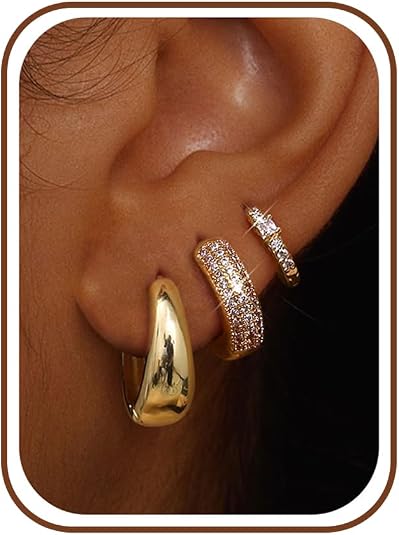
Gold tones photograph beautifully against Greece’s warm light and whitewashed buildings in a way silver sometimes doesn’t.
A scarf pulls double duty here too — dressing up a plain outfit, covering your shoulders for a church, or wrapping around your neck if the evening wind picks up more than expected.
Local tip: Skip the delicate jewellery you’re precious about — sea air, sand, and a lot of hand luggage shuffling isn’t kind to anything fragile.
Rain Prep (Yes, Really)
This one catches people off guard because Greece has such a sun-drenched reputation. But October rain is real, especially from mid-month onward, and it tends to arrive as short, sharp downpours rather than the all-day drizzle you’d get further north.

A packable rain jacket or a small umbrella that fits in your day bag covers you without adding real weight. Avoid suede shoes entirely this month — they do not recover well from an unexpected shower.
Local tip: Check the forecast the night before island-hopping by ferry — rough weather occasionally delays crossings, and you don’t want to be stuck without a layer if you’re waiting on a windy dock.
Fabrics to Pack (and Which to Leave Behind)
Cotton, linen, and linen blends remain your best friends — breathable enough for warm afternoons, substantial enough to feel appropriate once the temperature drops. A light knit or merino wool top is worth the suitcase space for evenings; it’s warm without being bulky and doesn’t wrinkle the way cotton sometimes does.

What to skip: heavy synthetic fabrics that don’t breathe, anything that needs ironing daily, and thick denim that takes forever to dry if it gets caught in a shower.
Local tip: If you’re also stopping somewhere further north on the same trip, our what to wear in France in September guide has good notes on richer autumn tones that photograph well and layer easily — a similar palette works nicely for a Greek October, too.
Do You Still Need Swimwear?
Honestly, yes — especially in the first half of the month or if you’re island-hopping somewhere like Crete, Rhodes, or the southern Cyclades, where the sea often stays swimmable later into autumn than you’d expect. Pack one swimsuit rather than the five you’d bring for a July trip, plus a cover-up that can double as a light dress.

By late October on the more northern or mainland stops, you’ll likely use it less, but I’ve regretted leaving it home more often than I’ve regretted packing it.
Local tip: A rash guard or long-sleeve swim top is a smart add if you’re prone to sunburn — the October sun is deceptively strong even when the air feels mild.
Carry-On, Duffle, or Suitcase — What Actually Suits This Trip
If you’re island-hopping by ferry, a soft-sided duffle or a smaller carry-on suitcase handles gangplanks and narrow boat stairs far better than a large hard-shell case that needs to be lifted by someone else. If you’re mostly based in one or two spots — Athens and one island, say — a standard carry-on is genuinely enough for a week to ten days if you pack with the capsule mindset above.

I travel with a soft duffle and a foldable tote for beach or market days, and it’s saved me more than once on a rickety ferry gangway where wheels were completely useless.
Local tip: Whatever you bring, make sure it has a strap you can sling across your body — cobblestone streets and suitcase wheels are not friends.
The Practical Packing Rundown
For a ten-day trip, you don’t need ten outfits — you need roughly five or six versatile tops, two dresses, two bottoms, and shoes that cover walking, evenings, and one dressier moment, all built around a color palette that mixes and matches without a second thought.
The mistake almost everyone makes is packing for the best-case version of the weather and ending up cold, or the worst-case version and sweating through half their case. Build around the actual forecast for your dates, lean on layers rather than bulk, and resist the urge to bring a “just in case” outfit for a scenario that’s unlikely to happen. Overpacking doesn’t make you more prepared — it just makes your suitcase heavier and your choices harder every morning.
Greece in October has this way of rewarding people who show up ready for it — warm enough to still feel like a holiday, cool enough to actually enjoy long walks without wilting, golden light that makes even a simple outfit look better than it has any right to. Pack the layers, break in the shoes before you go, and leave a little room in the case for whatever you inevitably buy in a market in Nafplio or a boutique in Chania. The rest sorts itself out once you’re actually there, sun on your shoulders, figuring out where to eat next.
