
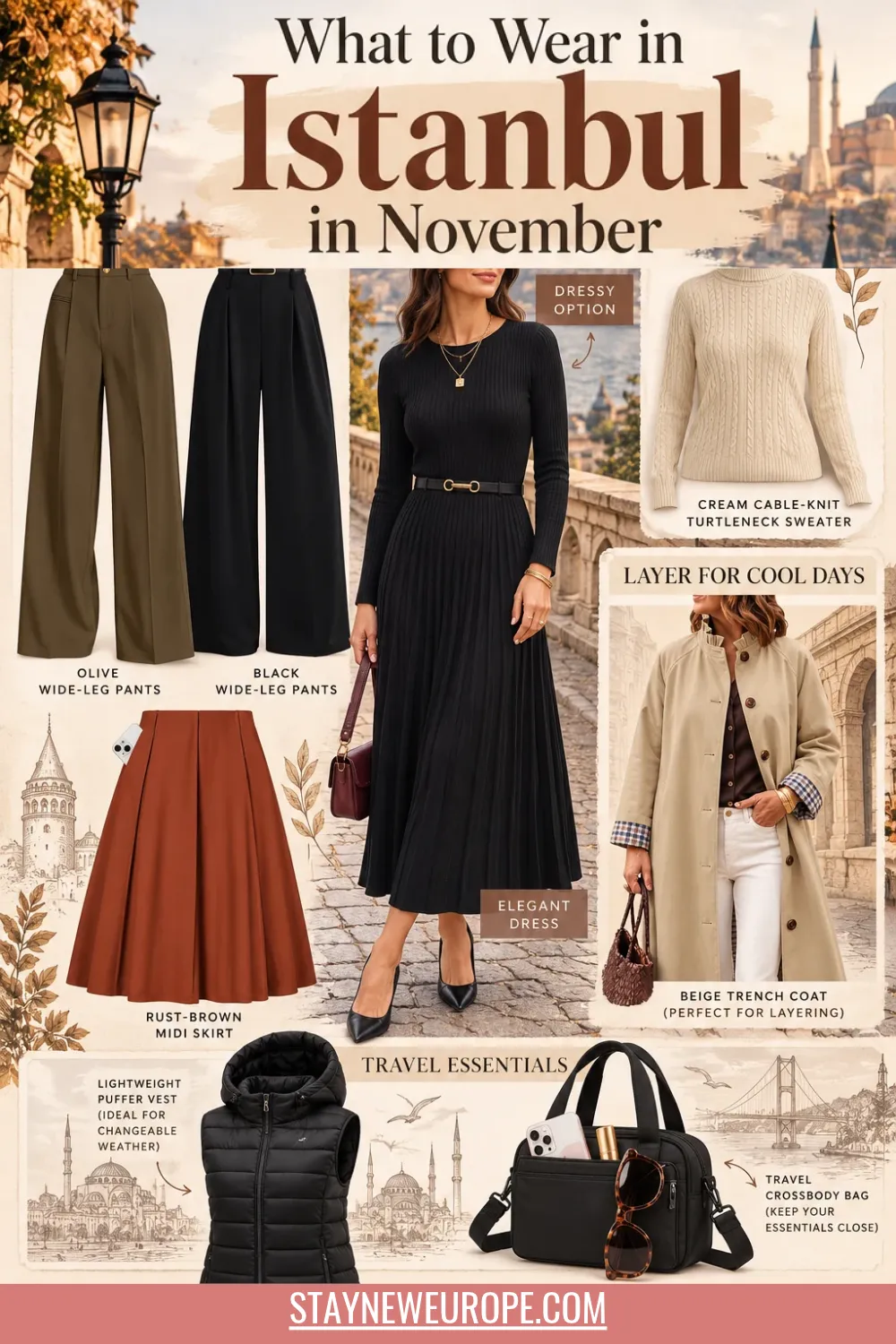
Istanbul in November is a mood. One minute the sun is bouncing off the Bosphorus and you’re unwinding your scarf on a ferry deck; the next, a wind straight off the water is trying to steal your hat and a shower arrives without so much as a warning. You’ll climb steep cobbled hills, hop on trams, duck into mosques, warm your hands around a tiny tulip glass of tea, and somehow experience three types of weather before lunch.
The city is also properly stylish. Istanbullus dress with real confidence: dark colours, sharp coats, good boots, a scarf that looks effortless. Meanwhile half of us tourists show up in thin canvas sneakers and one giant puffer, then wonder why we feel soggy, sweaty and slightly underdressed all at once.
So let’s fix that. Here’s exactly what I’d wear (and what I’d leave at home) so you stay warm, dry, mosque-ready and photo-ready from morning ferry to late dinner.
Before We Dive In
Weather: Expect roughly 9–16°C (48–61°F) in November, with the first week feeling like a bonus October and the last week noticeably colder. It’s one of the wetter months, humidity is high, and the wind off the Bosphorus makes it feel cooler than the number on your phone.
Walking conditions: Istanbul is hilly. Galata, Beyoğlu, Cihangir and the streets down to Karaköy are all steep, and wet cobblestones and polished stone steps get properly slippery. You’ll easily do 15,000+ steps a day.
Style culture: In Beyoğlu, Karaköy and Nişantaşı, people dress polished-casual, with lots of black, camel and olive. In older, more conservative neighbourhoods like Fatih and Eyüp, covered shoulders and knees are the norm. Dress for the city and you’ll blend in beautifully.
Daylight: The sun sets around 5 pm, so your evening outfit needs to be warm, not just cute.
Heading elsewhere in Europe this month? Check out our other November guides: what to wear in Prague in November, Vienna in November and Budapest in November.
1. Start With the Right Bag (Carry-On Wins)
Here’s the thing about Istanbul: you will almost certainly come home with more than you brought. Spices, ceramics, a rug you swore you didn’t need.
A soft-sided carry-on with a bit of expansion room is the sweet spot. It fits overhead bins, rolls over cobblestones without screaming, and leaves space for souvenirs. Cabin-only travel also means no waiting at the carousel after a long flight.

Pair it with a set of packing cubes. They keep your layers sorted so you’re not digging through the whole bag for a thin sweater at your hotel door. If you’re new to this, our rolling vs. folding clothes guide is worth a quick read before you pack.

Local tip: Leave the bottom third of your bag empty on the way in. The Grand Bazaar will fill it.
2. Lightweight Layers (Why They Matter More Than You Think)
Let me be honest: I used to think layering meant “bring more stuff.” In Istanbul I learned it means bringing the right thin stuff. You’ll be warm walking uphill, freezing on a ferry, and sweaty again inside a packed tram, all within an hour.
Start with a thin merino or cotton-blend long-sleeve top. It sits against the skin, handles the ups and downs, and doesn’t smell after a day of walking. On top, add a fine-knit sweater or a cardigan that looks good on its own.

Your outer layer then does the heavy lifting, and you can peel things off or add them back as the day demands. A typical morning: merino tee, wool-blend sweater, trench, scarf. By midday the trench is over my arm and the scarf is in my bag.

Local tip: Ferry decks are far windier than the shore. Keep your scarf on until you’ve sat down inside.
3. The Istanbul Dress Code (What Actually Works)
Istanbul is more modern and more mixed than many visitors expect. You’ll see tailored coats next to hijabs next to leather jackets next to streetwear, and nobody blinks. What reads as “local” is polish: clean lines, neutral colours, shoes that aren’t beaten up.
My go-to palette is black, camel, olive, cream and navy, with one scarf or sweater in a richer colour (burgundy, rust or deep green) to keep things interesting. Think relaxed tailoring: straight trousers, a good knit, a structured coat, leather boots.

Outside tourist areas, it’s wise to dial things up in modesty a notch. Nothing dramatic, just covered shoulders and no very short hemlines.
Local tip: If you can’t decide what to wear, ask yourself if it would look right at a Karaköy café at 9 am and a rooftop dinner at 8 pm. If yes, pack it.
4. What NOT to Wear (Tourist Mistakes)
I’ll say it kindly: shorts are a no for November anyway, but they’re also a no for mosques and not many locals wear them in the city. Skip the “I ♥ Istanbul” tees and anything very logo-heavy; you’ll stand out for the wrong reasons.
Thin canvas sneakers are the biggest mistake I see. Istanbul rain plus stone streets equals wet socks by 11 am. Flip-flops, high heels and flimsy ballet flats make the hills miserable, and the heels in particular get stuck in cobblestones.
Finally, skip the heavy parka unless you run very cold. Between the humidity and indoor heating in cafés, trams and museums, it’s too much for most days.
Local tip: Whatever you pack, make sure you can wear it with the same pair of shoes. That alone fixes 90% of overpacking.
5. Jeans, Trousers and Why Shorts Stay Home
Dark straight-leg or relaxed jeans are the easy answer for daytime. They hide rain splashes, they’re comfortable for 10 hours on your feet, and they work with every boot and coat you’ll bring.

For a dressier option, pack one pair of wool-blend or soft tailored trousers in black or charcoal. They’re warmer than jeans, dry faster, and take you straight from sightseeing to dinner without a change.

Skip thin leggings as outerwear and very light cotton trousers, as they get cold and damp quickly in wind and drizzle.
Local tip: Choose trousers with a hem that can handle puddles. Cropped is fine, but frayed hems collect Istanbul’s wet streets all day.
6. Comfortable but Stylish Walking Shoes
Your shoes will make or break this trip. I’d pick two pairs and be done.
First, a waterproof leather ankle boot with a grippy rubber sole. Chelsea boots (Blundstones are the classic) look great with everything, slip on easily, and handle wet stone with confidence. They’re also easy to wipe down after a rainy day.

Second, a sleek leather sneaker in white or off-white. Locals wear these all the time with trousers and coats, so you won’t look like a tourist. Make sure the sole has proper tread; smooth soles on wet marble are an accident waiting to happen.

Whichever you choose, break them in before you fly. Istanbul is not the place for blisters.
Local tip: Bring thin wool or merino socks. They keep feet warm even when damp, and you’ll be taking your shoes off at mosques, so they’d better be your nice ones.
7. What to Wear in Istanbul in November for Women (Tops, Skirts and Tights)
You can absolutely wear skirts and dresses here; you just need to be smart about it. A midi skirt that hits mid-calf, paired with boots, looks chic and works for mosques without a second thought.
A midi skirt in a wool blend or heavy knit is my favourite pick. It moves well on steps, stays warm, and looks great with a sweater and trench.

Add a pair of opaque, fleece-lined or wool-blend tights underneath. They’re the secret weapon for dresses on windy days, and no one needs to know how warm you are.

For tops, I’d bring a fine-knit turtleneck, a long-sleeve blouse that can be layered, and one slightly dressier piece (a silky shirt or soft knit) for dinners. Long sleeves, higher necklines, easy mosque access.

Local tip: Black tights, black boots, black skirt, and then one colourful scarf. It’s the Istanbul uniform, and it works.
8. Jackets for Unpredictable Weather
If you only invest in one thing, make it the coat. November in Istanbul can swing from mild and sunny to wind-whipped and wet inside a single afternoon, so you want something that handles both.
A trench coat with a removable liner is ideal. It sheds rain, looks effortlessly Istanbul, and works over every outfit. If you run cold, a mid-thigh wool coat in camel, black or grey does the same job in warmer style, although it’s less rainproof.

Add a packable down vest (Uniqlo’s lightweight one is a popular option) to wear under your coat on the coldest days. It squashes down to nothing in your bag and adds real warmth without bulk.

Local tip: Pick a coat that covers your hips. That extra length helps against the wind and keeps you mosque-appropriate without any extra effort.
9. Evening Outfits (Look Like a Local, Not a Tourist)
Istanbul after dark is glamorous. People get properly dressed for meyhane dinners in Beyoğlu, rooftop drinks overlooking the Golden Horn and long nights in Karaköy, and it shows.
My formula: black knit dress or tailored trousers, a nice top, ankle boots and a structured blazer or your trench. Add simple gold jewellery and you’re done. For men, dark chinos or trousers, a fine-knit sweater or shirt, and a leather jacket or wool coat does the same job.
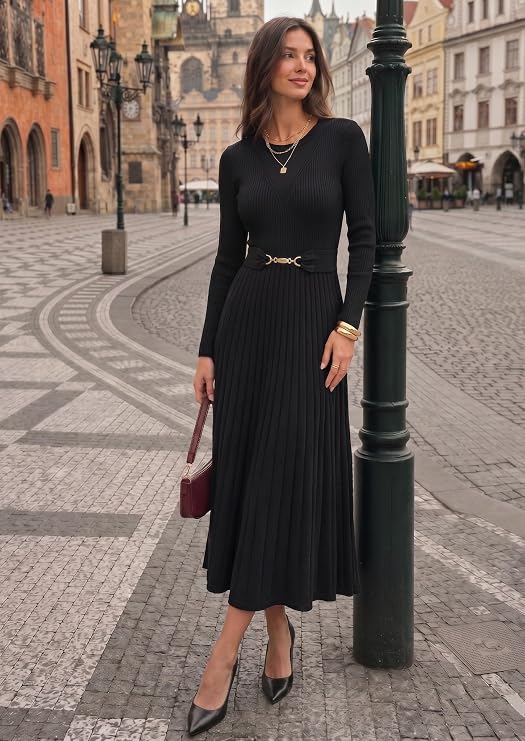
The key is staying warm. Rooftop terraces are chilly in November (many have heaters and blankets, but not all), so bring your coat and scarf no matter how cute the outfit.
Local tip: Dinner usually starts late. Eat a small snack at 5 pm and you’ll avoid being hangry in a freezing queue.
10. What to Wear for Mosques (Dress Code Rules)
The Blue Mosque, Süleymaniye and the others are open to visitors outside prayer times, and the dress code is simple. Women should cover their hair, shoulders and legs to below the knee. Men should cover shoulders and legs too (no shorts). Everyone removes their shoes.
Many large mosques lend wraps or headscarves at the entrance, but they’re not the nicest quality and the queue can be long. I’d rather carry my own.
A large, lightweight scarf in a cotton-modal blend or soft wool is the single most useful item you’ll pack. It covers your head at a mosque, warms your neck on the ferry, and doubles as a shawl over a dress at dinner.

Wear socks you’re happy to show off, because you will be walking in them on carpet. Slip-on boots make shoe removal quick and painless.
Local tip: Visit early in the morning. Fewer crowds, softer light, and prayer closures are easier to plan around.
11. Bags: Crossbody vs. Backpack
Crossbody wins here, hands down. It keeps your phone, cards and Istanbulkart close to your body and easy to reach, which matters in the crush of Istiklal Avenue, on packed trams and in the Grand Bazaar.
Look for a leather or sturdy fabric bag with a zip closure, in black or tan. If it sits in front of you when you walk through crowds, even better.

A backpack is fine for transit days but is awkward in crowded markets (you’ll hit people when you turn) and harder to keep an eye on. If you do bring one, wear it on your front in busy spots.
Local tip: Keep your phone in an inner pocket, not your back pocket, and not on a café table at the edge of a street.
12. Accessories That Elevate Simple Outfits
Accessories are where Istanbul style lives. A great scarf turns a plain sweater and jeans into an outfit; a good belt pulls a trench together; simple gold jewellery makes everything look intentional.
Pack one oversized scarf in a neutral tone and one in a richer colour. They solve cold, wind and mosque coverage all at once.
A beanie or soft wool hat is worth it for the last week of November, and a pair of thin gloves will be quietly wonderful on early mornings and ferry rides.

Pack sunglasses too. The low November sun reflecting off the water is surprisingly bright.
Local tip: Buy a scarf in the Grand Bazaar or Arasta Bazaar as your souvenir, then wear it all week. Instant local touch.
13. Rain Preparation (Unexpected but Important)
The rain is the thing most visitors underestimate. Istanbul showers are quick, heavy and often wind-driven, which means a flimsy umbrella lasts about four minutes.
A sturdy, compact umbrella with a vented canopy handles gusts far better than a cheap fold-up. Keep it in your bag every single day, even when the morning looks perfectly clear.
A hooded coat or trench with a hood is the other half of the plan, and it saves you from juggling an umbrella while holding a phone and a map. And waterproof boots (see above) mean wet streets never ruin your day.
Local tip: Duck into a nearby café or tea garden when the heavy rain hits. It usually passes in twenty minutes, and you get a free break.
14. Fabrics to Choose (and Avoid)
Wool, merino, cotton blends and structured knits are your friends. They insulate when damp, breathe well on busy trams and look sharp even after a long day.
Avoid very thin polyester (it clings and gets sweaty), pure linen (too light for the chill), and suede (rain ruins it quickly). Heavy denim can also stay damp for ages, so I’d stick to mid-weight jeans.
If something wrinkles in your suitcase, hang it in the bathroom while you shower. Steam fixes most things.
Local tip: Check the care label before you go. You won’t want to hand-wash a dry-clean-only sweater in a hotel sink.
15. What to Pack for Istanbul in November (Non-Clothing)
A universal travel adapter is essential, as Turkey uses the two-pin European plug at 230V. Pack one that fits your devices and keep it in your day bag.
A power bank saves you on long days of photos, maps and translation apps. You’ll be using your phone more than you expect.
Add a small pack of tissues (not every public toilet has paper), hand sanitiser, lip balm and a reusable water bottle. An eSIM or local SIM is also worth setting up before you land.
Local tip: Get an Istanbulkart at the airport or a kiosk. It works on trams, metros, buses and ferries, and saves you fiddling with cash and tickets.
How Much to Pack: A Quick Practical Guide
For a 5–7 day trip, I’d bring around 4–5 tops, 2 pairs of trousers or jeans, 1 skirt or dress, 2 sweaters, 1 coat, 1 packable vest, 2 pairs of shoes, and 2 scarves. That’s all. Stick to one colour family (black, camel, olive, cream and navy mix endlessly) and everything goes with everything.
Packing light vs overpacking: If you can’t picture at least three outfits for each piece, leave it. You can wear the same coat and boots every day, because no one is counting.
Outfit planning tip: Lay everything out on the bed before you pack. If it doesn’t work with at least two other items, it’s staying home.
Mistakes to avoid: Bringing only cute shoes, skipping the rain plan, forgetting a mosque-friendly scarf, and packing for a single weather type. Istanbul will test you on all four.
Planning more of Europe this season? Our guides to what to wear in Europe in fall and Greece in October are packed with ideas.
FAQs About Packing for Istanbul in November
Do I need to cover my hair in Istanbul? Only inside mosques (women). Everywhere else in the city, you don’t need to, though a scarf is handy for wind and cold.
Is it cold enough for a winter coat? Usually a trench or mid-weight wool coat with layers is enough. Only pack a heavy parka if you feel the cold strongly.
Can I wear dresses and skirts? Yes. Midi lengths with tights and boots work well and look great.
What shoes are best for cobblestones and rain? Waterproof leather ankle boots with a grippy sole, plus leather sneakers for dry days.
Is a backpack okay? Fine for transit days, but a zip-up crossbody is better in crowded areas like Istiklal and the Grand Bazaar.
Go Get Lost in It
Picture yourself on a ferry crossing between two continents, a glass of hot tea warming your hands, the city rising up the hillside in soft grey light. You’re in your favourite coat, your boots are dry, your scarf is doing its thing, and you’ve got that quiet confidence of someone who packed exactly right.
That’s Istanbul in November. It’s moody, moving and beautiful, and it rewards the traveller who shows up prepared. Pack your layers, pick your good boots, and leave a little space in the suitcase. The city will take care of the rest.

