
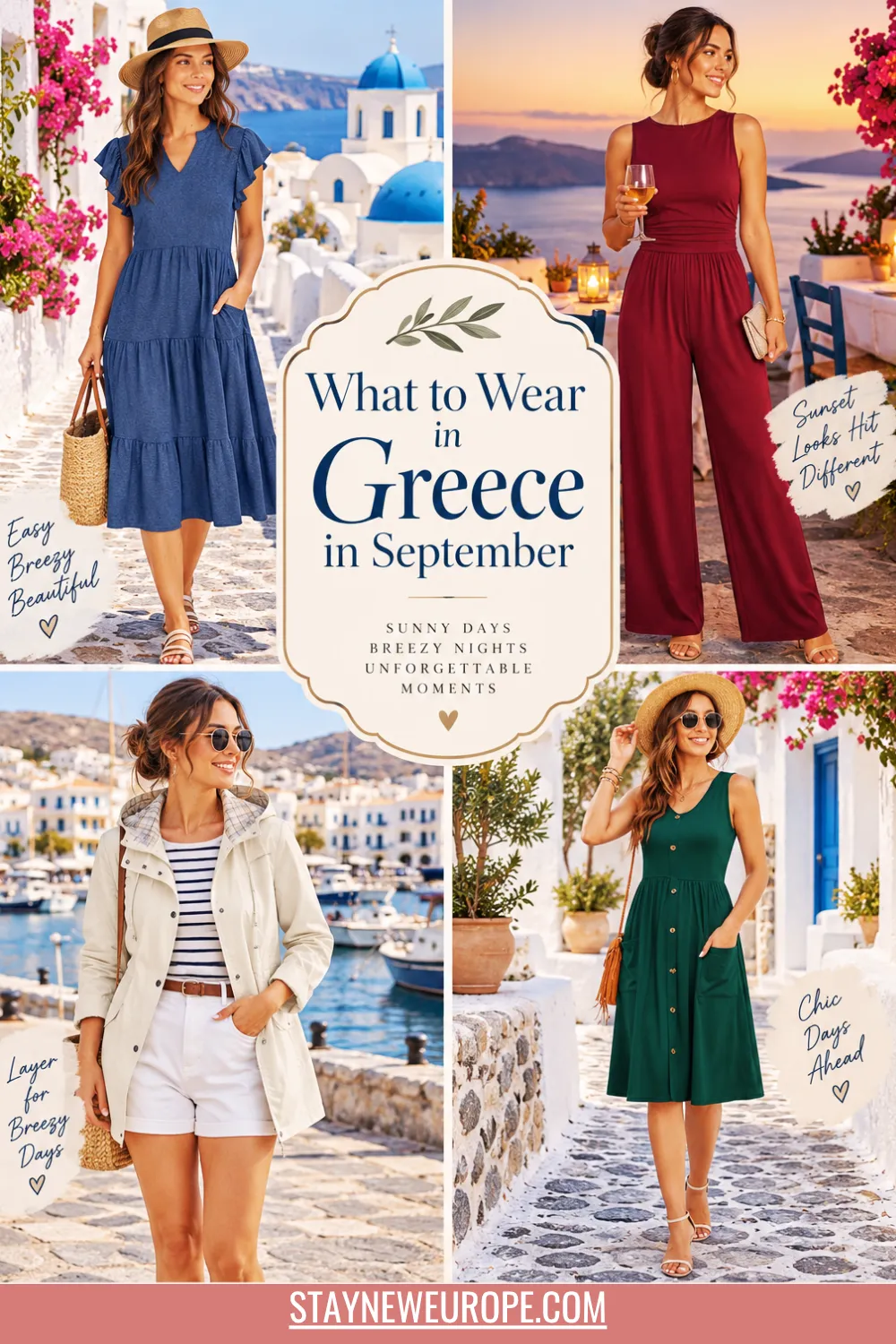
Let me be honest — I packed for Greece in September like I was still packing for August, and I paid for it. I landed in Athens in a heatwave, sweated through a linen dress by 10am, then froze on a ferry deck two days later because nobody warned me about the wind.
September in Greece is a trick. The days still feel like summer — warm stone, blinding light, that specific white-and-blue glare that makes you squint even with sunglasses on. But the season is turning underneath it, and if you’re not paying attention, it’ll catch you off guard somewhere between a sunset at the caldera and a gust of wind on a ferry.
This surprised me more than anything: the biggest packing mistake in Greece in September isn’t forgetting sunscreen or sandals. It’s assuming every day will feel identical. It won’t. Here’s what actually works, island to island, church to taverna.
Before We Dive In
September in Greece runs warm, especially in the first half. Athens and the islands typically sit around 26–29°C (79–84°F) in the day, dropping to a much gentler 18–21°C (64–70°F) once the sun goes down. By late September, especially up north or on higher islands like Naxos, that evening drop gets sharper. The sea is still genuinely warm from the summer months, so swimming stays very much on the table.
The other thing nobody mentions enough: wind. The meltemi, the strong seasonal wind that sweeps the Aegean, is often at its most persistent in September, particularly around the Cyclades — Mykonos, Paros, Santorini. It can turn a still, hot afternoon into a hair-whipping, dress-billowing situation within an hour. Pack accordingly.
Walking conditions vary a lot by destination. Athens has proper pavements but also plenty of uneven marble near the Acropolis, polished smooth by a few million pairs of feet. The islands are a different story — think steep whitewashed steps in Santorini, pebbled paths in Hydra (no cars, remember), and cobbled village lanes in Naxos or Crete that are gorgeous and genuinely ankle-testing in the wrong shoe.
And yes, Greeks dress well. Not fussy, not overdone — but there’s an effortless put-together quality, especially in the evenings, that separates locals from the flip-flops-and-sunburn crowd. You don’t need to overthink it, but a little intention goes a long way.
The Bag You Actually Bring
This trips people up more than any single outfit choice.
A hard-shell suitcase looks great in theory and becomes a nightmare the second you’re dragging it up Santorini’s cliffside steps or across Hydra’s stone paths (again — no vehicles there at all). If your trip includes more than one island, you’ll be hauling your bag on and off ferries, up gangways, and down narrow hotel staircases more times than you’d like.

A soft-structured duffle or a duffle-backpack hybrid is the better call for island-hopping. It squishes into awkward ferry storage, doesn’t have wheels to snap on cobblestones, and you can sling it over one shoulder while holding a ferry ticket, a coffee, and your dignity all at once.

For day trips, a foldable tote or a small crossbody does the heavy lifting — more on that below.
Local tip: If you’re doing Athens plus two or more islands, pack one soft weekender for the whole trip and skip the “beach bag plus suitcase” combo entirely. One bag, less stress, more room for the leather sandals you’ll inevitably buy in a market stall. If you want a wider rundown on getting bag choice right for any trip length, this carry-on packing guide is worth a read before you start folding anything.
Lightweight Layers (More Important Than You’d Think)
Here’s the thing about September heat in Greece: it’s real during the day and completely gone by 9pm.
I learned this the hard way on a rooftop in Athens, watching the sun drop behind the Acropolis in a sleeveless dress, absolutely thrilled with myself for about twenty minutes — and then absolutely miserable for the rest of dinner. The temperature swing from 4pm to 9pm can be ten degrees or more, and without a layer, that gap becomes your whole evening’s mood.

A lightweight linen shirt, a cotton overshirt, or a thin cardigan does the job without adding bulk to your bag. The key word is thin — you’re not packing for autumn in London, you’re packing for a warm evening that occasionally remembers it’s September.

Outfit combo: A linen slip dress during the day, linen button-down thrown over it as the sun starts to dip, sandals swapped for something slightly more closed at the toe once you’re walking cobblestones after dark.
Local tip: Locals lean on unstructured linen blazers in the evening — not for warmth exactly, more for that put-together look that separates “just got off the beach” from “having dinner in town.” One good linen jacket earns its space in your bag ten times over.
Dresses That Actually Match the Greek Island Vibe
Not every dress works here, and I say that as someone who brought a structured, fitted midi dress to Santorini and regretted it by lunchtime.

Greece — especially the islands — calls for movement. Flowy midi and maxi dresses in linen, cotton, or a lightweight viscose blend breathe properly and photograph beautifully against all that whitewash and blue. Structured fabrics cling in the heat and don’t forgive the wind the way looser silhouettes do.
Colour matters more than people expect too. White, obviously, works with the whole aesthetic, but it also shows sunscreen and dust fast. Terracotta, olive, dusty pink, and soft blues photograph just as well and hide a multitude of travel-day sins.

Situations this covers: a white cotton dress for morning café-hopping, a linen maxi for boat day into evening, a slightly more elevated wrap dress for a taverna dinner with a view.

Local tip: Skip anything with a fitted waistband for ferry days — you will be sitting, eating, and walking in the same outfit for hours, and comfort wins by 3pm every time.
Jeans, Trousers, or Shorts — What Actually Works
Jeans are the one thing I’d genuinely leave at home unless you’re heading somewhere cooler like Athens in the evening, or northern Greece.
For daytime island exploring, lightweight linen trousers or a good pair of tailored shorts handle the heat far better and still look intentional rather than “beach holiday off duty.” Wide-leg linen trousers in particular do double duty — cool enough for midday sun, smart enough for dinner with a simple top swap.

If you’re set on denim, a lightweight wide-leg or barrel-leg style in a lighter wash breathes better than skinny jeans and won’t have you sweating through a walking tour of the Acropolis.

Outfit combo: Linen wide-leg trousers, a fitted tank, sandals for daytime; swap the tank for a linen shirt and add a gold hoop for evening.
Local tip: Bring one pair of proper trousers for Athens specifically — the city has a slightly more polished, urban energy than the islands, and jeans or tailored linen trousers fit that mood better than beach shorts.
Comfortable but Stylish Walking Shoes
This is where I see people get caught out the most, and it’s almost always the same mistake: new sandals, broken in on the plane.
Santorini’s steps, Naxos’s cobbled old town, and even parts of central Athens are not forgiving on flimsy soles or brand-new leather straps. You want shoes that already know your feet before you land.

A pair of cushioned leather sandals with some ankle support handles 80% of your trip — markets, tavernas, ferry terminals, casual walking tours.

For anything involving genuine hiking (Samaria Gorge in Crete, hilltop ruins, longer coastal walks), a proper closed trainer earns its space, even if it feels unglamorous next to your linen dresses.

Local tip: Save the delicate strappy sandals for dinner only. Locals wear them for exactly that — a short walk from home to taverna — not for six hours of sightseeing on marble and cobblestone.
What NOT to Wear (The Tourist Mistakes)
A few honest ones, learned mostly through embarrassment.
Brand-new white trainers are a losing battle against dust, ferry decks, and beach sand — they’ll look grey by day three. Overly structured, non-breathable synthetic fabrics turn miserable fast in September’s still-strong midday sun. And very short shorts or bare shoulders, while completely fine on the beach, will get you turned away at churches and monasteries — more on that next.
The other one: heels on cobblestones. I watched someone twist an ankle on Mykonos’s back streets in gorgeous block heels, and it ended their evening early. Beautiful shoes, wrong terrain.
Jackets for Unpredictable Weather
You don’t need a proper coat, but you do need something for wind and the occasional early-autumn shower, which becomes more likely as September wears on.

A packable windbreaker or a lightweight denim jacket covers both. The meltemi wind on ferry decks is genuinely strong enough to make a bare-armed outfit uncomfortable, and a sudden shower — while rare early in the month — becomes more plausible by late September.

Local tip: Keep the jacket in your daybag rather than your suitcase. Wind on a ferry can turn a calm morning into a “why didn’t I bring a layer” situation within twenty minutes of leaving port.
Evening Outfits in Greece
This is where Greek islands quietly step up their game. Sunset dinners overlooking the caldera or a harbourside taverna call for a bit more than daytime beach-casual.
A linen jumpsuit, a flowy midi dress with delicate gold jewellery, or tailored linen trousers with a silk-blend top all hit the right note — elevated without being uncomfortable in the lingering warmth. Men can lean on a linen shirt (untucked, sleeves rolled) with tailored shorts or lightweight trousers.

Situation: Watching the sunset in Oia calls for something that photographs well but still lets you sit comfortably on stone steps for half an hour waiting for the sky to do its thing — a flowy dress or jumpsuit wins over anything tight or structured.

Local tip: A single striking accessory — a good pair of earrings, a woven belt, a silk scarf tied on a bag — does more for an evening look here than a full outfit change. Greeks favour understated elegance over head-to-toe dressing up.
What to Wear for Churches and Monasteries
Dress codes here are taken seriously, and it’s worth knowing before you’re standing at the entrance being handed a wrap by an unimpressed attendant.
Shoulders and knees should be covered for both men and women — this applies at major sites like the Monastery of Panagia in Santorini or Meteora’s clifftop monasteries just as much as smaller village churches. Women are sometimes asked to cover their heads at more traditional sites, though this varies.

The easiest fix is packing one lightweight scarf that does triple duty: shoulder cover, head cover, and an emergency layer against wind on a ferry deck.

Local tip: Many well-visited monasteries keep wraps at the entrance for exactly this reason, but they’re often thin, oversized, and not exactly stylish — bringing your own scarf means you’re not photographed in a monastery-issue sarong.
Bags: Crossbody vs Backpack
Crossbody bags win for most days in Greece. Cobbled streets, boat boarding, and crowded markets all favour something that sits close to your body and leaves both hands free for a coffee and a map.

A small structured crossbody or a woven straw bag with a zip closure covers daytime sightseeing comfortably. For beach days or longer excursions — think a day trip to Delos from Mykonos, or hiking near Samaria Gorge — a lightweight backpack carries water, sunscreen, and a spare layer without straining one shoulder.

Local tip: Avoid anything with long, loose straps for ferry travel — the meltemi wind loves to catch a dangling bag strap at exactly the wrong moment as you’re stepping across a gangway.
Accessories That Elevate Simple Outfits
A well-chosen accessory does more heavy lifting in Greece’s heat than another outfit change ever could.
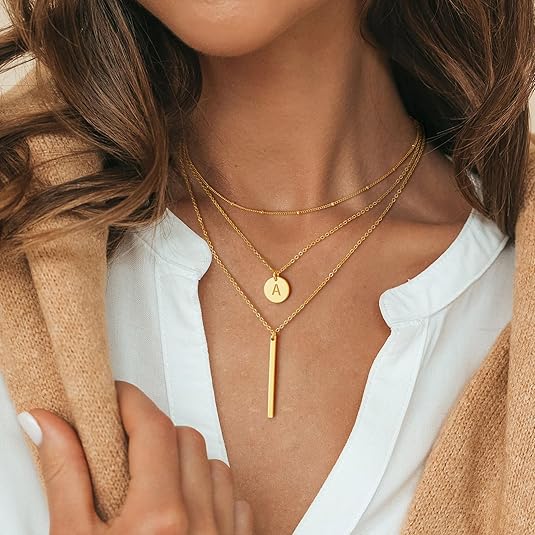
Gold jewellery — hoops, a simple pendant, a stack of thin bracelets — plays beautifully against tanned skin and white linen.
A wide-brim straw hat isn’t just an aesthetic choice either; September sun is still strong enough at midday to need real shade, not just sunglasses.

A woven belt cinches a loose linen dress into something more shaped for evening without changing the whole outfit.

Local tip: Leather sandals with a little gold or metallic detail bridge daytime and evening in one shoe, saving you a full pair of packing space.
Rain Preparation (Yes, Really)
It’s easy to assume Greece in September is rain-free, and for the first half of the month, it mostly is. But by late September, especially in Athens and northern regions, the odd short, sharp shower does happen — usually brief, sometimes dramatic.

A small packable rain jacket or a compact umbrella takes up almost no space and saves an outfit from disaster if timing goes wrong. It’s not worth building your wardrobe around, but it’s worth having in the bottom of your bag just in case.

Fabrics to Choose (and Avoid)
Linen and breathable cotton are your best friends here — they handle heat, they pack down small, and they photograph well even slightly wrinkled (arguably linen’s whole personality). A cotton-linen blend gives you a bit more structure without sacrificing breathability.
Avoid heavy synthetic blends, thick denim in daytime heat, and anything that doesn’t breathe — polyester in particular clings and traps heat in a way that turns an afternoon walk into an endurance event.
Local tip: Pack one silk or silk-blend piece for evenings only — it doesn’t crease as easily as it seems like it would, and it elevates a simple outfit instantly for dinner without adding weight to your bag.
A Simple Capsule Wardrobe for Greece in September
If you’re trying to pack light without missing anything, a loose capsule works better than trying to plan outfit-by-outfit.
Aim for three to four dresses in breathable fabric, one pair of linen trousers, one pair of tailored shorts, two to three tops that mix and match with the trousers and shorts, one light layer (cardigan or shirt), one packable jacket, and a scarf that covers church visits and chilly ferry decks alike. Round it out with two shoe options — sandals and something more closed for hiking or cobblestones — and you’ve got a wardrobe that covers beach, city, church, and dinner without a single wasted piece.
If you want a broader look at building this kind of flexible, mix-and-match wardrobe before you even start folding, this capsule wardrobe guide for summer travel is a genuinely useful starting point.
Practical Packing: How Much Is Actually Enough
For a week to ten days in Greece, five to six outfit combinations genuinely cover you — the trick is picking pieces that mix rather than packing a fixed outfit per day. Two swimsuits (one is always drying while the other’s in use), one evening-specific outfit or two, and the capsule pieces above will take you further than a suitcase stuffed with single-use outfits.

Overpacking is the mistake almost everyone makes once, myself included — I brought eleven tops for a nine-day trip once and wore four of them. Plan for repeats. Nobody on a Greek island is tracking your outfit changes, and a linen dress worn twice with different accessories reads as intentional, not lazy.
If you’re hopping between islands, roll rather than fold where you can — it saves space and cuts down on the wrinkles that heat and humidity tend to set into fabric anyway. For a proper side-by-side on which method actually works better for a trip like this, this piece on rolling versus folding for suitcase packing settles the debate pretty clearly. And if Athens is your starting point before island-hopping, it’s worth a quick look at what to wear in Italy in September too if your trip stretches into a second country — the layering logic carries over almost exactly.

Before You Go
Greece in September rewards a little planning and forgives almost everything else. You’ll get golden light without August’s crowds, warm sea without the peak-season chaos, and evenings just cool enough to make a linen layer feel like a small luxury rather than a necessity you forgot.
Pack light, pack breathable, bring one scarf that does more than you’d expect, and leave room in your bag for whatever you inevitably buy in a market on Naxos or a boutique in Athens. The best outfit for Greece in September is the one that lets you actually enjoy the place — sit on a step in Oia, walk the cobblestones without wincing, and still look like you meant to dress that well.
You’ll figure the rest out the moment you feel that first warm gust of Aegean air.

