
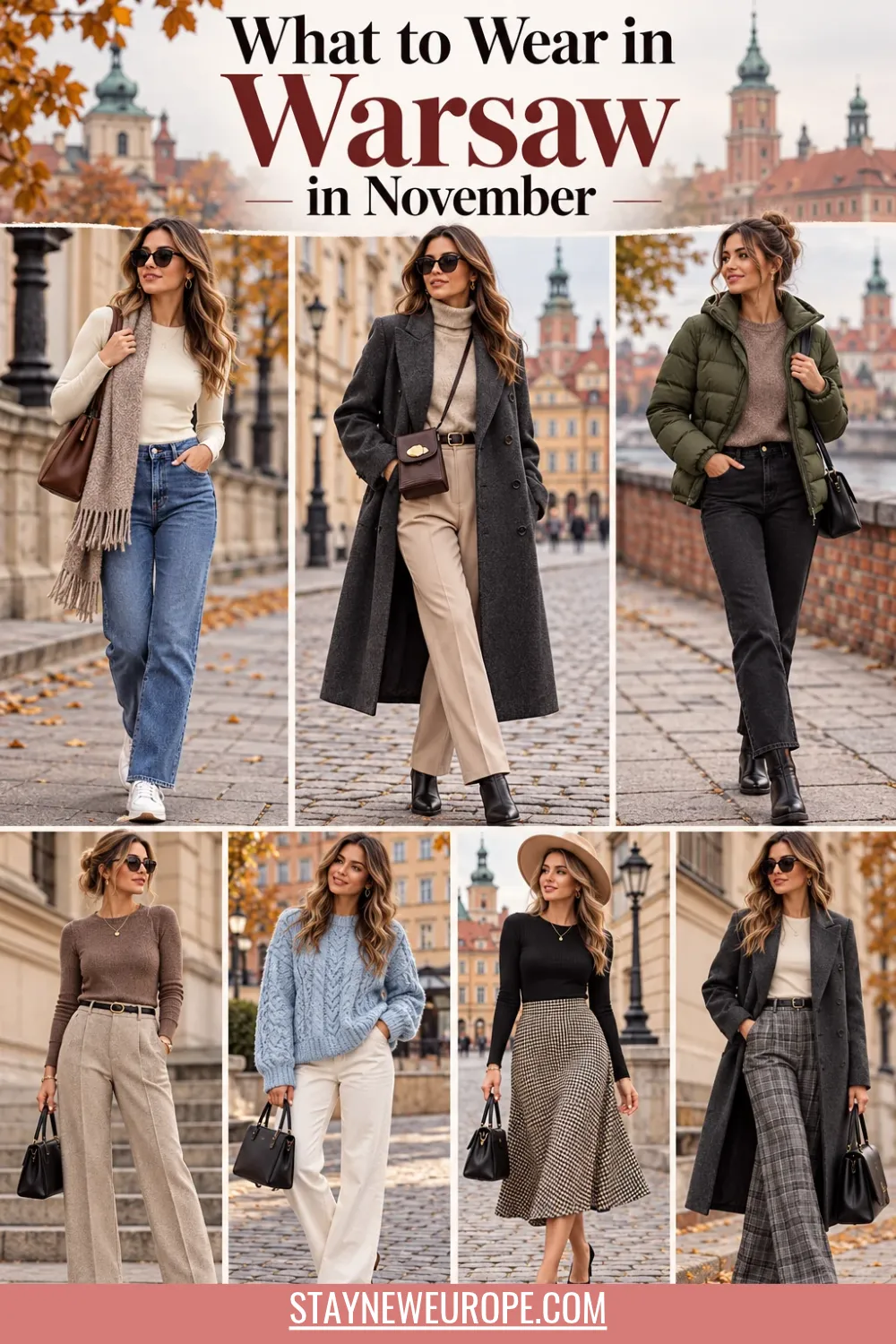
Warsaw in November is a mood. The sky turns the colour of wet concrete, the sun clocks out around four, and the whole city smells faintly of roasted chestnuts and tram brakes. Then, just when you’ve decided it’s grim, the Old Town lights come on, a café window fogs up, and you realise you’ve never felt cosier.
It’s also a city that walks. Cobbled lanes, long avenues, tram stops where you’ll stand in the wind for six minutes that feel like sixty. Locals glide through it in dark, sharp, properly warm layers. Tourists? Usually in a thin jacket and white trainers, looking betrayed by the weather forecast.
I got it wrong my first time. Let me save you the numb toes and the panic-buying of a scarf at a souvenir stall.
Before We Dive In
A few quick facts so the rest of this makes sense.
Weather: Expect highs around 3–7°C (37–45°F) and lows near or just below freezing, getting colder as the month goes on. Early November can be soft and golden; late November can bring sleet or a first dusting of snow. It’s grey more often than not.
Rain and damp: Drizzle is common rather than dramatic. It’s the damp, penetrating cold that gets you, not a downpour.
Daylight: The sun sets around 4 p.m. by the end of the month. Plan outfits for dark, colder evenings.
Walking conditions: Old Town is cobbled and uneven, and wet leaves on pavements get slippery fast. You’ll easily log 15,000 steps a day without trying.
Style culture: Warsaw dresses well, quietly. Think dark colours, good coats, clean boots. Nobody’s judging you, but you’ll feel better when you blend in.
Indoors: Trams, shops, museums and restaurants are heated, often a lot. That’s why layers matter so much.
Heading elsewhere in Europe? Check out our other monthly packing guides, like INSERT INTERNAL LINK: another “what to wear” guide from the sitemap, so you’re covered for every stop.
Start With the Right Bag
Here’s my honest take: bring a carry-on-sized bag and stop trying to pack for every possible scenario. Winter clothes are bulky, and you’ll resent hauling a giant suitcase over Old Town’s cobbles.
A soft-sided 40–45 L carry-on holdall or a small wheeled cabin case with big wheels is ideal. Big wheels matter more than you’d think, because tiny hard-plastic ones rattle and jam on cobblestones.

If you’re travelling light and doing a long weekend, a weekender duffle with a shoulder strap works well too. Pair it with a packing cube set to compress knitwear.
Local tip: Wear your bulkiest items (coat, boots, chunky knit) on the plane. It frees up a surprising amount of space and keeps you warm on the walk from the airport train.
Layers Are Everything (Not Just a Cliché)
Warsaw in November is an outdoor/indoor sandwich. You’ll be freezing at a tram stop, then boiling five minutes later inside a heated mall or museum. One thick sweater won’t cut it.
My formula is simple: a thin base layer, a mid-layer such as a fine-knit sweater or fleece, and a proper outer coat. Peel off as needed, stash in your bag, repeat. The best part is that this system works whether it’s 7°C or minus 2°C.

A morning in Łazienki Park might call for all three layers, while a heated museum afternoon means you’re down to your base and mid-layer. Don’t skimp on the base.
Local tip: If your trip includes the Warsaw Uprising Museum or the POLIN Museum, wear easy-to-remove layers. Cloakrooms are the norm, and you’ll be glad you’re not wrestling five items off in a queue.
The Warsaw Dress Code (What Actually Works)
Poles generally lean smart-casual and neutral. You’ll see lots of black, charcoal, navy, camel, olive and cream. Loud logos and neon sportswear are rare outside of gyms.
This doesn’t mean you need to dress up. It means a clean, put-together casual look works anywhere: dark jeans, a fine knit, a wool coat, leather boots. Done.
I noticed on my first evening in Powiśle that nearly everyone looked effortlessly coordinated, and I was the only one in a bright blue puffer. Lesson learned. Stick to a muted palette and add one accent, like a scarf or beanie.
Local tip: Warsaw is more relaxed than Paris or Milan, so you won’t be turned away anywhere for being casual. Just keep it neat.
What NOT to Wear (Tourist Mistakes I’ve Seen, and Made)
Let me be blunt: canvas trainers, ripped jeans with bare ankles, and a single lightweight hoodie are the holy trinity of a miserable Warsaw November.
Also skip anything that’s only water-resistant when you need waterproof, since damp seeps through fast. Skip heels on cobbles unless you enjoy ankle drama. And leave your summer-weight scarf at home; thin cotton does nothing against wind off the Vistula.
I once wore my beloved suede sneakers on a drizzly day. They looked tragic by lunchtime, and my socks were soaked by 2 p.m. Never again.
Local tip: If it looks like a spring outfit, it isn’t November-proof. Add a layer or swap the shoes.
The Coat: Your Most Important Purchase
If there’s one place to spend money, it’s here. A coat that’s warm enough makes everything else easier.
A long wool-blend coat in black, camel or grey is the Warsaw classic. It looks sharp at dinner, handles wind, and goes with everything. Look for something that covers your hips, ideally with a lining.

For a more casual or travel-friendly option, a mid-weight down or synthetic puffer that sits at hip or thigh length is brilliant, especially in late November when the temperature drops. Choose a muted colour (black, navy, olive) and you’ll blend right in.

If you tend to run cold, pick a coat with a hood. A hooded coat is a quiet lifesaver in sleet.
Local tip: Hip-length jackets may be fine at 7°C, but if you’re visiting late in the month, aim for thigh-length.
Trousers and Jeans: Keep Your Legs Happy
Shorts are obviously out. Thin leggings under a dress are borderline. What you want is something with a bit of weight.
Dark, mid-weight jeans are the easy answer. They’re comfortable for all-day walking, look right everywhere, and hide wet-pavement splashes. Straight or relaxed fit lets you wear thermal leggings underneath on bitter days.

Wool-blend or lined trousers are worth considering if you want to look a bit sharper at dinner. They’re warm, they don’t cling when damp, and they feel quietly stylish.

Local tip: Avoid very light colours on your lower half. Warsaw’s wet streets will splatter anything pale.
Tops, Knits and Skirt-Friendly Outfits for Women
If you love dresses and skirts, you absolutely can wear them. You just need a strategy.
A fine merino sweater is the hero here. It’s warm, thin enough to layer, and doesn’t get that sweaty smell after a day on the tram. Pair one with a midi skirt, thick tights and ankle boots, and you’re set for lunch in Nowy Świat.

A chunky knit works for lazy exploring days, especially over a long-sleeved tee. A silk or satin blouse can add a touch of polish for evenings, layered under a blazer or cardigan.

For skirts: choose midi or maxi, ideally lined or in wool-blend. Pair with fleece-lined or opaque thermal tights, which are far better than sheer ones in the cold.

Local tip: Tights in black, charcoal or deep burgundy look very Warsaw. Skip anything sheer or patterned.
Shoes: The Make-or-Break Decision
Shoes will decide whether you love or loathe this trip. Cobbles, puddles and long walking days demand something sturdier than fashion sneakers.
My top pick is a waterproof leather ankle boot with a grippy sole. Chelsea boots, lace-ups and low hikers all work, as long as they’re broken in. Never debut new boots in a city where you’re walking 15,000 steps a day.

A second pair is smart if you have room. Dark leather sneakers with a decent sole are fine for dry days and dinners, while the boots take wet-weather duty.

Rain boots are rarely needed unless forecasts look seriously soggy, but do waterproof-spray your leather before you go.
Local tip: Check the sole grip. Wet cobblestones and smooth leather soles are a bad combination.
Socks, Thermals and the Unsexy Stuff That Saves You
Nobody posts a photo of their thermal underlayer, but it’s the reason I could stand outside the Royal Castle at dusk without whimpering.
Merino wool socks are worth every penny. They keep your feet warm even when slightly damp, and they don’t smell after two days of walking. Bring three or four pairs and rotate.

Thermal base layers, like a thin long-sleeve top and leggings, take up almost no luggage space and make a huge difference on the coldest days. Uniqlo’s Heattech range is widely available in Warsaw if you forget yours.

Local tip: Cold feet ruin days faster than anything else. Pack one extra pair of socks in your day bag.
Accessories That Do Real Work
This is where you can add personality. A scarf, hat and gloves are non-negotiable in November, so you may as well enjoy them.
A big wool or cashmere-blend scarf doubles as a neck-warmer, a blanket on cold trams and a style statement. Go for a rich colour like mustard, forest green or burgundy against a dark coat.

A beanie or knit hat protects your ears from wind. Choose a plain colour and avoid anything too sporty.
Gloves should be warm but thin enough to handle your phone. Touchscreen-friendly leather or wool-blend pairs are perfect.
Local tip: Warsaw wind tunnels between buildings. A scarf you can wrap twice beats a thin fashion scarf every time.
Evening Outfits That Don’t Scream “Tourist”
Dinner in Warsaw is a pleasure, from cosy pierogi spots to polished restaurants in Śródmieście. The good news is you don’t need much more than your daytime outfit with a few swaps.
For women: dark trousers or a midi skirt, a silky top or fine knit, ankle boots and a statement earring. For men: dark jeans or chinos, a crisp shirt under a merino sweater, and clean boots. Add a good coat and you’re done.

Black, navy, deep green and burgundy always look elegant. Add one metallic or textured piece, like a belt or jewellery, and you’ll look polished without trying.
Local tip: Many restaurants have cloakrooms, so don’t be afraid to bring a proper coat. Just keep your valuables with you.
What to Wear for Churches and Cemeteries
Warsaw has some beautiful churches, including St. John’s Archcathedral, the Church of the Holy Cross and St. Anne’s. Dress codes are modest rather than strict: covered shoulders and knees are the safe rule.
In November you’ll likely be covered up anyway, but keep a scarf handy for a quick cover if you’re wearing something sleeveless indoors.
There’s also a bigger reason to dress thoughtfully this month. All Saints’ Day (1 November) is a deeply significant occasion in Poland, when families visit cemeteries and light thousands of candles. If you go to Powązki, dress quietly, speak softly and keep photos respectful.
Local tip: Public holidays like 1 November and 11 November (Independence Day) can mean closed shops and crowds, so plan outfits and itineraries accordingly.
Bags: Crossbody Beats Backpack
In a city with trams, crowds and cobbles, a crossbody bag is my favourite day-to-day option. It’s secure, easy to reach and keeps your hands free for gloves and phone.
Choose a leather or weather-resistant crossbody with a zip closure. Big enough for a water bottle, gloves, tissues and your phone charger, but not so big that it sags.

A small backpack is fine if you’re doing a day trip or carrying camera gear, but it’s bulky on trams and over a thick winter coat. Keep it slim if you go this route.
Local tip: Warsaw is generally safe, but crowded trams are a pickpocket opportunity anywhere. Wear your bag in front.
Rain, Sleet and Snow Prep
Don’t assume it’s all rain. November can throw drizzle, sleet and the occasional flurry at you in a single afternoon.
A compact travel umbrella is useful, though wind can wreck cheap ones. A hooded waterproof layer or a coat with a good hood is more reliable.
A waterproofing spray for boots and leather bags is cheap, light, and takes ten minutes before your flight. Do it. Future you will be grateful.
Local tip: Warsaw pavements can get icy by late November, especially in the early morning. Choose shoes with real tread and walk with small steps, like a penguin. I did, and I stayed upright.
Fabrics to Choose (and Avoid)
Think natural fibres and tight weaves. Wool, merino, cashmere blends and down are your friends. They trap heat and cope with the temperature swings between indoors and outdoors.
Avoid thin cotton, linen and loose-knit fashion sweaters with big holes where wind loves to slip through. Cheap polyester can feel clammy in heated trams, so choose blends carefully.
Local tip: If you can see light through the fabric, it won’t keep out a Warsaw wind.
Packing List (Non-Clothing)
A few extras make a big difference.
A portable power bank is essential, since cold drains batteries faster. A small, refillable water bottle and a lip balm save you from dry, heated-room misery. Hand cream helps too.
Bring a universal EU adapter (Poland uses Type C and E plugs) and a compact day pack or tote for souvenirs. Pack a few plasters in case your boots rub.
Local tip: Żabka convenience stores are everywhere, so you can top up on tissues, snacks and basics without searching for a pharmacy.
A Capsule Wardrobe for Warsaw in November
If you like a clear plan, here’s the one I’d follow for a 4 to 5 day trip.
Take one wool-blend or puffer coat, two pairs of dark jeans or trousers, three or four tops (two fine knits, one chunkier sweater, one blouse or shirt), one cardigan or blazer, two long-sleeve base layers, one skirt or dress if you like, and tights or thermal leggings.
Add one pair of waterproof boots, one pair of sneakers or flat shoes, four to five pairs of socks, a scarf, a hat and gloves. Everything should mix and match in a palette of black, navy, grey, camel and one accent colour.
Local tip: Lay out your outfits before packing. If an item only works with one other piece, leave it behind.
Practical Packing: How Much Is Enough?
How many outfits: Plan for 4–5 day outfits plus one smart evening look. Re-wearing jeans and coats is completely normal.
Packing light vs overpacking: Winter clothes take up space, so favour pieces that layer and repeat. Hotels and apartments often have laundry access nearby, and a quick wash is easier than lugging more.
Outfit planning tips: Build around a colour palette, check the forecast three days before, and pack your coat and boots to wear on travel day.
Mistakes to avoid: Overpacking shoes, bringing only one warm layer, forgetting gloves and underestimating how early it gets dark.
FAQs About Packing for Warsaw in November
Is Warsaw very cold in November? It’s chilly rather than extreme. Expect around freezing to 7°C, with dampness and wind making it feel colder.
Will it snow in Warsaw in November? Possibly, especially late in the month, though it often melts quickly. Be prepared for sleet and slush.
Do I need a heavy winter coat? A warm wool coat or mid-weight puffer is usually enough, paired with layers underneath. For very late November, go heavier.
Can I wear sneakers? Only if they’re water-resistant and have good grip. Waterproof boots are the safer choice.
What colours do locals wear? Mostly neutrals: black, grey, navy, camel and olive, often with a splash of colour in accessories.
Is it dressy at restaurants? Smart-casual is fine almost everywhere. Dark jeans, a nice knit and boots work well.
One Last Thing Before You Zip That Bag
Warsaw in November isn’t postcard-pretty in the sunny, bright way. It’s better. It’s steamy café windows, candlelit courtyards, hot chocolate so thick you could stand a spoon in it, and golden lamps glowing on cobbled streets at 4:30 p.m.
Pack warm, pack sensible, add a scarf you love, and let the city surprise you. You’ll be walking those streets in a coat you feel great in, boots that keep your feet happy, and a smile that says you’ve got this. Go and enjoy every foggy, glowing minute.

