
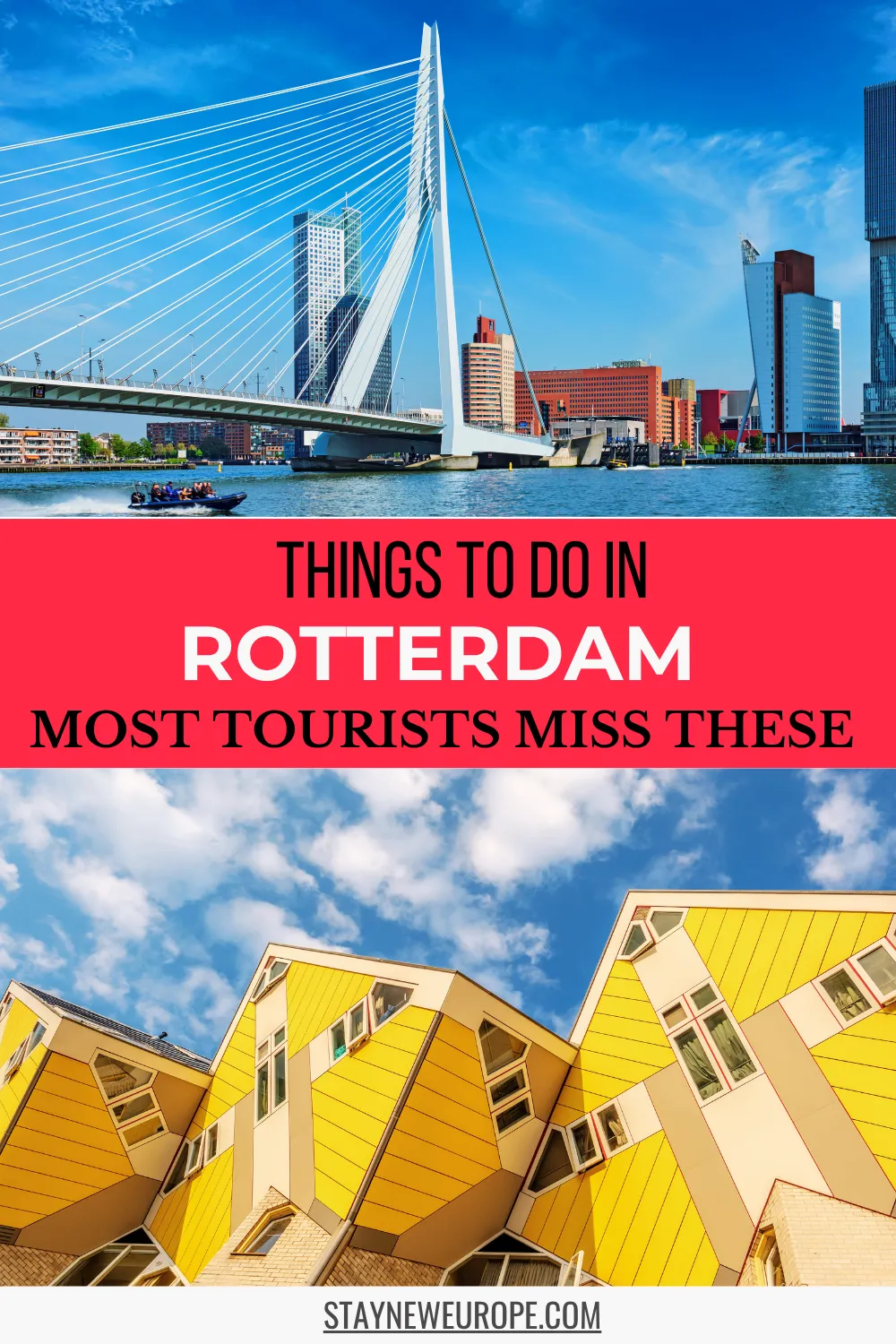
There’s a version of a Netherlands trip that goes: fly into Amsterdam, walk the canals, spot a tulip, head home. It’s a perfectly fine trip. But if you want to understand what the Netherlands is actually capable of — the ambition, the creativity, the sheer refusal to accept limitations — Rotterdam is where you need to be.
This city was bombed almost entirely flat during the Second World War. Rather than rebuild what was lost, Rotterdam did something audacious. It built something completely new. What exists today is one of the most architecturally striking cities in Europe: a port skyline full of towers that look like they were designed on a different planet, a food market the size of a cathedral, cube houses stacked like a fever dream, and a street art scene that would make Shoreditch feel self-conscious.
I came here for a weekend and stayed for a week. This guide is everything I think you shouldn’t miss — from the obvious icons to the spots that most visitors never stumble onto.
Rotterdam: More Than a Second City
Let me give you a bit of context before we dive in, because understanding Rotterdam’s story makes everything you see here land differently. In May 1940, German bombers reduced the city centre to rubble in a single afternoon. The attack killed over 800 people and destroyed almost every historic building in the heart of the city. What the Germans didn’t realise was that they had also, entirely by accident, handed Rotterdam architects a blank canvas unlike anything in Europe.
The rebuilding was radical. Where other Dutch cities preserved and restored, Rotterdam innovated. The city became a kind of open-air testing ground for every ambitious architectural movement of the 20th century — brutalism, deconstructivism, postmodernism, high-tech modernism — and the results are genuinely unlike anywhere else on the continent. You don’t come here for golden-age Dutch gables. You come here for buildings that look like they were designed by someone who thought the rules were optional.
Rotterdam is also the largest port in Europe, a fact that still shapes the city’s personality. This is a working city, a blue-collar city historically, and that industrial heritage gives it an edge and an authenticity that visitors often find more compelling than the well-polished charm of Amsterdam. If you’re already planning a Netherlands trip and wondering whether to split your time, our full guide to the 11 best places in the Netherlands to visit gives you the bigger picture — but let me be honest, Rotterdam will probably steal the show.
Rotterdam suits people who love architecture, food, street art, nightlife, and cities that haven’t been sanded smooth for tourists. It’s not a city of Instagram-perfect canals and slow afternoon light. It’s a city that surprises you, challenges you, and makes you feel like you’ve actually discovered something. Now let’s get into it.
1. The Markthal: The Most Spectacular Indoor Market in Europe
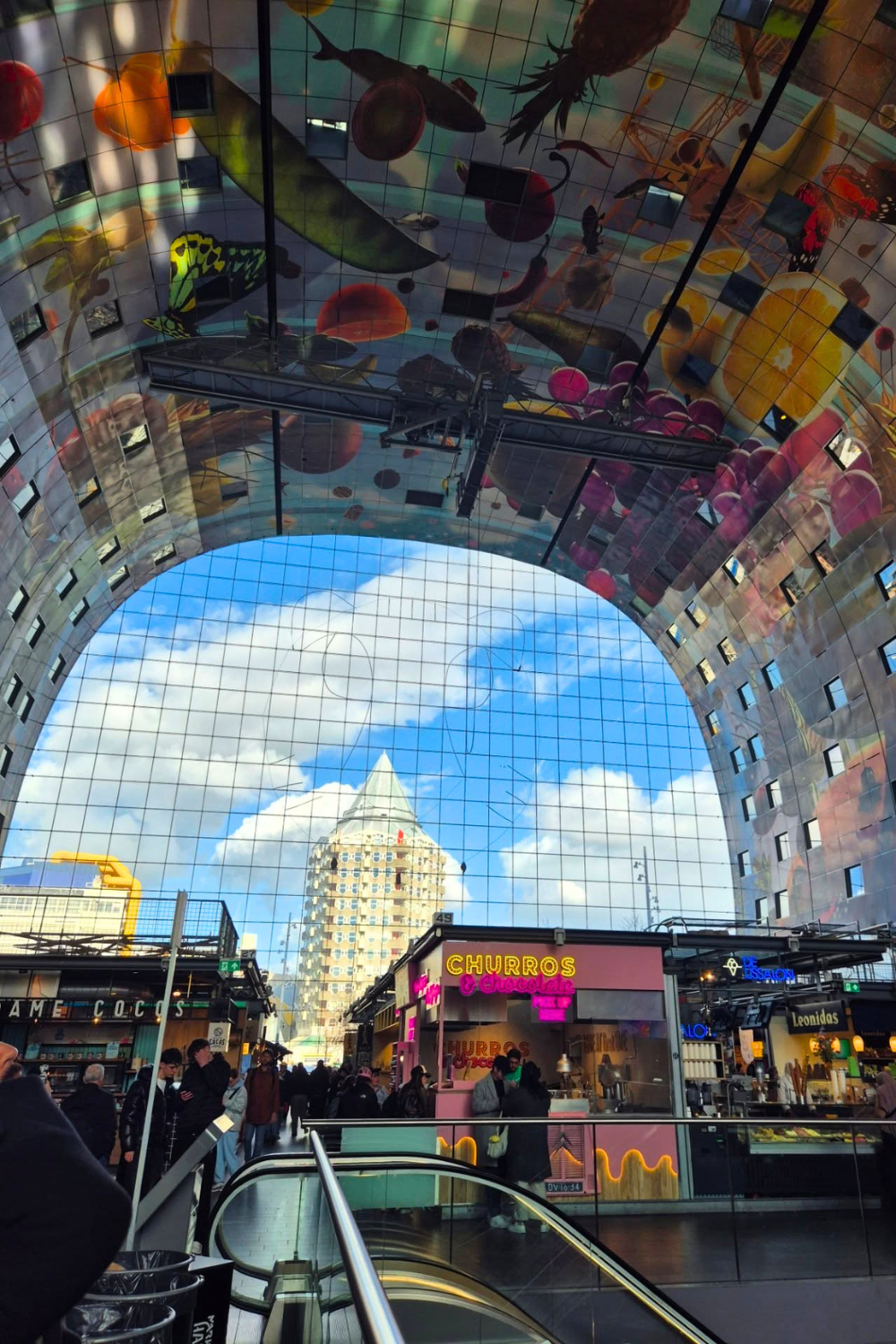
I know that’s a bold claim, but I’m standing by it. The Markthal opened in 2014 and immediately became one of the most photographed buildings in the Netherlands — and once you’ve seen it in person, you understand exactly why.
The building itself is a horseshoe-shaped residential block with a hollow centre, and the hollow is the market. The interior ceiling is entirely covered in a mural called “Hoorn des Overvloeds” — Horn of Plenty — painted by artists Arno Coenen and Iris Roos. It stretches 11,000 square metres across the arched vault and depicts enormous, hyper-coloured fruit, vegetables, insects, and flowers in a style that sits somewhere between Renaissance fresco and pop art. The first time you walk through the entrance and look up, your jaw does a thing it doesn’t usually do in indoor markets.
Below that extraordinary ceiling, around 100 food stalls sell everything from Dutch cheeses and fresh stroopwafels to Turkish baklava and Japanese street food. The quality is genuinely high. Don’t skip the raw herring at one of the fish stalls — the Dutch take their haring seriously, and a fresh one with pickled onion is the most local thing you can eat standing up. The stalls along the sides tend to be a little less crowded and just as good; most first-timers congregate in the middle, which means you can often get served faster at the edges.
The building also contains a supermarket in the basement, which might sound like a mundane detail but is actually the most civilised Albert Heijn I’ve ever been inside. The residential apartments built into the arch above the market are fully glazed, meaning residents have a direct view down into the food stalls below. Yes, you can wave at them while you eat your stroopwafel.
Local tip: Go on a weekday morning, ideally before 11am. The weekend crowd is intense, and the experience of eating underneath that ceiling is infinitely better when you can actually move. Wednesday mornings are particularly quiet and the fresh bread stalls are fully stocked.
2. Cube Houses (Kubuswoningen)
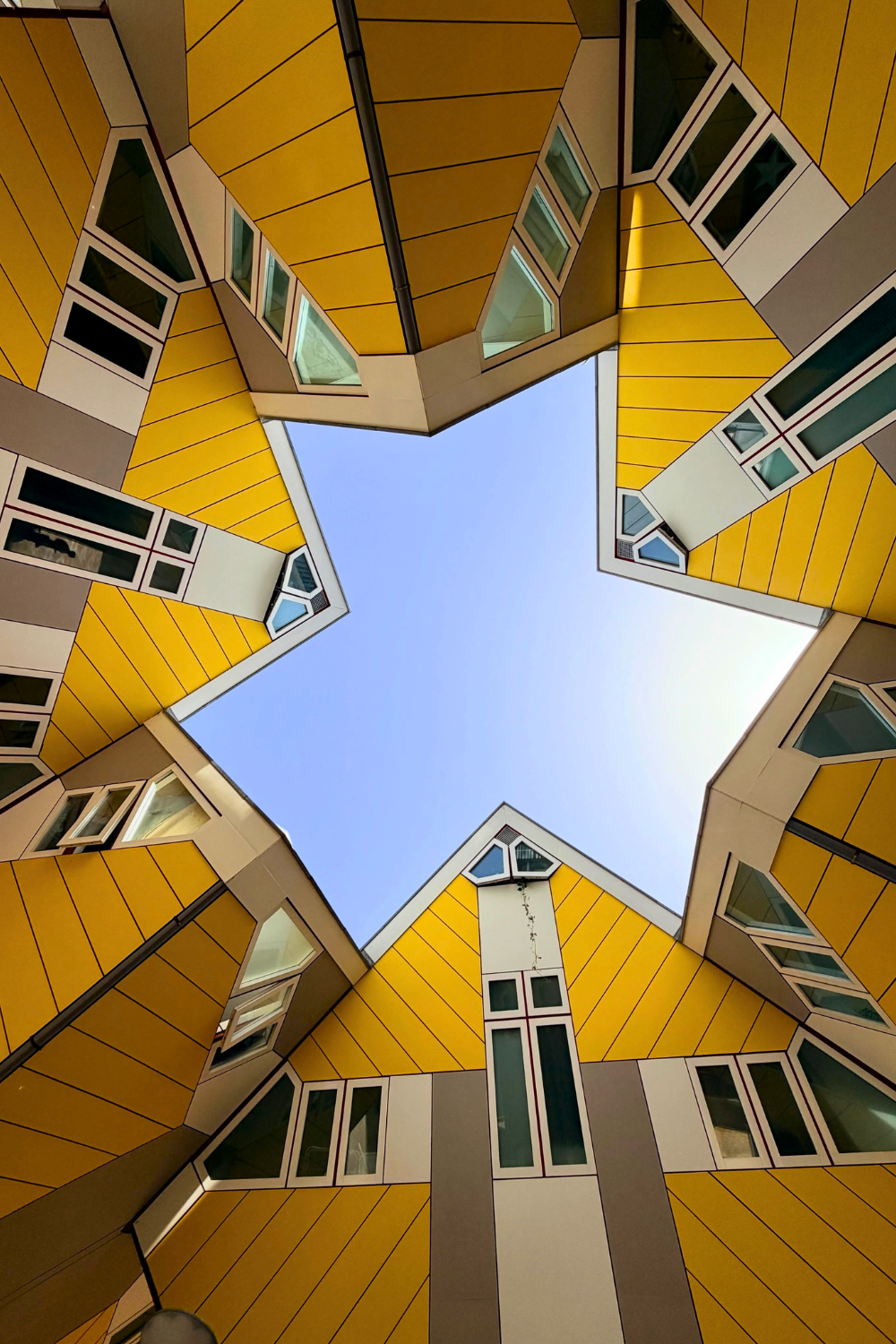
Right next to the Markthal, the Cube Houses are one of those things that you’ve probably seen in photos and assumed were slightly exaggerated. They’re not. They look exactly as strange in person.
Designed by architect Piet Blom and completed in 1984, the houses are cubes tilted at a 45-degree angle and perched on hexagonal pylons. Each one represents an abstract tree, and together they form a “forest” of houses above a pedestrian street. From a distance they look like an Escher drawing someone decided to build in real life. Up close, the yellow paint and geometric windows make them look like enormous novelty dice that someone has arranged with exaggerated care.
You can actually go inside one, which I’d recommend doing at least briefly. The Show Cube — Kijk-Kubus — is open to visitors and gives you a proper sense of what it’s like to live in a tilted cube. The answer, predictably, is that it’s quite odd. The sloping walls mean you lose a significant chunk of floor space to unusable angles, and I spent a good five minutes standing in the corner of one room trying to work out where a normal person would put a sofa. The views from the upper level are excellent though.
Some of the other cubes are privately rented, and there’s also a small hostel in the complex if you fancy waking up every morning in an architectural landmark. It’s called Stayokay Rotterdam, and the rooms are just as geometrically unusual as you’d hope.
Local tip: Walk the full length of the bridge that runs alongside the Cube Houses — the Oude Haven — at around dusk. The orange cubes reflected in the water with the modern skyline behind them is one of the best photographs you’ll take in Rotterdam, and almost no one seems to position themselves correctly for it.
3. Erasmusbrug (Erasmus Bridge)
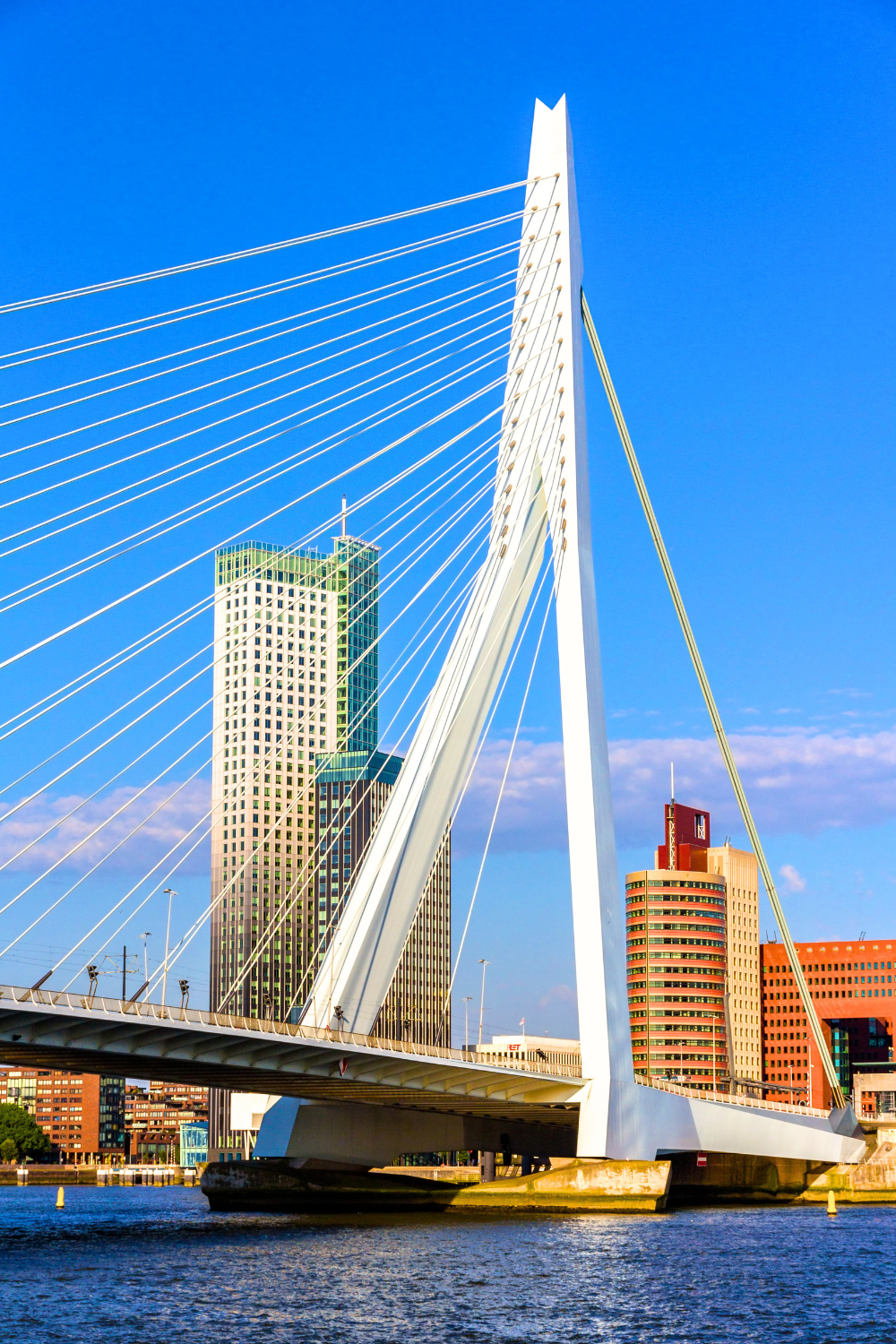
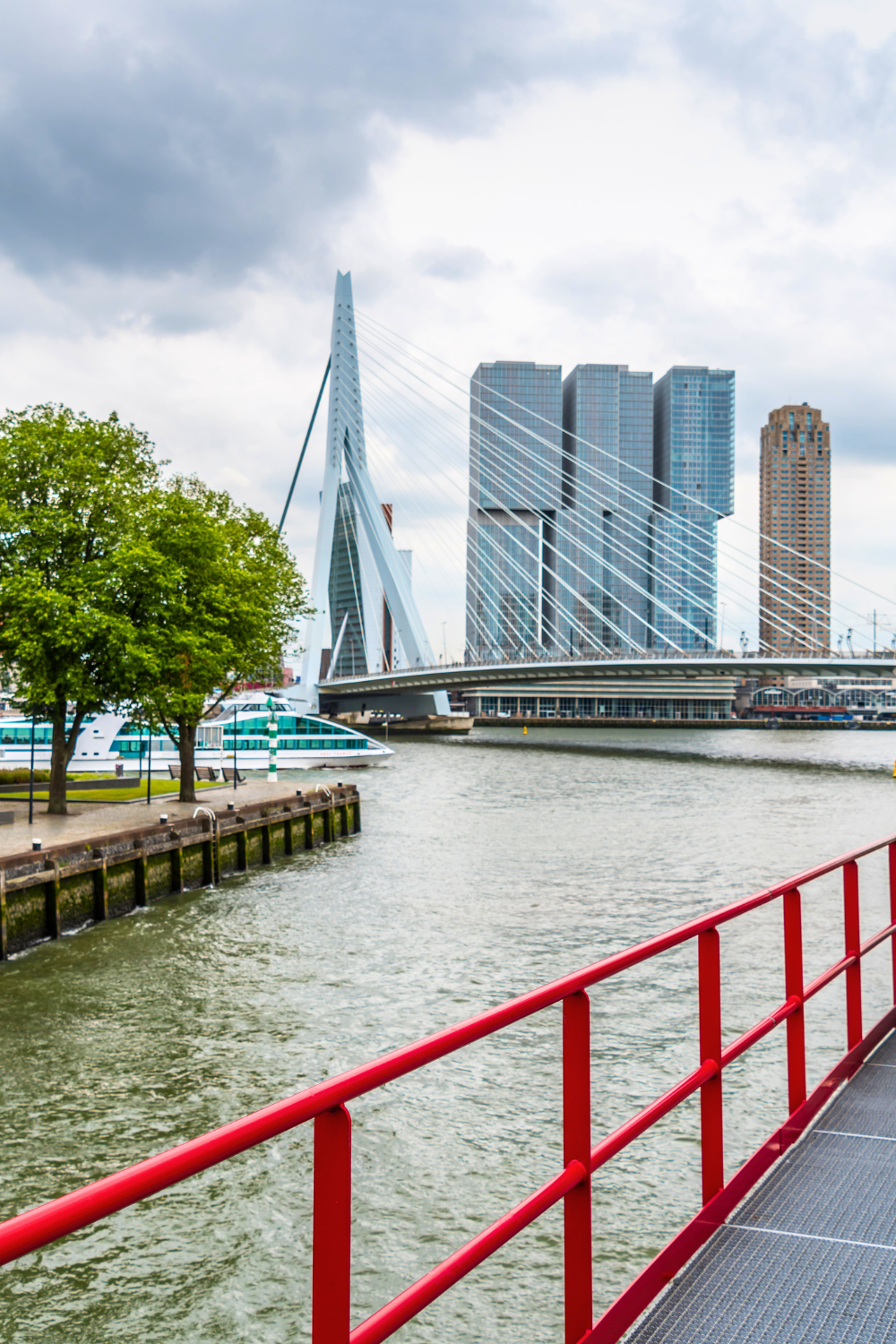
Every great port city has a landmark bridge, and among Europe’s best cities to visit in summer, Rotterdam showcases one of the finest. The Erasmusbrug spans the Nieuwe Maas river and connects the city centre to the Kop van Zuid district on the south bank. It was designed by architect Ben van Berkel and completed in 1996, and Rotterdammers call it “the Swan” — a nickname that takes about three seconds to understand once you’re looking at it.
The bridge is asymmetric: one enormous pylon rises from the north bank like an angular swan’s neck, supporting the bridge deck via a fan of steel cables. It’s 802 metres long, and walking across it gives you views of the entire Rotterdam port skyline in both directions — container ships and tugs on the water, the Euromast tower above the treeline to the west, the gleaming towers of Wilhelminapier to the south. On a clear afternoon, this is one of the finest urban views in Europe.
The Erasmusbrug is also the city’s unofficial gathering point. In summer, the steps and embankments on both sides fill with people eating, cycling, and watching the river traffic with a relaxed satisfaction that feels very Rotterdam. There are a couple of decent spots nearby for a drink with a view — more on those in the food and drink sections.
What many visitors miss is crossing the bridge and continuing into the Kop van Zuid neighbourhood, which is where some of Rotterdam’s most striking modern architecture is concentrated. The Hotel New York, in particular, is not to be skipped.
Local tip: Rotterdam hosts an annual city swim every summer where thousands of participants swim across the Nieuwe Maas near the Erasmusbrug. It’s one of the most joyful, chaotic, thoroughly Dutch events you’ll ever witness, and spectating from the bridge embankment is completely free.
4. Kop van Zuid and the Hotel New York
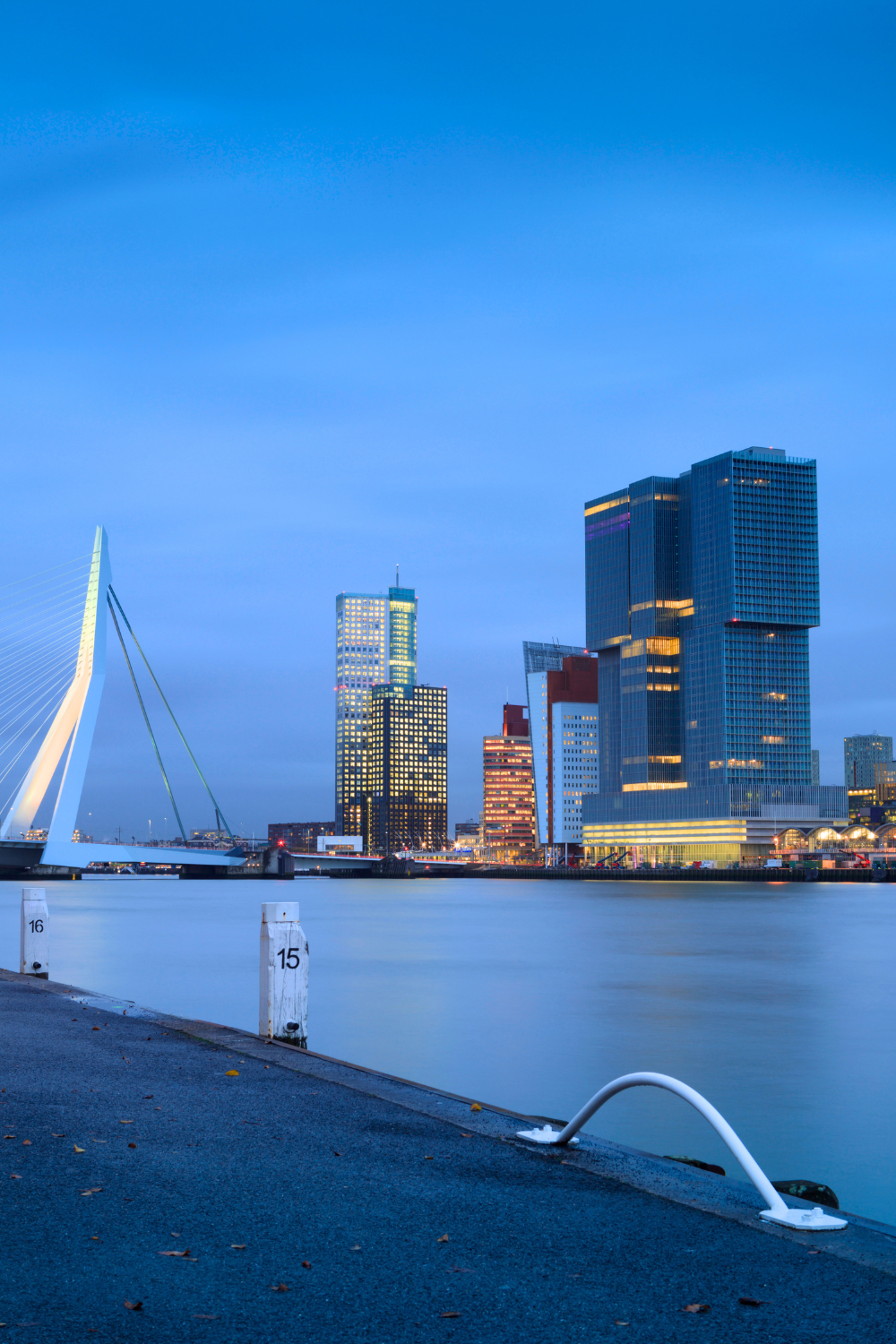
Before 1990, Kop van Zuid was a derelict port area south of the river — abandoned warehouses, rusting cranes, industrial wasteland. Then the city decided to do something extraordinary with it, and over the following three decades it was transformed into one of the most architecturally ambitious residential and commercial districts in Europe.
Hotel New York is the anchor of the neighbourhood and one of my favourite buildings in the entire city. It occupies the former headquarters of the Holland America Line — the shipping company that carried millions of European emigrants to the United States in the late 19th and early 20th centuries. The building is red-brick Beaux-Arts, twin-towered, and magnificent, and it sits right on the waterfront like a grand ocean liner that decided to stay.
Inside, the hotel has preserved extraordinary original detailing: leaded glass, carved woodwork, the sweeping main hall where passengers once checked in for their transatlantic crossings. The restaurant is excellent and reasonably priced given the location; the oyster bar at the front is one of my favourite spots for a long lunch. The hotel also has a small water taxi dock outside, which is the best way to arrive — coming in from the river on a small boat with that building rising ahead of you is genuinely dramatic.
The surrounding streets are worth exploring on foot. Norman Foster’s KPN Telecom Tower leans at a deliberate angle nearby. The Luxor Theatre is a striking piece of theatrical architecture. And the residential towers of Wilhelminapier — designed by various top European firms — form a skyline that looks more Manhattan than Netherlands.
Local tip: Walk to the far end of Wilhelminapier and look back at the city from the water’s edge. This is the view Rotterdam’s architects intended you to have, and it’s spectacular at any time of day. Almost nobody takes the extra ten-minute walk to get there.
5. The Rotterdam Architecture Tour
I’ve said it already but it bears repeating: Rotterdam is one of the greatest cities in the world for architecture, and the only right way to experience it is on foot with some intention. You can do this independently with a good map, but I’d strongly recommend either joining a guided tour with a local architecture guide or picking up the Rotterdam Architecture Institute’s self-guided tour leaflet.
The buildings that deserve your full attention, beyond what I’ve already described, include the Depot Boijmans Van Beuningen (a fully mirrored bowl-shaped building that reflects the entire sky around it — you have to see this), the Timmerhuis (a mixed-use complex that looks like a stack of enormous glass Lego bricks), the Eerste Nederlandsche Hypotheekbankgebouw on Coolsingel, and the De Rotterdam building on Wilhelminapier, which is a vertical city of stacked blocks designed by Rem Koolhaas.
The Blaak district — where the Cube Houses and Markthal both sit — is the densest concentration of landmark buildings and is genuinely walkable in an afternoon. From there, following the waterfront east and then south across the Erasmusbrug takes you through the best of it.
Rotterdam’s relationship with its built environment is one of genuine pride and engagement. You’ll see residents here who can tell you who designed the building they’re standing outside and why it matters. That sense of civic ownership over extraordinary architecture is rare, and it makes conversations with locals far more interesting than you’d expect.
Local tip: The Rotterdam Architecture Institute (Het Nieuwe Instituut) in the Museum Park runs architecture tours in English throughout the year and also has a compelling permanent exhibition on Dutch design and urban planning. It’s free on the first Sunday of every month.
6. Museum Boijmans Van Beuningen (and the Depot)
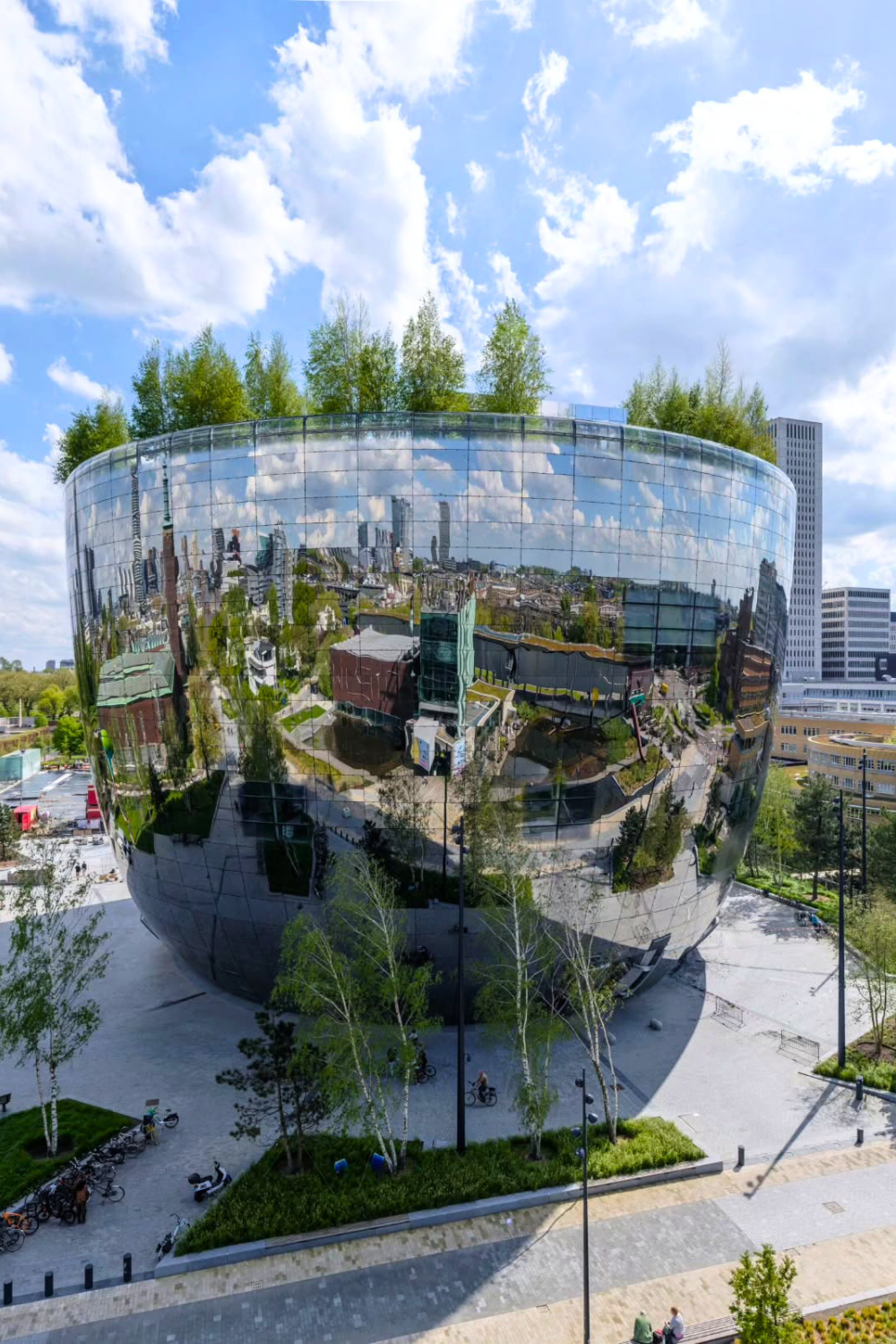
This one needs a bit of explanation, because the situation with Rotterdam’s flagship art museum is slightly unusual. The main museum building is currently undergoing a long renovation and is closed to the public, but in 2021 the city opened the Depot Boijmans Van Beuningen right next door — and the Depot is arguably the more fascinating experience.
The Depot is exactly what it sounds like: a public-access art storage facility. It holds around 151,000 works from the museum’s collection, and visitors can wander through the racks and shelves and climate-controlled rooms where art is normally hidden away. You can watch conservators at work, see the backs of paintings, and get close to works that would normally be behind velvet ropes. It sounds technical but it’s actually deeply engaging. There’s something about seeing art in its honest state — stored, stacked, waiting — that makes you look at it differently.
The building itself, designed by MVRDV, is the one I mentioned earlier: a fully reflective bowl that mirrors the clouds and city around it. The roof terrace is open to visitors and has some of the best views in Rotterdam, with a restaurant up there that’s excellent. The building looks like a flying saucer that crash-landed in a park and decided to stay permanently.
When the main Boijmans building eventually reopens, the collection inside is formidable: Hieronymus Bosch, Pieter Bruegel, Rembrandt, Van Gogh, Dalí, Magritte, and an exceptional modern and contemporary collection. Rotterdam has serious cultural credentials, and this museum is a big part of why.
Local tip: Book the Depot in advance — capacity is limited and it sells out on weekends. The Tuesday or Wednesday afternoon slots are the quietest. The guided tour of the storage areas is worth adding if you have any interest in conservation or museum practice.
7. The Euromast
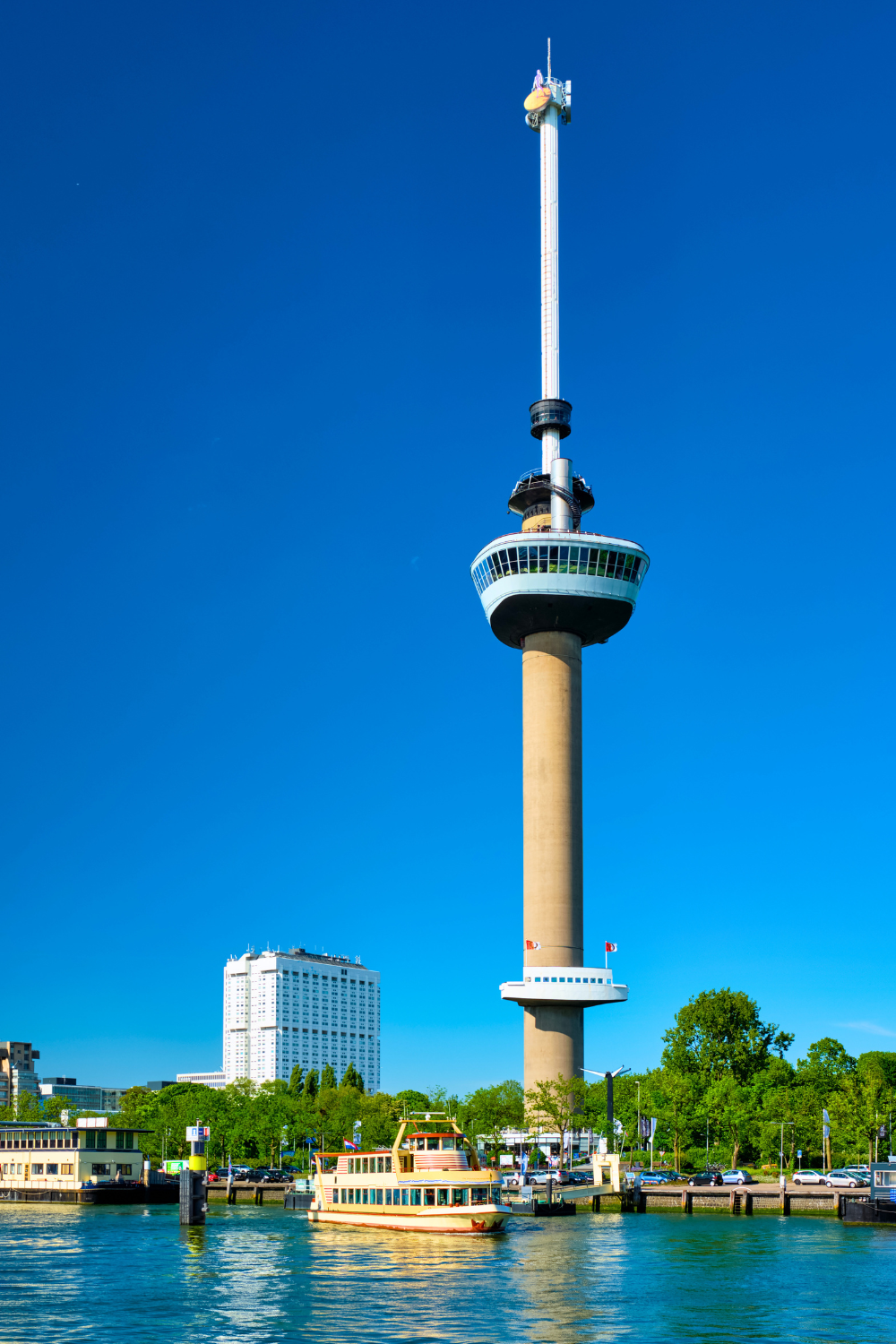
Let me be honest with you: I usually have a fairly low tolerance for observation towers. Most of them offer a view you’ve already seen from the airplane window, and they cost twice as much as they should. The Euromast is different enough that I’m including it without reservation.
The tower was built for the 1960 Floriade horticultural expo and stands 185 metres tall. The main observation deck at 100 metres already gives extraordinary 360-degree views of the port, the river, the city, and on clear days, the entire delta landscape spreading out toward the coast. But if you ride the Euroscoop — a rotating pod that spirals up the top section of the tower — you get right out to the highest accessible point and the views are simply stunning.
The real appeal, though, is that the Euromast manages to be worth visiting because of what surrounds it. It sits in Het Park, a 19th-century English landscape garden right on the river, and the contrast between the manicured greenery below and the towers of the port in every direction is uniquely Rotterdam. You could walk the park for an hour before or after the tower and not feel like you’re wasting your time.
The tower also has a restaurant and, in summer, an abseil operation that allows you to drop down the outside of the structure on a rope. I watched someone do this with my jaw fully open and felt immediately inadequate as a traveller.
Local tip: On very clear winter days — when the air is cold and sharp and the light is low — the views from the Euromast extend much further than in summer. Bring a coat and go on a frost morning if you can.
8. Witte de Withstraat and the Arts Quarter
This is my favourite street in Rotterdam, and I’ll fight anyone who disagrees. Witte de Withstraat runs east to west through the centre of the city and is home to an extraordinary concentration of independent galleries, design studios, bars, restaurants, and one of the best streets for simply walking and watching the city go about its evening.
The street takes its name from 17th-century Dutch admiral Witte de With, and for decades it was a fairly rough part of the city. The galleries moved in during the 1990s and 2000s, followed by the bars, then the restaurants, and it’s now the creative heart of Rotterdam in the best possible way. TENT Rotterdam at the eastern end is a contemporary art space in a former bathhouse that always has something interesting on. Further west, Showroom MAMA specialises in youth culture and digital media. The galleries here refresh their exhibitions regularly and most are free to enter.
In the evenings, the street fills with a young, international, genuinely mixed crowd. The bars are good and not overpriced. Aloha Bar, located at the western end near the water, is particularly excellent — it’s a former cable factory turned cultural venue with a terrace that fills up fast in good weather. If you love the atmosphere of creative city neighbourhoods, explore more vibrant European destinations with similar energy.
Local tip: Every two years, Rotterdam hosts the Witte de With Festival, a street-level art event that takes over the entire neighbourhood with performances, installations, and open studios. Even in non-festival years, the street often has unexplained art appearing on walls and in doorways. Don’t walk it with your phone out — look up and around.
9. Rotterdam’s Street Art Scene
Speaking of looking up: Rotterdam has one of the strongest street art scenes in Europe, and navigating it is one of the best ways to experience neighbourhoods that most tourists never reach.
The Luchtsingel pedestrian bridge — a yellow wooden structure that was crowdfunded by Rotterdam residents and connects previously disconnected neighbourhoods — passes through some of the best murals in the city. Walk the full length and look at every building in every direction. The Hofbogen area, built into the arches of a former railway viaduct, has murals by internationally recognised artists alongside local work, and the market and workshop spaces inside the arches are worth exploring.
The area around Schiedam and the streets north of Central Station are also strong for street art. Artists including Antony Gormley, Oscar Murillo, and a long list of Dutch urban artists have left work across this city. The Rotterdam Street Art tour, which runs regularly from the tourist information centre, covers a good breadth of the work in about two and a half hours.
What I find most interesting about Rotterdam’s street art is that it doesn’t feel like it was curated to make a neighbourhood look cooler. It feels organic — commissioned by communities, left by artists who wanted to contribute to a city that was rebuilding itself. That sense of genuine participation in the urban landscape is part of what makes Rotterdam special.
Local tip: The Fenix Food Factory in the Katendrecht neighbourhood — the old peninsula neighbourhood that’s now one of the city’s most interesting foodie districts — is surrounded by significant murals. It’s worth combining the food hall visit with a full walk around the block.
10. Katendrecht: The Neighbourhood to Know
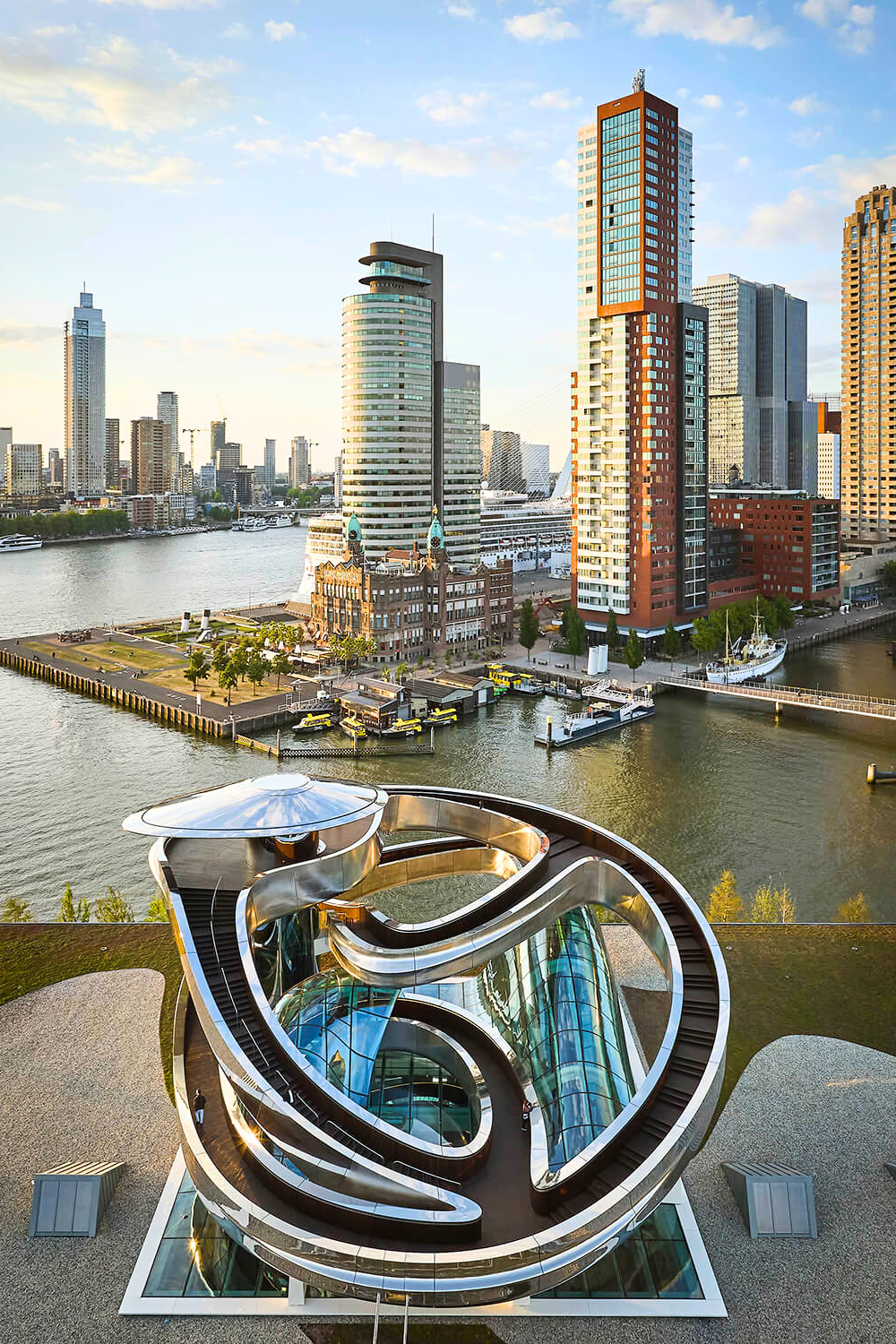
Most visitors to Rotterdam stay in the centre or Kop van Zuid. Katendrecht is right next to Kop van Zuid, connected by a pedestrian bridge, and it’s where I’d recommend spending an afternoon if you want to see what a Rotterdam neighbourhood feels like when it’s still in the process of becoming itself.
Katendrecht was historically a port district with a rough reputation — it was known as Cape Town in the early 20th century because of its multiethnic seafaring population, and it had the city’s first Chinese and Cantonese community. That history has left a cultural richness that survives in the neighbourhood today. The Fenix Food Factory, a converted warehouse on the waterfront, houses some of the city’s best food producers under one roof: a brewery, a cheesemonger, a butcher, a fishmonger, and a bakery whose sourdough is genuinely worth crossing the river for.
The streets around the Fenix are full of independent shops and studios, many of them artist-run. The views back across the Nieuwe Maas to the Erasmusbrug and the hotel New York are among the best in the city. And in summer, the waterfront terraces here are considerably more relaxed than anything in the city centre.
Katendrecht also has some excellent restaurants, including Fenix Food Factory’s own communal tables, and a growing collection of international kitchens reflecting the neighbourhood’s history. This is a place worth a couple of hours, and it pairs perfectly with a Hotel New York visit just across the bridge.
Local tip: The rooftop of the Fenix II warehouse — being developed into a park and public space as part of Rotterdam’s ongoing urban transformation — offers a perspective on the water and port that very few visitors bother to find. Ask locally about current access; it changes as the development progresses.
11. The Rotterdam Food Scene
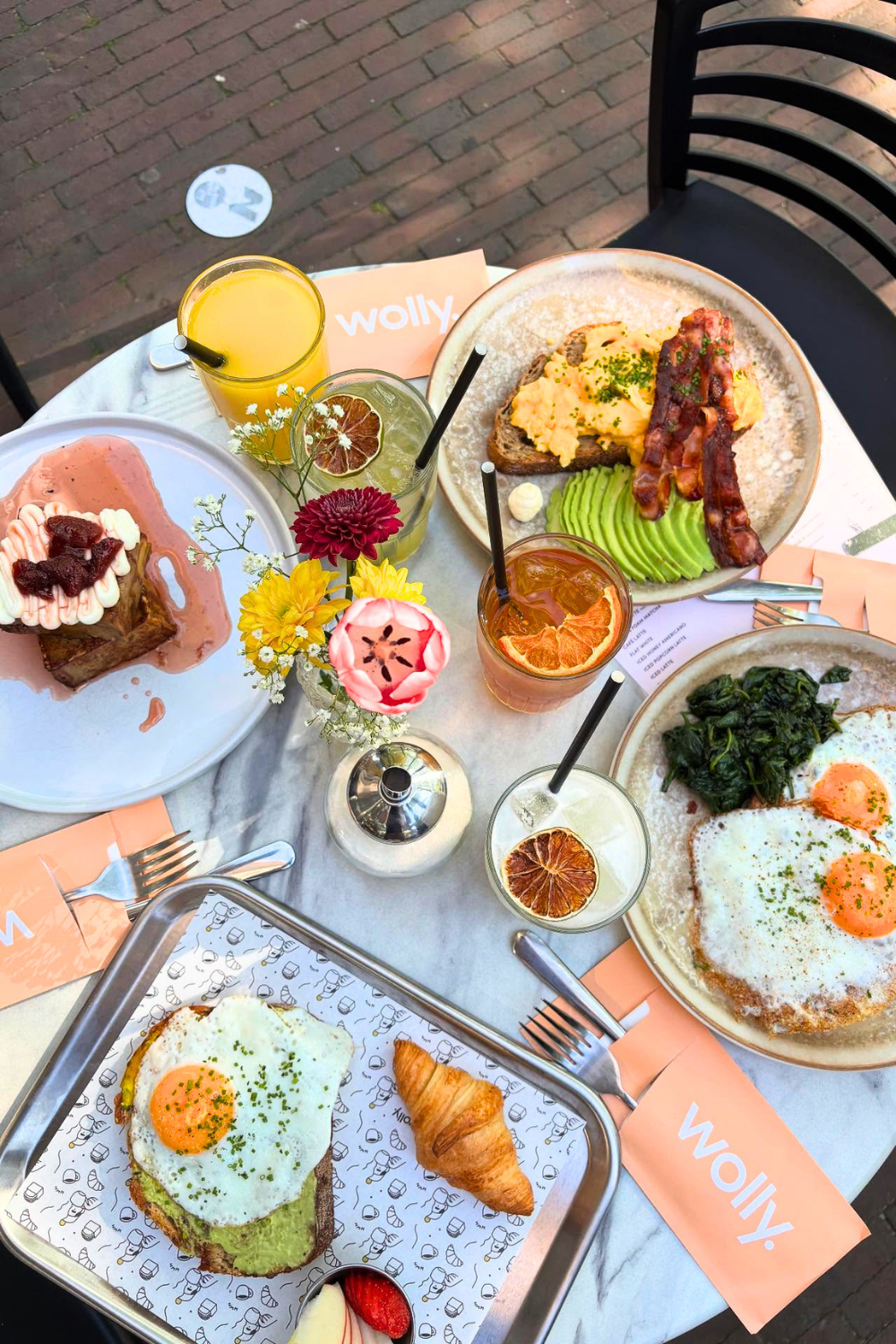
Rotterdam has, quietly and without making a huge fuss about it, become one of the best cities in the Netherlands for eating. This is a city built by immigrants and port workers, which means the food culture is diverse, unpretentious, and genuinely excellent at every price point.
Dutch cuisine doesn’t have the international reputation of French or Italian food, but Rotterdam makes a strong case for it. The Markthal’s Indonesian stalls reflect the country’s colonial history with dishes that are genuinely exceptional — a proper nasi goreng here is a different thing entirely from what you’d find outside the Netherlands. The herring stalls throughout the city serve fish that was caught this week. And the Dutch cheese tradition is represented at its very best in the shops around the Blaak market.
For sit-down eating, Restaurant Fitzgerald near the Witte de Withstraat area has a beautiful interior and a menu that leans into contemporary Dutch cooking with real ambition. For something more casual, Broodje Bert in the city centre serves sandwiches so good that they’ve become a kind of Rotterdam institution — get in line. For something spectacular, Restaurant Joelia in the Hilton has a Michelin star and a tasting menu worth saving up for.
The city also has a strong Indonesian rijsttafel tradition, reflecting the Netherlands’ colonial relationship with Indonesia. Blauw on Westersingel is widely considered the best in the city — it’s not cheap but it’s extraordinary, a procession of small dishes that goes on longer than you expect and leaves you fuller than you’ve ever been.
Local tip: Rotterdam has a weekly food market at the Dakakker — the rooftop farm on top of the WDCD building — that’s unlike anything you’ll find elsewhere in the Netherlands. It’s small, slightly hidden, and sells produce grown on the roof. The view of the city from up there is a bonus.
12. Het Park and the Waterfront Walk
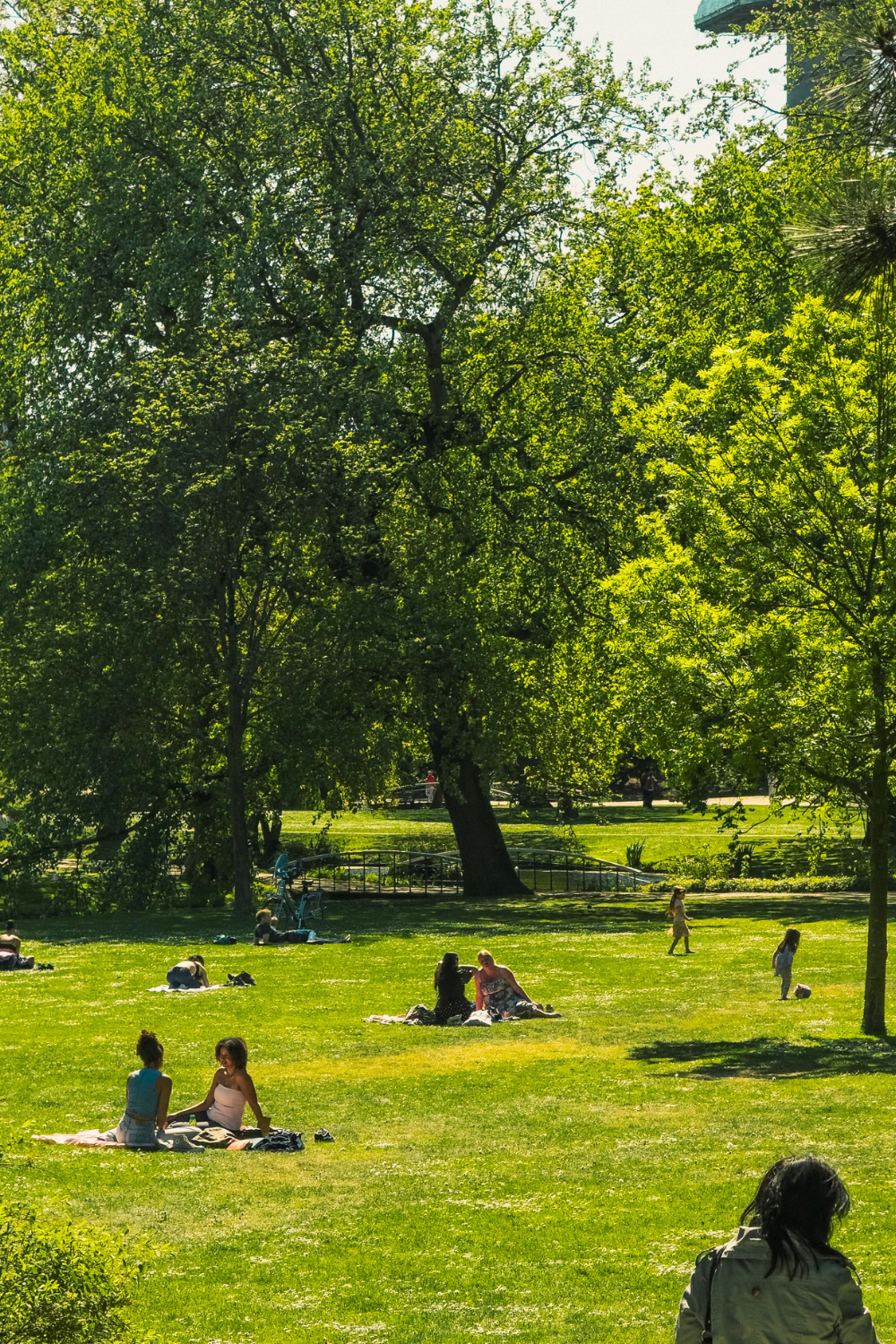
Sometimes the best thing you can do in a city is put your phone away and walk. In Rotterdam, the walk along the north bank of the Nieuwe Maas from Het Park west of the centre all the way east to the Rijnhaven is one of the finest urban waterfront walks in northern Europe.
Het Park itself is a green relief after the density of the architecture elsewhere — it was designed in the English landscape tradition in the 19th century and has been lovingly maintained. The park sits right at the water’s edge, and from the riverside you can watch the enormous container ships and tankers heading in and out of the port with a strangeness that never quite loses its power. These are some of the largest vessels in the world, and they pass at close quarters with a quiet, inexorable momentum.
Walking east from Het Park along the Boompjeskade and then the Wilhelminakade takes you past the Euromast, the old customs warehouses, and eventually to the Erasmusbrug. This is also where you’ll find the SS Rotterdam, the former flagship of the Holland America Line, moored permanently as a hotel and museum ship. She’s enormous, painted white, and slightly surreal floating at the foot of the city’s modern towers.
The walk in either direction takes about 90 minutes at a leisurely pace. Do it in the late afternoon when the light on the water is golden and the port cranes are silhouetted against the sky to the west.
Local tip: The Rijnhaven, just east of the Erasmusbrug, has a floating forest — a small collection of trees planted in repurposed shipping containers that float on the water. It sounds gimmicky and it is, slightly, but it’s also charming and represents a genuine attempt to bring nature into an industrial port environment.
13. Delfshaven: The Neighbourhood That Survived the Bombs
Let me be honest: Delfshaven genuinely surprised me. I’d been told it was worth seeing, but I wasn’t prepared for how different it feels from the rest of Rotterdam — how old, how quiet, how Dutch in the way that the rest of the city deliberately isn’t. If you’re drawn to these traditional Dutch characteristics, Giethoorn offers similar charming canal scenery in a quieter setting.
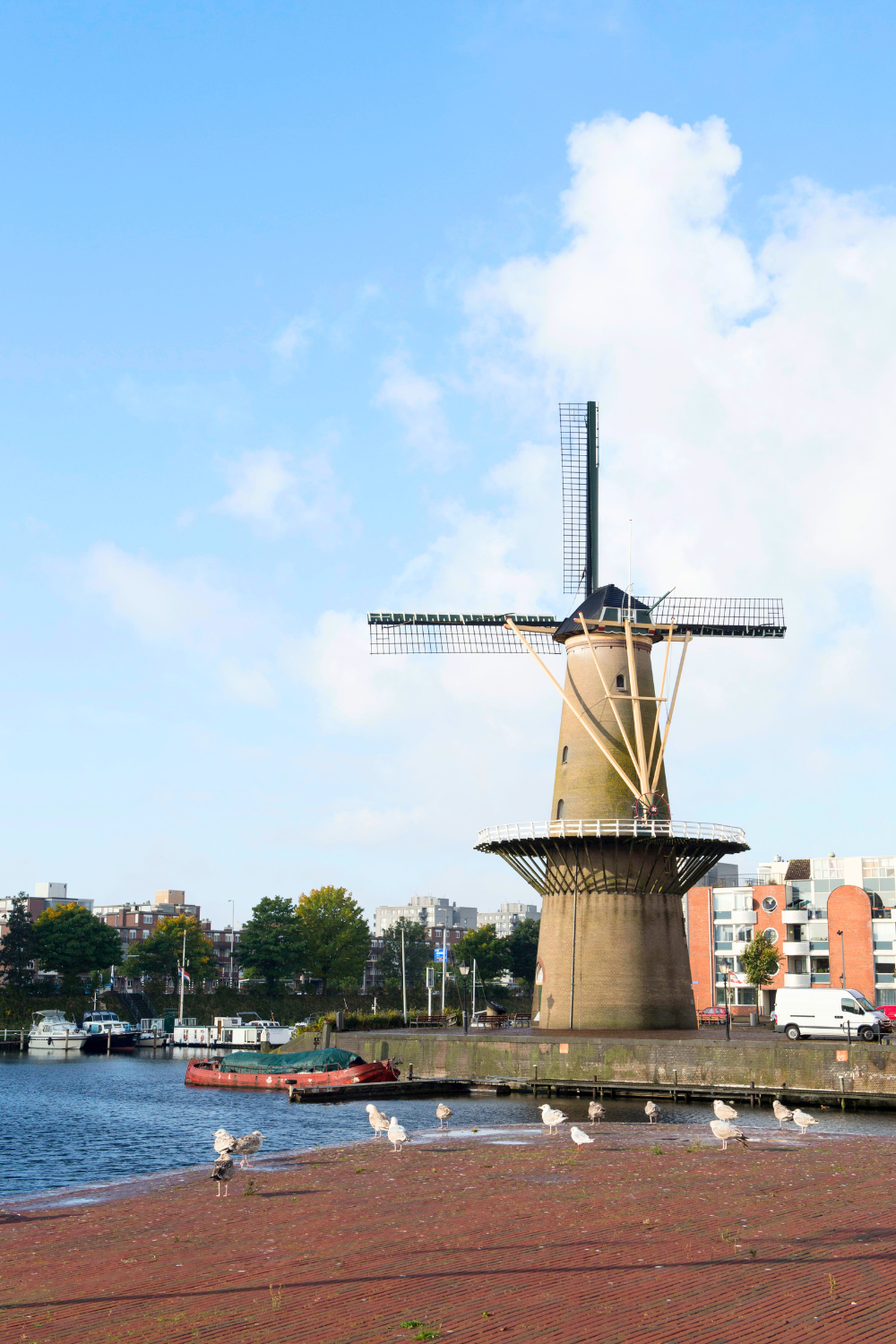
Delfshaven is the only part of Rotterdam that survived the 1940 bombing largely intact, which means it looks like the Netherlands you probably imagined before you arrived. Narrow canal, step-gabled houses, a windmill, a cobbled waterfront. It was once the harbour of the city of Delft (hence the name) and in 1620, the Pilgrim Fathers set sail from this very canal on their way to the Mayflower and eventually to America. There’s a small monument at the quayside to commemorate this, and on quiet mornings it’s a genuinely moving spot.
The Pilgrimvaders church — Pelgrimsvaderskerk — is still standing and still in use. It’s where the Pilgrim Fathers held their final prayer service before departure. The windmill further along the canal, De Distilleerketel, is also original and is still used to produce jenever (Dutch gin) — you can taste the results in the small shop at its base.
The canal walk in Delfshaven takes about 45 minutes and is a complete contrast to the architectural drama of the city centre. It’s the Rotterdam that nobody photographed for the architecture magazines, and I think I loved it more for that.
Local tip: Delfshaven has a small Saturday market along the canal that sells antiques, local produce, and handmade goods. It’s not enormous but the setting — surrounded by those intact 17th-century buildings — makes it one of the most atmospheric markets in the region.
14. The Kunsthal
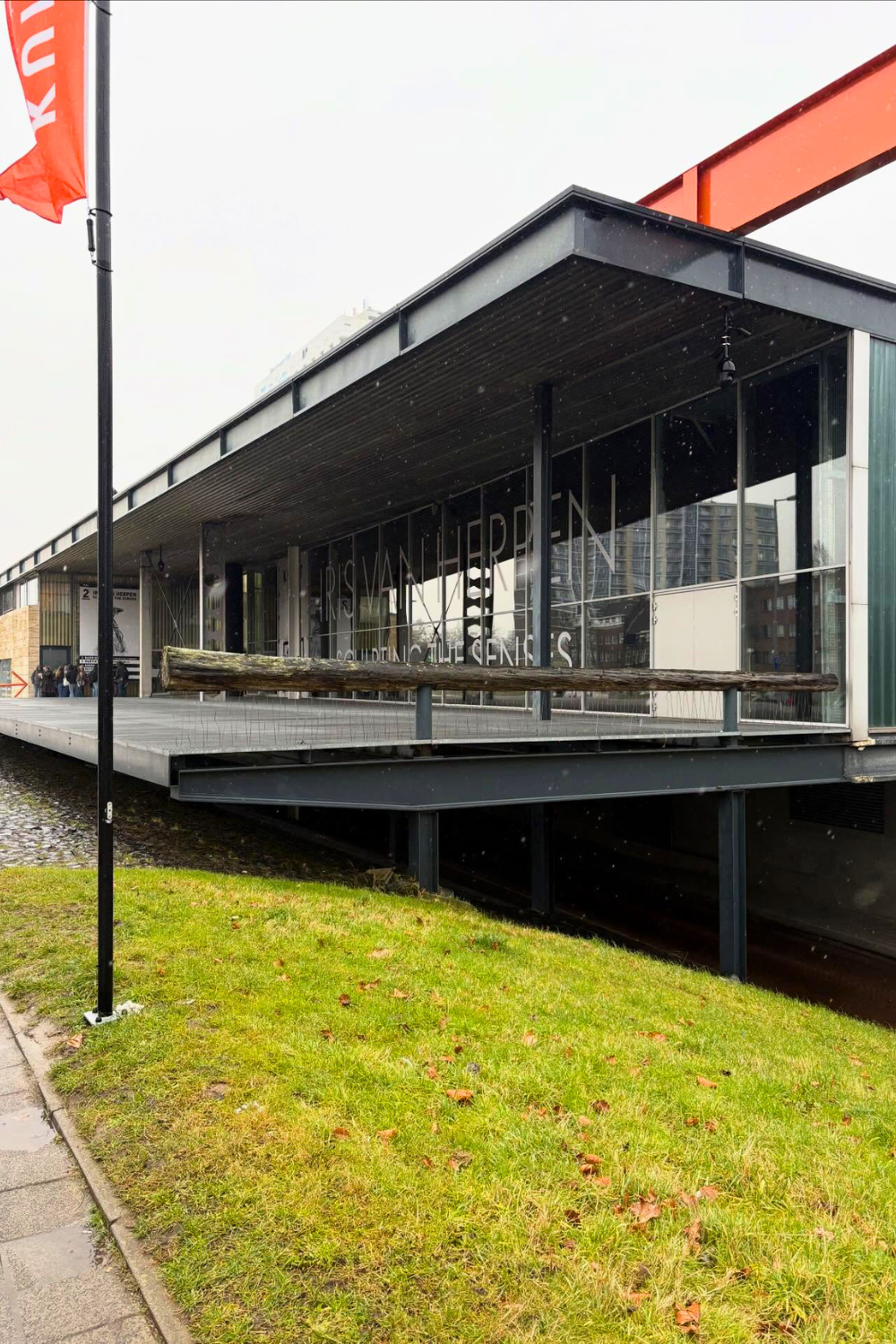
The Kunsthal is one of the most interesting museums in Rotterdam, which is saying something in a city that takes its cultural institutions seriously. It was designed by Rem Koolhaas and completed in 1992, and the building itself is a kind of demonstration of everything Koolhaas was thinking about at the time: the circulation routes through the building are continuous, meaning you can enter at street level and exit at park level having walked through all the galleries without retracing your steps.
What makes the Kunsthal particularly worth visiting is that it has no permanent collection. Every exhibition is temporary and the programme is genuinely diverse — fashion, photography, graphic design, fine art, subculture, history, science. I’ve been on three separate occasions and seen a retrospective of Dutch poster design, an exhibition on the history of sneaker culture, and a show of photographs from the Iran-Iraq War. None of those combinations are ones I would have predicted, and all three were excellent.
The building sits right at the corner of Het Park on Westzeedijk, which means it’s easy to combine with a park walk. It’s also within easy walking distance of the Depot Boijmans and the natural history museum, making that whole corner of the city a solid half-day of cultural itinerary.
Local tip: The Kunsthal café, in the lower level of the building, serves some of the best lunch in the Museum Park area and is open even when you’re not visiting an exhibition. The booksho on the ground floor stocks some of the best design and architecture titles in the city.
15. Rotterdam’s Indonesian Heritage
This is one of those things that Rotterdam does better than anywhere else in Europe, and it deserves its own section rather than being folded into a general food note. The Netherlands’ long colonial relationship with Indonesia means that Indonesian cuisine has been woven into Dutch food culture for well over a century, and Rotterdam — as the port through which so much of that contact flowed — has a particularly deep connection.
Rijsttafel, which translates as rice table, is the Dutch-Indonesian tradition of serving a large number of small dishes alongside rice in a format that was invented in the colonial era as a way of showcasing the breadth of Indonesian cooking. Done properly, it involves fifteen to twenty-five dishes arriving in succession: sate with peanut sauce, beef rendang, gado-gado, tempeh, prawn crackers, spiced coconut vegetables, and so much more. It’s one of those meals that resets your understanding of what food can do.
Blauw on Westersingel is the gold standard in Rotterdam, but there are excellent Indonesian restaurants throughout the city at far more accessible prices — particularly in the streets around the Markthal and in the West district. Warung Mini near the Westersingel serves a modest rijsttafel that’s one of the city’s best-kept lunch secrets.
The Indonesian community in Rotterdam is also visible in the city’s culture more broadly — in the spice shops, the kroepoek sellers in the Markthal, the warungs (small cafes) in residential neighbourhoods, and in the cooking that influences even non-Indonesian kitchens in the city. This food culture is one of the most distinctive things about eating in the Netherlands, and Rotterdam is where you feel it most strongly.
Local tip: The area around Hang and Haagse Veer in the centre has several Indonesian grocery shops that sell ingredients and snacks unavailable in supermarkets. Even if you’re not cooking, the spice smell alone when you walk in is worth it.
16. Day Trip to Kinderdijk
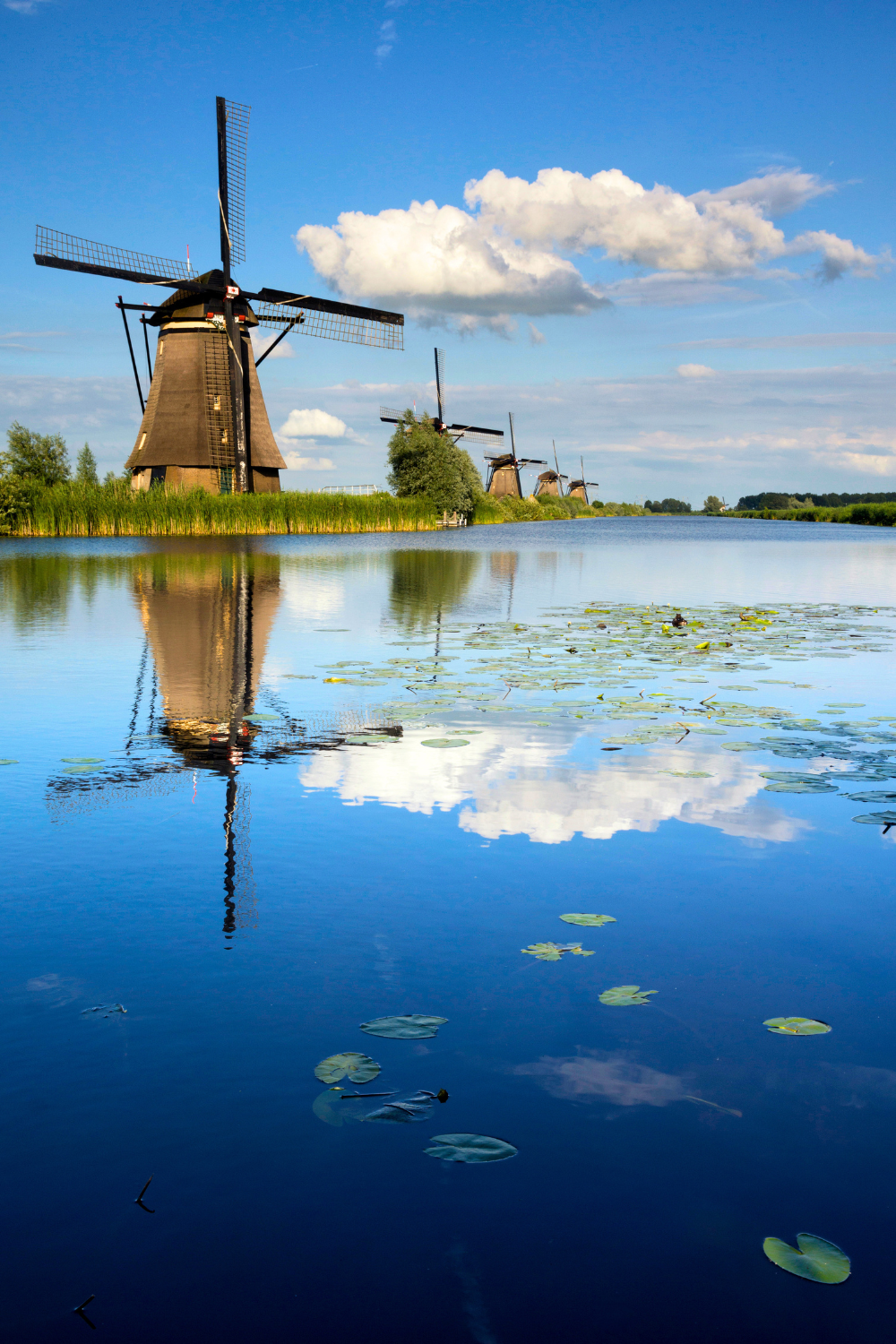
I know this is supposed to be a Rotterdam guide, but Kinderdijk is only 15 kilometres from the city and leaving it out would be doing you a disservice. This is the Netherlands at its most iconically itself — a UNESCO World Heritage Site containing 19 windmills lined up along the canals of the Alblasserwaard polder, built between 1722 and 1761 to drain the land and keep the Netherlands dry.
The windmills at Kinderdijk are everything you imagined a Dutch landscape would look like before you arrived in Rotterdam and discovered the future. They’re huge — real working mills, not decorative ones — and on days when the wind is right, they spin with a slow, massive authority that makes you understand why people were once so impressed by them.
The site is accessible by fast ferry from Rotterdam’s Erasmusbrug in around 40 minutes, which is the best way to arrive — you approach by water through the flat polder landscape and the windmills come into view across the canal in a way that’s genuinely beautiful. You can hire bikes on site and cycle the full circuit of the windmills, which takes about 90 minutes and is the best way to experience them.
Go on a weekday outside of peak summer if you possibly can. The weekend crowds in July and August make the whole experience less special. In spring, when the land is green and the sky is enormous and there are sometimes still tulip fields nearby, it’s close to perfect.
Local tip: If you visit on Saturday afternoons in the summer months (July and August), four of the windmills operate simultaneously — sails turning, millstones grinding — which is something you can’t see at any other time. Check the Kinderdijk website before you go to confirm the schedule.
17. The Rotterdam Nightlife
Rotterdam has a nightlife scene that consistently outranks its size, and it’s genuinely different in character from Amsterdam’s more tourist-heavy party atmosphere. This city’s clubs and music venues skew toward the serious — techno, house, experimental electronic music, jazz — and the venues tend to be in unusual spaces rather than purpose-built boxes.
Maassilo is the most famous example: a converted grain silo right on the river with a capacity of 4,000 and an industrial atmosphere that’s hard to describe without sounding hyperbolic. It hosts some of the best electronic music events in the Benelux, and the building alone — the curved concrete interior, the loading dock entrance, the sheer scale of the thing — is worth experiencing even if the music isn’t to your taste.
BIRD is a much smaller jazz and soul venue in the West district that hosts a quality of live music entirely disproportionate to its footprint. Annabel, in a former tram shed, leans more toward hip-hop and R&B and has a terrace that’s excellent in summer. For something more relaxed, the bars along Witte de Withstraat stay lively until 2am on weekends and until surprisingly late on weekdays too.
The city’s bar culture also deserves a mention. Rotterdam has a growing craft beer scene, and Kaapse Brouwers — a local brewery on Veerlaan in Katendrecht — is one of the best in the Netherlands. Their taproom is worth a visit on its own.
Local tip: Rotterdam’s most interesting clubbing neighbourhood has shifted in recent years toward the old port areas south of the river, particularly in Katendrecht and around the Rijnhaven. A few venues that don’t appear on major listings sites operate seasonally in warehouse spaces — your best intelligence for these comes from locals and from noticeboards in the coffee shops around Witte de Withstraat.
18. The Rotterdam City Beach and Summer Culture
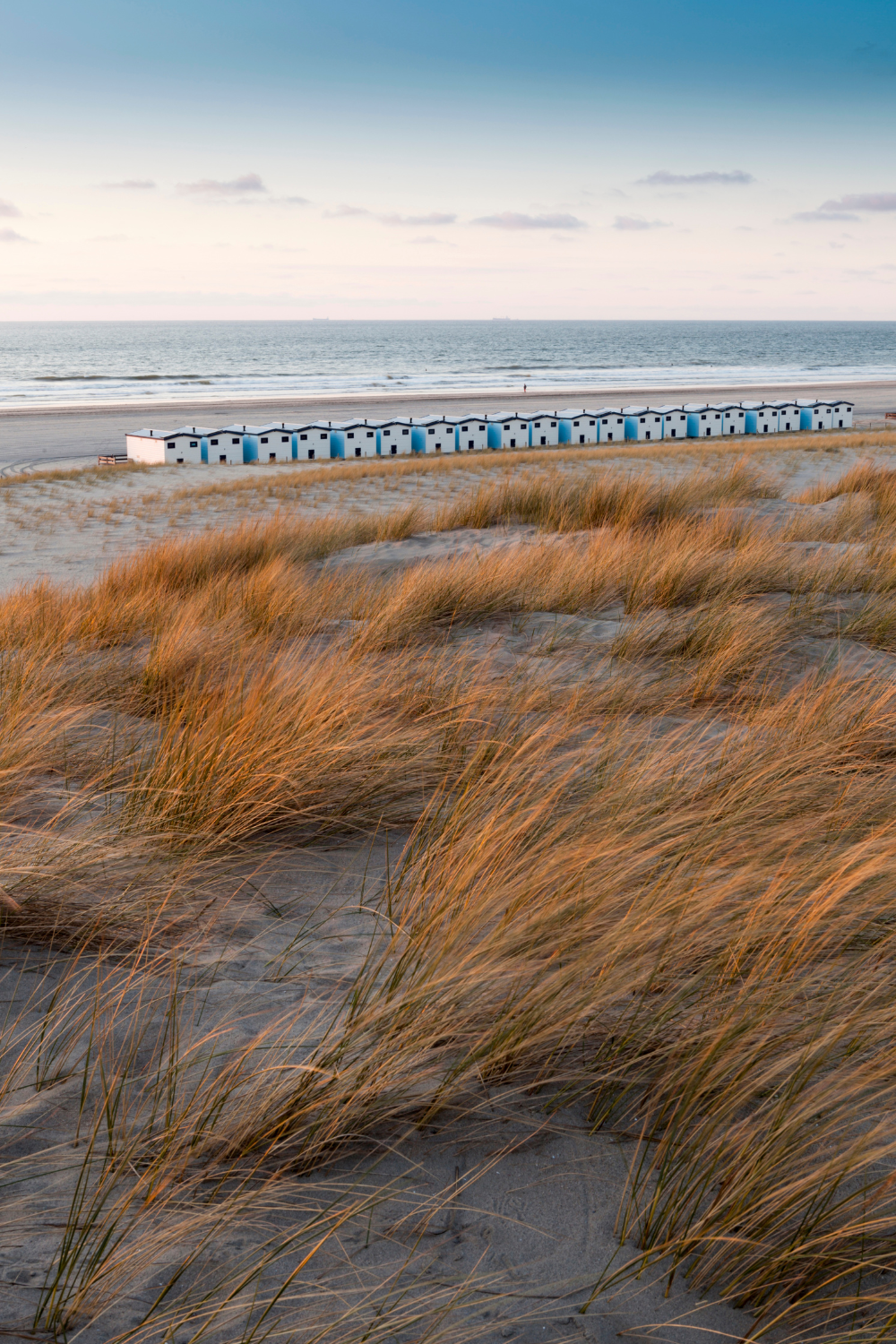
This one surprised me more than almost anything else in the city. Rotterdam — a port city at sea level in the Netherlands — has a beach. Several, in fact, of varying quality and ambition, but the best is the Strand aan de Maas on the north bank near the Rijnhaven.
This is city beach as urban event: sand trucked in, sun loungers and parasols, bars serving cold beer and grilled food, the extraordinary backdrop of the Erasmusbrug and the Kop van Zuid skyline, and a constant light show of river traffic going past. It’s open from June through September, and on a warm afternoon it has a genuinely holiday atmosphere that makes you completely forget you’re in a post-industrial port city.
Rotterdam also has an excellent summer festival calendar. North Sea Jazz — one of the largest jazz festivals in the world — takes place every July at the Ahoy convention centre and attracts artists from across the globe. Motel Mozaïque, a spring festival of new music and art, runs across various venues in the city and is a favourite of locals who find North Sea Jazz too mainstream. The Rotterdam Unlimited summer carnival in June is the largest street carnival in the Netherlands, rooted in the city’s Surinamese and Caribbean communities.
In summer, the city feels different — looser, more expansive, spilling out onto every waterfront terrace and open space with a warmth that the grey months make you forget is coming. The best places in the Netherlands are all worth considering as part of your summer travel plans, but Rotterdam in July is a different city from Rotterdam in November, and both are worth knowing.
Local tip: The temporary summer pavilion on the Plein 1940 square near the city centre changes every year — different architects are invited to design an installation that serves as a bar and cultural space for the summer months. It’s always interesting and always worth a drink inside.
Practical Tips for Planning Your Rotterdam Visit
Getting there: Rotterdam Centraal is one of the best-connected stations in the Netherlands. Direct trains run from Amsterdam Centraal in about 40 minutes, from The Hague in 25 minutes, and from Utrecht in 35 minutes. The station itself — designed by Benthem Crouwel and completed in 2014 — is worth a moment of appreciation on arrival. It has a sloping glass canopy like the bow of a ship, which feels entirely appropriate for Rotterdam.
Getting around: The tram and metro network is excellent and covers all the main areas. The OV-chipkaart (a rechargeable travel card) works across all public transport. Cycling is the best way to explore the city in depth — there are plenty of rental shops near Centraal and the flat terrain makes it suitable for everyone.
Best time to visit: Spring (April to June) and early autumn (September to October) are the sweet spots: pleasant temperatures, manageable crowds, and the city’s outdoor culture in full swing without summer heat or winter rain. The summer festival season (July to August) is excellent if you want nightlife and events. Winter is cold and grey but the Markthal, museums, and indoor venues all operate normally, and the city is genuinely less crowded.
Where to stay: The city centre around Blaak and Witte de Withstraat puts you walking distance from everything. Kop van Zuid has some excellent hotels including the Hotel New York for atmosphere, and the Nhow Rotterdam for striking contemporary design. Budget travellers should look at the Stayokay hostel in the Cube Houses — it’s genuinely one of the most unusual places to sleep in Europe.
Costs: Rotterdam is slightly cheaper than Amsterdam across the board. Budget around €15–20 for museum entry (many accept the Museumkaart), €12–18 for a main course at a good restaurant, and €4–5 for a beer in most bars. The Markthal is good for budget eating — €8–12 will get you a filling lunch from the stalls.
Currency and tipping: The Netherlands uses the euro. Tipping isn’t mandatory but rounding up to the nearest five euros is appreciated in restaurants. Many places now are cashless.
If you’re working out how Rotterdam fits into a broader Netherlands trip, check out the hidden gems in the Netherlands for some places beyond the obvious, or the weekend in Amsterdam guide if you’re splitting your time between the two cities. They’re only 40 minutes apart by train — there’s no reason not to do both.
Rotterdam isn’t the Netherlands that most people imagine. It doesn’t look like the postcards. The canals are industrial, the buildings are radical, and the city has no interest whatsoever in performing nostalgia. But that’s exactly the point. Rotterdam is a city that was forced to start over and chose to do it brilliantly, and spending real time here — more than a half-day detour, more than a quick Cube House selfie — is one of the best decisions you can make on a European trip. Go hungry, wear comfortable shoes, and look up at every building. You won’t regret any of it.

