
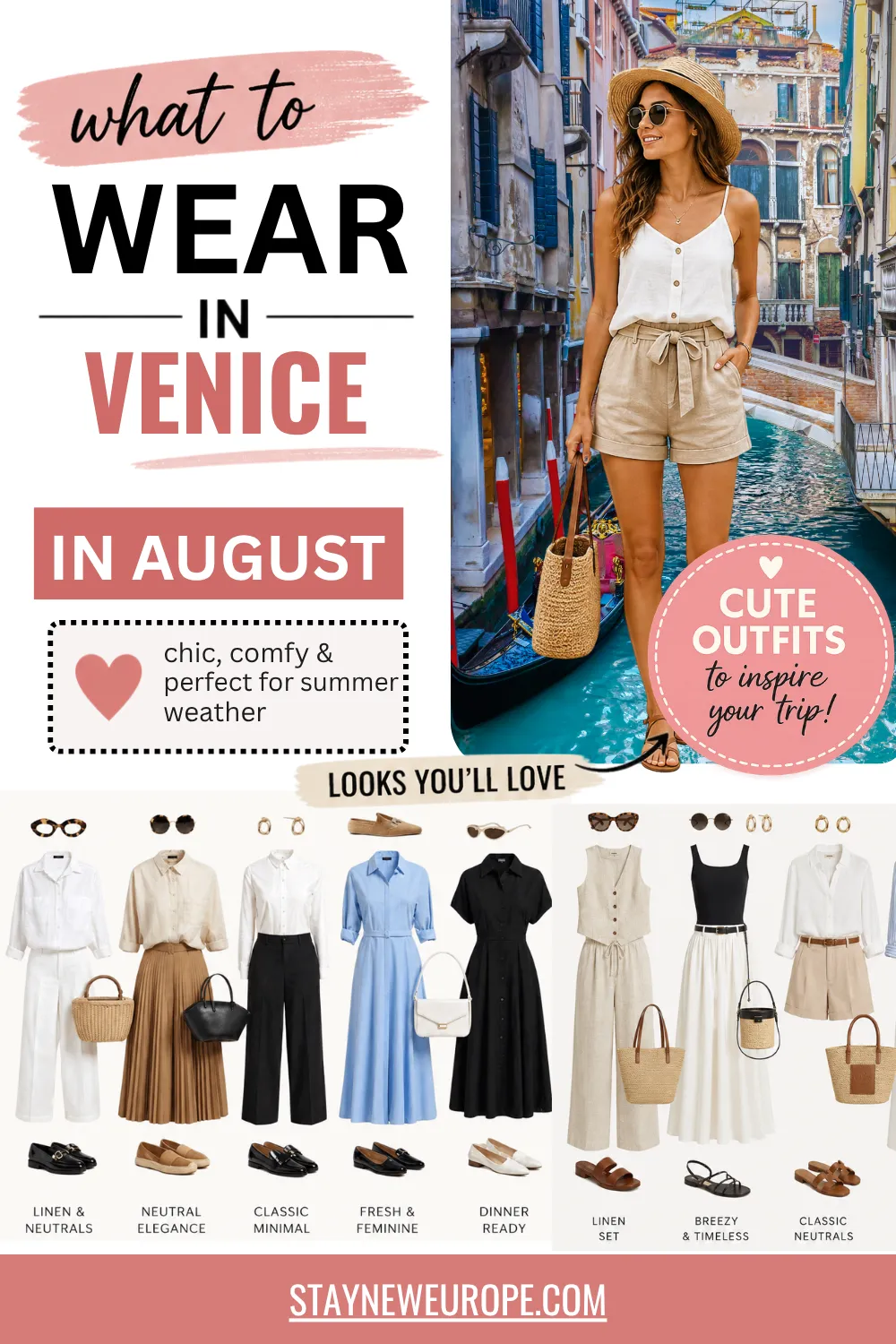
What to Wear in Venice in August
Let me set the scene. It’s 9am and you’ve just stepped off the vaporetto onto the cobbled fondamenta near Rialto. The sun is already blazing at an angle that feels personal. The air is thick — not just with heat, but with the particular humidity that rises off the canals and wraps itself around you like a damp second skin. You’ve got a full day ahead: churches, bridges, narrow calli, maybe a glass of Aperol somewhere in the shade. And you’re already regretting the jeans.
Venice in August is one of the most beautiful and merciless travel experiences Italy offers. The light is extraordinary, the piazzas are packed, and the heat is not a passing inconvenience — it’s a defining feature of the trip. How you dress here matters more than almost anywhere else in Europe, because you’re not just battling the weather. You’re navigating uneven stone, church dress codes, canal-side evenings that call for something smarter, and the very Italian social expectation that tourists should, at minimum, make an effort.
Most people get it wrong. They pack too heavy, choose the wrong fabrics, bring shoes that look cute and feel catastrophic after the first bridge crossing, and end up sweaty and sore before noon. This guide is here to make sure that’s not you.
Before We Dive In: Venice in August — What You’re Actually Dealing With
August in Venice is the peak of Italian summer, and temperatures regularly sit between 28°C and 34°C (82–93°F) during the day, with nights rarely dropping below 22°C (72°F). The humidity is the real story though — Venice is built on water, and that moisture doesn’t go anywhere. It hovers. It softens everything, including your will to wear more than one layer.
Rain is possible but typically arrives as short, intense afternoon thunderstorms rather than all-day drizzle. You’ll want something compact for those moments rather than a full rain jacket. Mornings are golden and slightly cooler, afternoons are ferocious, and evenings soften into something genuinely magical.
On top of the heat, consider how Venice is physically walked. There are no cars, no escalators, no shortcuts. You walk on uneven stone, up and over countless bridges (the steeper ones like Ponte dell’Accademia can be surprisingly tiring with the wrong shoes), and through narrow shadowed calli that suddenly open into sun-flooded campi. Your feet will do serious work. Your clothes need to move with you.
Lastly, the style context: Italians take their appearance seriously, especially in a city as visually charged as Venice. You don’t need to dress expensively, but you should dress thoughtfully. Looking polished in the heat is entirely achievable — it just means making smarter fabric and silhouette choices, not wearing more.
Lightweight Linen: Your Non-Negotiable August Foundation
I used to be a linen sceptic. It wrinkles. It looks slept-in by lunchtime. Then I wore it in 32°C heat in Italy and understood immediately why it’s been worn in Mediterranean climates for centuries.
Linen breathes in a way that cotton simply doesn’t match, and in August Venice, that difference is felt acutely. A linen shirt or linen-blend dress allows airflow against your skin that keeps you genuinely cooler — not just psychologically cooler, but physiologically. The slight wrinkle thing? In Venice, it reads as effortless and relaxed rather than careless. Nobody looks pressed in this heat, and nobody expects you to.
For women: a loosely cut linen dress in a neutral — oatmeal, terracotta, soft white, sage — works for everything from morning museum visits to afternoon spritz sessions.
For men: a linen shirt in white or pale blue, worn open-collared and tucked loosely into lightweight trousers, is both practical and very Italian. Avoid 100% linen if you really can’t stand the texture; a linen-cotton or linen-viscose blend keeps the breathability while smoothing the feel slightly.
I also want to flag linen wide-leg trousers as a genuine hero piece. They look polished, they’re appropriate for churches, they’re cool, and they move beautifully in the canal breeze. Worth building an outfit or two around them.
Local tip: Linen in darker colours absorbs more heat in direct sun. For August Venice, keep your linen light. Dusty rose, cream, sand, and muted sage are your friends. Save the navy and charcoal for evening.
Dresses: Why They’re the Smartest Thing in Your Suitcase
If you were wondering whether to lean into dresses for this trip, lean in. Hard.
A midi or maxi dress in a breathable fabric is essentially a one-piece climate solution. There are no waistbands trapping heat, no leg fabric chafing in humidity, no separate top-and-bottom combination to manage when you’re sweating on a steep bridge at 2pm. A loose-fitting dress simply floats, and in August Venice, floating is exactly what you want.
The silhouettes that work best here are flowy rather than fitted. Think empire waists, wrap styles, or simple A-line shapes — not bodycon, not anything with structure or padding. The key is airflow. Fabrics to look for: linen (as above), viscose, rayon, or lightweight cotton voile. All of these stay cool, move beautifully, and look intentional rather than thrown together.

I found the sweet spot was three to four dresses that could be dressed up or down depending on shoes and accessories. Sandals and a straw bag by day, low block heels or mules and simple gold jewellery by evening. Same dress, completely different register.

I found the sweet spot was three to four dresses that could be dressed up or down depending on shoes and accessories. Sandals and a straw bag by day, low block heels or mules and simple gold jewellery by evening. Same dress, completely different register.

Local tip: If you’re buying a dress specifically for Venice, check that the hem sits safely above the stone ground when you’re stepping up bridges. A dramatic floor-grazing hem is beautiful in photos but catches on cobblestones in a way that’s both embarrassing and genuinely dangerous.
Walking Shoes That Won’t Ruin Your Trip
This is where most people make their most expensive mistake, and I don’t mean price-wise.
Venice is not a sandal-and-done situation. The stone is uneven, slippery in places near the canal edges, and the bridges have shallow steps that require some grip. You will walk far more than you think — eight to twelve kilometres a day is typical for active sightseers — and your shoes will either carry you through that joyfully or slowly destroy you.

The footwear that works in August Venice specifically: leather or canvas sandals with a proper footbed (Birkenstock-style, not flip-flops), low-heeled leather mules with a back strap or good fit, or leather sneakers that aren’t too bulky.
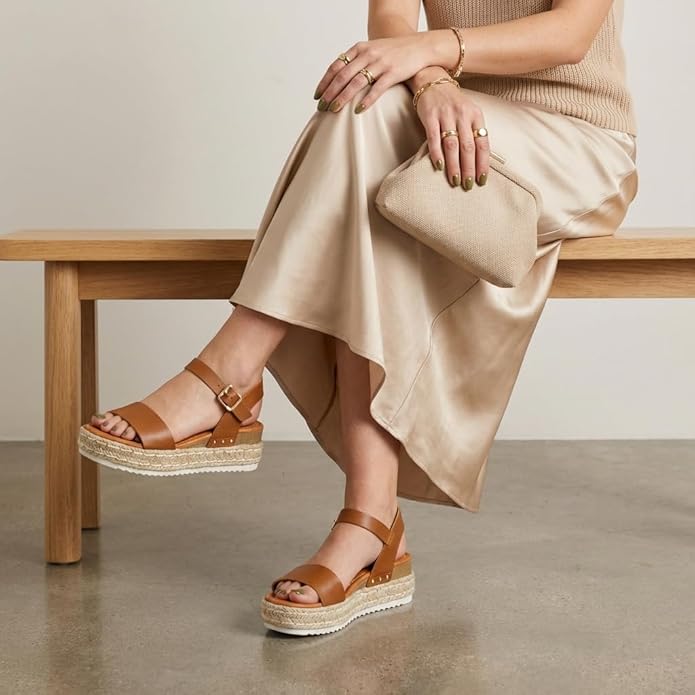
What definitely doesn’t work: heeled sandals with thin straps, brand new shoes of any kind, platform sandals (nightmare on bridges), and anything without grip on the sole.
I learned this the hard way with a beautiful pair of slide sandals that seemed perfect and spent two days slowly rubbing the back of my ankles raw on the sweat-slippery straps. Break in any new footwear before you arrive. Bring plasters regardless.
For women: a pair of simple leather or suede loafers in a neutral tone is genuinely brilliant in Venice — they look polished, work for churches, and survive full walking days without complaint. If you want something more open, a leather sandal with a proper footbed and ankle strap is your safest bet.

Local tip: Bring two pairs of walking shoes and alternate daily. The insoles need to dry out overnight in August heat, and rotating pairs dramatically extends the life of both your shoes and your feet.
What Not to Wear in Venice in August
Let me be honest about this one, because the temptation is real and the outcome is always regret.
Shorts and sleeveless tops as your default look will get you refused entry into every significant church in Venice — and that includes the Frari, San Zaccaria, and the Basilica di San Marco, which has some of the strictest door staff in Italy. They will turn you away without hesitation. Shoulders must be covered and knees must be covered to enter, full stop. This doesn’t mean you can’t wear shorts — it means you need to plan around them strategically, or carry a scarf and a lightweight layer for every church visit.
Beyond the practical problem, very short shorts and crop tops in Venice also read as distinctly tourist-coded in a way that sets you apart from locals and fellow European travellers in a way you probably don’t want. That’s not a judgment — just an observation. Venice dresses up slightly even in crushing heat.
Athletic wear is another one. Gym leggings, sports bras worn as tops, running shoes — these read as incongruous in a city that prizes aesthetic. If you need compression or comfort, there are athleisure options that look more intentional: a good pair of wide-leg linen trousers reads very differently from cycling shorts.
Lastly: large backpacks. Venice’s calli are genuinely narrow. You will knock things off shelves in shops, bump into elderly Venetians, and generally take up space you don’t have. A crossbody bag or a small day bag is all you need.
Local tip: Check the dress code requirements before you visit any church. Most require covered shoulders AND knees. If you’re caught without a scarf, there are vendors outside major churches selling cheap ones — but planning ahead is better.
Lightweight Layers for Morning and Evening
August in Venice doesn’t really require warmth in the traditional sense, but layers still matter — they’re just serving a different function here.
In the morning, when temperatures are slightly lower and the stone holds the cool of the night, a very lightweight cardigan or thin linen overshirt is genuinely pleasant. In the evening, sitting at a canalside restaurant with a breeze coming off the water, you’ll be glad you have something to throw over bare arms. And crucially, layers provide the church-cover function without requiring you to change outfits entirely.
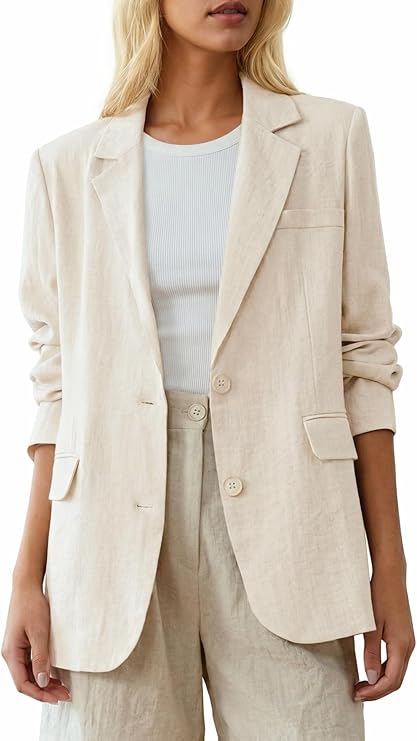
The layer I recommend most for August: a fine-knit cotton or silk-blend cardigan in a neutral. It packs to almost nothing, weighs nothing, and does triple duty as morning chill insurance, church cover-up, and evening warmth. Avoid anything with volume or thickness — a light jacket that’s right for spring will feel unbearable in the August afternoon heat, even in shade.

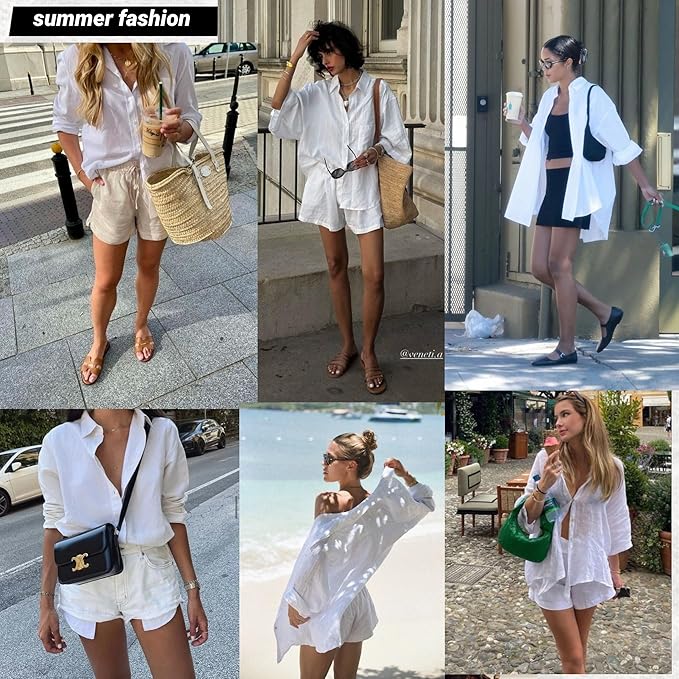
A second option is the oversized linen shirt, worn open over a dress or cami during the day and buttoned up for cooler evenings. This is one of those versatile pieces worth building several outfits around. If you’re planning a longer Italian trip — perhaps pairing Venice with Florence or Rome — you’ll find this layer earns its suitcase space across every destination.
Local tip: Keep your evening layer in your bag throughout the day rather than wearing it. You won’t need it until the sun drops, and putting it on mid-afternoon will just make you hotter.
Evening Outfits in Venice: When the City Really Comes Alive
Here’s what nobody tells you: Venice in the evening is a different city entirely, and your outfit choices should reflect that.
Once the worst of the afternoon heat passes and the light turns golden over the Grand Canal, the whole atmosphere shifts. Venetians appear — properly Venetian locals, not just the tourist crush — and everything becomes more beautiful, more stylish, and more alive. This is when you want to feel like you’ve put in a small amount of effort, even if that effort is entirely invisible.
For women: a midi dress in a slightly more elevated fabric — silk-look viscose, a polished cotton, even a simple wrap dress — worn with low block-heel mules or elegant leather sandals and a pair of gold earrings is completely perfect.

It requires no additional effort if you’ve been wearing a simpler version of the same silhouette during the day; just swap the shoes, add jewellery, and you’re there.

For men: the cheat code is linen trousers in a medium tone (camel, stone, soft navy) with a well-fitted shirt, tucked in or neatly out, and leather loafers or clean leather sneakers. This takes all of ten seconds and looks genuinely polished in a Venetian restaurant setting.
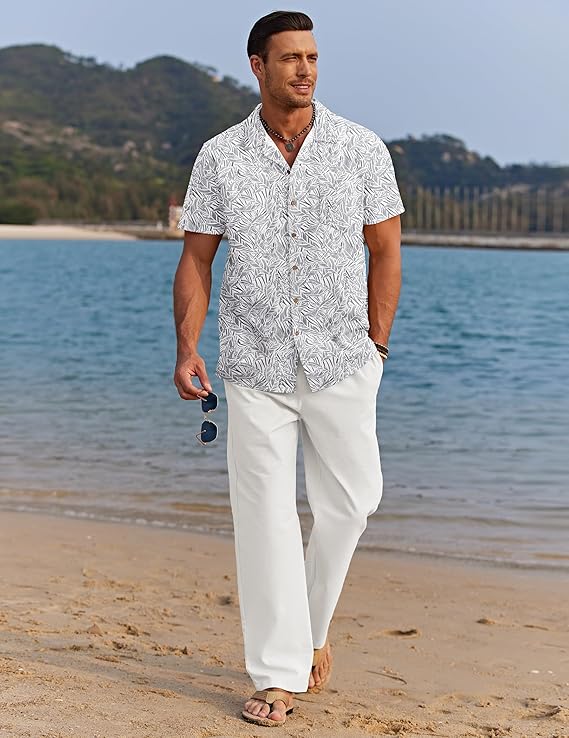
The secret to dressing well for Venice evenings is that the bar is lower than you fear, but higher than pure daytime casual. You’re not dressing for a Michelin-starred dinner (though those exist here). You’re dressing for a beautiful city that deserves a small amount of your care.
Local tip: Many good Venetian restaurants are hidden down small calli and have no outdoor seating at all. If you’re planning a proper evening meal, slightly more polished footwear than flip-flops is quietly appreciated.
Church Outfits: Dressing for San Marco Without the Stress
The Basilica di San Marco has a dress code enforcer at the door who has seen every trick tourists try, and she is not impressed.
Shoulders covered, knees covered, no exceptions, no scarves as a half-measure if they slip. This is non-negotiable at San Marco specifically, and also at the Frari, San Zaccaria, and most smaller parish churches. The good news is that dressing for churches in August Venice doesn’t mean dressing conservatively — it means planning your silhouettes thoughtfully.

A midi dress automatically solves the knee problem. Sleeveless is fine as long as you carry a scarf or light cardigan to cover shoulders. Wide-leg linen trousers are perfectly appropriate for both genders. Shorts can work if they’re genuinely to the knee — not above the knee, not “almost to the knee.” At the knee. And cover your shoulders.
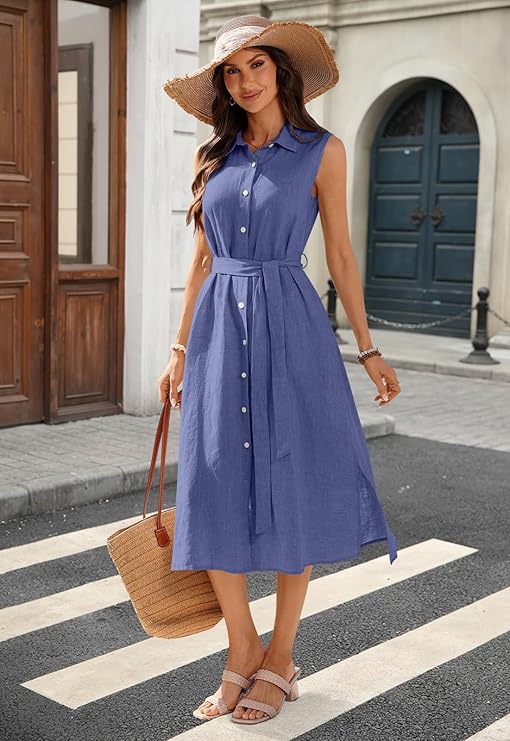
The outfit that solves everything simultaneously and I’d recommend packing at least one of:
loose wide-leg trousers + a lightweight short-sleeved blouse.

Cool enough for the August heat, fully church-appropriate without modification, polished enough for the evening with a shoe change.
Local tip: Keep a thin scarf in your bag at all times. It weighs nothing, takes up no space, and gets you into every church in Venice without any planning required. It doubles as sun protection for your shoulders walking in direct light, which is a genuine bonus.
Fabrics to Choose and Fabrics to Absolutely Avoid
This is practical, unglamorous, and one of the most important packing decisions you’ll make.
Fabrics that work in August Venice:
linen, cotton voile, chambray, viscose/rayon, and silk (if you’re in the budget and not planning a full walking day — silk and sweat are uncomfortable bedfellows). These all breathe, move well, and stay relatively comfortable even when the humidity climbs.
Fabrics that will make you miserable: polyester in any form, including most athletic fabrics, polyester-cotton blends, denim (heavy, holds heat, stays damp once wet), and anything structured or padded. I genuinely advise leaving your usual jeans at home unless they’re a lightweight denim. Standard jeans in 32°C Venice humidity feel like wearing a heated blanket on your legs within an hour.
Synthetic blends are particularly sneaky — they often look great in photos but trap moisture against your skin and develop an odour by mid-afternoon in this heat. Natural fibres genuinely perform better here, and it’s worth checking labels before you pack.
Local tip: If you want to bring one denim item, make it a lightweight chambray shirt rather than jeans. It reads as denim aesthetically, weighs a fraction of the equivalent, and behaves like cotton in the heat.

Bags: The Crossbody Question
This one comes up every time and the answer is simple: crossbody, always, in Venice.
Large backpacks are a nightmare in narrow calli (as mentioned — you will knock things over and bump into people), but they’re also a security issue in crowded areas like San Marco and the Rialto Bridge, where pickpocketing is a known problem. A crossbody bag worn in front of your body, zipped, is both practical and secure.

For daytime: a medium-sized crossbody in canvas, leather, or woven straw carries your essentials without strain.

For evenings: a smaller leather crossbody or clutch elevates any outfit without adding weight. If you want one bag that does both, a soft structured leather crossbody in a neutral (tan, cognac, natural) is genuinely versatile enough for the whole trip.

What you actually need to carry in August Venice:
- phone, wallet, small water bottle (refillable — there are public fountains throughout the city), sunscreen, plasters, your thin scarf, and a lip balm with SPF. That’s it. Venice is not a shopping bag city.
Local tip: The acqua alta (high water flooding) is rare in August but not impossible during weather events. Keep anything irreplaceable — passport, cash, cards — in your bag rather than a pocket, and be aware that ground floors of shops and restaurants occasionally see water during unexpected weather.
Accessories That Earn Their Suitcase Space
August Venice doesn’t need much accessory layering — the heat itself strips everything down to essentials — but a few thoughtful additions genuinely elevate what you’re wearing without adding weight or bulk.
A quality pair of sunglasses is non-negotiable. Not just for style (though the aesthetic value is real) but because the light reflecting off the canals is intense and squinting all day is exhausting. A classic frame in a tortoiseshell or gold tone works with almost every outfit.

A straw or woven bag — as your beach bag or overflow day bag — brings a particular Venetian-summer charm that nothing else replicates. Light, cool, and deeply appropriate for the setting. Just don’t trust it with valuables.

Simple gold jewellery in small amounts — a fine chain, small hoops, a thin bracelet — adds polish to even the most basic dress-and-sandal combination without the weight or inconvenience of heavier pieces. In August heat, you’ll want to keep jewellery minimal anyway: heavy earrings and thick necklaces against a sweaty neck are uncomfortable and often look overdone against casual summer fabrics.
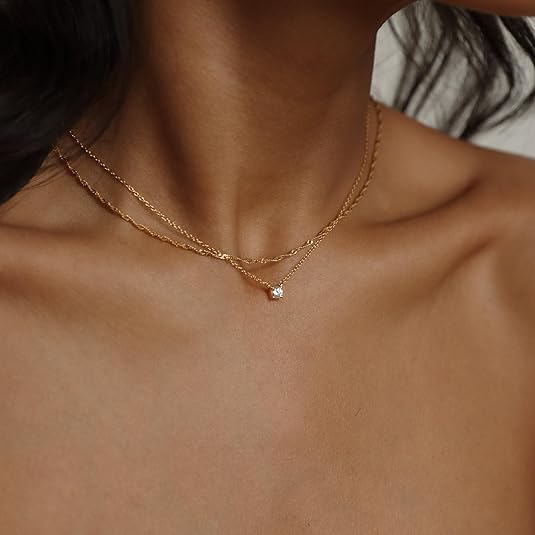
A wide-brimmed hat is both functional and stylish in Venice. The direct afternoon sun on the bridges and open campi is unrelenting, and a hat does real work here. A raffia or woven brim hat in a natural tone is the most versatile option.

Local tip: Leave expensive jewellery at home unless you have a secure hotel safe you trust. Venice’s busy tourist areas are prime territory for opportunistic theft, and the heartbreak of losing a special piece isn’t worth it.
What to Wear on a Gondola (Or the Vaporetto)
The gondola is the most photographed moment of most Venice trips, and yet most people give exactly no thought to what they’re wearing when they climb in.
The main practical note: gondolas are low, and getting in and out requires some ungainly manoeuvring from a wobbly dock. If you’re wearing a very full maxi skirt or wide-leg trousers, be aware they need managing. A midi dress or straight-cut trousers are slightly easier. The vaporetto is simpler — you’re just standing — but the boats splash occasionally, so all-white outfits should be approached with some awareness.

For the gondola aesthetic specifically, this is genuinely one of those moments where a slightly more romantic outfit pays off in photographs.
A flowy midi dress, oversized sunglasses, and a light scarf are the visual ideal, and they also happen to be completely practical in the heat.

The vaporetto is utilitarian travel — don’t overthink it. Just make sure your bag is crossbody and secured, and be ready to stand in close quarters with a crowd.
Local tip: The light on the Grand Canal is best in the late afternoon, around 5–6pm, for photographs. If you’re planning a gondola ride for the light, this is the hour, and the slightly lower temperature makes it more comfortable too.
Sun Protection as a Style Choice
I know this sounds like it doesn’t belong in a fashion guide, but hear me out: in August Venice, your approach to sun protection will dictate your entire outfit strategy.
If you don’t plan for sun protection, you’ll end up doing the tourist shuffle of burning, then covering up uncomfortably, then burning again. If you plan for it from the beginning, it becomes part of your style rather than a reaction to it.
A UPF-rated lightweight shirt or rash guard doesn’t exist in my Venice wardrobe, but a lightweight linen overshirt in a light colour does essentially the same job while looking intentional. It provides genuine sun protection for your shoulders and arms without the sticky discomfort of sunscreen through a long afternoon.
A wide-brimmed hat — already mentioned in accessories — is your most effective single piece of sun protection for your face and the back of your neck, which catches sun crossing bridges.
Sunscreen under clothes is still important for exposed areas (legs, arms when your overshirt is off, décolletage), and I’d recommend a water-resistant formula because the humidity will have you sweating it off faster than you’d expect.
Local tip: Re-apply sunscreen at lunchtime, especially if you’ve been walking in direct sun all morning. The canals reflect UV as well as light, and you can burn more quickly in Venice than you’d anticipate.
Rain in August: Brief, Dramatic, and Worth Preparing For
Venice in August isn’t rainy in a sustained way — but when the thunderstorms arrive, they arrive with enthusiasm and minimal warning.
The standard afternoon storm pattern tends to build fast, dump hard for twenty to forty minutes, and then clear almost completely, often leaving the stones steaming and the air slightly fresher. You don’t need a proper rain jacket for this — in fact, putting on a packable waterproof in 32°C heat is arguably worse than just getting slightly wet.

What I’ve found works better: a compact travel umbrella (the kind that folds down to handbag-sized) and shoes that won’t be destroyed by water. This is another reason the open canvas sandal with a proper footbed works better than suede or expensive leather mules — it dries fast and doesn’t warp.
If you’re worried about thunder and lightning (which do appear with these storms), having an indoor plan for the 3–5pm window is wise — a museum, a church, a good aperitivo bar. The storms rarely last longer than an hour, and they rarely ruin a day.
Local tip: If you’re caught in a Venice downpour, head into any bar and order a coffee or a drink and wait it out. This is entirely normal behaviour and gives you an unexpected authentic Venetian moment.
The Venice August Capsule Wardrobe
You really don’t need as much as you think. Venice in August calls for a tight, intentional wardrobe that works hard and travels light. If you’re wondering how to pack a carry-on for 10 days, this guide covers the approach in detail.
Here is what I’d actually pack for a five-to-seven day Venice trip in August:
Bottoms: Two pairs of lightweight trousers (one linen wide-leg in a light neutral, one slightly more polished pair for evenings), one pair of knee-length shorts for casual mornings. That’s it. You won’t need more than this.
Tops and dresses: Three to four dresses (one or two are your workhorses, one slightly more polished for evenings), two lightweight blouses or camisoles that work with the trousers, one linen overshirt that doubles as a layer and church cover-up.
Shoes: One pair of leather sandals with proper footbed and ankle strap, one pair of leather loafers or mules for evenings and churches, and — if you’re doing long walking days — one pair of leather or canvas sneakers.
Accessories: Sunglasses, wide-brimmed hat, two scarves (one light cotton for churches, one slightly more decorative for evenings), simple gold jewellery in small quantities.
Extras: Compact umbrella, small crossbody bag for days, slightly smaller leather crossbody or clutch for evenings, a light cardigan or fine-knit layer for mornings and evenings.
Everything listed above fits into a carry-on. Everything listed above covers every scenario Venice in August will throw at you.
Local tip: Colour-coordinate your wardrobe before you pack. Choose a palette that lets everything mix and match — three base neutrals plus one or two accent tones — and you’ll multiply your outfit options without adding any additional items. The ultimate Italy travel checklist has a printable version of this kind of packing system that works well for Venice specifically.
Practical Packing Tips for Venice in August
A few honest notes on the mechanics of packing rather than what to pack:
How many outfits? For five to seven days: five to six outfits worth of pieces that remix into eight to ten looks. You don’t need a separate outfit for every day — that’s not how Venetians dress, and it’s not how smart packers travel.
Pack light, always. Venice involves hauling your luggage over bridges and through narrow streets to your hotel. There are no wheels-friendly paths through most of the sestieri. A heavy wheeled suitcase becomes a genuine obstacle course, and some hotels involve staircases with zero room for negotiation. A carry-on or soft-sided bag you can carry over a shoulder is significantly easier to navigate. There’s more detail on the multi-destination version of this in our Europe two-week itinerary guide.
Wash as you go. Most Venetian hotels have a sink you can use for handwashing, and lightweight travel fabrics (viscose, linen, fine cotton) dry overnight. Packing a small travel detergent pod or bar lets you re-wear pieces without compromising on freshness in the heat.
Mistakes to avoid: Bringing your full makeup kit when heat means it melts off anyway; packing a hairdryer when your hair will air-dry in twenty minutes in August warmth; including “just in case” heavy pieces that don’t work in the heat; and purchasing cheap synthetic souvenir T-shirts to wear rather than packing properly.
Venice Outfits Compared to Other Italian Destinations
If you’ve been reading through our Italy outfit guides, it’s worth noting that Venice in August has a slightly different set of demands than, say, Rome or Florence in the same month.
Rome in August (covered in detail in What to Wear in Rome) is similarly hot but feels more urban and slightly more dressed-up. Florence has a similar heat profile but less of the canal humidity that defines Venice. What you wear in Venice can absolutely translate to Florence or Rome on a broader Italy trip — the linen, the breathable dresses, the church-ready layers — but Venice’s water-based geography makes shoe grip and fabric weight even more important than they are elsewhere.
Sardinia, which we’ve also covered in What to Wear in Sardinia in Summer, offers a different calculus entirely — beach-oriented, more casual, and far less concerned with church dress codes. Knowing which version of Italian summer dressing you’re preparing for matters.
Closing Thoughts
Venice in August will challenge you in the best possible way. The heat is real. The crowds are real. The humidity is absolutely real. But the city is also staggeringly beautiful, and when you’re dressed in something light and effortless and genuinely appropriate, you move through it differently — more confidently, more comfortably, more like someone who belongs there.
The goal isn’t to look like a local (that’s largely a fantasy — Venetians live there, and it shows). The goal is to look like someone who gave Venice the respect it deserves. A little linen, a few considered silhouettes, shoes that carry you through a ten-kilometre day without complaint, and a thin scarf for the churches you can’t bear to miss.
Pack less than you think you need. Choose fabrics that work with the heat rather than against it. Leave the jeans at home. And step off that vaporetto knowing you are going to feel exactly as good as Venice looks.


One Response