
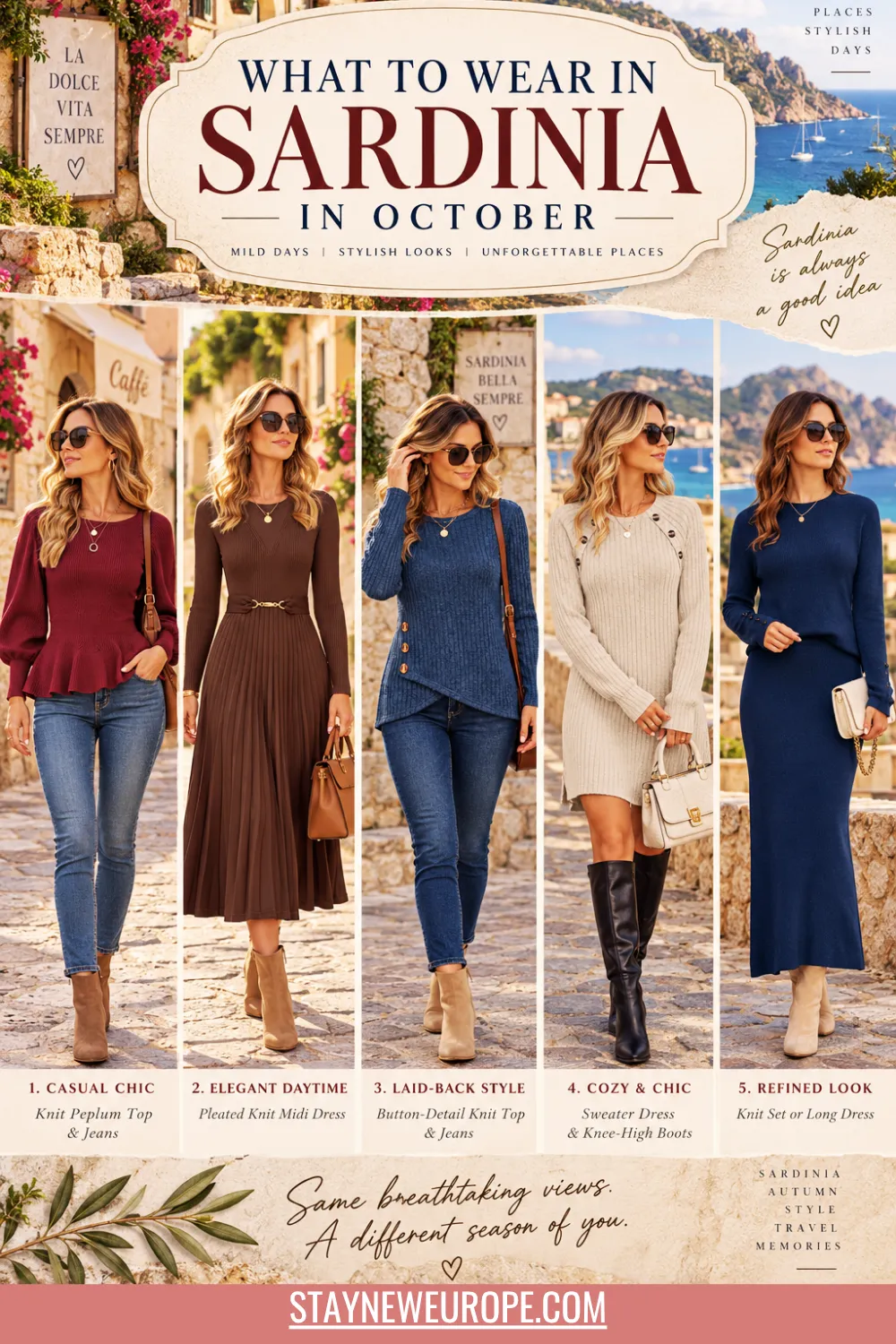
Let me be honest with you: I almost brought exactly the same suitcase I’d have packed for July. Same linen dresses, same flat sandals, same single cardigan “just in case.” Big mistake. Sardinia in October is a completely different island — quieter, windier, golden instead of blinding-white, and about ten degrees more honest about what it actually is.
The beach clubs are folding up their umbrellas. The tourist crowds have thinned out to almost nothing. And the light in the late afternoon does something to the coastline that summer’s harsh midday sun never quite manages. It’s genuinely one of my favourite times to be there — but it caught me off guard more than once, standing on a windy harbour in Alghero wishing I’d packed one more layer.
This is the guide I wish someone had handed me before that trip: what actually works, what doesn’t, and the few small mistakes I watched half the tourists around me make.
Before We Dive In
October in Sardinia sits in that tricky in-between zone. Daytime temperatures usually land somewhere around 20–24°C, and the sea is still warm enough to tempt you in on a sunny afternoon (genuinely — the water holds its summer heat longer than you’d expect). But the moment the sun dips, things shift fast. Evenings can drop to 13–15°C, and the maestrale — the island’s famous, occasionally furious wind — has a habit of showing up uninvited.
Walking-wise, expect a mix: cobblestoned old towns like Alghero, Bosa, and Cagliari’s Castello district, sandy coastal paths, and if you’re venturing inland toward places like Orgosolo or the Gennargentu hills, genuinely uneven trekking terrain. None of it is punishing, but none of it forgives the wrong shoes either.
And then there’s the style question. Sardinians — like Italians generally — dress with intention even in the shoulder season. You won’t see many locals in shorts and flip-flops by mid-October. There’s a quiet, put-together look that runs through the whole island, and honestly, dressing a little more deliberately just makes the whole trip feel nicer. Not fussier — just more considered.
Layers Are Doing More Work Than You Think
Here’s the thing nobody tells you: in October, your outfit isn’t one decision, it’s three or four, stacked.
I learned this the hard way on a morning in Cagliari where I left the apartment in a t-shirt because the sky was clear and it already felt warm. By 10am, a breeze had rolled in off the harbour and I spent the next hour hugging my arms and pretending I wasn’t cold. Layering in October isn’t about looking cute in photos (though it does that too) — it’s about surviving a single day that swings from 14°C to 23°C without needing to go back to your hotel to change.

The formula that actually works: a breathable base layer (a fine cotton or merino tee), a mid layer (light knit or overshirt), and something for wind or rain on top. You add and remove pieces through the day rather than committing to one outfit at 8am and regretting it by noon.
Local tip: Pack layers in colours that all work together — navy, cream, olive, terracotta — so you’re never stuck holding a jacket that clashes with what’s underneath it.
The Light Jacket You Genuinely Cannot Skip
A single cardigan is not a jacket. This surprised me more than it should have.
A proper lightweight jacket — something windproof, ideally with a hood — is the one item that shows up in nearly every outfit I wore in Sardinia in October. The maestrale isn’t a gentle sea breeze; it can be genuinely strong, especially along the northwest coast around Alghero and Stintino, and a flimsy cardigan does absolutely nothing against it.

Look for something packable — a shell jacket or a technical bomber that folds down small enough to live in your day bag, because you will be putting it on and taking it off constantly. A structured trench looks lovely in photos but is overkill for most of the island in October; save the heavier coats for northern Italy in November.

Local tip: Choose a jacket in a neutral tone you’d actually wear over an evening outfit too — you don’t want to be carrying two separate jackets for day and night.
Dresses That Still Make Sense
You don’t have to give up dresses in October — you just have to be smarter about which ones you bring.
A midi dress in a slightly heavier cotton or a knit blend works beautifully layered under a jacket during the day and on its own (or with a light scarf) for dinner.
Think long sleeves, or a dress you can throw a cardigan over rather than a strapless summer piece that only works in direct sun. A sweater dress, specifically, earns its suitcase space here — it functions as a full outfit on its own, pairs with boots or trainers, and handles a genuinely wide temperature range without you doing anything else.

Save the floaty linen sundresses for Sardinia in summer — they’re not wrong exactly, they’re just not built for an October evening wind.
Local tip: A wrap dress in a warmer fabric is the most forgiving option if you’re only bringing one dress — it adjusts to the day’s temperature better than almost anything else you’ll pack.
Jeans, Trousers, and the Truth About Shorts
Shorts aren’t off the table entirely, but they’ve earned a much smaller role in your suitcase than they had in July.
Straight-leg jeans or lightweight tailored trousers are your daytime workhorses — comfortable for long walking days, warm enough for a breezy harbour lunch, and smart enough that you’re not out of step with how the locals dress.

If you’re set on packing shorts, keep them to one pair, in a slightly heavier cotton, for the rare warm afternoon, and plan to pair them with a long-sleeve top rather than treating them as a full summer outfit.

Corduroy trousers or a mid-weight chino also earn their keep here — they photograph well against Sardinia’s stone architecture and don’t wrinkle the way linen does after a day of sitting on trains or in cars.

Local tip: One pair of dark jeans does double duty for both sightseeing and dinner — dress them up with a nicer top and you’ve saved a whole outfit’s worth of suitcase space.
Walking Shoes That Can Actually Handle the Island
Your feet are going to cover more uneven ground than you expect, and this is genuinely not the season for cute-but-useless sandals.
A clean pair of leather trainers or a low ankle boot is the single most versatile shoe you can bring. It handles cobblestones in Bosa’s old town, coastal paths, and a casual dinner without missing a beat. If you’re planning any hiking — even a moderate trail toward the interior — pack a proper pair of trekking shoes with real grip; the terrain is rockier and steeper than it looks in photos.

Flat sandals still have a place on genuinely warm afternoons near the coast, but they shouldn’t be your only shoe option. I made that mistake on my first October trip and regretted it by day two, when a cooler, windier stretch of days rolled in and I had nothing but sandals to show for it.

Local tip: Break in your walking shoes before you arrive. Cobblestones are unforgiving toward brand-new soles, and there’s nothing worse than blisters on day one of a trip.
What NOT to Wear (The Mistakes I Watched Tourists Make)
I’m going to be direct here, because this is the section that saves you actual regret.
Full summer beachwear as daily attire. Bikinis, tiny shorts, and flip-flops as an all-day uniform read as out of season by October, and honestly, you’ll just be cold.
One thin cardigan as your only outer layer. It will not survive an evening wind, and you’ll end up buying a jacket you didn’t plan for.
Brand-new white sneakers. They will not stay white past day one on Sardinia’s dusty inland roads and stone streets. Bring a pair you don’t mind getting a little lived-in.
Heels of any kind, anywhere near the old towns. Cobblestones and heels are not friends, and October’s occasional rain makes the stone genuinely slippery.
No rain protection at all. October is shoulder season for a reason — some rain is likely, and showing up without so much as a packable layer is asking for a soggy afternoon.
Local tip: A good gut check before leaving your accommodation: would this outfit survive an unexpected 20-minute walk in wind and light rain? If not, adjust before you head out.
Evenings Get Colder Than You’d Guess
The evening shift in Sardinia is dramatic in October in a way it simply isn’t in July.
Once the sun goes down, temperatures drop fast, and the coastal wind picks up right around dinner time.

A knit sweater or a slightly heavier cardigan over your daytime outfit is often enough, but for a proper dinner out, I’d lean into something with a bit more polish — a fine-knit top with tailored trousers, or that sweater dress from earlier, with boots instead of sandals.

The passeggiata still happens in October, just in coats instead of sundresses. People still get dressed for the evening walk before dinner; it’s just a warmer, more layered version of the same ritual you’d see in August.

Local tip: Bring one slightly dressier knit specifically for evenings — something you wouldn’t necessarily wear sightseeing, but that elevates a simple daytime outfit into a dinner-ready one in under a minute.
Church Dress Code Still Applies
Sardinia’s churches — from the cathedral in Cagliari to smaller village chapels — expect covered shoulders and knees, and this doesn’t relax just because it’s October.
The good news is that October’s cooler weather actually makes this easier than summer, when you’re constantly weighing sun protection against modesty.

A long-sleeve top and trousers or a midi dress covers you without any extra thought. If you’re wearing a shorter dress for other parts of the day, keep a light scarf in your bag to wrap over your shoulders before stepping inside — it takes ten seconds and saves you from being turned away at the door, which does happen.

Local tip: The scarf you’re already carrying for warmth does double duty here — one less thing to pack separately.
Bags: Crossbody Over Everything Else
A structured crossbody bag is, without much competition, the best bag for a Sardinia October trip.

It keeps your hands free for a coffee cup or a jacket you’ve just taken off, sits securely against your body in busier spots like Cagliari’s markets, and holds everything you actually need for a day out — phone, wallet, sunscreen (yes, still), and your folded-up jacket when the sun comes back out.
A larger tote works for beach or market days if you’re still planning a swim, but it’s not what you want for a full day of walking and layering.

If you’re figuring out your full luggage setup for the trip, our carry-on packing guide covers how to fit a shoulder-season wardrobe into one bag without checking anything.
Local tip: Choose a crossbody with a zip closure, not just a magnetic clasp — October’s busier market days in Cagliari and Alghero are exactly when you want that extra bit of security.
Accessories That Actually Earn Their Space
A handful of the right accessories do far more work in October than an entire extra outfit would.
Sunglasses are still essential — the light off the water is bright even on cooler days.

A light scarf is arguably the single most useful item on this whole list: warmth, church coverage, wind protection, and an instant style upgrade, all from one folded piece of fabric.

Skip the wide-brimmed sun hat you’d pack for July — it’s more likely to blow away in October’s wind than protect you from much.
Local tip: Pack one scarf in a slightly heavier fabric (wool-cotton blend rather than pure silk) — it’ll actually keep you warm, not just look nice around your neck.
Should You Even Pack Swimwear?
Yes — just don’t expect to use it every day.
Early October, especially the first two weeks, can still deliver genuinely warm, swimmable afternoons, particularly on the sheltered eastern coast. By late October, it’s more of a gamble, but the sea holds its warmth surprisingly well even as the air cools. Pack one swimsuit, just in case, but don’t build outfits around it the way you would in July.

Local tip: Check which beach clubs are still operating before you go — many close for the season by mid-October, so a “wild” swim off a quieter stretch of coast might be your best bet rather than a full beach day setup.
Fabrics to Choose (and What to Leave Home)
October calls for a completely different fabric strategy than summer, and getting this right changes how comfortable your whole trip feels.
Reach for cotton, wool-blend knits, and a bit of denim — fabrics with actual weight and structure that hold up against wind and the occasional splash of rain. Linen, which is the star of a Sardinian summer wardrobe, starts to feel thin and slightly wrong for the season by October; it wrinkles badly, doesn’t hold warmth, and looks a little out of place next to what the locals are wearing.
If you want a full breakdown of why fabric choice matters so much here, our guide on what to wear in Italy in July makes a useful contrast — nearly everything about the fabric logic flips for October.

Local tip: A merino wool base layer is quietly one of the smartest packing decisions you can make — it regulates temperature far better than cotton and doesn’t hold onto odour the way synthetic thermals do.
The October Capsule Wardrobe for Sardinia
Here’s what actually covers a week to ten days on the island without overpacking:
Bottoms: One pair of dark jeans, one pair of tailored trousers or chinos, one pair of heavier cotton shorts for a warm afternoon.
Tops: Three or four long-sleeve tees or fine-knit tops, one or two blouses for dinners.

Layers: One lightweight windproof jacket, one knit cardigan or sweater, one slightly dressier knit for evenings.
Dresses: One midi or sweater dress that layers well.
Shoes: Leather trainers or ankle boots for daily wear, flat sandals for a warm coastal afternoon, trekking shoes if hiking is on the itinerary.
Extras: One swimsuit, one scarf, sunglasses, a crossbody bag.
That’s genuinely everything. Mix and match, add the jacket or remove it, and you’re covered for almost anything the island throws at you in October.
Practical Packing: How Much Is Actually Enough
For a week-long trip, five to six full outfits is plenty, since you’ll be repeating and remixing pieces constantly rather than wearing something once and never again.
The biggest mistake I see (and made myself, the first time) is overpacking for both extremes — treating October like it might suddenly become a summer heatwave or a winter cold snap, and bringing gear for both. It won’t. Trust the actual forecast for your specific dates rather than packing for “just in case Sardinia decides to be July again.”
Plan your outfits around your layering pieces rather than around individual “looks” — one jacket, one cardigan, and a scarf will completely transform four or five base outfits into what feels like twice as many. And leave a bit of room in your bag; Sardinia’s autumn markets sell beautiful handmade ceramics and textiles that are genuinely hard to resist.
One Last Thing
Sardinia in October has a completely different personality than the version everyone posts about in July — quieter beaches, golden late-afternoon light, empty coastal roads, and a slower rhythm that summer crowds never really allow for.
Pack your layers, bring one good jacket, and don’t be afraid to look a little more put-together than you would on a beach holiday. The island rewards it either way. Go find your own version of that windy harbour evening — you’ll be glad you packed for it properly.

