
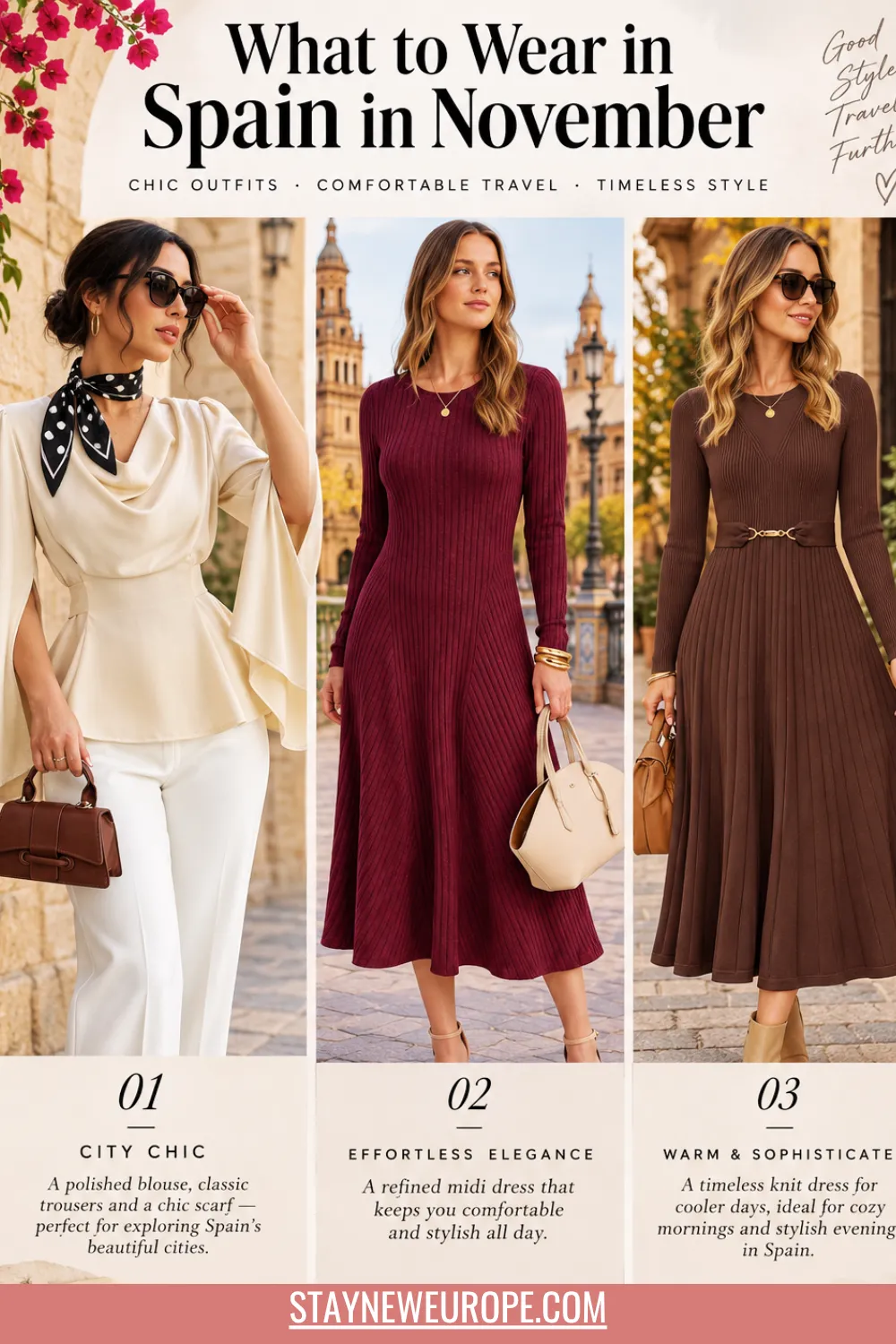
Everyone tells you Spain is warm. Everyone is lying to you, at least a little, in November.
I’ve done this trip three times now — Madrid, Barcelona, and a very confused week bouncing between Seville and San Sebastián — and every single time I’ve either sweated through a coat I didn’t need or shivered through an evening I completely underestimated. November in Spain is a shapeshifter. One coffee you’re in a light cardigan on a sunny terrace, the next you’re clutching your one jacket like it owes you money.
This is the guide I wish someone had handed me before my first trip, instead of the “pack layers!” advice that tells you nothing useful. Let’s actually talk about what goes in the suitcase.
Before We Dive In
Weather: Spain in November isn’t one climate, it’s about four of them wearing a trench coat. Madrid sits around 6–15°C (43–59°F) and can genuinely bite in the mornings and after sunset. Barcelona and the east coast hover closer to 10–17°C (50–63°F), mild but damp. Head south to Seville or Málaga and you’re often still in the high teens, sometimes touching 20°C (68°F) at midday — t-shirt weather with a jacket in your bag. The north (San Sebastián, Bilbao) is the wildcard: grey, rainy, and genuinely cool, closer to what you’d expect from Ireland than Spain.
Walking conditions: Spanish cities are made for walking, and also made of cobblestones, tile, and marble that turns into a skating rink the second it rains. Add in some serious hills if you’re in Toledo or Granada, and your shoe choice matters more than almost anything else on this list.
Style culture: this is the part people underestimate. Spaniards dress with intention — even a quick trip to the panadería involves a real outfit. Athleisure, baggy shorts, and head-to-toe branded logos read as “tourist” instantly. You don’t need to dress up, but a little polish goes a long way toward blending in and, frankly, feeling good in your photos.
The Bag That Survives Spain in November
Here’s something nobody tells you: the bag you bring shapes your whole trip more than any outfit will.
I used to be a stuff-everything-in-a-giant-suitcase person until a very unglamorous incident dragging a 28-inch case up four flights of stairs in a Madrid walk-up apartment. November trips to Spain are usually a mix of cities, weather, and transitions (plane, train, maybe a rental car), so a mid-size soft-sided suitcase or a structured duffel with wheels earns its keep.

You want something you can lift into an overhead bin without a fight, but roomy enough for a jacket, a knit dress, and the inevitable extra sweater you’ll buy in a Zara because you underestimated Madrid nights.
For day-to-day, pack a foldable tote or packable daypack inside your main bag. You’ll use it more than you think — museum days, market runs, the extra layers you peel off by 1pm and need somewhere to stuff.

Local tip: if you’re hopping between cities by train (which, honestly, do it — Spain’s rail network is one of the best reasons to build a longer itinerary), a bag with a luggage-strap sleeve that slides over a rolling carry-on saves you at every station transfer.
Lightweight Layers Matter More Than You Think
The mistake I made on my first trip was packing for “cold weather” instead of packing for change. November in Spain rarely commits to one temperature for a whole day.
The fix is thin layers you can add and subtract without bulk. A lightweight long-sleeve top under a knit sweater, topped with a jacket, gets you through a morning that starts at 8°C and ends at 16°C without you carrying a giant coat around all afternoon. Merino wool and midweight cotton blends are your friends here — they regulate temperature without looking like you’re dressed for a hike.

What I actually wore on repeat: a fitted long-sleeve tee, a lightweight cardigan, and a scarf that could double as extra warmth or just an accessory. Three thin pieces beat one thick one, every time, because you can adjust as the day shifts instead of overheating on a sunny plaza at noon.
Local tip: skip the bulky knit sweaters. A fine-gauge knit layers under a jacket; a chunky one doesn’t, and you’ll end up carrying it half the trip.
Jeans, Trousers, or That One Skirt You’ll Actually Wear
Dark, well-fitted jeans are doing about 60% of the work in most Spanish wardrobes in November, and there’s a reason for that — they read as put-together in a way that leggings or joggers just don’t.

I’d bring two pairs max: one dark wash for evenings and one slightly more casual pair (or a pair of tailored trousers) for daytime walking. Tailored wide-leg trousers are having a real moment in Spain right now and they photograph beautifully against all that tiled architecture, but check they clear the ground enough that you’re not dragging hems through wet cobblestones.

If you love a skirt, a midi in a heavier fabric — think ponte knit or a structured cotton blend — works surprisingly well with tights and boots for cooler days, and can go bare-legged on a warm Seville afternoon. Denim skirts and anything too short read more “spring break” than “November in Spain,” so I’d leave those home.

Local tip: one pair of black trousers can go from a museum morning to a tapas dinner. That versatility is worth more suitcase space than a third pair of jeans.
Dresses That Actually Work for November
Yes, you can still wear dresses. No, not the linen sundress you wore in July.
The trick is fabric weight and layering intent. A long-sleeve knit dress or a midi in a heavier jersey works as a standalone outfit in Andalusia’s milder afternoons, and layers under a coat with tights in Madrid or the north. I packed one wrap dress in a thicker knit and wore it at least four times — once with boots and a jacket for dinner, once with sneakers and a denim jacket for a museum day.

Avoid anything strapless or fully bare-shouldered unless you’re planning to layer a blazer or cardigan over it — November evenings drop fast, and a gorgeous dress you’re too cold to enjoy isn’t doing its job.
Local tip: a slip dress in a substantial fabric (not the flimsy satin kind) becomes an entirely different outfit with a turtleneck underneath and boots below. One dress, two completely different looks.
Walking Shoes That Don’t Scream “Tourist”
I learned this one the hard way: chunky white trainers with visible cushioning are basically a neon sign that says “I don’t live here.” It doesn’t matter, functionally — but if blending in matters to you at all, it’s worth knowing.
What actually works: leather sneakers in a neutral tone (white, tan, or black — nothing with a huge logo), or a low ankle boot with real grip on the sole. Cobblestones are unforgiving on flat, slick soles, and wet cobblestones in the rain are a genuine hazard, not just an inconvenience.

I wear ankle boots with a slight tread almost the entire trip and switch to sneakers only on the most casual days.

Whatever you bring, break it in before you land. This sounds obvious, but I still meet people limping through the Alhambra in shoes they bought the week before the trip.
Local tip: bring a small pack of blister plasters regardless of how broken-in your shoes are. Spanish cities involve more walking than most people plan for, easily 15,000+ steps a day.
The Jacket Question: What Actually Earns Its Spot
This is the single hardest packing decision for Spain in November, because the “right” jacket depends entirely on which cities you’re hitting.
For Madrid or anywhere central, a wool or wool-blend coat in a mid-length is worth the suitcase space — mornings and evenings genuinely need it. For the south (Seville, Málaga, Granada), a lighter trench or a heavier cardigan usually does the job; a full winter coat will spend most of the trip stuffed in your bag.

If San Sebastián or Bilbao is on your list, prioritize water resistance over warmth — a good rain-resistant parka beats a stylish wool coat that turns into a wet sponge.

My actual solution, after getting this wrong more than once: one versatile trench with a removable or zip-in lining. It handles rain, layers over a sweater for cold mornings, and doesn’t take up the space of a full coat.

Local tip: a packable puffer as a backup layer weighs almost nothing and saves you if a cold front rolls through unexpectedly — which, in November, it will.
What NOT to Wear in Spain This Time of Year
A few honest mistakes I’ve made or watched other tourists make, so you don’t have to.
Shorts, in general, read as summer tourist gear even on the warmer southern days — locals just don’t wear them once autumn hits, no matter the temperature.
Flip-flops are another one; even beach towns swap them for closed shoes by November.
And please, skip the head-to-toe activewear — leggings-as-pants with a branded windbreaker is comfortable, but it’s the fastest way to be visibly, unmistakably a tourist (and, unfortunately, a pickpocket target, since it signals unfamiliarity).
The other mistake is the opposite extreme: overpacking “smart” clothes you’ll never actually wear because they don’t handle the walking. A blazer with sneakers works. A blazer with heels for eight hours of city walking does not.
Local tip: if you’re unsure whether something reads as “too casual,” picture a Spaniard running errands on a Tuesday — that’s roughly the bar for daytime dressing here, and it’s higher than most people expect.
Evening Outfits: Tapas, Flamenco, and Dinners That Start at 10pm
Spanish dinner culture runs late, and evening outfits need to work for a night that’s colder than you’d guess and longer than you’re used to.
For a tapas crawl, I go with dark trousers or a midi skirt, a nice top, and the trench from earlier over the top — comfortable enough to stand at a bar counter for two hours, polished enough to not feel underdressed.

For anything slightly dressier, like a flamenco show or a proper sit-down dinner, that knit dress or wrap dress earns its spot again, paired with boots and statement earrings.

The temperature drop after dark genuinely catches people off guard. What felt like a mild afternoon at 4pm can be a real jacket-required evening by 9pm, especially in Madrid or the north.

Local tip: Spaniards dress up more for dinner than most visitors expect — not formal, but definitely more than jeans-and-a-t-shirt. A blazer over anything instantly bridges that gap. If your trip includes a city break built entirely around food and nightlife, this is the outfit category worth the most thought.
What to Wear for Churches and Cathedrals
Spain has some of the most stunning religious architecture in Europe, and most major sites — Sagrada Família, Seville Cathedral, Toledo’s cathedral — have real dress codes, not just polite suggestions.
Shoulders covered, no plunging necklines, and knees covered are the general rule, for both men and women. I keep a lightweight scarf in my daybag specifically for this — it doubles as extra warmth outside and as a quick shoulder or knee cover the moment I walk up to a site with a strict entry policy. Skip actual shorts and tank tops on any day you know a cathedral is on the itinerary.

This is also where those midi dresses and longer skirts pull double duty — no last-minute scrambling to cover up at the entrance.
Local tip: some sites (Sagrada Família especially) enforce this strictly at the door and will turn you away or hand you a paper cover-up that looks nothing like your outfit photos. Save yourself the awkward paper poncho.
Bags: Crossbody vs. Backpack
Pickpocketing is a real, well-documented issue in Madrid and Barcelona specifically, and your bag choice is a genuine safety decision, not just a style one.
A crossbody with a zip closure worn in front of your body (not swung around your back) is the safest daily option, and it also happens to look intentional rather than “tourist with a fanny pack.

” A slim daypack works for museum-heavy days but wear it on your front on crowded metros — the classic Barcelona metro pickpocket move targets exactly the backpack worn normally on your back.

I keep a small crossbody for evenings — just phone, card, lipstick — and a slightly larger one for daytime that fits a scarf, water bottle, and a portable charger.
Local tip: avoid anything with an easy top-zip you can’t see while wearing it. If you can’t glance down and check it’s closed, it’s not the bag for busy plazas.
Accessories That Make a Basic Outfit Look Intentional
Spanish style leans into accessories doing the heavy lifting over logos or trends, and it’s genuinely the easiest, lightest way to upgrade a simple outfit.
A good scarf is doing at least three jobs on this trip: warmth, cathedral cover-up, and instant polish over a plain sweater.
Statement earrings turn a basic jeans-and-top combo into an evening outfit without needing to change clothes entirely.

A leather belt, a structured watch, or a single good ring reads more “put together” here than a stack of trendy jewelry.

I over-pack scarves every single trip and never regret it — they’re the lightest, most flexible item in the suitcase.

Local tip: leave the sparkly or overly branded accessories at home. Understated and well-made reads better here than flashy.
Rain Prep: The Thing Nobody Warns You About
Everyone packs sunglasses for Spain. Almost nobody packs proper rain gear, and November is exactly the month you’ll wish you had.
A compact travel umbrella and a water-resistant jacket are non-negotiable if San Sebastián, Bilbao, or Galicia are anywhere on your route — the north gets genuinely wet in autumn. Even in Madrid or Barcelona, a sudden afternoon shower isn’t rare.
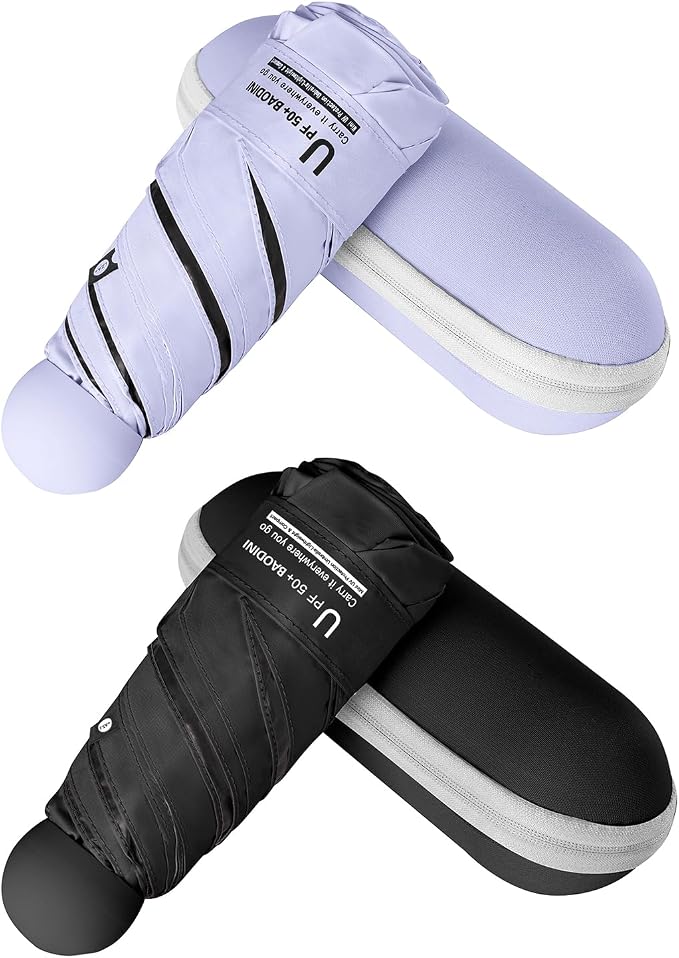
Suede shoes and unlined leather boots are the two items I’ve personally ruined in Spanish rain; stick to treated leather or a synthetic that can handle a downpour.

A packable rain shell that folds into your daybag takes up almost no space and saves entire days that would otherwise be spent hiding in a café doorway.
Local tip: check the forecast city by city, not for the country as a whole — a sunny week in Seville and a soaked week in Bilbao happen simultaneously more often than you’d think.
Fabrics to Pack (and the Ones to Skip)
November in Spain rewards fabrics that transition well and punishes anything too thin or too heavy.
Merino wool, midweight cotton, ponte knit, and denim all handle the temperature swings without bulk. Leather and suede (treated) work beautifully for jackets and shoes.
What doesn’t work: pure linen, which you’ll want to leave for summer since it offers almost no warmth once evening hits, and anything too heavy and wool-only, which turns into a sweat situation the moment you’re inside a heated café or walking uphill in Toledo.
I lean on cotton-wool blends for almost everything on this trip — enough structure and warmth without the bulk of a pure wool piece.
Local tip: pack one genuinely warm piece (a proper wool coat or a thick cardigan) even if you think you won’t need it. The one cold snap you don’t plan for is always the one that happens.
Regional Differences You Actually Need to Plan Around
If your trip covers more than one region, packing “for Spain” isn’t really one packing list — it’s two or three.
Madrid and the central plateau run coldest, with real morning chill and cooler evenings than the coasts. Barcelona and the eastern coast sit in the middle — mild, but damp enough that rain gear matters. Andalusia (Seville, Granada, Málaga) stays the warmest by a real margin, often still shirt-and-cardigan weather at midday. The north (San Sebastián, Bilbao, Santander) is the outlier — genuinely rainy and cool, closer to a British autumn than a Spanish one.
On multi-city trips, I pack for the coldest and rainiest stop and treat everything warmer as a bonus where I can shed layers.
Local tip: if your itinerary runs south to north or vice versa, pack your suitcase in “temperature order” so the warm-weather stuff is easy to reach first and the heavier layers surface as you head north.
Building a Capsule Wardrobe for Spain in November
Here’s the version of all of this that actually fits in one carry-on: a five-day capsule that mixes and matches into far more outfits than the piece count suggests.
Two pairs of trousers (dark jeans, tailored black), one knit dress, one long-sleeve top, one lightweight cardigan, one trench with a zip-in layer, and one pair of ankle boots plus one pair of leather sneakers. Add a scarf, a crossbody bag, and a handful of accessories, and that’s roughly nine outfits from about ten pieces — including a daytime and an evening look for every day of a week-long trip.
This is genuinely the system I use now after years of overpacking. Everything works with everything else, so there’s no “orphan” piece taking up space and never leaving the suitcase.
Local tip: lay every piece out before you pack and make sure each item pairs with at least three others. If something only works with one outfit, it’s the first thing to cut.
How Many Outfits to Actually Pack
For a week in Spain in November, I bring roughly five tops, two bottoms, one dress, two jackets (one warm, one rain-ready), and two pairs of shoes — then do laundry once mid-trip if it’s longer than that.
The overpacking mistake almost everyone makes is bringing a “just in case” outfit for every possible scenario — one more fancy dress you might not wear, one more pair of shoes for a hike you might not do. Plan your actual itinerary first (how many dinners out, how many museum days, how many travel days) and pack to that, not to a hypothetical.
The other habit worth building: plan outfits, not just pieces. Before I pack anything, I sketch out roughly what I’ll wear each day, which instantly reveals when I’m bringing three variations of the same outfit and none of an evening look.
Spain in November rewards a slightly different kind of packing than the peak-summer version everyone’s seen a thousand times — a little more intentional, a little more layered, a lot more useful across an entire trip instead of just the sunny afternoons. Pack the trench, break in the boots, bring one scarf more than feels necessary, and you’ll spend far less time thinking about your suitcase and a lot more time actually enjoying the tapas, the cathedrals, and those long, golden Spanish evenings.

