
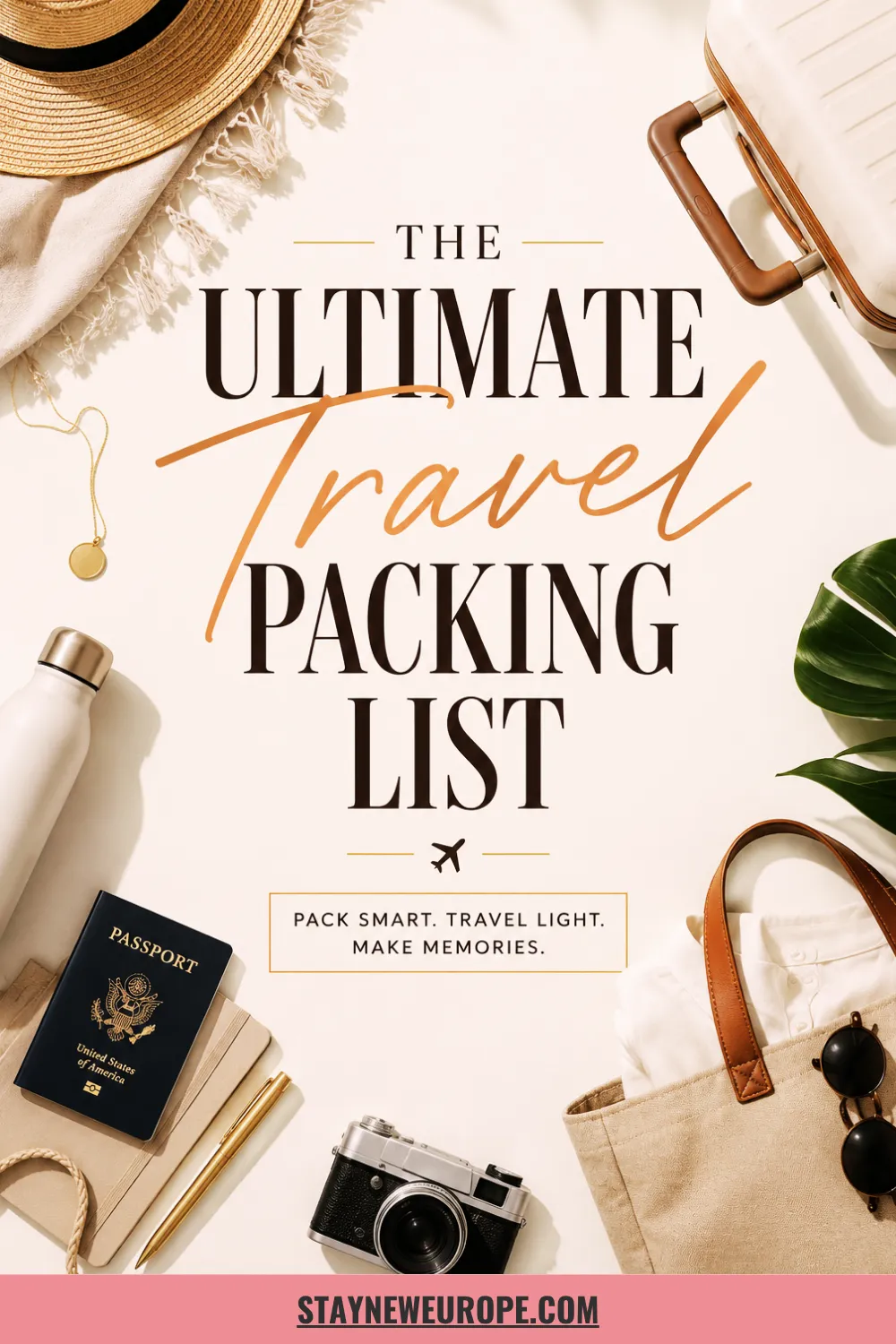
I have packed for weekend trips to Lisbon and month-long rambles across six countries, and somewhere in between I finally stopped overthinking it. This is the packing list I actually use — the one that’s been refined by leaving things in hotel drawers, paying for extra baggage I didn’t need, and standing in a Florence launderette at 9pm because I packed all cotton and none of it dried overnight. Consider this your shortcut past all of that.
Before We Dive In
This isn’t a destination-specific list — for that, I’ve got dedicated guides like my Spain packing list or what to pack for Greece in July. This is the foundational list: the stuff that goes in the bag no matter where in Europe (or beyond) you’re headed. A few ground rules before we get into it:
- Everything should work with at least two other things. If an item only pairs with one outfit, it’s not earning its space.
- Pack for the trip you’re taking, not the trip you’re imagining. You don’t need “just in case” outfits.
- Laundry exists everywhere. You are not packing for a trip with no access to a sink or a washing machine.
With that out of the way, let’s get your suitcase sorted.
Travel Documents & Money
Start here, because this is the one category where forgetting something actually derails the trip. Passport (checked for expiry — many countries require six months’ validity beyond your travel dates), any visa documents, printed or digital copies of your accommodation confirmations, travel insurance details, and a driver’s license or International Driving Permit if you’re renting a car. For money, I carry one primary card, one backup card kept separately from my wallet, and a small amount of local currency for the first day before I’ve found an ATM.
Local tip: Photograph the photo page of your passport and email it to yourself. If it’s ever lost or stolen, this shaves hours off the replacement process at an embassy.
Electronics & Tech
Keep this tight. A phone charger, a universal adapter (Europe mostly runs on Type C/F outlets, but the UK and Ireland use Type G — check before you go), a portable power bank, and headphones cover most people’s needs. If you’re bringing a camera, pack the charger and one spare battery, not three. E-readers save enormous suitcase space over physical books.
Local tip: Buy a European eSIM before you fly rather than hunting for a SIM card on arrival — it activates the moment you land and it’s usually cheaper than roaming.
Toiletries That Actually Earn Their Space
Hotel bathrooms almost always have basic soap and shampoo, so resist packing full-size everything. Decant what you actually use daily into 100ml containers: cleanser, moisturiser, sunscreen. Bring your prescriptions in their original containers with a copy of the prescription.
A travel-size first aid kit — plasters, painkillers, antihistamines, motion sickness tablets — takes up almost no room and saves a pharmacy run when you least want one.

Local tip: European pharmacies (marked by a green cross) are excellent and often stock things over the counter that require a prescription elsewhere. You can genuinely pack light on the medical front and top up there if needed.
Building a Capsule Wardrobe
This is the single biggest lever for packing light. A capsule wardrobe means every piece is chosen because it works with several others — not because it’s a “nice outfit” on its own. Aim for 12–15 clothing pieces (excluding underwear and sleepwear) built around two or three neutral base colours plus one or two accent colours. That’s genuinely enough to create ten-plus different outfits.
Local tip: Lay every piece out on the bed before you pack and cross off anything that doesn’t pair with at least two other items. If it fails that test, it doesn’t go in the suitcase.
Tops
Three to five tops covers most trips of a week to ten days:
a couple of plain t-shirts or tanks in neutral colours, one button-down that layers well, and one top with a bit of personality — a print, a colour, a texture — to keep outfits from feeling repetitive. Natural fibres (cotton, linen) breathe better and photograph better than synthetics, though a merino wool base layer is worth its weight if you’re travelling somewhere cool.

Local tip: One striped top is doing more work in your suitcase than you’d expect — it reads as intentional dressing in almost every European city and pairs with literally everything else on this list.
Bottoms
Two to three bottoms is usually plenty: one pair of well-fitting trousers or jeans, one pair of shorts or a skirt for warmer days,

even shorts works well too

and — if there’s room — a pair of lightweight linen trousers that double as your “smart casual” option for dinners. Stick to colours that all coordinate with your tops.

Local tip: Wide-leg linen trousers are the most underrated packing item I own. They’re cool in heat, they cover your knees for church visits, and they look considerably more put-together than shorts for the same amount of effort.
Dresses & One-Piece Wins
If you wear dresses, they’re the most efficient item in your bag — one piece, instantly a full outfit.

Pack one or two versatile options: something that works for daytime with sandals and can be dressed up for the evening with different shoes and a layer.
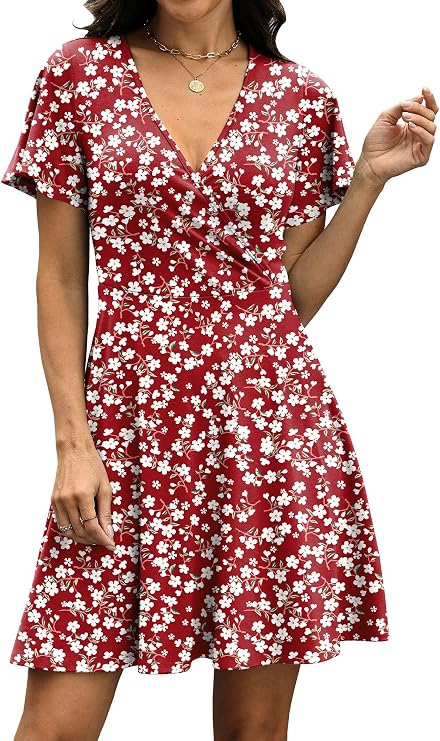
Local tip: A wrap dress is the most flexible option going, since it adjusts to fit under a light jacket, cinches for a more polished silhouette, and works from a hot afternoon to an air-conditioned restaurant without a wardrobe change.

Layers & Outerwear
One lightweight layer is non-negotiable, even in peak summer — evenings cool down more than people expect, especially near coastlines or at altitude.

A packable rain jacket, a denim jacket, or a light cardigan all do the job without taking up much room.

For colder-weather trips, prioritise one genuinely warm layer over several medium ones.
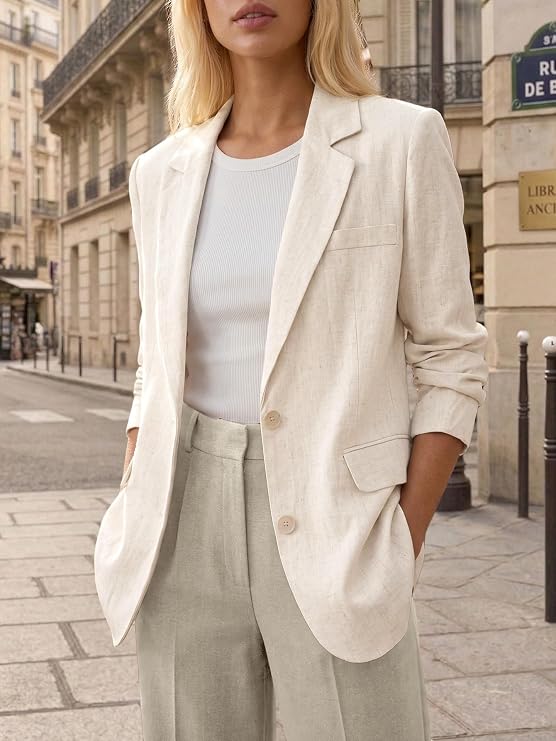
Local tip: A large scarf pulls triple duty as a layer, a church covering for shoulders and knees, and an in-flight blanket. It weighs almost nothing and belongs in every bag regardless of season.
Shoes
This is where overpacking happens most. Two pairs is enough for most trips: one genuinely comfortable walking shoe (broken in before you leave — never on the trip itself)

and one pair that can go from daytime to dinner.

A third pair, like sandals for a beach leg of the trip, is reasonable if the itinerary actually calls for it.
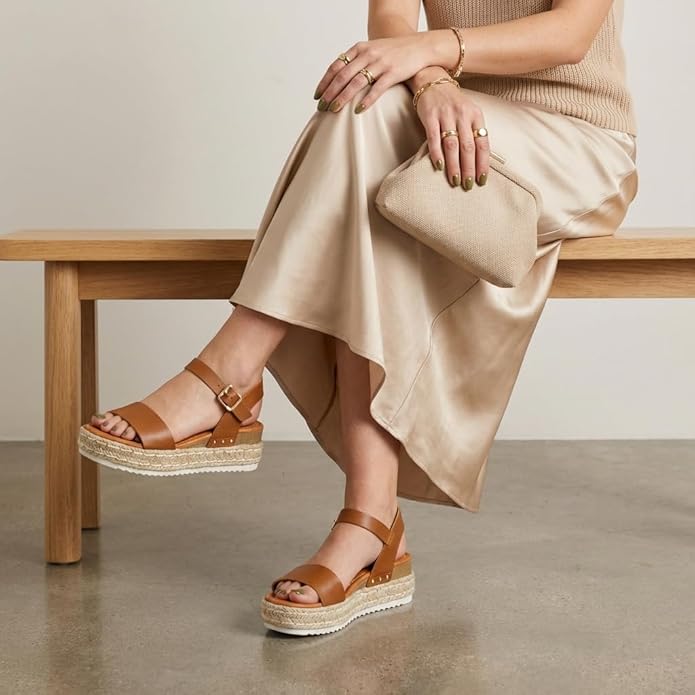
Local tip: European cities mean cobblestones, hills, and a lot more walking than people plan for. Comfort should outrank style for your primary shoe — your feet will thank you by day three.
Accessories
Accessories are where you get creative without adding bulk: a crossbody bag for security

and hands-free days, sunglasses,

a belt, minimal jewellery,
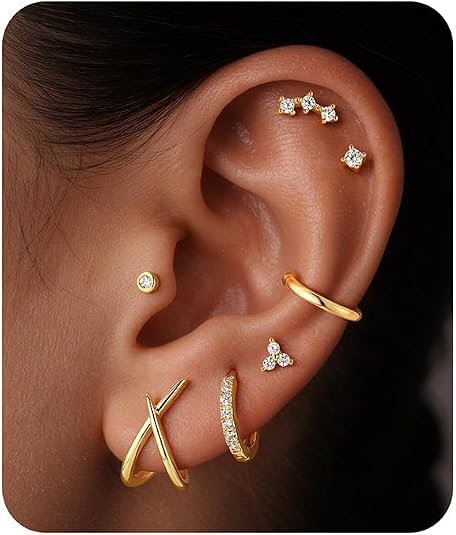
and a sun hat that folds flat. These are the pieces that let a small wardrobe feel like more outfits than it actually is.

Local tip: Keep jewellery simple and minimal — statement pieces read as a target in busy tourist areas, and they’re one more thing to keep track of.
Health & Safety Kit
Beyond the basics already mentioned: hand sanitiser, a reusable water bottle, sunscreen (SPF 30 or higher — European sunscreen in tourist-heavy spots can be marked up significantly),

and a small padlock for hostel lockers or securing a zipped bag. If you wear contacts, pack a spare pair and your prescription.

Local tip: A doorstop alarm — a small wedge alarm that fits under a hotel or Airbnb door — is a genuinely underrated addition for solo travellers, and it weighs almost nothing.
Packing Techniques: Rolling vs Folding
Both have their place, and the debate is more nuanced than “rolling always wins.”
Rolling vs Folding Clothes for Suitcase Packing: Which One Is Actually Better?
Roll soft, non-structured items — t-shirts, underwear, knitwear — to save space and reduce creasing. Fold structured pieces — blazers, dress shirts, anything tailored — flat, since rolling distorts their shape. Packing cubes make either method more effective by compressing everything and keeping categories visible without you having to dig.
Local tip: Stuff socks and small accessories into the inside of your shoes before packing them — it’s dead space otherwise, and it keeps your shoes from losing their shape in transit.
Carry-On vs Checked Luggage
For most trips under two weeks, carry-on only is genuinely achievable if you commit to the capsule wardrobe above — and it means skipping baggage fees, never worrying about lost luggage, and moving faster between trains, flights, and cities. Longer trips or multi-climate itineraries may call for one checked bag, but even then, pack a full outfit change in your carry-on in case your checked bag doesn’t arrive with you.
- How to Pack a Carry On for 10 Days (Without Losing Your Mind or Your Style)
- How to Pack a Carry On for 10 Days Italy Summer (Without Sweating Through Everything You Own)
Local tip: If you’re island-hopping or taking multiple internal trains, a carry-on becomes less of a lifestyle choice and more of a practical necessity — dragging a large suitcase up a Santorini staircase is a genuinely miserable way to start a holiday.
Seasonal Packing Adjustments
Summer: travel swaps in linen, cotton, and breathable fabrics, plus more sun protection.
Winter: travel is about layering rather than one bulky coat — a thermal base layer, a mid-layer, and a packable outer shell handles more temperature swings than a single heavy coat while taking up comparable space.
Shoulder-season trips (spring and autumn) are the trickiest, since a single day can swing 15°C — pack layers you can add and remove rather than committing to one temperature range.
Local tip: Check not just the average temperature for your destination and dates, but the actual daily range — a “22°C” day in a coastal town can still start at 12°C before sunrise.
Final Pre-Departure Checklist
The night before you leave, do one last pass: documents and money in your personal item, chargers and valuables in your carry-on (never checked luggage), one weather-appropriate outfit worn on travel days to save suitcase space, and a final check that every item in the case actually pairs with at least two others. If something doesn’t, take it out. You’ll thank yourself on day four when you’re not hauling dead weight through a train station.
Packing well isn’t about bringing less for its own sake — it’s about bringing exactly what earns its place, so you spend your trip enjoying it rather than wrestling a suitcase that won’t zip. Wherever you’re headed next, safe travels.


One Response