
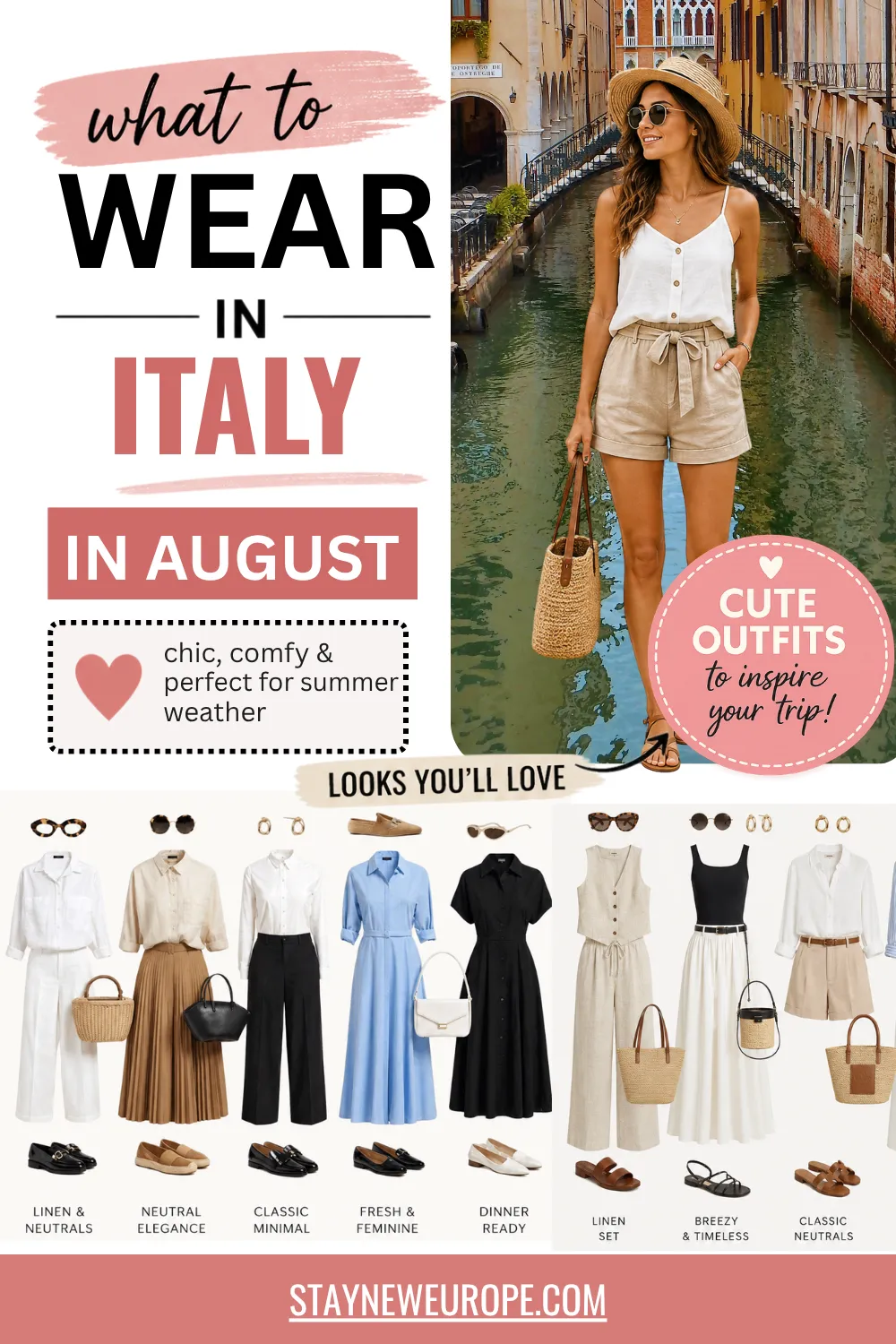
Let me be honest with you: Italy in August is not for the faint-hearted — or the overdressed. It is hot. Not “oh, how lovely and warm” hot. More like “why did I pack that second cardigan, what was I thinking” hot. Temperatures regularly hit 35°C (95°F) in Rome, Florence bakes in the Arno Valley like a terracotta pot in a kiln, and even the coast can feel relentless by midday. And yet — somehow — Italian women are still out there looking impossibly put-together. Linen trousers, silk scarves, bronze sandals. Not a bead of sweat in sight. It’s maddening, and it’s also an art form.
The good news is that dressing well in Italy in August is genuinely not complicated, once you understand the logic. It’s not about packing more — it’s about packing smarter. The people who struggle most are the ones who drag half their wardrobe across the Atlantic and end up sweating through a polyester sundress on the steps of the Colosseum. This guide is here to make sure that isn’t you.
What follows is everything I’ve learned — sometimes the hard way — about what to wear in Italy in August: which fabrics survive the heat, which shoes will carry you across ancient cobblestones without destroying your feet, and how to put together outfits that feel stylish without trying too hard. Italy rewards effort. Let’s make sure yours is well-placed.
Before We Dive In: Italy in August — What You’re Actually Dealing With
August in Italy is peak summer, full stop. The entire country is in holiday mode, which means crowded piazzas, long lunch queues, and a heat that settles in like an uninvited guest who refuses to leave.
Weather:
In cities like Rome and Florence, daytime temperatures hover between 30–36°C (86–97°F), and the humidity in coastal areas like the Amalfi Coast or Sicily can make that feel significantly worse. Evenings cool down — sometimes only to 24°C — so there’s genuine relief, but you’ll want to plan for warm nights too.
Road condition:
Rome’s streets are ancient, uneven, and paved with sampietrini — the small, irregular volcanic cobblestones that will eat cheap sandals and unstable heels alive. Florence has similar texture across the centro storico. The Cinque Terre involves actual hiking between villages. Even Venice — which I know isn’t strictly August’s most popular Italian destination — involves hundreds of small bridges with steep steps.
Culture:
Then there’s the style culture, and this matters more than people realise. Italians dress with intention. The concept of bella figura — making a good impression, presenting yourself well — is deeply woven into daily life. That doesn’t mean you need to wear couture, but it does mean that rocking up to a restaurant in beachwear or wandering a church in a crop top will earn you a very specific kind of Italian look. Aim for put-together. Aim for considered. You don’t have to be fancy — you just have to look like you tried.
The Fabric Rule: Linen, Linen, Linen (And a Few Others)
If you take nothing else from this guide, take this: your August Italy wardrobe should be built almost entirely around natural fibres. Specifically linen, and secondarily cotton and rayon. Everything else — and I mean everything — is going to make you miserable.
I learned this personally on a trip to Florence in late July, when I packed a gorgeous polyester wrap dress because it “wouldn’t crease.” Reader: it was unwearable by 10am. Polyester traps heat against your skin in a way that goes beyond uncomfortable. It becomes genuinely unpleasant, and no amount of aesthetic appeal makes up for that when you’re queuing outside the Uffizi in 34-degree heat.
Linen is the answer. Yes, it creases. Yes, you will look slightly rumpled by mid-afternoon. But here’s the thing — rumpled linen in Italy looks chic. It’s textured and lived-in and perfectly appropriate for the setting. Linen breathes in a way that cotton can’t quite match at extreme heat, and it dries quickly when you inevitably get a little sweaty. If you’re not a linen devotee yet, August in Italy will convert you.
Cotton lawn, cotton voile, and rayon (sometimes labelled viscose) are also excellent choices. They’re softer than linen, drape beautifully, and keep you cool. Avoid anything with a high synthetic content — even “moisture-wicking” technical fabrics, unless you’re genuinely hiking, feel out of place in Italian cities and don’t perform as well as you’d expect in humid heat. Stick to natural, and you’ll feel dramatically better.
Local tip: Look for misto linen — linen blended with a small percentage of cotton or viscose. It gives you the breathability of pure linen with a touch more softness and slightly less aggressive creasing. Many Italian brands do this beautifully.
Linen Trousers: The One Item That Does Everything
There is no single piece of clothing more useful in Italy in August than a good pair of linen trousers. I’m going to be emphatic about this because I think people underestimate them.
Wide-leg linen trousers — particularly in neutrals like cream, oatmeal, sand, or sage — are extraordinarily versatile. They’re cool enough for a morning walk to the market, smart enough for a lunch at a proper restaurant, and covered-up enough to slip into a church without needing to scramble for a scarf. They also look incredibly chic when paired with a simple linen or cotton camisole and a pair of leather sandals, which is essentially the unofficial Italian summer uniform.

The key is fit. Trousers that are too tight will feel suffocating in the heat. Go for a relaxed, easy silhouette — not baggy, but definitely not fitted. Cropped styles that hit just above the ankle are particularly good in August because they keep air moving around your legs without going full palazzo-dramatic. I wore a pair of stone-coloured cropped linens through an entire week in Rome and genuinely reached for them every single day.

For evenings: the same trousers swap beautifully into a more elevated outfit. Tuck in a silk camisole, add some gold jewellery, and switch your flat sandals for something with a small heel or a strappy mule, and you’re dinner-ready without having changed dramatically.
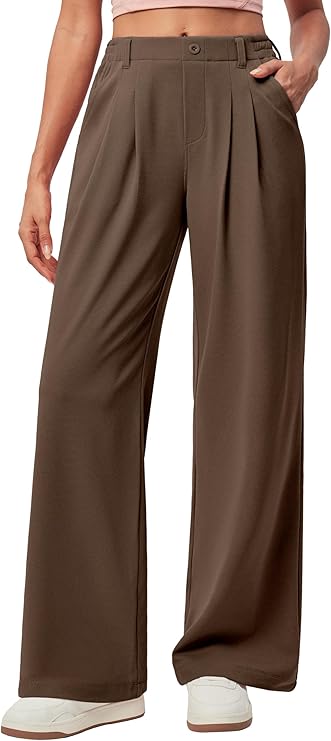
Local tip: Palazzo trousers (the wide, flowing kind) look amazing but can feel like a sauna if the fabric is heavy. If you go wide-leg, make sure the linen is lightweight — hold it up to the light; you should be able to see through it slightly.
Dresses: Your Most Important August Ally
Dresses in Italy in August are not optional — they’re survival gear. A dress is, at its core, the most aerodynamic thing you can wear, and in August heat, airflow around your body is the whole game.
The dresses that work best are midi-length, in lightweight fabrics (see: linen, cotton voile, rayon), with either thin straps or short sleeves. Maxi dresses are great for evening and for beach towns where you’re going back and forth from the water. Mini lengths work for younger travellers but can feel limiting when you want to enter churches or more formal restaurants.

What I love about a simple linen midi dress in Italy is how little effort is required to look completely appropriate for almost any situation. A terracotta or rust-coloured linen dress with tan leather sandals and a woven bag is breakfast, afternoon sightseeing, and early dinner in one unchanged outfit. That kind of effortless versatility is exactly what you want when you’re moving through multiple Italian cities in the heat. If you’re exploring multiple regions — which is very doable with Italy’s excellent train network, as you’ll know from the best cities in Italy to visit — a dress that works in every context is genuinely invaluable.

For church visits, the rule is simple:
- shoulders covered.
- knees covered.
- Keep a lightweight cotton scarf in your bag,
and you can drape it over yourself as needed. Some churches lend out coverings at the door, but it’s hit or miss, and having your own is just easier.
Local tip: Broderie anglaise (eyelet cotton) dresses are particularly beautiful in Italian summer light — the texture reads as elevated rather than casual, even in simple silhouettes, and the perforations keep the fabric feeling airy.
What to Actually Wear on Your Feet (This Matters More Than You Think)
Footwear in Italy in August is where I have seen the most spectacular tourist errors, and I say this with love. High heels on cobblestones. Flip-flops on a 6-hour walking day. Brand-new sandals that blister within 90 minutes of arrival. Please, do not do this to yourself.
The ideal August Italy shoe is a flat or very low-heeled leather sandal — the kind with a proper footbed and secure straps. Think Birkenstock-style contoured soles, or Italian leather sandals with ankle straps. These work for walking all day and look completely intentional and stylish in a way that rubber-soled tourist sandals never quite manage.
If you want to look like you belong in Italy, the shoes are often the giveaway — Italians wear real leather, and they wear it broken-in.

For cities: a pair of well-worn leather loafers or slip-on mules also work beautifully, particularly if you want a slightly more polished look. The key word is “well-worn” — your feet will not thank you for debuting new leather shoes on a day of cobblestone-heavy sightseeing. Wear whatever you’re bringing around the house for a week before you go.

Save your elevated sandals — heeled mules, strappy wedges — for evening, and make sure the heel is either chunky or very low. A thin stiletto heel on Italian cobblestones is not a fashion statement; it’s a sprained ankle waiting to happen.

Local tip: If you’re heading to somewhere like the Cinque Terre or Amalfi, pack a pair of proper walking sandals with rubber soles — Chacos, Tevas, or decent hiking sandals. The trails are steep and sometimes wet, and style comes second to not falling off a cliff.
The Capsule Wardrobe for Italy in August
Rather than listing random items, let me give you the actual framework I use when packing for a week to ten days in Italy in August. Everything should mix and match, and your colour palette should be intentionally narrow — neutrals anchored by one or two richer tones.
Build around: cream, sand, terracotta, olive, and white. Add one “interesting” colour — a cobalt blue, a dusty rose, a deep rust — and let that be your accent. Every single item should work with everything else.
The core:
- two or three linen midi dresses.
- two pairs of linen or cotton trousers (one light, one slightly darker).
- three to four light tops (camisoles, cotton button-downs, a simple t-shirt).
- one airy blouse or linen shirt that doubles as a cover-up.
- one evening outfit (this can be a silkier dress or a trouser-and-camisole combination).
For shoes:
- One pair of everyday sandals.
- One pair of evening sandals.
- One pair of comfortable walking shoes.
For Bag:
- One lightweight crossbody bag.
- one beach or market tote if you’re including coastal stops.
That’s it. That’s a ten-day wardrobe for Italy in August that fits in a carry-on — and speaking of carry-ons, if you want the full methodology on packing light for longer trips, the guide on how to pack a carry-on for 10 days is genuinely worth a read before you start folding.
Local tip: Roll your linen pieces rather than folding them to reduce creasing in transit. A steamer is available in most hotels, and linen actually smooths out remarkably quickly when hung in a steamy bathroom after a shower.
What NOT to Wear in Italy in August (Tourist Mistakes That Stand Out)
Let me be blunt, because I think this is actually useful information. There are a handful of things that immediately mark someone as a tourist in Italy, and while that’s not inherently a problem, dressing thoughtfully can make your experience measurably better — you’ll be taken more seriously in restaurants, you’ll be treated with more warmth by locals, and you’ll feel more confident.
Avoid: beachwear anywhere that isn’t a beach. Italy is surprisingly strict about this, and several cities including Rome, Florence, and Portofino have introduced fines for wandering through the centro storico in swimwear or going shirtless. It’s not prudishness — it’s just that the street is not a beach, and Italians are protective of that distinction.
Avoid: sports trainers (unless you’re doing something genuinely athletic). White sneakers are fine and have been fashionable for years — but bulky running shoes with a sightseeing outfit reads as very specifically tourist. It’s a small thing, but Italian cities are very style-conscious places. If you need something supportive, opt for a leather-upper sneaker or a cushioned walking sandal over a fluorescent gym shoe.
Avoid: shorts in churches and formal restaurants. A lot of American tourists in particular are confused about this — even in 35-degree heat, many Italian churches and some restaurants will turn you away if your knees are showing. Carry light trousers in your bag, or simply wear a midi dress that covers you automatically.
Avoid: overpacking. This sounds obvious but the consequences are real — hauling a heavy suitcase over cobblestones in August heat is its own special form of misery. If you’re wondering how to travel Italy on a budget without checking a bag, the savings on luggage fees alone are motivation to pack light.
Local tip: Italians rarely wear shorts in the city, even in peak summer. If you want to blend in, swap shorts for lightweight linen trousers or a loose midi skirt. You’ll also feel cooler — counterintuitively, loose-fitting long clothing often feels less hot than exposed skin in direct sun.
Lightweight Layers: Why You Still Need Them in 35-Degree Heat
This surprises people every single time: you absolutely still need layers in Italy in August. Not wool. Not fleece. But layers.
Here’s why:
air conditioning in Italy is aggressive. Museums, restaurants, trains, and shops are often cooled to a temperature that feels designed for people who just walked out of a freezer, not off a sunny piazza. After an afternoon wandering sun-soaked streets, walking into an aggressively air-conditioned gallery can genuinely make you shiver. If you’re doing the Vatican, the Uffizi, or any number of lengthy indoor experiences, you will be grateful for a lightweight layer.
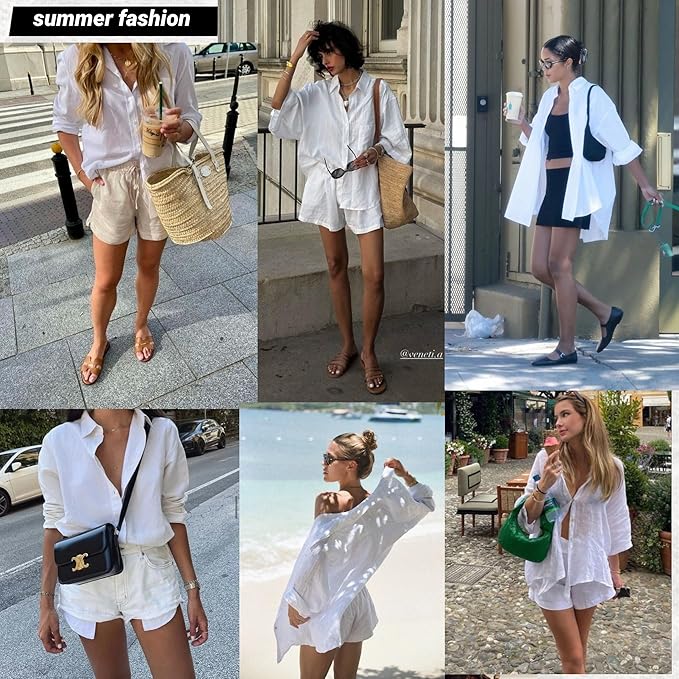
The best option for August Italy is a linen or cotton kimono-style cover-up, a lightweight cotton overshirt, or a thin cashmere or merino short-sleeve cardigan.

These pack flat, barely add weight to your bag, and double as church coverings when needed. A large cotton or linen scarf (often sold beautifully in Italian markets) does triple duty: layer, church covering, and beach wrap.
I also want to mention evenings specifically. Even in August, after 9pm in cities, a light layer is often welcome — particularly if you’re sitting outside at a restaurant in a sleeveless dress when a breeze comes through. It won’t be cold, but it might be comfortable-with-a-light-layer rather than comfortable-without. That distinction matters over a long, leisurely Italian dinner.
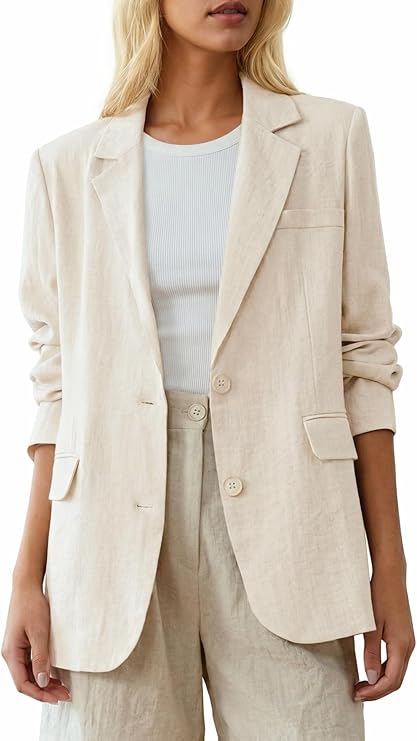
Local tip: A linen overshirt in a slightly oversized fit is the single most multi-purpose item you can pack for August Italy. Wear it open as a light jacket, belted as a dress over a camisole and trousers, or draped over your shoulders European-style in the evening.
Evening Outfits in Italy: How to Dress for Dinner Italian-Style
Dinner in Italy is a proper occasion, and even the most casual-seeming trattoria tends to have an unspoken dress code of “not this again, not the hiking sandals.” Italians eat late — 8:30pm to 10pm is very normal in August — and they dress up a touch for it. Not dramatically, but intentionally.
For women: the sweet spot for Italian evening dressing is somewhere between effortlessly elegant and deliberately casual.

A silk or satin-finish camisole tucked into wide-leg linen trousers with some gold jewellery and strappy sandals is genuinely perfect.

A floaty midi dress in a slightly richer colour — dusty rose, deep terracotta, midnight blue — elevated with simple accessories works beautifully.

What doesn’t work: the same thing you wore all day sightseeing without any adjustment, beachwear, or very casual sportswear.
If you’re visiting Rome specifically — and the what to wear in Rome guide has more city-specific detail on this — evenings in Trastevere and around the Pantheon area tend toward a slightly dressier casual vibe than you might expect from a summer city. People genuinely make an effort, and it’s enjoyable to match that energy.
A simple trick: keep one item in your bag specifically earmarked for evenings — a silk camisole, a delicate necklace, a lightweight scarf you can style differently. Swapping one thing into your daytime outfit gives you a quick evening transformation without needing to carry an entirely separate look.
Local tip: Gold jewellery is absolutely the Italian evening accessory of choice. Simple gold hoops, a thin layered chain, a chunky gold cuff — any of these will make a simple linen-and-sandals outfit look completely dinner-appropriate. Silver can work but tends to read as slightly cooler in palette; gold feels more Italian summer in an instinctive way.
Church Dress Code: The Rules Are Simple, So Please Follow Them
This is a short section but an important one. Italy has a lot of churches. Many of them are extraordinarily beautiful and deeply worth visiting. Most of them have a dress code. The dress code is not complicated: shoulders covered, knees covered. For both men and women.
The issue is that in August, people are wearing as little as possible — which is completely understandable given the heat — and then are surprised when they get turned away from the Sistine Chapel or the Duomo in Florence because their shorts are too short or their shoulders are bare.

The solution is simple and doesn’t require changing your entire packing strategy. A lightweight cotton or linen scarf doubles as a shoulder covering and a lap covering simultaneously when tied or draped correctly. A linen overshirt thrown into your bag does the same job more completely. A loose cotton cover-up that fits over whatever you’re wearing is ideal.
Midi dresses and linen trousers with a sleeved top mean you often don’t need to think about this at all — you’re already compliant. That’s another reason why these pieces dominate a smart Italy August wardrobe.

Local tip: Major tourist churches sometimes have disposable cover-ups available at the entrance, but I have seen them run out, I have seen them be frankly unpleasant to wear in the heat, and I have seen people refused entry before they even got to ask. Just pack a scarf. It weighs nothing and fits in every bag.
Bags: What to Actually Carry Through Italian Streets
Your bag choice in Italy in August matters partly for style and partly for very practical security reasons. Pickpocketing is a real concern in tourist-heavy areas — particularly in Rome near major sights, and in Florence’s busy markets. A bag that is hard to access without your knowledge is a better choice than one that isn’t.
The crossbody bag is ideal for Italian sightseeing. Wear it across your body with the bag itself positioned in front of you, and it becomes very difficult for anyone to open without you noticing.

A leather or waxed canvas crossbody in a neutral colour — tan, cognac, dark brown, black — looks genuinely chic with summer outfits and is practically sized for a day’s essentials: phone, cards, sunscreen, water bottle (in a bag with a bit of depth), and your scarf-slash-church-covering.

Backpacks work, but they have two problems: they’re accessible to people behind you without your knowledge (wear them on your front in busy areas), and they read as quite tourist-y rather than Italian in style. If you want to carry one, go for a small, structured leather backpack rather than a hiking-style bag.

For beach days or market trips, a woven raffia or canvas tote adds a relaxed, Mediterranean feel that’s actually very on-trend in Italian coastal areas right now. It works beautifully alongside a linen dress or a casual summer outfit, and is large enough to carry your sandy beach things home without ruining a structured bag.

Local tip: Never put your phone or wallet in an outer pocket of any bag while walking through crowded Italian streets. Keep valuables in a zipped inner compartment, and if your bag doesn’t have a zip closure at the top, consider a small padlock or simply hold it close in busy areas.
Accessories That Elevate Without Adding Weight
One of the things I love about dressing in Italy is that the accessories culture is genuinely good here. Italians use accessories to express personality within an otherwise restrained, neutral-based wardrobe — and this is a very smart approach for travellers too, because accessories pack flat and can completely transform a limited wardrobe.
Sunglasses are essential in August — not a fashion option, an actual necessity. The light in Italy in August is strong and relentless, especially in coastal and hilltop towns where there’s no shade to hide in. Invest in a pair with good UV protection and frames that feel like you. Italians wear sunglasses with authority, and a good pair instantly reads as more put-together than a bad one. A classic acetate frame in tortoiseshell or black is always the right answer.

A silk or cotton printed scarf is my single most-recommended accessory for Italy in August.
It doubles as a church covering, a hair wrap for moped rides or windy boat trips, a picnic blanket, a beach wrap, and a bag accessory when tied to a handle.

Italians are extremely good at styling scarves in a hundred different ways, and even one casually knotted in your hair gives a summer outfit a completely different feel.

Gold jewellery — as I mentioned in the evening section — is the Italian summer staple. Keep it simple: earrings, a necklace, one bracelet. Layered delicate chains are having a permanent moment and work with everything from a linen dress to a button-down and trousers.
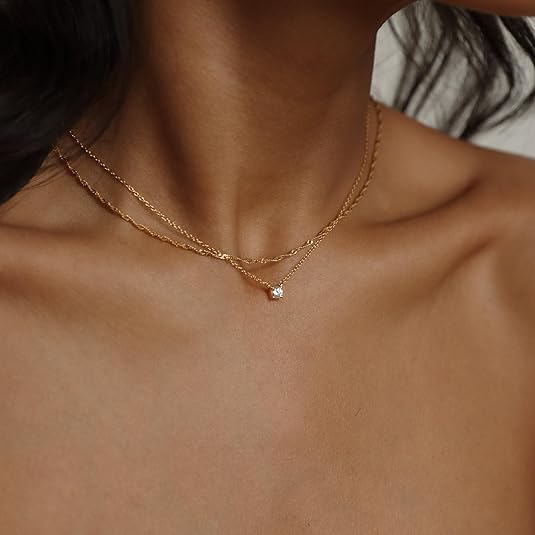
Local tip: Straw hats are both practical and beautiful in Italian summer heat. A wide-brimmed natural straw hat is sold in markets across Italy for very reasonable prices — buying one there rather than packing it saves space and means you get something locally made. It will also protect your face and neck far more effectively than sunscreen alone.
Sun Protection: The Style-Adjacent Essential No One Talks About Enough
I’m including this section because I’ve watched too many people end their second day of sightseeing burned, headachy, and miserable — and it’s entirely preventable.
August in Italy means UV index 8 to 10+ in the south and on the coast. That’s the kind of sun that burns light skin in under 20 minutes without protection. The practical implications for dressing: long sleeves and wide brims are not just stylish — they are genuinely the most effective sun protection available, more reliable than reapplying SPF every two hours when you’re sweating and moving.
This reframes your whole wardrobe logic. That linen overshirt isn’t just a layer for churches or air-conditioned museums — it’s also sun protection for your arms.
The straw hat isn’t just a fashion choice — it’s protecting your face, neck, and scalp.

A lightweight long-sleeved linen top isn’t too warm — it’s cooler than exposed skin in direct, intense sun, because it blocks the radiant heat.
Sunscreen is still essential for face, neck, décolletage, and any exposed skin. Pack a high-SPF product in a small, travel-appropriate size, and factor in that Italian pharmacies (farmacie) stock excellent European sunscreens if you run out or need to buy there. European sun protection formulations are often rated higher in actual UVA protection than their American equivalents, which is a little-known advantage of the Italian pharmacy stop.
Local tip: Lip balm with SPF is constantly forgotten and constantly needed in Italian summer sun. Pack one in every bag you’re using.
What to Wear for Specific Italy Situations
Because Italy in August is not one experience — it’s many.
The Amalfi Coast and coastal villages: More relaxed, more beach-adjacent dressing is appropriate here. A linen cover-up over a swimsuit, a flowing maxi dress, espadrilles or leather sandals. If you’re exploring places like Positano or Ravello, the steep walking paths still require proper footwear. The what to wear in Sardinia in summer guide covers the beach-town wardrobe logic well if that’s part of your trip.
Rome in August: The city is genuinely hot and the tourist sites are crowded. Comfort without sacrificing style is the goal. Linen trousers or a midi dress, supportive sandals, your crossbody bag, sunglasses, and a scarf for churches. Stick to light colours that won’t absorb heat.
Florence in August: Many Florentines actually leave the city in August (it’s a local joke that August Florence belongs entirely to tourists), but the city is still beautiful and manageable. Similar dressing logic to Rome, with the addition that Florence’s restaurant culture skews slightly smarter — a touch more dressed-up for dinner is appreciated. The what to wear in Florence in June guide has useful Florence-specific style context that translates well to August too.
Hill towns (Siena, Assisi, Orvieto): The altitude provides some relief from the heat, but the streets are steep and often cobblestoned. Comfortable, secure footwear is essential. Dresses and linen trousers work beautifully in these settings — there’s something about a linen midi dress against ancient stone streets that feels exactly right.
Local tip: If you’re planning to visit Italy in August across multiple cities, the ultimate printable Italy travel checklist is a useful practical resource to work through before you start packing.
Practical Packing: How Many Outfits and What to Actually Bring
Let me give you concrete numbers, because vague packing advice is unhelpful.
For seven days in Italy in August, you need approximately:
- three to four dresses (or two dresses and two sets of trousers-with-tops).
- two to three lightweight tops that mix with the trousers.
- one evening-specific option (a silk camisole or a slightly dressier dress).
- two pairs of sandals (everyday and evening).
- one pair of walking shoes.
- one pair of swimwear if you’re including any beach time.
- five to six sets of underwear.
- one lightweight layer (overshirt or kimono).
- two to three silk or lightweight scarves.
The biggest packing mistake for Italy in August is bringing too many options “just in case.” The heat means you’ll want to repeat your most comfortable items rather than experiment with things you haven’t tested in that kind of warmth. Test-wear your full outfits — including shoes — at home in warm conditions before you pack them. This sounds obvious, but it catches problems you won’t want to discover in a Florentine street in 38-degree heat.
Do not bring: heavy jeans (they’re miserable in August heat), formal heels (they’ll be unworn), more than one jacket (you don’t need it), or multiple bags (one crossbody and one tote is plenty). If you’re tempted to bring more than fits comfortably in a medium-sized suitcase or large carry-on, remove one thing for every extra thing you’re considering.
Local tip: Italy is one of the world’s great shopping destinations for exactly the kind of clothing this article describes — linen dresses, leather sandals, silk scarves. Arriving with slightly less leaves you room to buy something beautiful there, which is honestly a lovely way to approach a trip.
A Note on Italian Style: The Real Secret
I want to end the main body of this guide with something that isn’t exactly about clothing, but that shapes how clothing is worn in Italy, and it’s worth saying directly.
Italians dress with confidence. That’s the actual secret. The same linen dress on two different people will read very differently depending on how the person wearing it carries themselves. In Italy, fashion is not anxious — it’s not about following trends or worrying whether something is fashionable enough. It’s about wearing things that fit well, that are appropriate for the situation, and that you feel genuinely comfortable and good in.
That’s actually liberating advice for a tourist. You don’t need to dress Italian — you just need to dress intentionally. Choose things that work for the heat. Choose things that work for your body. Choose things that make you feel like yourself on a trip that is exciting and sensory and slightly overwhelming in the best possible way. The most stylish thing you can wear in Italy in August is the thing you’ve chosen on purpose.
Italy rewards that energy. Trust me — the piazzas, the evening light, the gelato, the whole magnificent sun-drenched experience — it’s waiting for you. Now you’re ready for it.


8 Responses