
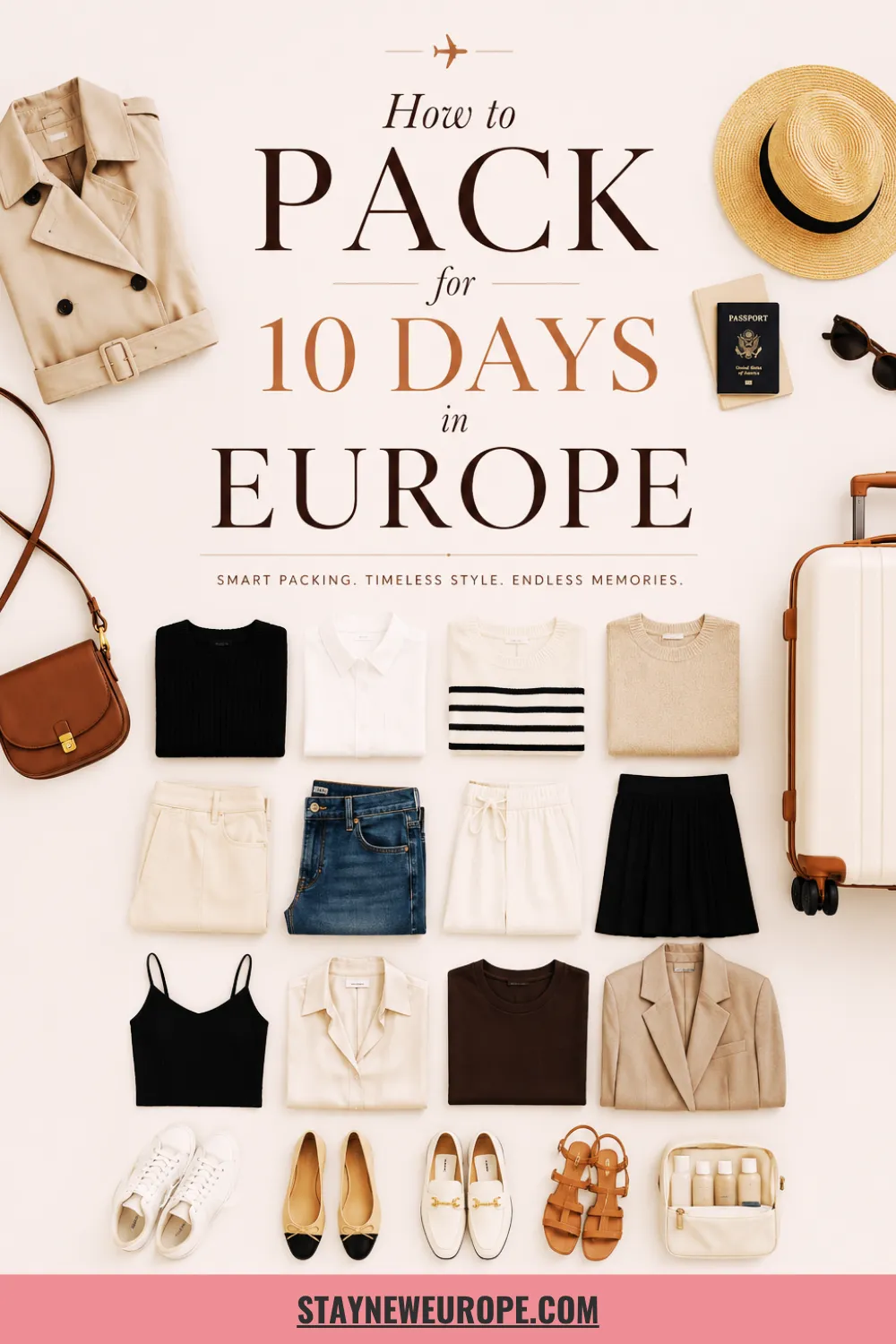
I used to be the person who packed for every possible version of a trip — the sudden cold snap, the fancy dinner that probably wouldn’t happen, the hike I wasn’t actually going to do. Ten-plus trips across Europe later, my suitcase has gotten smaller every single time, and my outfits have somehow gotten better. This is the system I actually use, not the idealized one from a packing influencer’s carousel.
If you’re staring at your bed covered in clothes right now wondering how any of it fits into one bag for ten days, I promise you it does. Let’s get into it.
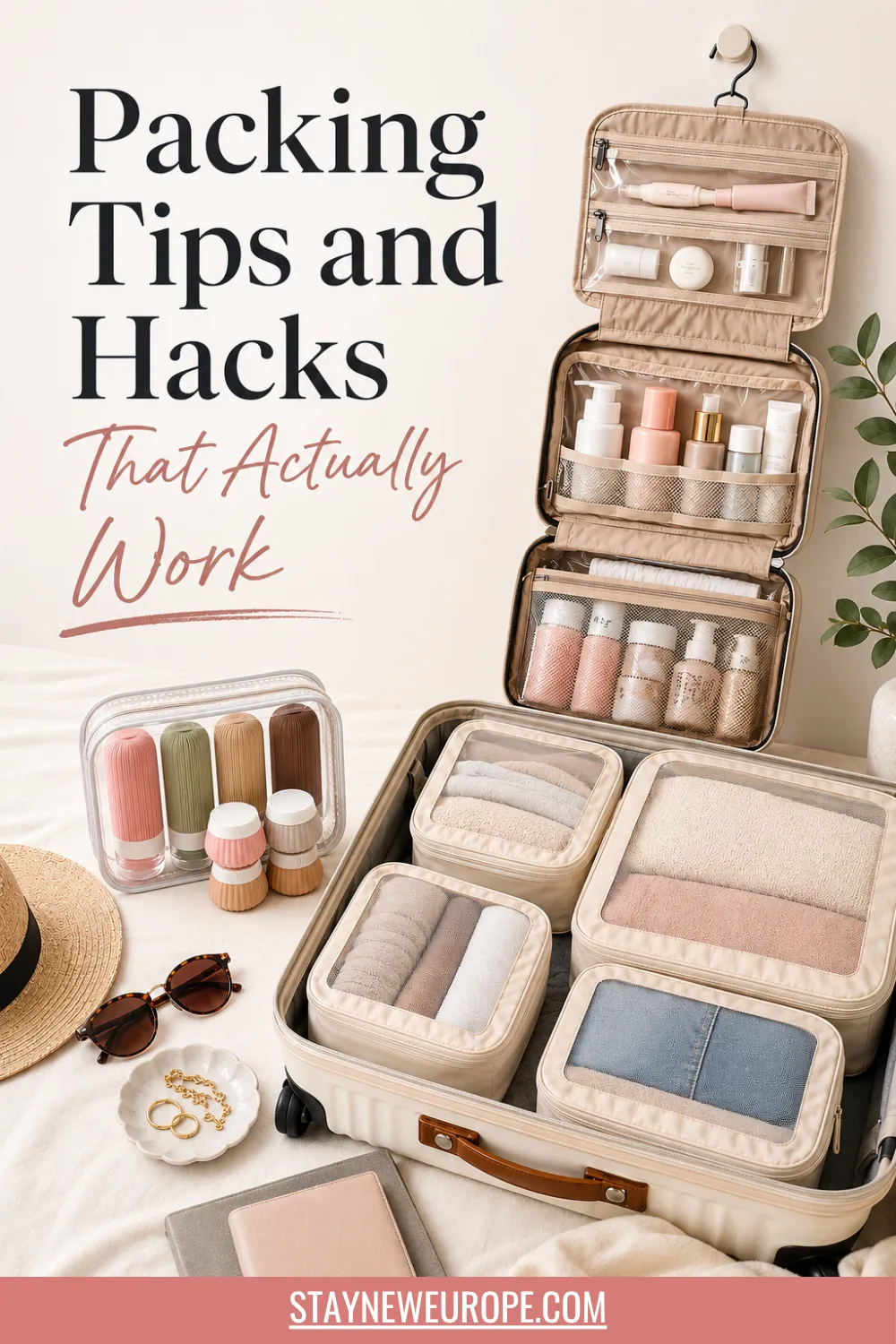
Packing Tips and Hacks That Actually Work
Before We Dive In
A few quick notes before the list: this guide is built around a carry-on-sized suitcase or a large backpack, one personal item, and a trip that involves more than one city or country — the classic multi-stop European itinerary. If you’re doing a single destination in a single season, you can be even more specific with your choices (my Spain packing list and Greece in July guide go deeper on that). But for ten days bouncing between cities, climates, and dress codes, you need a wardrobe that flexes without you having to think too hard about it.
Start With the Right Bag
Before a single item goes in, decide on your vessel. A hard-sided carry-on protects your clothes better and rolls easily on cobblestones, but a structured backpack is unbeatable if your ten days include train stations with stairs and no elevators (more common than you’d think).

Whichever you choose, make sure it actually fits airline carry-on dimensions for every airline you’re flying — European budget carriers are notoriously strict, and getting hit with a gate fee is a miserable way to start a trip.
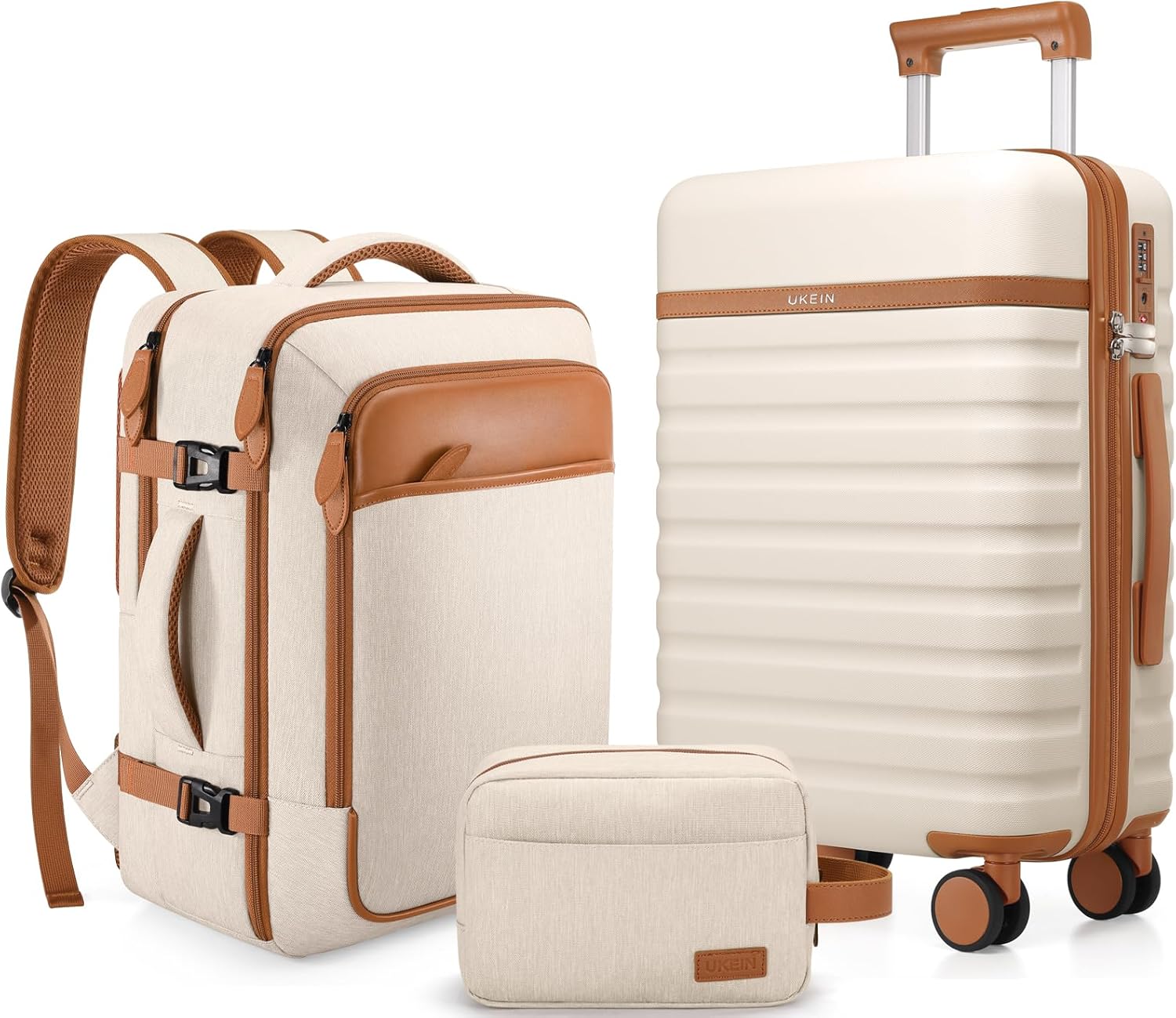
Local tip: Weigh your empty bag before you leave home. Some carry-ons alone eat up 4-5kg of your allowance before you’ve packed a thing.
The Formula: Build a Ten-Day Capsule
The single biggest shift in how I pack came from stopping the “one outfit per day” mentality. For ten days, you want roughly:
- 5-6 tops
- 3 bottoms
- 1-2 layering pieces
- 1 versatile dress or set (if that’s your style)
- 3 pairs of shoes, max
That’s around ten to twelve core pieces that combine into well over twenty outfits, as long as every piece is chosen to work with everything else. The trick isn’t restriction for its own sake — it’s intentional coordination.
Local tip: Before you pack anything, lay every piece on the bed and ask if it works with at least three other items in the pile. If it doesn’t, it stays home.
Choose a Tight Colour Palette
Pick two or three neutrals as your base — think black, white, navy, or sand — and one or two accent colours that show up in more than one piece. This is what actually makes mixing and matching possible; a beautiful top that only goes with one pair of pants isn’t earning its space in a carry-on. I write out my palette on my phone before I even open my closet, and I don’t let myself add anything outside it.
Tops That Pull Their Weight
Favour tops that layer well and don’t wrinkle easily — merino or a cotton-modal blend hold up far better over ten days than pure cotton, which will look tired by day four. Mix short sleeve, long sleeve, and at least one slightly dressier option that can go from a museum afternoon to a dinner with minimal effort.
Bottoms You Won’t Get Sick Of
Three bottoms is genuinely enough if you choose well: one pair of jeans

or trousers, one pair of lightweight travel pants or a skirt, and one that’s dressier for evenings out.

Look for fabrics with a bit of stretch — you’ll be walking more than you think, and rigid fabric gets uncomfortable fast on long sightseeing days.

Layers for Europe’s Unpredictable Weather
Even in peak summer, European evenings can turn cool, and shoulder-season trips can swing 15 degrees in a single day.

Pack one lightweight cardigan or overshirt, and one packable rain jacket that folds down to almost nothing.

Skip the heavy sweater unless you know you’re headed somewhere genuinely cold — it’s one of the biggest space-wasters I see people pack.
Local tip: A packable rain jacket earns its keep on any European itinerary — a sudden downpour in a city like Amsterdam or London is more likely than you’d think, whatever the forecast says.
Shoes: The Three-Pair Rule
This is where most overpacking happens. Stick to three pairs, no exceptions:
- A broken-in walking shoe — not brand new, not stiff, genuinely tested on pavement before your trip
- A dressier flat or low heel for dinners and nicer settings
- A sandal or lightweight shoe for warm days or downtime
Wear your bulkiest pair on travel days to save suitcase space.
Dressing for Day-to-Night Without Repacking
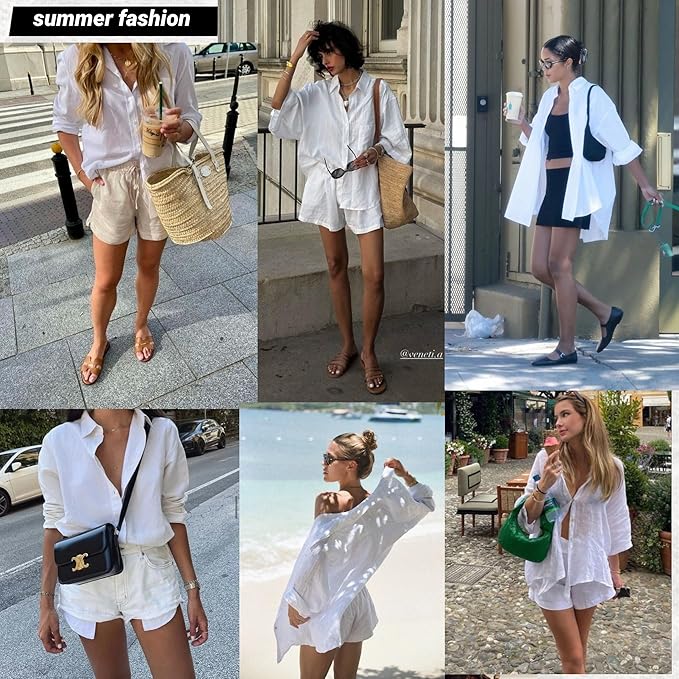
The pieces that earn a permanent spot in my bag are the ones that transition.
A simple slip dress worn with sneakers and a denim jacket by day becomes an evening look with the dressier flats and a swap of accessories.

A crisp button-down does double duty over a swimsuit at the coast and buttoned up with trousers at a nice restaurant. Aim for at least three or four pieces in your bag that can pull this trick.
Travel Capsule Wardrobe for Summer
Toiletries That Actually Survive Ten Days
Decant what you can into reusable travel bottles under 100ml, and be honest about what you’ll actually use — most people pack three products for every one they touch.

Solid shampoo bars and multi-use balms save real space and sidestep liquid restrictions entirely.

Local tip: Pack a small stain-remover pen. Ten days is long enough that something will end up on your one good top, usually on day two.
The Ultimate Travel Packing List
Tech and Documents, Kept Simple
One universal adapter (not one per device — get a multi-port version), a portable charger, and your charging cables rolled and secured with a cable tie or small pouch so they don’t turn into a tangled mess at the bottom of your bag. Keep digital and physical copies of your passport, accommodation confirmations, and any train or museum tickets in one place you can access without digging.
How I Actually Pack the Bag
Packing cubes are the single upgrade that changed my packing life more than any specific item on this list. One cube for tops, one for bottoms, one for underwear and smaller items.
Rolling vs Folding Clothes for Suitcase Packing: Which One Is Actually Better?
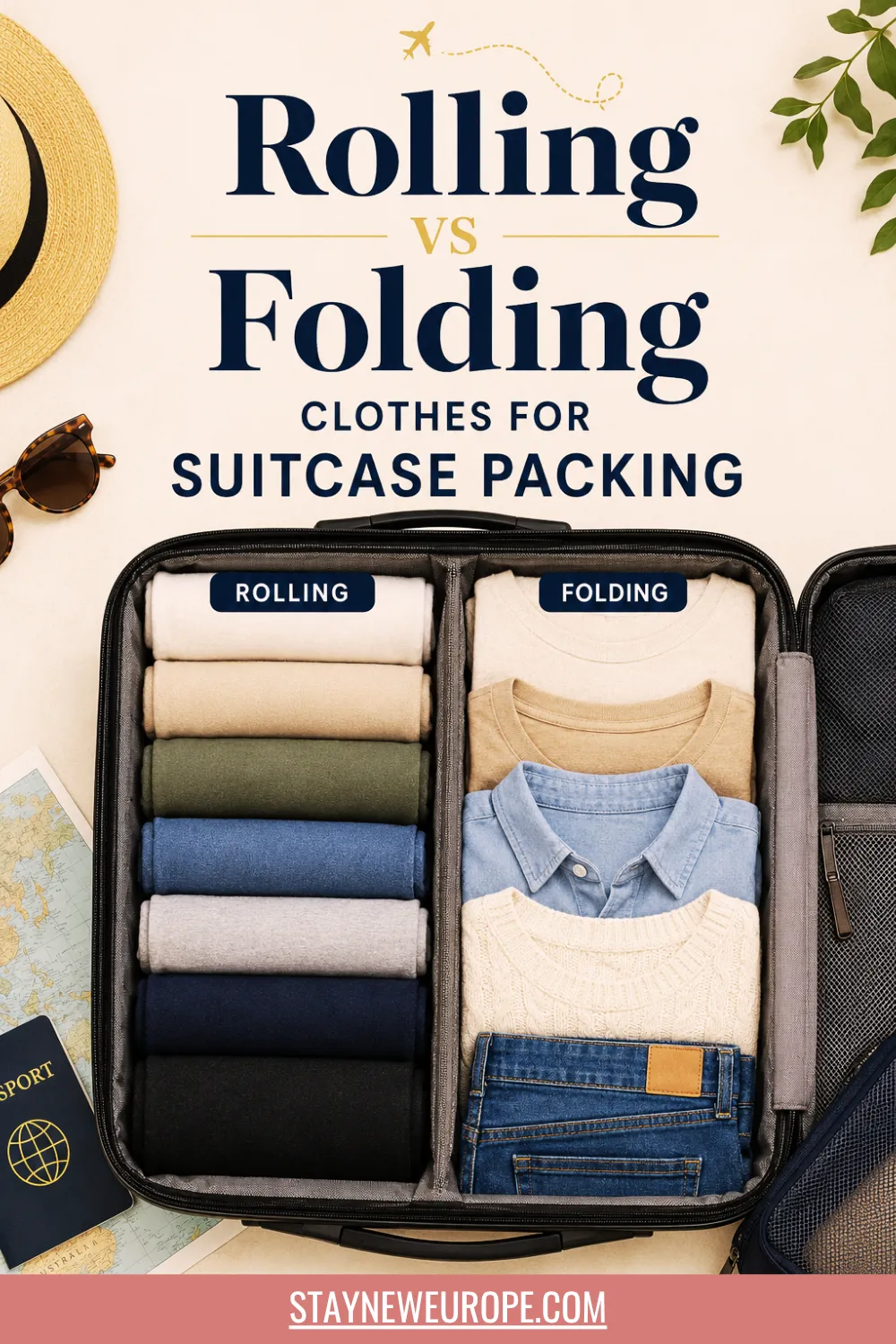
As for rolling versus folding — I roll almost everything, since it takes up less space and creates fewer sharp creases than folding, and I fold only delicate or structured pieces that roll badly. Shoes go along the bottom or the edges, stuffed with socks to save space.
Laundry: Your Secret Weapon for a Longer Trip
Ten days is genuinely doable without checked luggage if you plan for one laundry stop, whether that’s a hotel sink with a few sachets of travel detergent or an actual laundromat, which many European cities have and which are often cheaper than you’d expect. Planning for laundry around day five or six means you can pack for five or six days instead of ten, which changes the entire equation.
What I Always Leave Behind
A few things that sound reasonable in theory and are dead weight in practice:
a hair dryer (most hotels have one), a “just in case” formal outfit you never actually wear, more than one bulky toiletry item, and books — a phone or e-reader does the job for a fraction of the weight. If you’re debating an item and can’t picture the exact outfit or moment you’d wear it, it doesn’t make the cut.
A Sample Ten-Day Outfit Rotation
To make this concrete, here’s roughly how ten pieces stretch across ten days: three outfit combinations repeated with small swaps (a different top, a swapped layer, dressed up or down with shoes), one laundry reset around the midpoint, and one dedicated “nice dinner” outfit kept fresh and separate from the daily rotation. If you want a deeper breakdown by destination and climate, my guides on what to wear in Italy in August walk through this exact framework for a specific ten-day stretch.
Packing for More Than One Climate or Country
If your ten days span, say, a warm coastal stop and a cooler capital city, resist the urge to pack two separate wardrobes. Instead, build your capsule around your coolest destination and use layers to adapt upward — it’s much easier to strip a layer off in the heat than to have brought nothing warm enough for a cool evening.
Your Final Pre-Departure Checklist
Before you zip the bag for the last time, run through this: every piece works with at least three others, you have exactly three pairs of shoes, your liquids are under the limit and easily accessible, your documents are backed up digitally, and you’ve left at least ten percent of your bag’s capacity empty for anything you pick up along the way. If all of that checks out, you’re genuinely ready.


One Response