
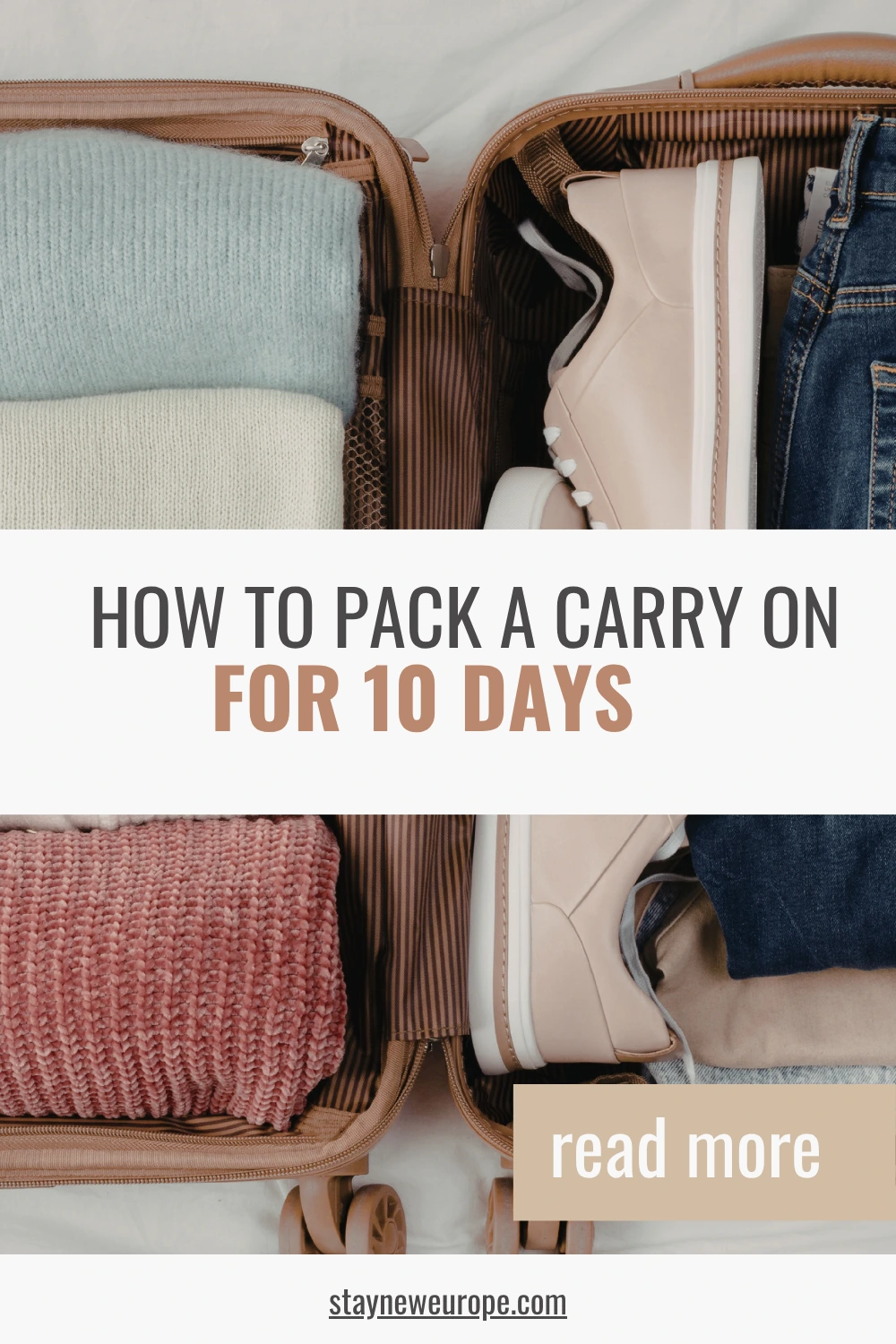
There’s a specific kind of dread that hits when you’re standing over a suitcase that’s already bursting at the seams — and you haven’t even packed your shoes yet. I’ve been there. Many times. I used to be the person who checked a bag for a long weekend, just in case. I’d haul a massive suitcase across train platforms, up flights of stairs in boutique hotels with no lifts, and along cobblestone streets that were absolutely not designed with wheeled luggage in mind.
Then one trip changed everything. I was heading out for ten days — a mix of cities, one hiking day, and two dinners that actually required me to look like a functioning adult — and I decided, almost on a whim, to try fitting it all into a carry-on. What happened next was either an act of madness or the best travel decision I’ve ever made. Spoiler: it was the latter.
This is the guide I wish I’d had before that trip. It covers everything — the mindset, the clothing math, the toiletry tetris, the packing order — so that you can pull off ten full days with one small bag and still have outfits you’re genuinely happy to wear. Let me be honest with you: it takes a bit of planning upfront. But once you land and sail straight past baggage claim while everyone else stands at a carousel for forty minutes? Worth every second.
Before We Get Into It: Why Ten Days in a Carry-On Is More Doable Than You Think
Here’s what most packing guides won’t say out loud: the reason we overpack has almost nothing to do with what we actually need, and everything to do with anxiety. The “what ifs.” What if it rains? What if there’s a fancy dinner? What if I spill something on day two and need a backup? What if I just feel like wearing something different?
I’ve asked myself all of these questions while standing in front of an overflowing bag, and here’s what I’ve learned — most of those “what if” moments either don’t happen, or they’re solved by a quick trip to a local shop, a sink rinse, or just getting creative with what you’ve got. Europe especially is full of incredible little shops — whether you’re in Lisbon, Paris, or anywhere else on the continent. It’s not a wilderness survival situation.
The other thing worth knowing: ten days is actually the sweet spot for carry-on travel. It sounds like a lot, but once you factor in a single laundry day mid-trip (more on that shortly), you’re really only packing for five days and repeating. That mental reframe alone will change how you approach your bag.
So before you start throwing things in and hoping for the best, let’s talk about how to pack a carry on for 10 days in a way that’s intentional, strategic, and still leaves room for a few souvenirs on the way home.
1. Start With the Right Bag (This Decision Does Half the Work)
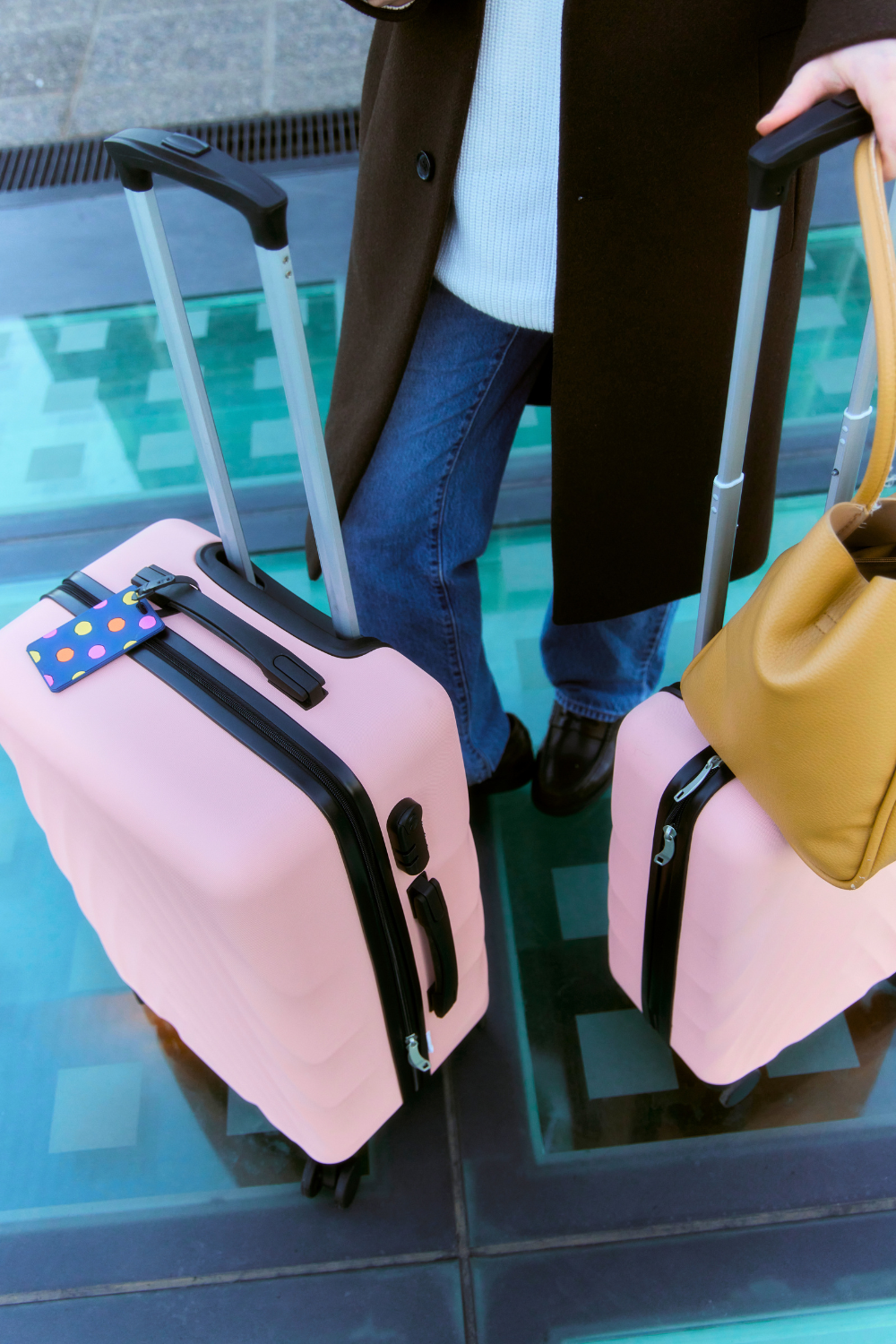
You can have the most perfectly curated capsule wardrobe in the world, but if your bag is the wrong size or the wrong shape, you’ll be fighting it the entire trip.
Not all carry-ons are created equal. Budget airlines — especially in Europe — have notoriously strict sizing rules, and the difference between 55cm and 56cm can mean a gate-check fee that costs more than your flight. Before you pack a single thing, know your airline’s maximum carry-on dimensions and weigh your empty bag. Some hard-shell spinners look compact but are surprisingly heavy before you’ve put anything in them.

For a ten-day trip, I lean toward a hard-shell carry-on in the 20–22 inch range with four spinner wheels. The spinner wheels are non-negotiable for me — cobblestones are punishing enough without having to drag a two-wheeler. Inside, you want compression straps and at least one zip divider. That divider sounds minor until you’re trying to find your charger at the bottom of a fully packed bag at 6am.

If you’re flying budget, especially within Europe between cities, look up the specific airline before you go. Ryanair and Wizz Air both have cabin bag policies that are stricter than most, and some require you to pay for overhead bin access separately. Worth checking before you arrive at the gate confidently rolling a bag that technically doesn’t fit.
Local tip: Weigh your packed bag at home before you leave. Airlines have gotten much stricter about weight limits on carry-ons, and 10kg fills up faster than you’d expect. If you’re right at the limit going out, you won’t have space for anything you pick up along the way.
2. Build a Color Palette, Not a Wardrobe
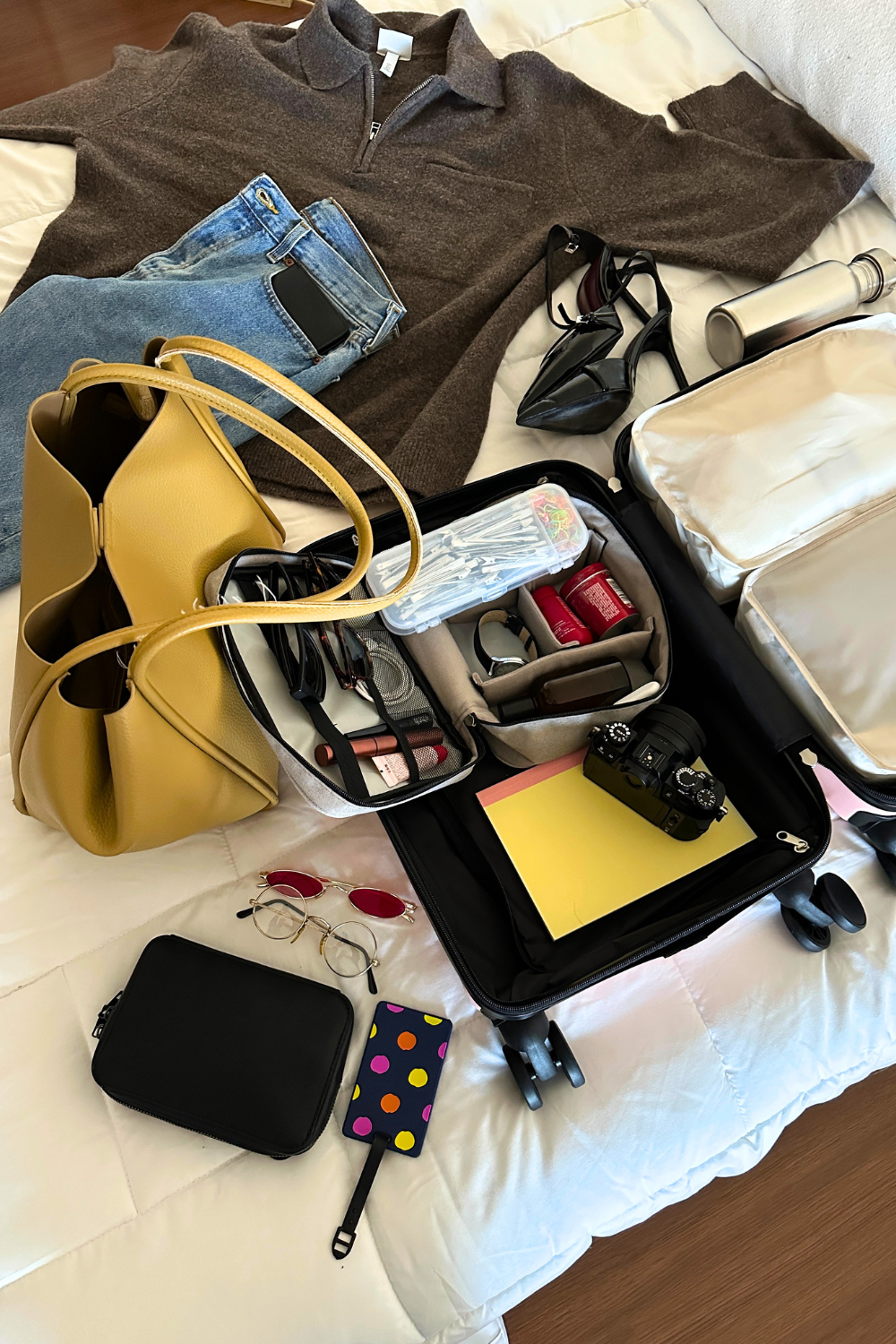
This is the single most important mindset shift in learning how to pack a carry on for 10 days, and I say this as someone who spent years ignoring it entirely.
When you pack without a color strategy, you end up with twelve tops that don’t work with half your bottoms, three bags that only match two outfits, and a shoe situation that requires its own separate piece of luggage. When you pack within a deliberate palette — say, neutral bases like black, white, navy, and tan, with one or two accent colors — suddenly everything works with everything, and you’ve multiplied your outfit options without adding a single extra item.
Pick your palette before you open your wardrobe. For most trips, I go with a base of black and white, a warm neutral (usually camel or tan), and one accent — either a warm terracotta or a sage green, depending on the season.
Every piece I consider has to fit within that palette or it doesn’t make the cut, no matter how much I love it.
This sounds restrictive. It isn’t. It’s actually the most freeing way to travel, because you stop looking at your suitcase every morning wondering what goes with what.
Local tip: Pack one “wild card” piece — a printed scarf, a patterned top, something with personality — that still works within your palette. It stops everything feeling too matchy and gives you that one outfit that feels different and fun even on day eight.
3. Tops: The Six-Piece Formula That Actually Works
Six tops for ten days sounds like not enough. I promise it’s more than enough.
The formula:
1.Two basic tees (I always do one white, one black).
2. One lightweight button-down or linen shirt that can dress up or dress down.
3. One slightly nicer blouse or going-out top
4. One long-sleeve layer for cooler evenings or air-conditioned museums.
5. One striped or patterned top that does the heavy lifting aesthetically.

The fabric matters enormously here, and this is where most packers go wrong. Cotton tees crease badly and hold odour faster than other fabrics. Merino wool is genuinely magic — it doesn’t wrinkle, it regulates temperature, it can be worn multiple days without smelling, and it washes and dries overnight in a hotel bathroom. Whether you’re heading to Lisbon, Barcelona, or elsewhere in Europe, merino wool keeps your packing minimal. I know it sounds expensive and slightly granola, but merino has saved my suitcase space more times than I can count. A lightweight merino tee looks just as good as a cotton one and packs down to almost nothing.
For the blouse or going-out top, look for something that travels wrinkle-free. Silk-look fabrics and certain polyester blends shake out beautifully after being packed for hours. Test at home: scrunch it in your hand for thirty seconds, let go, and see what happens. If it springs back, it’s a traveller. If it looks like a crumpled receipt, leave it behind.
Local tip: Wear your bulkiest or most wrinkle-prone top on travel days. It’ll be the freshest it’ll ever be, it takes up zero bag space, and by the time you land, any wrinkles from the journey will hang out overnight.
4. Bottoms: Four Is Plenty (Yes, Really)
Four bottoms for ten days. I see you looking skeptical. Stay with me.
Here’s the thing about bottoms — people notice your tops and shoes far more than your trousers. A pair of well-fitting dark jeans that you wear three times over ten days is not something anyone will clock. What they’ll notice is that you always look put-together, which is about fit and coordination, not novelty.
My four-bottom formula:
1.One pair of dark or mid-wash jeans (worn on the flight, therefore not taking up bag space).
2. One pair of lightweight travel trousers in a neutral (linen or a ponte fabric both work brilliantly).
3. One casual skirt or wide-leg linen pants for warmer days.
4. One pair of leggings or relaxed joggers strictly for travel days, long train journeys, and evenings in the accommodation when you just don’t want to be wearing proper trousers anymore.
If it’s a beach or warm-weather trip, swap the leggings for a second skirt or a pair of shorts. If it’s winter, the linen skirt goes and gets replaced by a second warmer trouser or thick-knit leggings worn as a base layer. The number stays the same; only the specifics shift.
Local tip: Wear your jeans on the plane. It sounds obvious but so many people pack them instead, which is a waste of bag space and usually means they arrive more wrinkled than if they’d just been worn.
5. Dresses: Two, and They’ll Earn Their Keep
I used to leave dresses out of my carry-on packing because they felt like a luxury item — one piece, one outfit, not very versatile. Then I figured out that a dress with the right accessories and a light layer over the top is actually three or four different outfits. The dress is not the item; it’s the foundation.
Pack two: one casual day dress and one slightly more elevated option for dinners, evening strolls, or nicer occasions. The casual one should be in your neutral palette so it works with your cardigan or jacket. The second one can be a little more interesting — a colour, a print, something that makes you feel genuinely great when you put it on, because that dress is going to carry the weight of any occasion that calls for it.
Wrap dresses and jersey dresses pack down to almost nothing and shake out impressively well. A structured midi dress, on the other hand, will take up the space of two items and arrive looking like it lost a fight. The golden rule: if it needs ironing in real life, it definitely doesn’t belong in a ten-day carry-on.

Local tip: A lightweight dress worn with chunky trainers and an oversized linen shirt thrown over it is one of the most versatile, effortlessly stylish travel outfits going. It works for a market, a casual dinner, a museum, and a long walking day. Pack it. Wear it constantly.
6. Layers and Outerwear: Three Pieces, No More
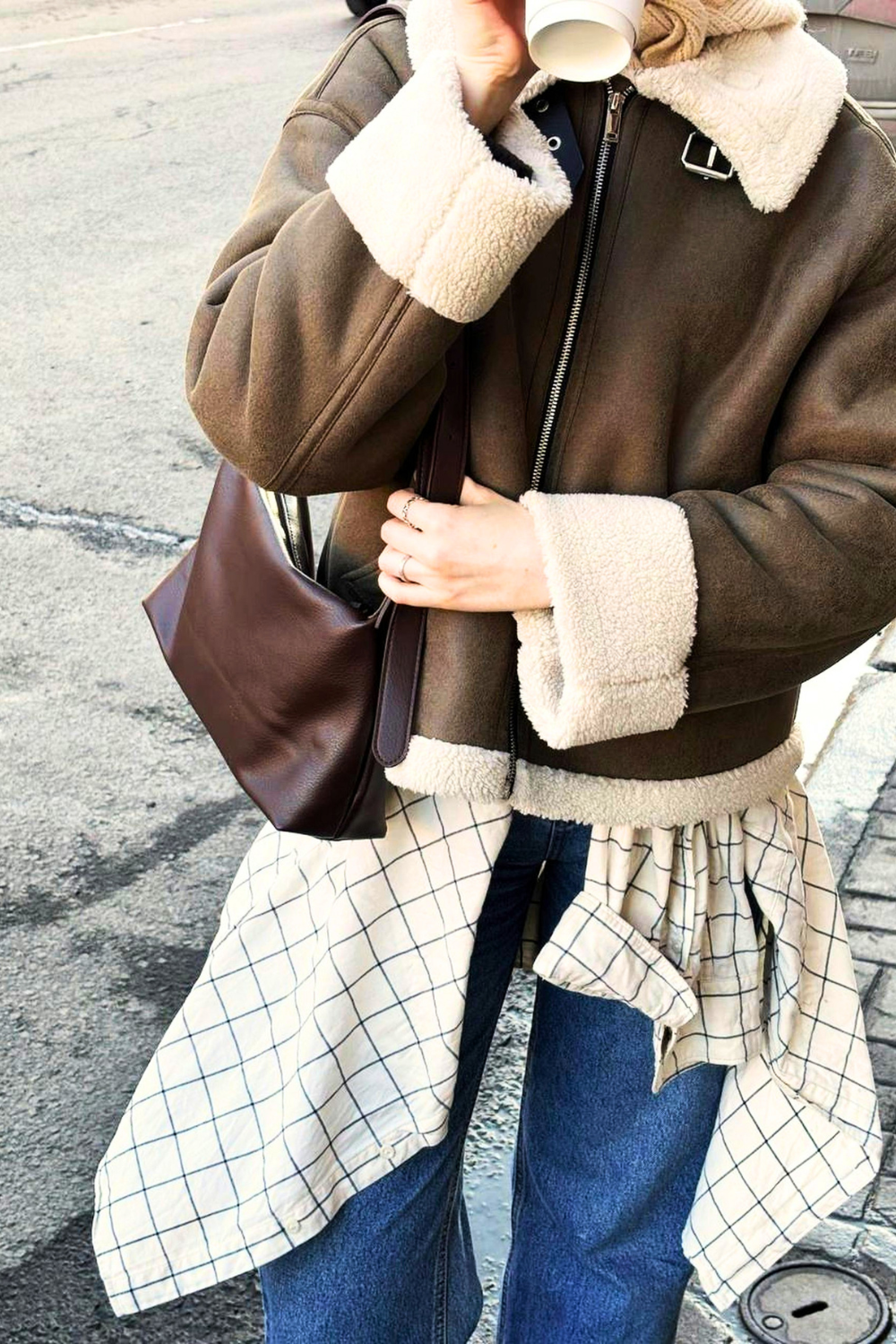
Outerwear is where most people blow their packing budget — space-wise, I mean. They pack a big coat, a cardigan, a denim jacket, a packable rain jacket, and then wonder why nothing fits. Three layers is the magic number, and being strategic about which three makes all the difference.
First: Your main jacket. This should be versatile enough for both days and evenings, packable enough that it doesn’t take up half your bag, and warm enough for the coldest weather you’ll encounter on the trip. A trench coat is classically good for this. So is a leather-look jacket or a lightweight quilted. For winter trips, this is where you wear your coat on the plane and count it as your one coat.
Second: Acardigan, knit, or fleece for layering. Something you can throw over anything when the evening cools down or the museum is aggressively air-conditioned. This should be in your core palette and should work with all your tops.
Third: A scarf. This one does triple duty as warmth on cold evenings, a head covering for religious sites, and a pop of colour or texture to elevate an outfit. A large lightweight scarf takes up almost no space and earns its keep every single day.
Local tip: If you’re travelling in shoulder season — April, May, September, October — European weather can swing wildly between warm afternoons and cool, damp evenings. A large pashmina-style scarf that you can wrap properly around your shoulders will serve you better than a thin decorative one.
7. Shoes: The Three-Pair Rule and How to Stick to It
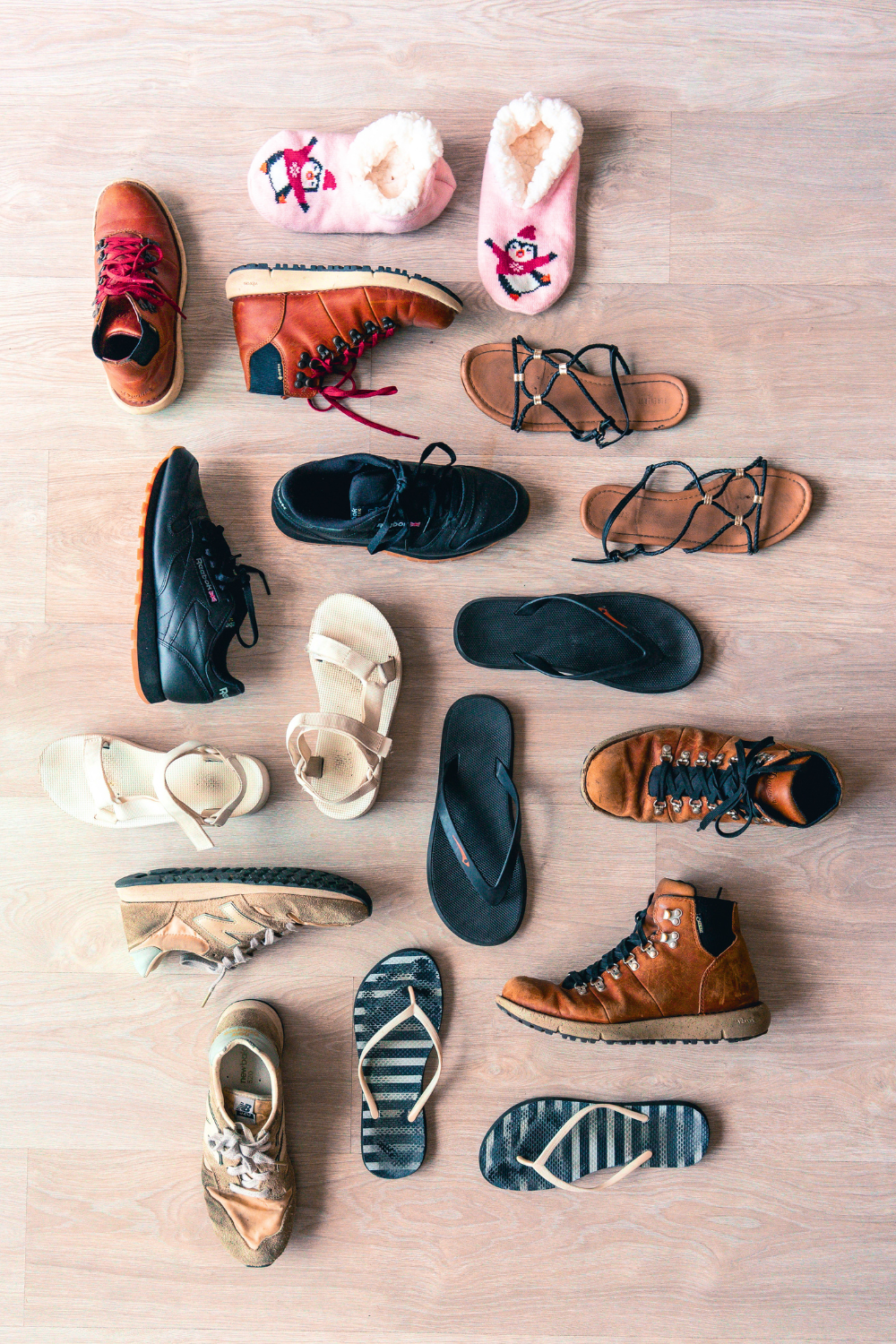
Let me be honest with you about shoes: I used to pack five pairs. I wore three. Two of those pairs were worn exactly once, usually for the “nicer dinner” that I’d overcautiously prepared for. Every. Single. Time.
Three pairs is the carry-on traveller’s law. And the key is choosing three pairs that cover genuinely different functions without overlapping.
Pair one: Comfortable walking shoes. This is your workhorse — the shoe you’ll have on for eight to ten hours of exploration. White trainers are endlessly versatile and look good with almost everything in your palette. Supportive sandals work brilliantly for summer trips. Whatever it is, it must be broken in before you travel. New shoes on a travel day is one of the most reliable ways to have a miserable afternoon.
Pair two: Something slightly more elevated. Clean leather loafers, block-heeled sandals, low ankle boots — the shoe that elevates your dress or your smarter trousers for evenings or nicer outings. It doesn’t need to be uncomfortable; it just needs to look like you made an effort.
Pair three: Slides, flip-flops, or lightweight slip-ons. For the hotel, the beach, wandering back from dinner in a warm city, or any moment when you’ve spent all day in shoes and your feet need liberation. These pack flat and weigh almost nothing.
Local tip: Stuff your shoes with rolled socks, underwear, or small accessories to maximise every square centimetre of space. It sounds obvious but genuinely makes a difference when you’re fitting three pairs into an already-full bag.
8. Underwear and Sleepwear: The Unsexy Section That Really Matters
Seven pairs of underwear for ten days, with a laundry day planned around the midpoint. That’s the formula. You could go to eight or nine if laundry feels uncertain, but once you accept that a mid-trip laundry stop is part of the plan rather than a compromise, seven is genuinely fine.
Undergarments: For bras, two is enough for most people. If you’re doing a lot of walking or active days, a third sports bra is worth it. Bras are one of the few items where I’d say the comfort and support matter more than the space savings, so don’t sacrifice what you need here and same goes for underwear.
Sleepwear: One set. That’s it. A lightweight two-piece or a comfortable oversized sleep shirt — something that packs small and doesn’t make you sweat in a warm hotel room. If you run cold, a lightweight pair of legging-style pyjama bottoms doubles as warm sleepwear and an extra layer for very cold mornings.
Swimsuit: Always pack one, even if you’re not planning a beach trip. Europe surprises you constantly — a hotel with a rooftop pool, a spontaneous afternoon at a lido, a spa day that seemed impractical until the third day of rain when suddenly it sounded perfect.
Local tip: Merino wool underwear is worth the investment for long trips—especially useful when traveling for extended periods. It dries faster than cotton, doesn’t hold odour as quickly, and works brilliantly for active days. A couple of merino pairs mixed in with your regular ones makes the laundry timing more flexible.
9. Toiletries: Be Ruthless and Thank Yourself Later
Toiletries are the silent space-eaters of carry-on travel. Full-size bottles of shampoo, conditioner, three different moisturisers, a hairdryer because you don’t trust hotels — I’ve been there and I am here to tell you that almost none of it is necessary.
The 100ml (3.4oz) liquid rule for carry-on security actually works in your favour as a packing constraint. If it doesn’t fit in your clear liquids bag without taking up half of it, you don’t need it.
Essentials: Travel-size shampoo and conditioner, face cleanser, moisturiser with SPF, toothbrush and toothpaste, deodorant, razor, and a small basic first-aid kit — paracetamol, a few plasters, antihistamine, and some blister pads, because blisters on a walking-heavy trip are a very real threat. Add a lip balm and your sunscreen to the liquids bag.

Buy silicone travel bottles and decant your favourite products into them. The leak-proof ones — you’ll find them everywhere online and in travel shops — have genuinely changed the toiletry game. Label them if you’re the kind of person who will not, under any circumstances, use conditioner as face wash at 6am. I am that person.

Local tip: Most European hotel chains and Airbnbs provide at minimum a hairdryer. Check your accommodation before you pack one. A travel-size hairdryer still takes up a significant chunk of space, and nine times out of ten, there’s one waiting for you when you arrive.
10. Makeup: Less Than You Think, More Than You Fear
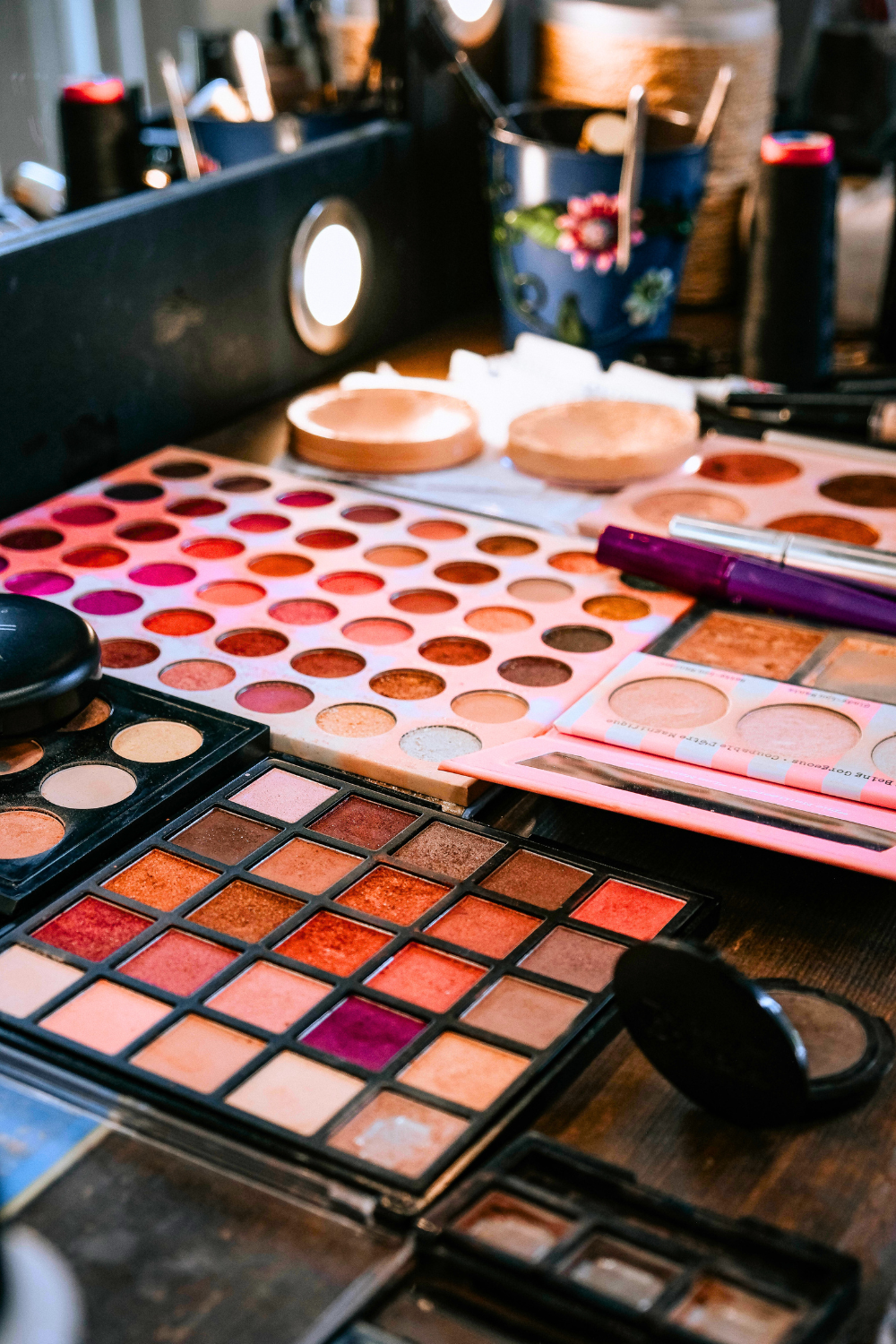
Europe, as I said in the intro and will happily say again, has extraordinary lighting. Natural light in cities like Lisbon, Florence, and Dubrovnik at golden hour makes everyone look annoyingly radiant. You genuinely need less makeup than you think.
My ten-day travel makeup bag:
1. Tinted moisturiser or a light foundation.
2. Concealer for the dark circles that will inevitably appear after a long travel day.
3. Mascara, one neutral eyeshadow palette with four or five shades.
4. A brow product.
5. A highlighter (this doubles as eyeshadow if you’re being economical).
6. Two lip options — one your everyday lip balm with colour, one a proper lipstick or lip liner for evenings.
7. And a small setting spray.
Everything lives in a compact zip pouch. If it doesn’t fit in the pouch, something is getting left behind.

The temptation to bring your full foundation routine, multiple palettes, and a contouring kit is real. But here’s the honest truth: you probably won’t do a full face every single day when you’re tired from exploring and breakfast ends in thirty minutes. A quick, confident routine with fewer products is better than a complex one you abandon by day four.
Local tip: A tinted SPF moisturiser is genuinely the single most efficient beauty product for travel. It covers, protects, and adds a healthy glow all at once. If you’re not already using one at home, a trip abroad is an excellent reason to start.
11. Tech and Accessories: Travel Light, Travel Smart
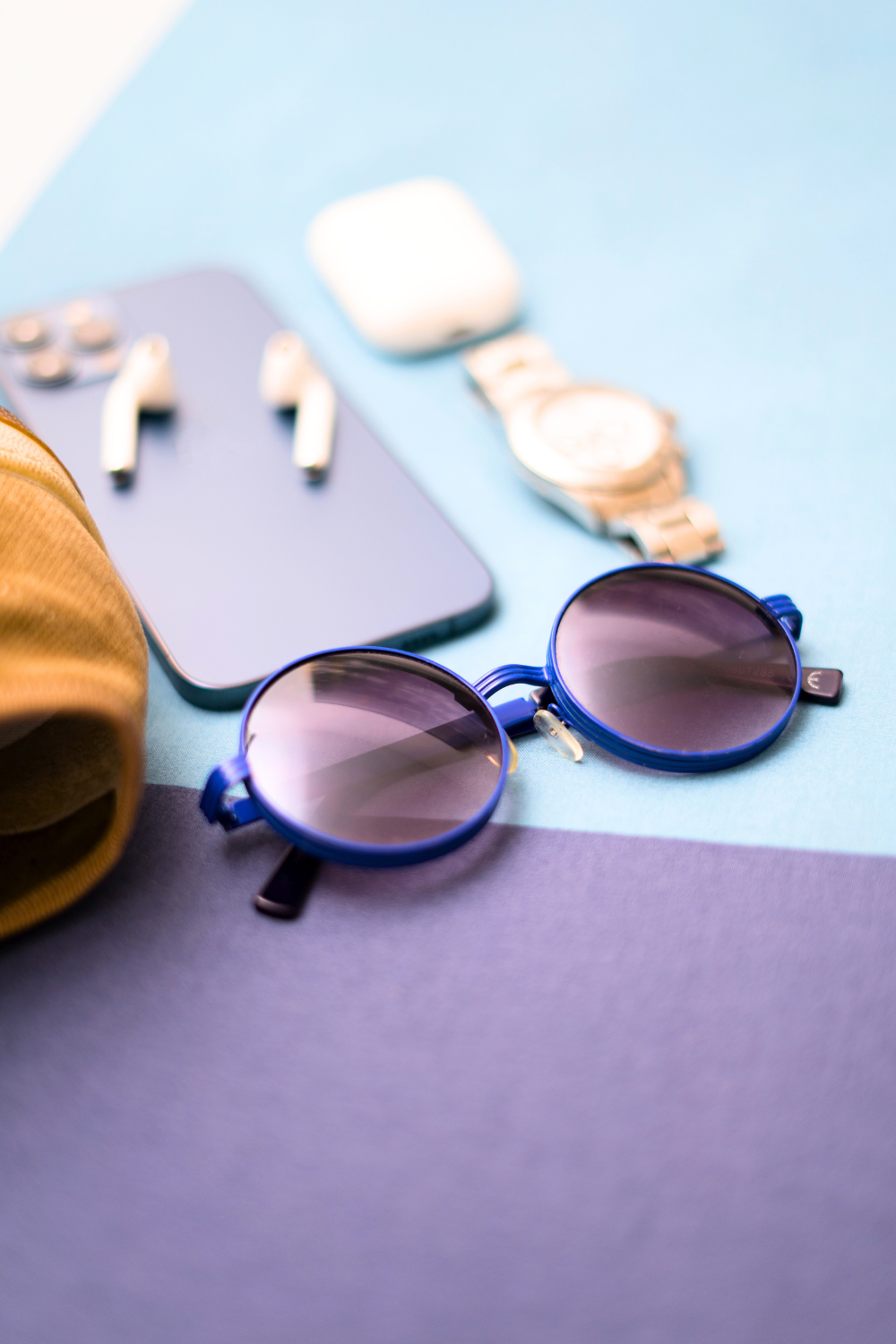
Tech is where bags get quietly heavy without you noticing. A phone, a charger, a camera, a laptop, a tablet, a power bank, headphones, an e-reader — all of a sudden you’ve got two kilos of electronics and nowhere comfortable to sit because your personal item is essentially a tech bag with aspirations.
Be honest about what you’ll actually use. If your phone camera is genuinely excellent, do you need a separate camera? If you’re going for ten days rather than a workation, do you need your laptop, or will a tablet and keyboard cover it? These aren’t judgements — they’re just questions worth asking before the stuff ends up in the bag by default.
Non-negotiables:
Phone and charger, a small power bank (especially for long day trips away from power sockets), a universal travel adapter (Europe uses EU plugs, but if you’re hopping between countries including the UK, get a multi-region adapter), and noise-cancelling earphones for flights and trains. An e-reader if you’re a reader — it weighs almost nothing and replaces the three books you would otherwise have packed.
Everything tech-related lives in my personal item, not my carry-on. Your personal item is your secret weapon, and it deserves its own section.

Local tip: Download your maps, playlists, podcasts, and e-books before you leave home. Airport Wi-Fi is unpredictable, data roaming can be expensive, and standing in an airport desperately trying to download a book you forgot because there’s no signal is genuinely frustrating. Prepare digitally before you pack physically.
12. The Personal Item: Your Underrated Second Bag
Your carry-on gets all the glory, but your personal item — the bag that goes under the seat in front of you — is equally important and used by surprisingly few people strategically.
Most airlines allow a personal item in addition to your carry-on, and the size allowance is usually generous: a tote bag, a backpack, a small structured crossbody. This is where I put everything I want access to during the flight and anything that would be annoying to rummage for in the overhead bin.
In my personal item: Travel documents (passport, insurance, bookings — always in hard copy as backup), the toiletries I need on the flight (lip balm, eye drops, a travel toothbrush), snacks, an empty collapsible water bottle to fill after security, my scarf for the plane, earphones, and anything tech. If I’m flying somewhere warm, I might also wear a layer on the plane that I then shove into my personal item once I land — freeing up space in the carry-on for the whole trip.

A medium-sized backpack or a tote that structures well is ideal. The bag should be able to sit flat under the seat without being bulging so hard it doesn’t fit — you don’t want to be the person having the conversation with the flight attendant about your personal item, especially on an early morning flight when everyone is already tired.

Local tip: A crossbody anti-theft bag for exploring is worth considering as your personal item. It does double duty as your daypack once you land and keeps your valuables secure while you’re out. Look for hidden zip pockets and slash-resistant straps.
13. Packing Cubes: The Organisational Tool That Changed Everything
If you’ve never used packing cubes, welcome to the one travel accessory recommendation I’ll make without any caveats whatsoever. They are, without exaggeration, one of the best investments in making carry-on travel actually work.
The magic isn’t just that they compress your clothes slightly — it’s that they make your bag retrievable. Without packing cubes, every time you need something from the bottom of your bag, you’re essentially unpacking the whole thing. With cubes, everything has a designated zone, unpacking at the hotel takes two minutes, and repacking before you move cities takes five.
My cube system for a ten-day carry-on: one cube for tops, one for bottoms, one for underwear and sleepwear, and a small flat pouch for accessories. Shoes go in dust bags or two separate small pouches along the sides of the bag.

The compression cubes — the kind with a second zip that squeezes out air — are worth having for bulkier items like the cardigan or the fleece. For lighter items like tees and underwear, standard cubes are perfectly sufficient.
Local tip: Unpack your cubes into the hotel drawers as soon as you arrive. It sounds small, but living out of a suitcase in a cramped hotel room makes the whole trip feel slightly chaotic, while drawers make it feel like home. And because your system is already in cubes, you repack in minutes when it’s time to move on.
14. The Laundry Day That Makes Everything Possible
Let’s talk about the secret weapon in the ten-days-one-bag equation, because without it, the maths simply don’t work: the planned laundry stop. Many European cities have convenient laundromats, and destinations like Amsterdam make it easy to refresh your wardrobe mid-trip.
I know “plan your laundry” sounds deeply unglamorous for a travel guide. Bear with me.
A mid-trip laundry day — somewhere around day five or six — transforms a ten-day packing list into a five-day one with repeats. Suddenly you’re not packing ten pairs of underwear or seven tops; you’re packing half that and knowing you’ll refresh halfway through. See our packing lists for specific destination guidance. It’s genuinely liberating rather than restrictive once you accept it as part of the plan rather than a compromise.
Your options: Most hotels with any kind of service will do a laundry service, usually 24-hour turnaround. If you’re in an Airbnb or apartment, there’s often a washing machine. Laundromats (launderettes, laveries, wäschereien) exist in every European city — some are self-service, some drop-off, and they’re usually cheap. Or for the essentials — underwear, a couple of tees — a sink wash with travel soap and an overnight dry works beautifully, especially in warm climates where things dry in a few hours.
The only item that doesn’t work for a sink wash: jeans. They take forever to dry. But jeans were already only being worn twice at most before washing, so they don’t need to go in the laundry sink anyway.
Local tip: Pack a small bar of travel laundry soap or a few laundry detergent sheets. They take up almost no space, they work brilliantly for sink washing, and they mean you’re never dependent on finding a laundry service at exactly the right moment. Scrubba makes a tiny portable wash bag that’s essentially a laundry machine in your palm — slightly extra, genuinely useful.
15. The Rolling vs Folding Debate (And What Actually Wins)
Packing technique sounds like it shouldn’t matter that much, but the difference between a well-packed carry-on and a chaotic one often comes down entirely to method.
The bundle packing method (wrapping clothes around a core to minimise fold points) is excellent for wrinkle-sensitive pieces, though it requires you to unpack the entire bundle to access anything. Fine if you’re going to one place; less ideal if you’re moving through multiple cities.
Local tip: Once everything is in, engage those compression straps firmly but not aggressively. You want the contents secure, not fighting to breathe. Then give the bag a gentle shake — if things shift significantly, you’ve got air pockets that could be used for something.
16. What to Leave at Home (The List That Hurts a Little)
This section exists because knowing what not to pack is just as important as knowing what to pack, and most packing guides skip it because it requires saying mildly uncomfortable things.
- “Just in case” outfits. That phrase is responsible for more overpacked bags than any other force in travel. If you’re bringing it because you might wear it, put it back. Bring things you know you’ll wear.
- Full-size toiletries. You know this. You still pack them. The 100ml limit is your friend, not your enemy — use it as the hard rule it is.
- More than two “nice” options. For most trips, one elevated dinner outfit is sufficient. If you have two very different dinner situations, fine — but if they’re both “nice restaurant,” one outfit and some accessory variation will absolutely do.
- Heavy books. Your e-reader holds thousands. This is not the 1990s. Physical books on trips are a form of self-punishment disguised as a literary virtue.
- A hairdryer. I’ve said it once; I’ll say it again. Check your accommodation. It’s almost certainly there.
- Heels. Unless you are specifically going somewhere that requires them and you’ve thought carefully about when and where you’ll wear them and you’ve accepted that you’ll spend at least one evening carrying them on the cobblestones — leave them at home.
Local tip: Do a trial pack three or four days before you travel. Fully pack everything, lift the bag, carry it around for five minutes. Whatever you reach for to lighten the load in that moment is exactly what should go.
17. Seasonal Adjustments: How the Formula Changes by Time of Year
The ten-day carry-on formula I’ve laid out works brilliantly for spring through early autumn — roughly March to October in Europe. Outside of that, or for more extreme climates, some adjustments are necessary, and they’re worth thinking through rather than just piling on extra layers.
For winter travel, the main shift is outerwear. You’ll want a proper coat, and the easiest solution is wearing it on the plane. Your main jacket becomes your in-plane coat; your cardigan or fleece becomes your in-destination layer; and your scarf becomes essential rather than optional. Inside the bag, dresses mostly give way to thermal base layers and extra warm socks. The number of items stays roughly the same; the categories shift.
For genuinely hot destinations — peak summer Mediterranean, North Africa, Southeast Asia — you can actually pack lighter, not heavier. Fabrics dry faster, you need fewer layers, and a couple of the lighter pieces pull more weight. This is the season when one good pair of sandals does almost all the work across all three shoe slots.
For shoulder season, where the weather is genuinely unpredictable and you might get blazing sun and cold rain in the same afternoon, the layering strategy is crucial. A packable rain layer that stuffs into its own pocket takes up almost no bag space and can entirely salvage a rainy day that would otherwise ruin a light linen outfit.
Local tip: Check average temperatures and rainfall for your destination in the specific weeks you’re travelling, not just the general season. “Summer in Amsterdam” and “summer in Seville” are not the same thing at all, and packing for the wrong version is a common and entirely avoidable mistake. For example, summer in different European cities varies dramatically in temperature and humidity.
18. The Night Before: Your Final Packing Checklist
You’ve done the hard work. The cubes are packed, the shoes are in the bag, the toiletries are in their clear bag ready for security. Now — the night before — is when you do one final check that prevents the panicked airport moment.
Documents: Passport (valid for at least six months beyond your travel dates), visa if required, travel insurance details (digital and paper), accommodation bookings, budget travel planning, a card that works internationally and one backup method of payment.
Medication: Anything prescription, in original packaging with a prescription letter if it’s controlled. Painkillers, antihistamine, and stomach medication are worth having even if you don’t think you’ll need them.
Phone: Fully charged, offline maps downloaded, airline app with boarding passes, accommodation addresses saved.
Carry-on compliance: Check your airline’s current liquid rules, double-check that your bag meets their dimensions, and make sure you haven’t accidentally packed anything that doesn’t go in hand luggage — lithium batteries, lighters, and certain sharp items have specific rules that vary by airline and country.
The bag: Can you lift it comfortably? Can you lift it above your head comfortably? If you can’t manage it solo, it’s too heavy for carry-on travel regardless of whether it technically fits.
Local tip: Wear your most valuable outfit on travel day — your best jeans, your nicest trainers, your good jacket. It’s your most secure location, it frees up bag space, and arriving somewhere feeling put-together rather than scruffy makes a quiet but real difference to how you start a trip.
Practical Tips for Making It All Work
A few quick, high-value things that didn’t fit neatly into their own sections but genuinely matter:
On buying things at your destination: Europe has brilliant shops. If you forget something, you can almost certainly buy it. Remove the anxiety of forgetting from the packing equation and it becomes much lighter immediately.
On repeating outfits: Nobody is tracking what you wore on day three. This is something that feels much more loaded at home than it is in reality. Wear the jeans twice. Nobody cares.
On airport security: Your carry-on is going through the scanner. Know what needs to come out (liquids in the clear bag, laptop if required) before you’re at the conveyor belt, not while you’re at it. Have your boarding pass and ID easily accessible. The whole security experience is dramatically better when you’re prepared.
On overstuffed bags at boarding: If your bag genuinely doesn’t fit in the overhead bin, it will be gate-checked. This means it goes in the hold and you collect it at baggage reclaim. It defeats the entire purpose of carry-on travel. Pack within the limits.
On not buying more than you can carry: Leave a little space for souvenirs going home. A small compression bag or a packable tote you can pop inside the carry-on gives you overflow capacity for the way back without meaning you arrive overdressed.
Final Thoughts: Pack Light, Travel Better
Here’s the thing about learning how to pack a carry on for 10 days: it changes your relationship with travel in ways you don’t fully anticipate until you’ve done it.
Moving through a city with one small bag that you can lift, carry, and manage entirely on your own creates a kind of quiet freedom that nothing else quite replicates. No waiting at carousels. No baggage fees. No wheeling a massive case over a cobblestone street at midnight while your arms argue with you. You just arrive, and you go.
Ten days is a long trip. It’s also entirely manageable in a carry-on, and once you’ve done it, five days feels almost indulgently over-packed. The formula works. The laundry stop is not a defeat. The three pairs of shoes are genuinely enough. And that feeling at the airport on the way home, when you still have room in your bag for the olive oil and the linen trousers you bought in a tiny Sicilian market on day seven — that feeling makes every decision you made worthwhile.
Pack well. Travel light. Enjoy every single second of it.


14 Responses